
made to move: Elisa Terry's UCLA fitness legacy
“Our physical self is such a big component of who we are. If we are not expressing it, testing it, having fun, then we’re only living part of ourselves,” Elisa Terry ’94 shared. As the associate director of fitness and wellbeing at UCLA Recreation, that conviction has shaped a three-decade long career at UCLA and continues to influence her leadership approach on campus.
Her UCLA career began in the fall quarter of her freshman year at the John Wooden Center, where she worked as one of the first female intramural basketball officials. But her love of movement started long before her time at UCLA, going back to her upbringing. As the daughter of two recreation professionals, her childhood was spent at parks and playgrounds, dancing and playing sports. “I was just made to move and have always loved moving,” Terry said.
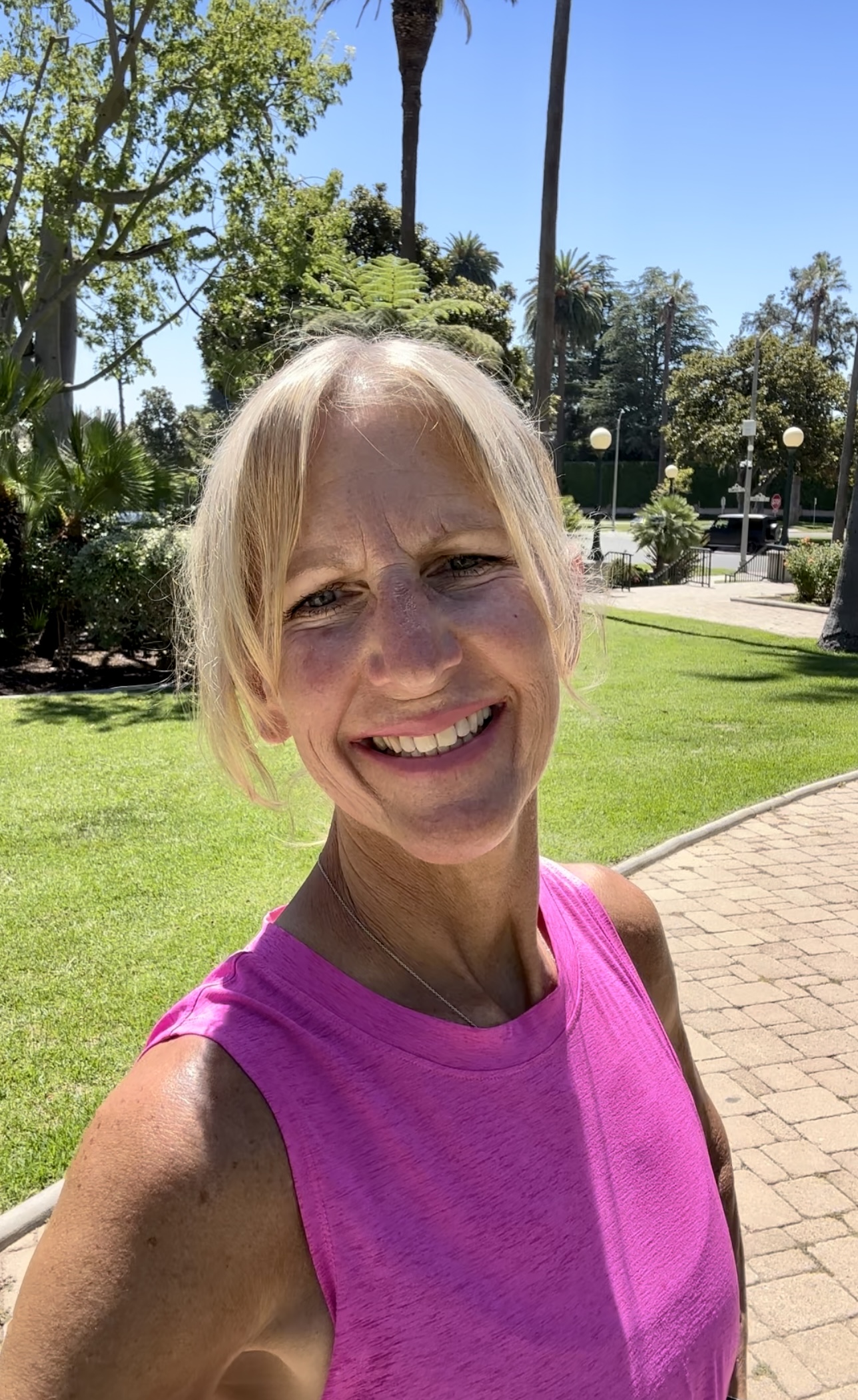
In high school, her basketball coach formalized what she already knew: that sports are about more than the game itself.
“I was fortunate to have a really fantastic coach in high school and she really brought the mind-body connection…showing the lessons on the court and how they translated to off the court, in personal growth, leadership and how you conduct yourself,” Terry said. “That’s the beauty about sports, right? You learn to work together, you have leadership positions, you learn perseverance and struggle, how to win and lose, and be a good teammate.”
Once admitted to UCLA, Terry knew she couldn’t pass up the opportunity to attend. However, the practical, prevention-focused study of exercise science and human movement that she was drawn to wasn’t offered as an official program of study. Undeterred, she supplemented her education through the athletic training program, in which she logged 1,800 hours under seasoned UCLA professionals, all while studying sociology as a major.
She soon became a program assistant in the instructional classes program, mentored by Nancy Rapp, who managed the fitness classes. After a year of rowing crew, she found her way to fitness, then to athletic training, working primarily with the track and field team. She later taught yoga to the women’s softball team for a full season and, eventually, to the UCLA football team.
“I put the best package together for myself,” she said. “I think that goes along the lines with how I think and how I process things. It lends itself to recreation and just how we all play a part in society and how we can be a better part of society. So I put the two together and here I am.”
After graduating, Terry split her time between UCLA Recreation and UCLA Athletics, running the adult sports program for the City of Beverly Hills. Within a year, she was full-time with UCLA Recreation, moving from instructional and fitness programs to employee wellness and fitness center management.
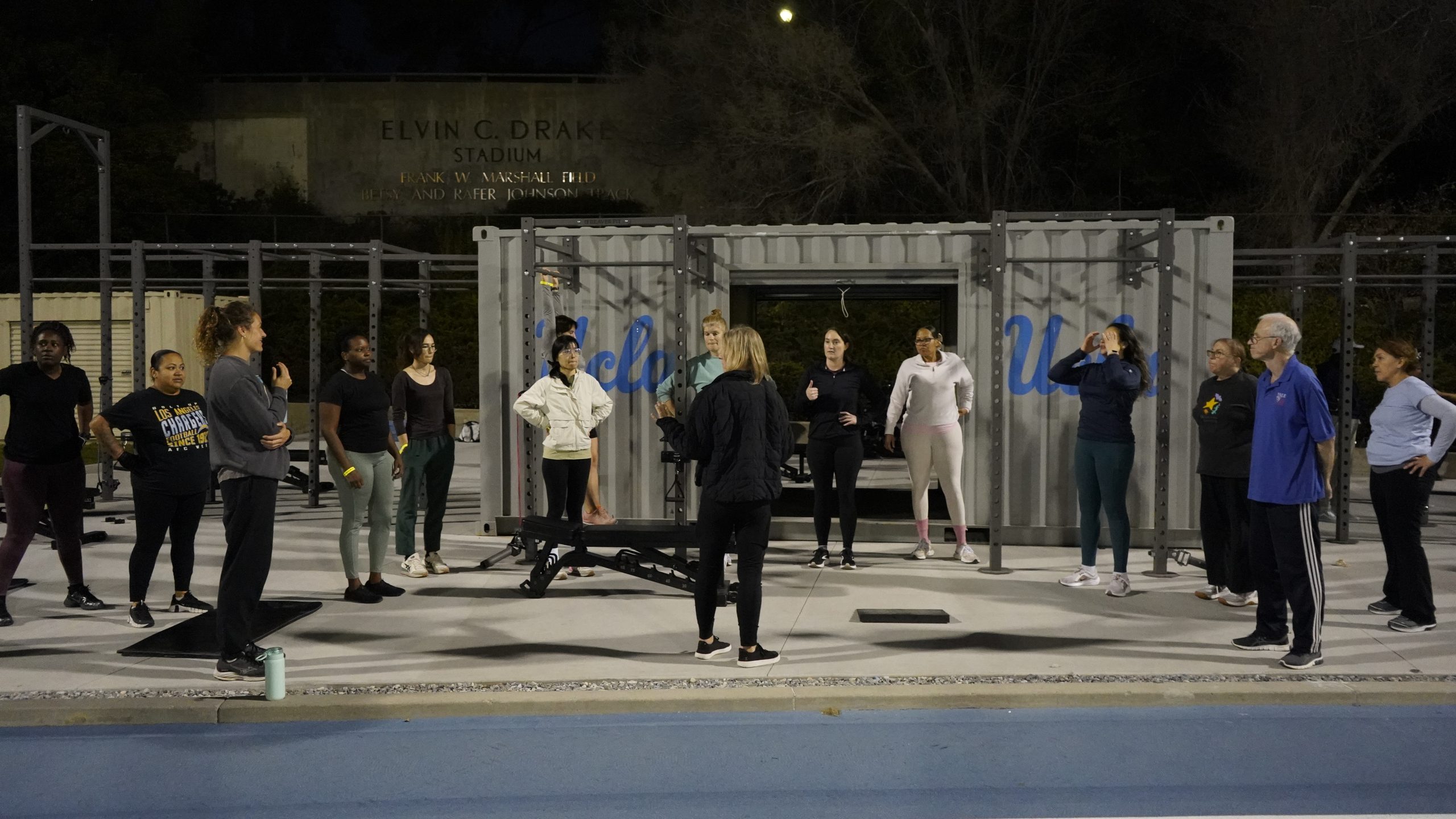
Over the past 15 years, Terry has been the creative force behind FitWell, UCLA’s fitness and wellness offerings for faculty and staff, which has grown to include multiple programs, including Bruin Health Improvement Program (BHIP), FitZone classes, FitWell EDU workshops, Warm Up to Work, Bruin MindFit, MoveMail and Bruin P.A.W.S. She also leads the Fitness Leadership Program, a year-long academic program that trains UCLA students and other Recreation members to become fitness instructors and personal trainers. Many of its graduates now teach group exercise, train clients and lead BHIP.
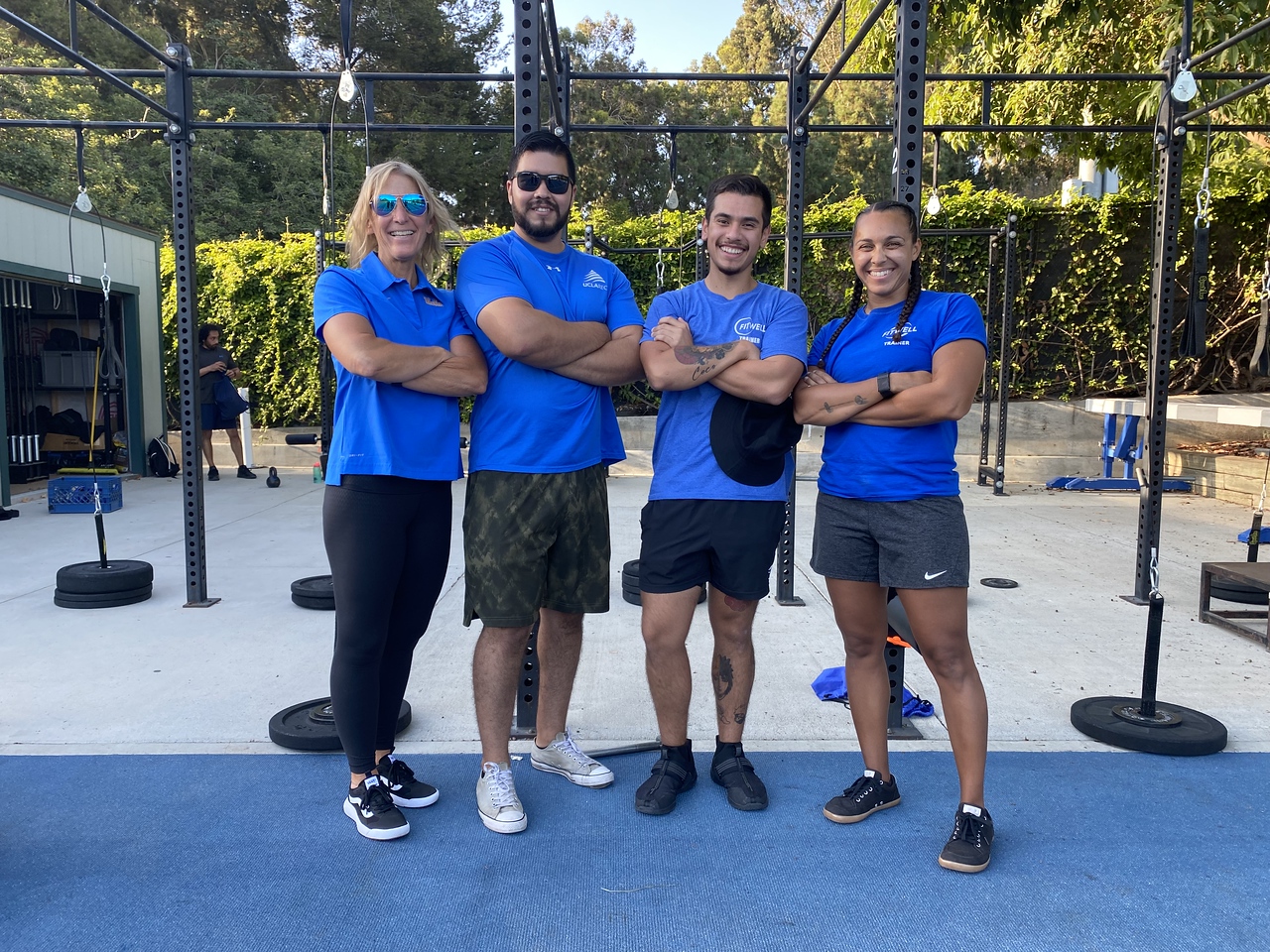
She credits the University’s support for the growth of these offerings. “They’ve helped me grow what I call the FitWell program, fitness and wellness for faculty and staff,” she says. “If you have an employee that is more fit, guess what? They’re less likely to be injured, and if they do get injured, they’re going to spend less time away from work and their injuries are going to cost less. And if you’re healthier, if you’re moving, you’re generally happier, your mood is better, so it creates a better work environment.”
Terry is also quick to share the credit with her team. “I have a wonderful staff of people that are also super creative and passionate, and we all make these programs happen,” she says.
Their impact is felt throughout the UCLA community. Terry has watched studious undergraduates try something new, like ballroom dance, and get hooked. She has seen hospital social workers and nurses find a much-needed reset. “They need a break and a chance to come outside and do something with others and not think about some of the sad things that they’ve been dealing with for the last eight to 12 hours,” she said.
Terry has many positive stories of individuals in the programs, but one story has stuck with her. Cynthia Cyrus, a doctor’s executive assistant, had long taken UCLA Recreation classes but did not enroll in the Fitness Leadership Program until later in life. Finding joy in movement, she went on to lead group exercise and boot camp-style classes for about decade.
“She was just the most positive person,” Terry said. “Her transformation and how it impacted her life just went out into her classes, because she had such a positive experience being able to learn this and then to be able to teach others.” When Cyrus passed, she left part of her estate to UCLA Recreation. Terry said plans are underway to dedicate a plaque in her honor.
Terry also hopes everyone who participates in their programs gets to take away that same sense of confidence.
“When you have a physical confidence, a physical efficacy, then you can say yes to experiences,” she said. “Somebody invites you to hike a mountain, or go on a vacation that’s going to require a lot of physicality — if you don’t have that capability, then you’re shutting yourself off to a lot of life experiences.
“The best thing I see is when they feel that confidence, like, ‘I can do stuff and I can trust my body to take me places and do things.’ People start walking around a lot differently and approaching life a lot differently.”
Terry works to dispel the myths that keep people on the sidelines: that you are simply built a certain way, or that results should come quickly. “Improving, getting stronger, becoming more fit is available to everybody at every age,” she said. She also cautions against treating exercise just as a way to burn off what you ate, which, she said, “creates such a negative relationship with movement.”
For those who haven’t had positive experiences with exercise, her advice is to keep experimenting. Her own mother disliked sweating until she discovered water aerobics. “She was a water aerobics fanatic because she was no longer sweating,” Terry said. “She loved to move in the water. She loved the social aspect of it, talking to everybody. When it feels good and it makes you feel better, then you’re going to want to do it again.”
And for those short on time, she says everything counts. “It all counts, and you can do it in a cumulative way,” she said. “You can break it up. Several short walks, totally great. You do not have to have this hour-long period. Thirty minutes, three times a week of strength training is going to be fantastic, and then short walks or longer walks. It all adds up and it all counts.”
She also knows how real the pressures are, which is why she is proud of programs that meet people where they are. Warm Up to Work, for example, offers a 15-minute session for housing, dining and facilities employees. “That might be the only time they have,” Terry said, “because they might be running to a bus or to another job after that.” Likewise, anyone in the UCLA community can sign up for MoveMail, which delivers a short exercise video at 10 a.m. and 2 p.m., as well as Bruin P.A.W.S., which provides a schedule of bite-size fitness pauses to incorporate throughout the day.
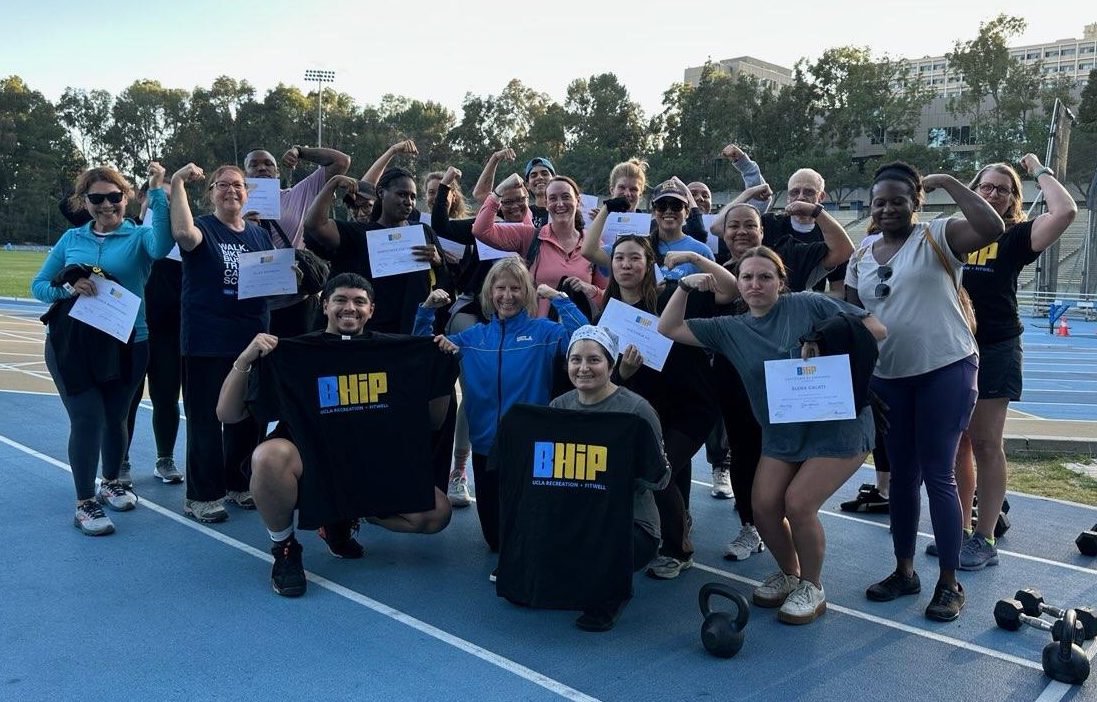
As a fitness professional, Terry practices what she preaches. Strength training is her main focus, and she plays pickleball and boxes about once a week each. A lifelong learner, she also frequently listens to online coursework while walking, combining her commitment to physical activity with her passion for continued education. “We don’t have to be perfect all the time,” she said, emphasizing that fitness is an ongoing journey rather than a destination.
As Terry reflects on her decades at UCLA, she hopes her legacy will be one of helping people recognize that caring for their physical health enriches nearly every aspect of life. She also hopes to elevate the fitness profession by preparing knowledgeable instructors who can continue helping others discover the value of movement. “That’s what I’ve tried to do with the Fitness Leadership Program: to take already bright UCLA students and teach them at a level that they can understand to be the best fitness professionals in the game,” she said.
From her earliest days officiating intramural sports, to leading programs that continue to support the health of the Bruin community, Terry’s career embodies a lifelong belief in the power of movement. For her, the greatest measure of success isn’t simply helping someone become physically stronger, but helping them develop the confidence and ability to embrace everything life has to offer.
Ultimately, fitness allows us to say “yes” to the experiences that can shape us. “They build your character,” Terry said. “And your character is how people know you and relate to you. And it’s really the only thing that lives on forever.”
connect articles
Connect Newsletter
Made to Move: Elisa Terry’s UCLA Fitness Legacy
“Our physical self is such a big component of who we are. If we are not expressing it, testing it, having fun, then we’re only living part of ourselves,” Elisa…

Connect Newsletter
The Beat Goes On
Connect Newsletter
Why Not Westwood?
Banner image: Young Galaxy Cluster, MACS J0553.4-3342 – Image credit: ESA/Webb, NASA & CSA, S. Fujimoto