


reflecting on a stellar career
the story of Jonathan Arenberg ’83, M.S. ’85, Ph.D. ’87
“The quest to understand how our universe works and our place in it is one of mankind’s oldest questions from the dawn of civilization.” For Jon Arenberg ’83, M.S. ’85, Ph.D. ’87, this quest has led to a lifetime of important accomplishments. A polymath who earned his undergraduate degree in physics and then switched to engineering for graduate school, he has worked at aerospace giant Northrop Grumman since 1989, playing crucial roles in major projects such as the Chandra X-ray Observatory, the James Webb Space Telescope and now the Habitable Worlds Observatory. His education and abilities put him in a unique position to understand theory and application, the science and technology necessary to make projects such as these successful.
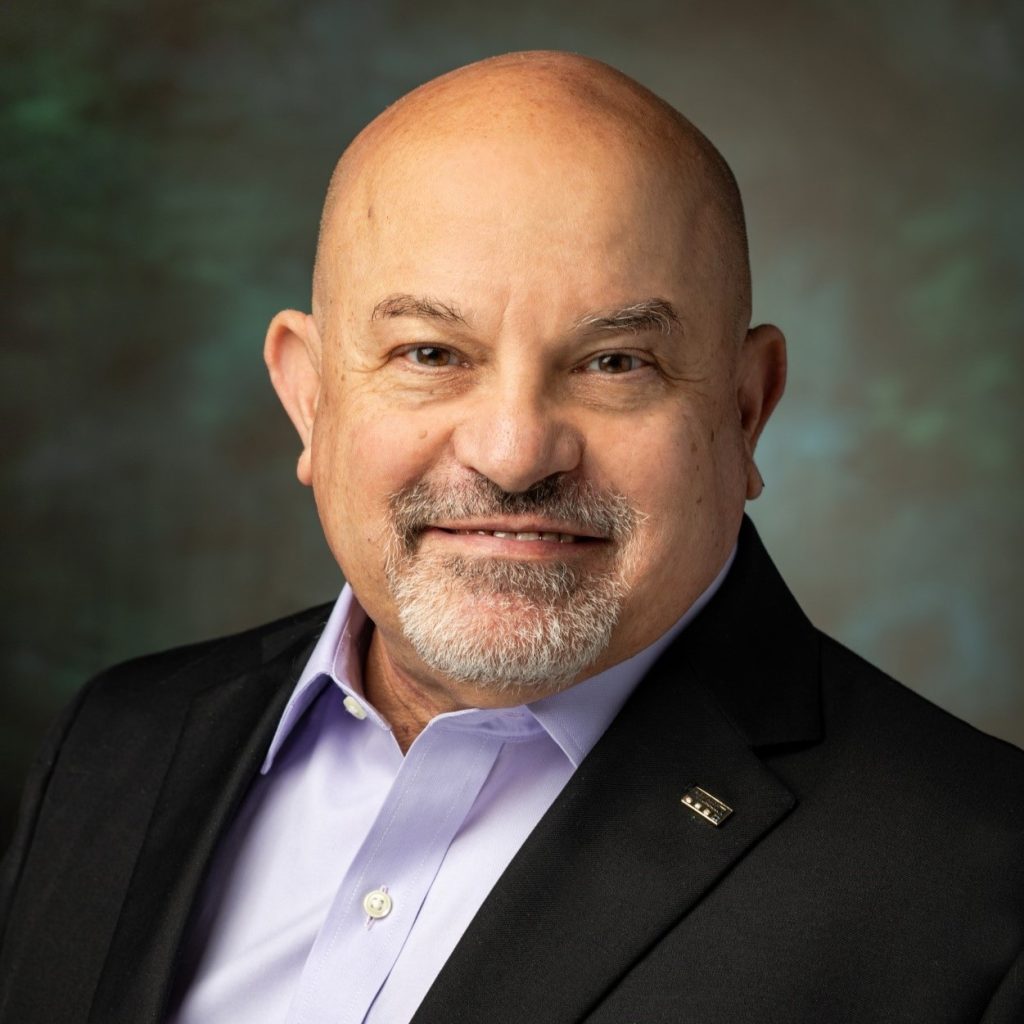
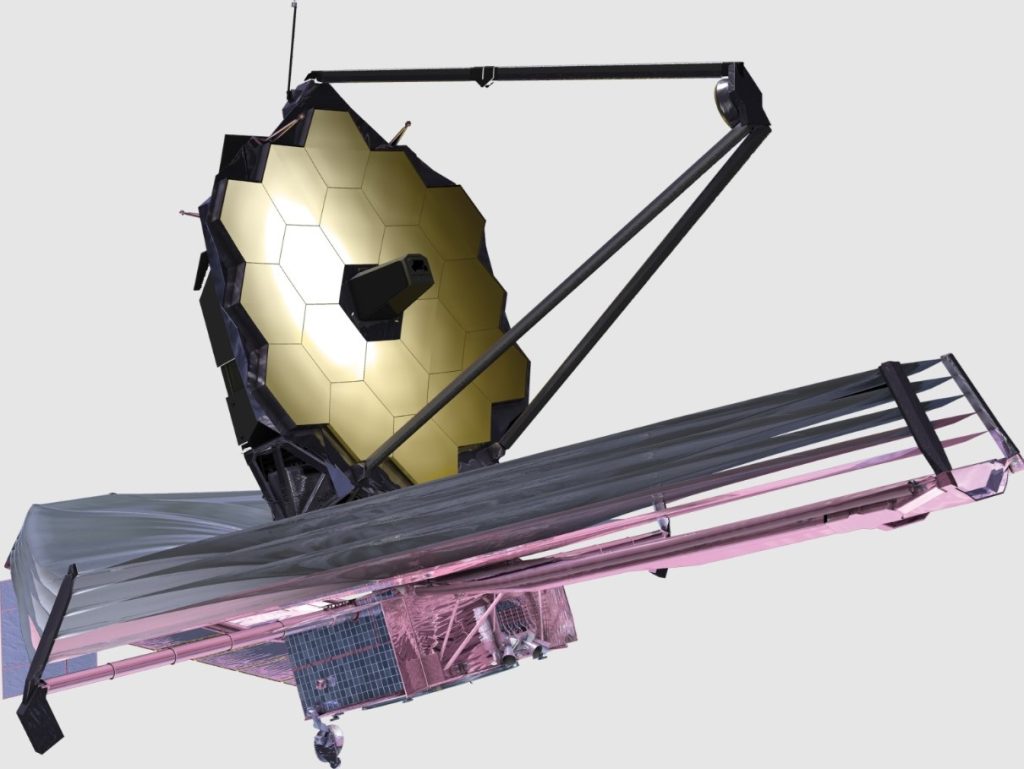
In 2020, Arenberg was honored with the UCLA Samueli Professional Achievement Award, celebrating both his aerospace milestones and his passion for the Bruin community. Since then, the James Webb Space Telescope, for which he led the system-design team and, ultimately, served as chief engineer, launched and has been a spectacular success. This is the largest telescope in space, and is equipped with high-resolution and high-sensitivity instruments, allowing it to view objects too old, distant or faint for the Hubble Space Telescope. It serves thousands of astronomers worldwide and advances the study of the history of the universe.
“On Webb, Northrop was responsible for the spacecraft, for the sunshield, for the observatory and telescope design,” Arenberg says. “We engaged the major subcontractors to build the telescope. We were part of the group that built the structure and we also performed the systems engineering role to integrate all of that. Then we put the entire flight system together in Redondo Beach [California] and worked with NASA to get it on the rocket in South America, and also play an ongoing role in science operations.
“I’m proud of the achievements of the whole Webb team and what we’ve done together and the fact that I got to play a role ꟷ it’s almost beyond words. We redeemed the promise that the Webb team had been making to the astronomical community and the public for decades and had done so in such a tremendous way.
“And then the fact that the first satellite I worked on, the Chandra X-ray Observatory is still operating and frequently operates with Webb to do things like detect the earliest, most distance black hole, only compounds my gratitude for having a career that let me have not only a job of a lifetime, but several ꟷ because each one of them is a highlight. I don’t know which one I would rank highest.”
The detection of that black hole is emblematic of the synergy between theory and observation.
“It is inexplicably large and it doesn’t fit with current models,” Arenberg says. “And that’s the real excitement, the detection of heavy elements in the early universe where our original theories wouldn’t have predicted it.
“It’s just a reminder that astronomy, astrophysics is an observational science and hardware is required to make the observations. This is the way engineers like me and all of my colleagues get to participate in pushing the frontier. The science wouldn’t get done if we didn’t build the hardware. And the hardware is this very cutting edge, very complex system that took literally thousands of people decades to build. And ultimately, it’s very human because it involves so many people.
“The James Webb involved about 300 science agencies of various sizes, and 700 companies. It was spread over 29 U.S. states, three continents and three national space agencies. Webb is truly an act of collective genius; everybody had to do their part.” The achievement was a triumph of human ability and ingenuity, but Arenberg also argues that the results it has produced, in addition to advancing science, nourish the human spirit, its thirst for knowledge and instinct for exploration.
“Yes, the hardware is there,” Arenberg says, “but in some respects it’s the people that animate the hardware with our desire and focus on mission success. The fact everybody’s pulling in the same direction is one of these very life affirming feelings ꟷ and those kinds of teams don’t happen all the time.
“That’s one of the great personal satisfactions of doing this kind of work, because you do it with this very large team. You don’t necessarily know everybody. But I was just at a conference and I ran into other people that were working on other parts of the mission, and it was almost like we were at a family reunion. We had all of this in common. So that human part of the engineering is also as fulfilling as the technical achievement.”
He says, “People appreciating even just the beauty of the universe is intrinsically valuable; in some ways it’s as valuable as the fundamental science and more.”
Arenberg’s latest project is to help both Northrop and the NASA community prepare for the next great flagship, the Habitable Worlds Observatory, which will be completed and launched probably long after he retires. This project may help add to one of humanity’s most eternal, ongoing questions: are we alone in the universe? Or, at least, how unique is Earth in its habitability for life as we know it?
He says the Webb telescope does a lot of exoplanet studies, but its capabilities are not sufficient enough to detect a habitable zone, Earth-like twin. Habitable Worlds, on the other hand, is being designed specifically to look for these Earth-like habitable planets in other solar systems.
Arenberg is confident that the coming generation of engineers, physicists and other essential contributors will pick up the mantle when he eventually retires. Currently, he helps foster that sense of togetherness and common purpose as a co-founder and chair of UCLA Alumni Northrop Grumman, which encourages a culture of giving back to build a strong community.
“UCLA played a strong role in my professional success and I enjoy giving back,” he says. “I believe that’s my role as a senior engineer ꟷ to share what I’ve learned to guide my younger colleagues. It is fun to go back to campus and talk to the young engineers about the practice of engineering, how we build things like James Webb and how they can contribute.” “The current generation of engineers and scientists that I get to work with are very well educated, very bright and ꟷ equally important ꟷ enthusiastic about facing the challenges of these missions and eager to both learn and contribute. I’m very enthusiastic about the future of the field. I’m not ending tomorrow; I can’t see the finish line, but I can probably see the last couple of curves. I don’t worry about the fact that the current generation will have issues. It’s like what President Kennedy said, ‘We are doing them not because they are easy, but because they are hard.’ I think they will do spectacularly in solving those issues, just like the generations before them.”
connect articles
Connect Newsletter
The Beat Goes On
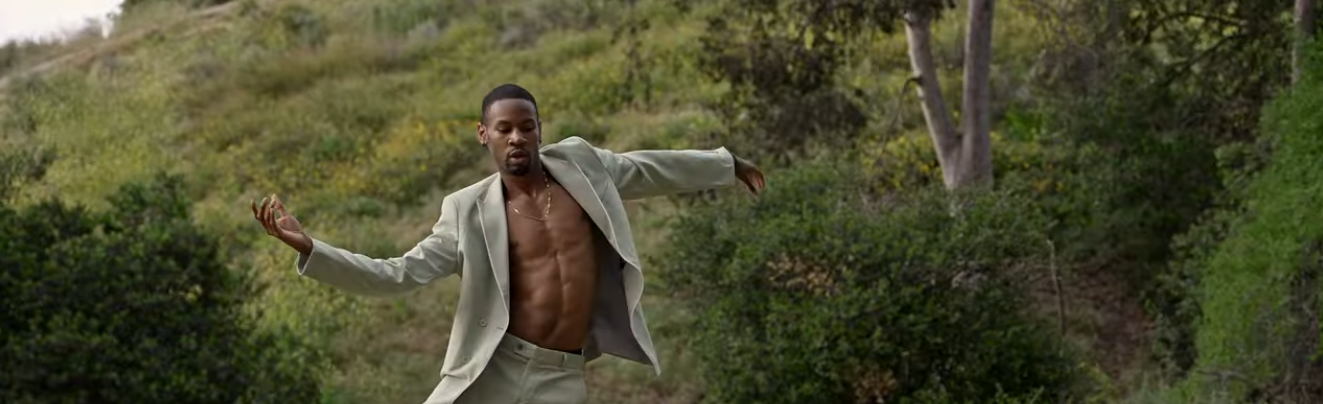
Life can be very unpredictable. Such is the story of G’bari “GQ” Gilliam ʼ16, a hip-hop dancer/choreographer at the height of professional success when a health trauma earlier this year…
Connect Newsletter
Why Not Westwood?
Connect Newsletter
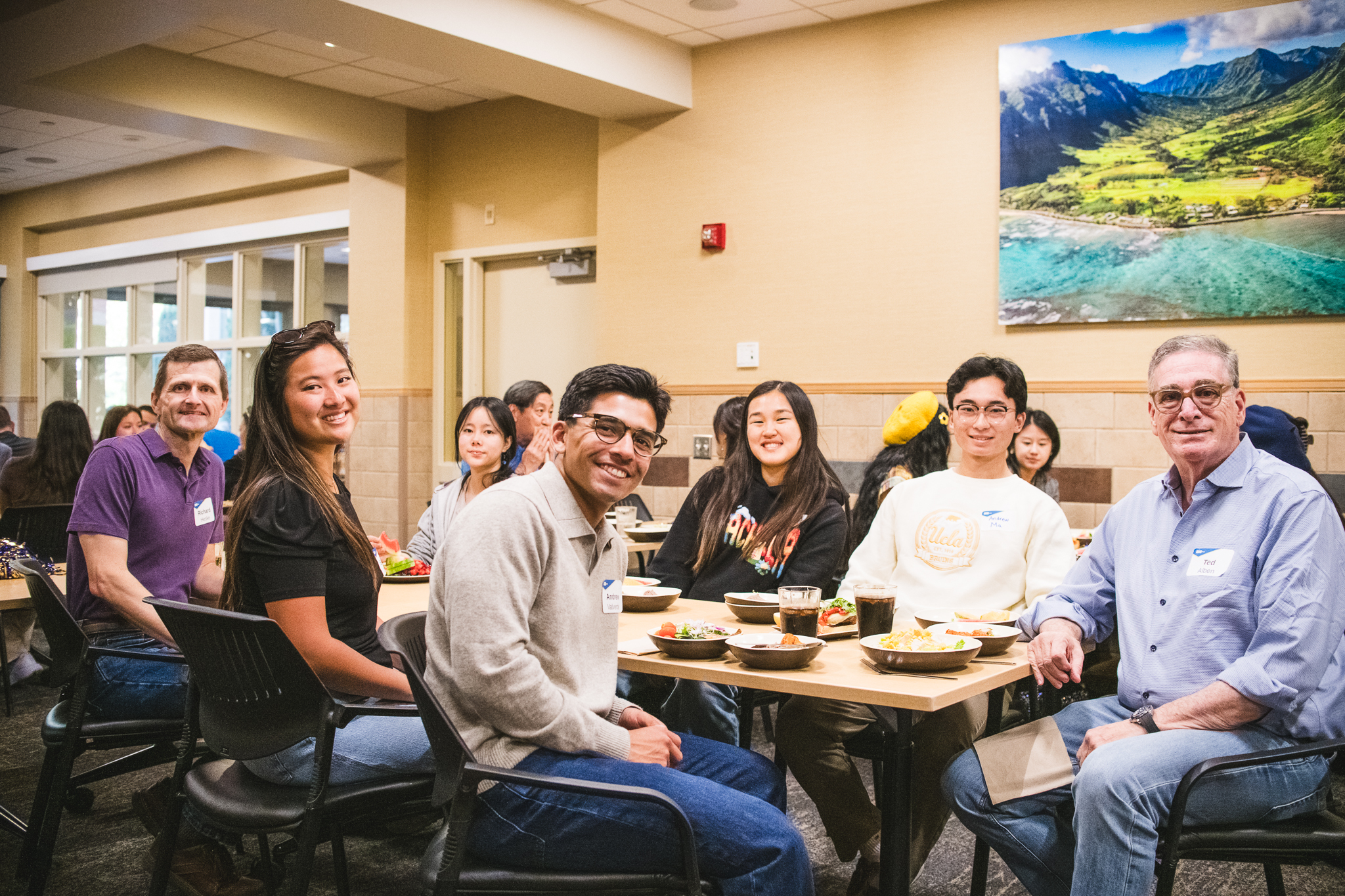
Alumni Mentors Make a Difference
Banner image: Young Galaxy Cluster, MACS J0553.4-3342 – Image credit: ESA/Webb, NASA & CSA, S. Fujimoto