
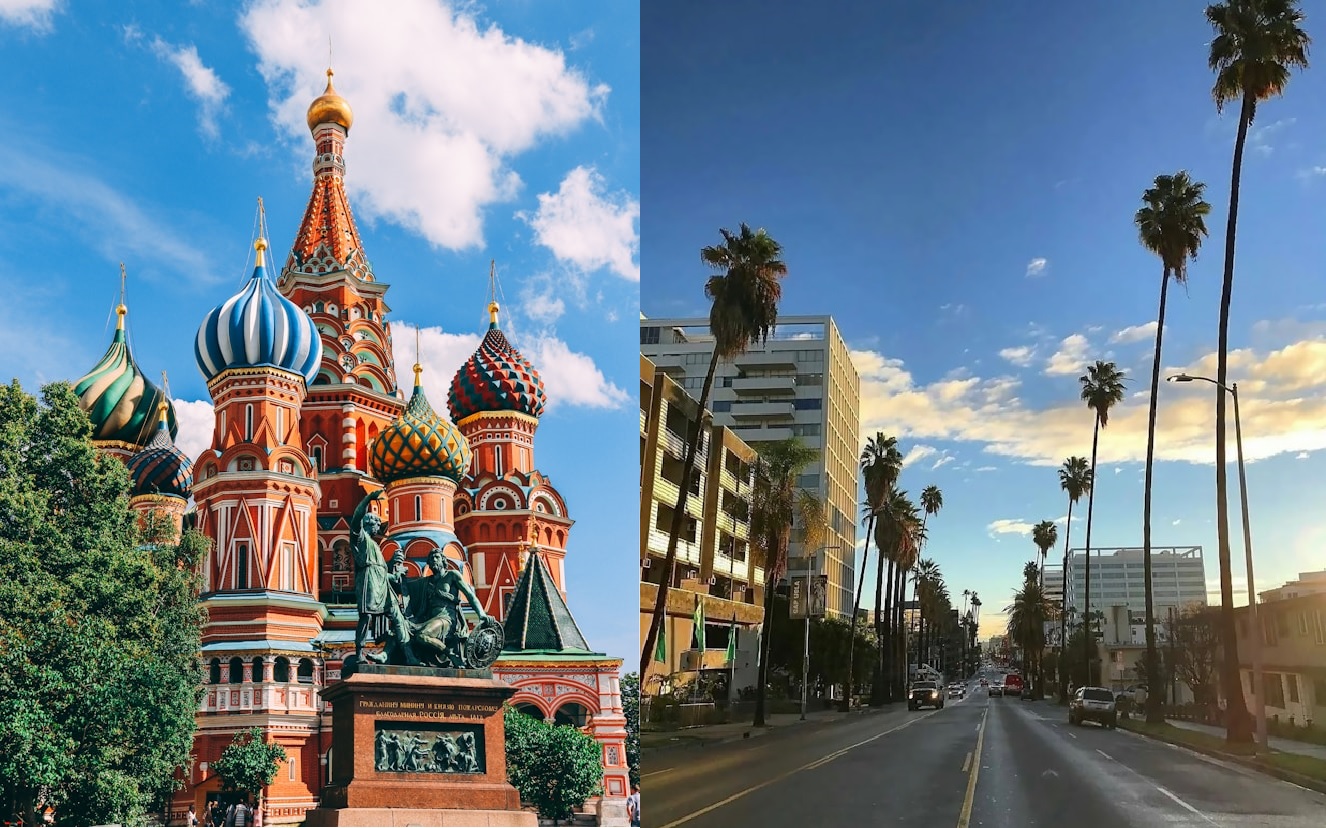
From Russia With Love for L.A.
(Editor’s note: due to the topics and opinions expressed in this article, we are concealing the identity of the person being interviewed and will refer to her only as Natasha.)
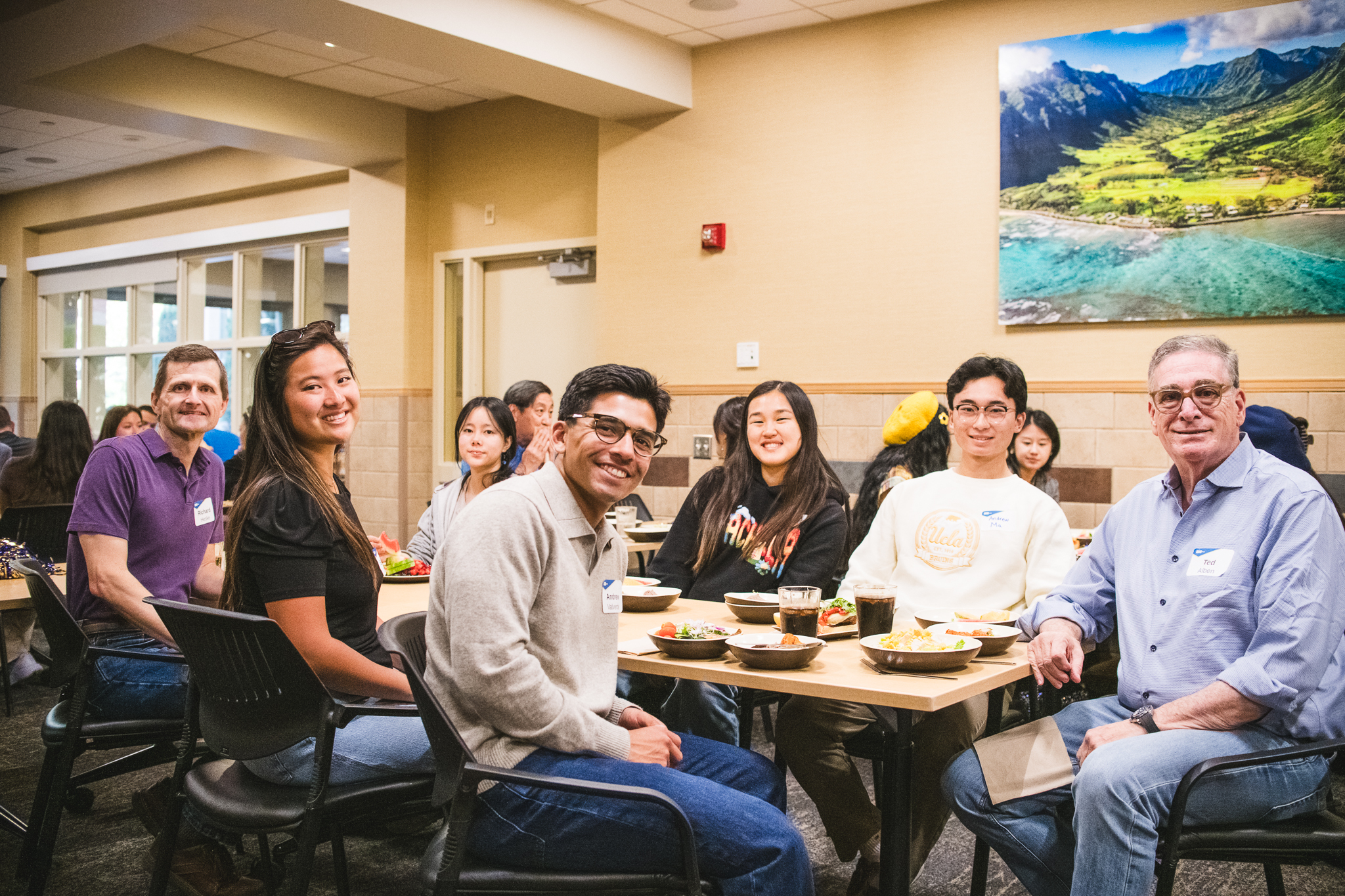
One sunny afternoon during a San Fernando Valley alumni networking event, I struck up a conversation with a woman in her late 30s, who was born and raised in Moscow, and now happily lives and studies in Los Angeles.
Natasha was well educated, having obtained two degrees in Moscow: the first in economics from the Russian Academy of Foreign Trade; the second from the Institute of International Business. A lover of learning, she was always taking classes and gained over 20 years of work experience, including in IT where she implemented software for big Russian companies, and working for the audit firm Grant Thornton. She says, “I tried to get as much knowledge as I could, but I’m still learning, still studying, because the world is changing constantly, so I need to upgrade my knowledge of everything.”
In 2019, Natasha came to Los Angeles with the hope of getting into a master’s program at a “great university.” She chose California for the great weather and for its many reputable universities. She ended up completing three certificate programs at UCLA Extension from 2019 to 2024 in accounting, finance and general business studies.
Unfortunately, during her first year at Extension, the pandemic shut down in-person instruction and her classes were all taught online, limiting her interaction with classmates. By the time she took her last certificate program, society and the classrooms had completely opened up, campus activities had resumed and she was living the American life she had always dreamed of.
She said, “In Russia, we have a perception that education in Britain and the United States is the best education you can get. I actually agree, because the books that I have for my courses are so much better than Russian books. You can get all the knowledge from the book, plus when you have a great professor, there’s a great synergy there.”
Our conversation veered into comparisons of culture and politics between our two countries. She says, “I’ve traveled throughout Europe and Asia and now the States. From my viewpoint, people are people everywhere you go. There are some cultural differences, and each person has their pros and cons, but in every corner of the world, people have similar problems.”
In Russian propaganda, she says, America is a demonic country that’s trying to conquer Russia and its resources. They’re taught that American people are evil. But after living in Los Angeles, she completely disagrees. She says, “Here in Los Angeles, people are a little bit different, because there’s so many cultures mixed together, but still all these people are Americans who value their freedoms: freedom of speech, freedom of expression, etc. and this kind of mentality makes it different.” She goes on to describe how Angelenos are free to dress however they like to express themselves and people are respectful of one another for these differences.
Not so in Russia, she says, where people have a mental block. She explains, “When I was growing up in Russia in the late ’80s, early ’90s, it was a period of time during the collapse of the Soviet Union, and it felt kind of like the United States where freedom was absolute and you can do whatever you want. But it was also not civilized and nice because people did very bad things and there were no police to stop them. You would see the Russian mafia shooting each other in the center of Moscow even though it was not legal to own guns. The police were controlled by the mafia and corruption was everywhere.”
Nonetheless, she described Russia during this time as a free society, which enjoyed freedom of speech, an independent press and citizens could say whatever they wanted against the government without repercussions. Slowly this began to change. “This frog has been boiling for a very long time. Little by little, piece by piece,” she alluded to how their democracy began eroding, “and now we actually don’t have any opposition (to Putin’s government).”
“That’s why I’m grateful that I’m here now, where I can express my position and not go to jail immediately.”
Many figures who oppose this current regime have left the country or stayed silent at the risk of being jailed or killed at the hands of the government. This included Putin’s rival, opposition-leader Alexei Navalny, who died in 2024 in a Russian prison.
She says, “In the U.S. Congress, the representatives fight for every vote. In Russia, there is no fight because it’s 100% in favor of Putin every time. Sometimes even dead representatives cast their vote for him.”
Natasha says Russian people live in fear. “People are afraid to say anything and try to avoid sensitive topics when talking to each other or family.” Mainly because they never know who is listening and who might report them. She describes Moscow as having one of the best surveillance systems where cameras are everywhere with facial recognition. People fear that the police are listening for anything inappropriate being said so they can arrest them. It’s become common knowledge that police have an arrest quota they need to meet.
She says, “Since 2022, we got very strict legislation about what can be considered a punishable act. If you say anything bad about the current administration, about Putin, about the war, about anyone in power, you can go to prison for eight years. It’s absolutely crazy.”
Natasha says the independent press has been shuttered in Russia, where the state controls all media. Social media platforms like Facebook and Instagram are blocked in Russia and Meta is labeled an extremist organization. Ironically, WhatsApp continues to thrive as one of the most popular messaging platforms in Russia, despite it being run by Meta. The largest social media platform is VKontakte (VK), which is the Russian version of Facebook. But, she says, because everything is controlled or monitored by the government, posting a critique can land you in jail.
Since coming to Los Angeles, Natasha has been active with her newfound freedom to express herself in social media. Yet, she acknowledges this puts her at risk, especially upon her return to Moscow. She says, “That’s why I’m grateful that I’m here now, where I can express my position and not go to jail immediately.”
We switched topics to discuss the Russian perspectives regarding the war in Ukraine. When the war began, Natasha says people were shocked. Even Putin’s closes allies were shocked, but they had to pledge allegiance to him no matter what. There was a small group of hawkish Russians who were prone to violence and were eager to go to war, but she says, “The majority of Russians are just common people who don’t want to die, don’t want to kill anyone; they just want to live their lives and get through the day.”
There were protests that erupted in Moscow when the war started that were quickly put down by the police and protesters were jailed to discourage future antiwar activity. She says at first the Kremlin justified the war by claiming that Ukranian leadership were Nazis, despite President Zelenskyy being Jewish. Later, the narrative switched to Russians living in the Donbas and Lugansk region were being persecuted by Ukraine.
While the larger war began in 2022, the conflict really started with Russia’s annexation of Crimea in 2014. This was presented in Russia like it was a referendum voted on by the people in that region. Natasha was conflicted with this narrative because, while there is a large population of Russians in Crimea, she has always viewed it as Ukranian territory. Yet from the government’s perspective, it was the majority Russian population in Crimea who voted to return to Russia.
After the Russian invasion, Western countries mobilized to exert heavy sanctions. Western companies also began moving their businesses out of Russia, including Visa and Mastercard. The hope was to collapse the Russian economy and bring them to the negotiating table for peace. But Natasha claims the sanctions actually did a good thing for the Russian economy. That’s because oligarchs who were traveling all over the world were forced to return to Russia with all their money and spend it there. When their accounts and assets were frozen by the European Union, these very wealthy Russians retreated home where they were able to access their other wealth stashed away in untouched accounts.
Like these oligarchs, Russian people were also able to skirt sanctions on products. Natasha says, “Russian people are creative, and they found ways to get all the sanctioned products from different countries.” Trade agreements with places like Iran, China and Hong Kong kept the grocery shelves stocked and buying goods off the black market became commonplace. Coca-Cola was among the U.S. companies who vacated their plant, but what Russia did was convert their factory into a Russian cola factory, creating a similar product to Coke.
Living in Los Angeles during the Trump Administration, Natasha says she’s starting to see some similarities to Russia. In Russia, she says, it took a couple of years to dismantle independent media so there is just one state-controlled media. Whereas in the U.S., political polarization has led to a distrust of the media, dividing people into two camps: consumers of either right-leaning media or left-leaning media. Unlike in Russia, she says, “There is only Fox News (Russian edition).”
Natasha says the terror she’s seeing happening in the streets of American cities from ICE operations has reminded her of tactics used back home. Deportations have always taken place in every administration; however, “it was never like a terror thing. You could at least count on due process. You wouldn’t see this level of violence towards regular people who aren’t criminals.”
She thinks that sort of violence may be effective in Russia but she’s not sure it will work in the U.S. “People in the United States are more fearless. They’re not used to this. They still believe in freedom and they will fight back. Plus, there are a lot of guns here. In Russia, we don’t have guns.”
Despite the changing times in America, Natasha is still very grateful to be here. The freedoms, the weather, the educational excellence, it still can’t be beat. However, she wants Americans to know what Russians are really like. “Russia has all forms of coldness. The climate, the politics, even the gloomy personalities, because people are oppressed. However, we are like coconuts. After you crack open that hard shell, it’s very nice inside. We are very nice, soft and warm inside.”
Bruin news
View All
Connect Newsletter
The Beat Goes On
Life can be very unpredictable. Such is the story of G’bari “GQ” Gilliam ʼ16, a hip-hop dancer/choreographer at the height of professional success when a health trauma earlier this year…
Connect Newsletter
Why Not Westwood?
Connect Newsletter