
Meet the Prez – Cinthia Flores
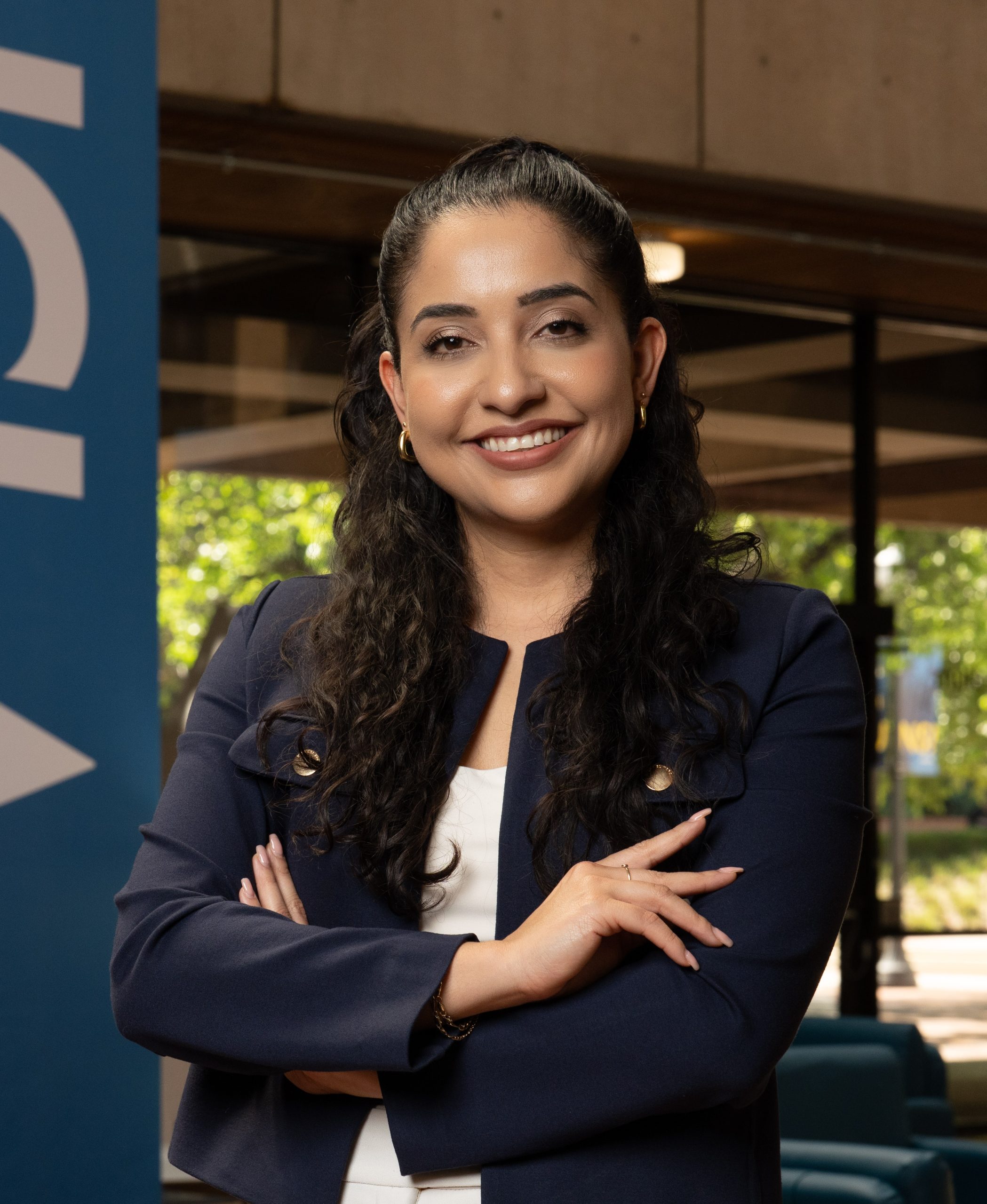
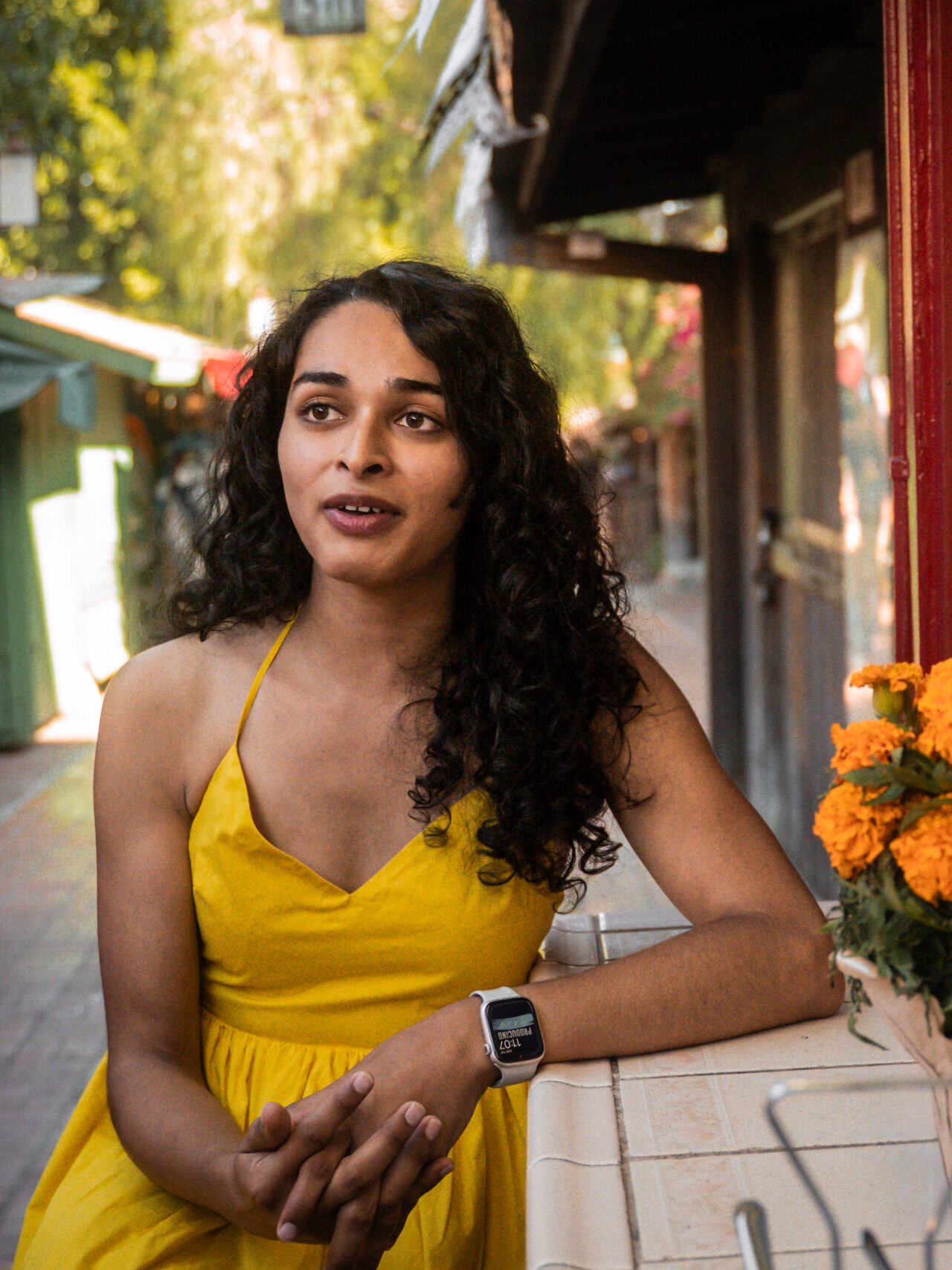
On July 1, 2026, Cinthia Flores ʼ10 began her two-year term serving as the president of the UCLA Alumni Association. The daughter of a single mother, who immigrated by herself from El Salvador, she grew up in East Hollywood and came to UCLA majoring in political science and double-minoring in labor and workplace studies and Chicana/o studies. She became the first Latina to be elected president of Undergraduate Student Association Council (USAC) and was the first in her family to graduate from high school, college and graduate school, where she received her juris doctorate from UC Irvine in 2014. While at law school, she also served as the student regent for the UC Board of Regents.
She’s built a career as a labor and immigration attorney. In 2020, she was appointed by Gov. Gavin Newsom to the California Agricultural Labor Relations Board, where she served for six years adjudicating cases arising from the California Agricultural Labor Relations Act.
Among her various leadership roles, Flores is past president of the Latina Lawyers Bar Association and is the current president of Latinas Lead California. Her other UCLA involvement includes participating in the UCLA Latino Alumni Association, First Gen Network, Los Angeles Downtown Network and the Academic Advancement Program Alumni Network.
In a recent interview, Flores shared what has shaped her values and motivations as a servant leader and her vision for UCLA Alumni during her tenure.
My values are informed by my lived experience, which primarily centers on justice, equity and fairness. As a first-generation high school, college and law school graduate, I understand intimately the obstacles of access and affordability on the path toward success. For example, Latinas only make up approximately 3% of the legal profession across the country. It shouldn’t have to be that hard. We can make the path more equitable and increase access to people of all backgrounds. I view UC and UCLA as an instrument for upward economic mobility.
I chose to attend UCLA because my classmates were applying to college so I felt that was what I was expected to do [as a high school senior]. I didn’t have other examples. At the time, low-income students were only afforded four fee waivers to apply to college. When I told my college counselor I’d be applying to UCLA, he told me not to. He said I didn’t have the grades, I didn’t have the test scores and that I shouldn’t apply — I’d be wasting a fee waiver. I was in student government and journalism, I was part of the honors program and took some AP courses. And so me being me, I said, well, I know who I am and I think I have a pretty good shot.
Admittedly, when I applied to UCLA, I didn’t know it was “the” UCLA. I just knew it was in Los Angeles and that I wanted to stay close to home, close to family and that I love my city. Growing up, my uncle worked as custodial staff in Bunche Hall. He sometimes took my brother, my cousin and me to play soccer in the Sculpture Garden. I also used to clean houses with my aunt on the Westside, where we would take the No. 2 and No. 4 bus getting off on Doheny Drive. Growing up in East Hollywood without a car, I wasn’t familiar with the Westside, but I would see people on the bus wearing UCLA-branded clothing, so I knew they had some connection to UCLA. When I became a student, it finally made sense to me when I took the No. 2 and No. 4 bus to get home, that the route to UCLA had been in front of me all along. It was a full circle moment.
I wanted to do something that focused on people and service and civic engagement. My first year I spent getting to meet as many people as possible from different backgrounds and different perspectives. I participated in student groups and tried to understand what campus life was about. Through that process, I decided to study political science, because I believed it would provide a well-rounded education on the science of people with relation to systems. What are the systems in which people function and how do those systems propel or hinder people? What’s the responsibility of those elected into these systems to ensure that there’s equity and justice in the world; that these systems are working to benefit people? I’m a people person so political science just made sense.
At UCLA I learned many things in the classroom, but it was how I put them into practice that has shaped how I navigate the world. It’s the actual practice of engaging people from different backgrounds who may have different perspectives that challenge your own. My service and leadership roles at UCLA became the foundation of my leadership style — how I show up, where I have strengths and where there’s room for growth. As student body president, I learned how to be an executive and a legislative officer at the same time, how to build coalitions, work with different kinds of people, how to pull resources, and how to develop authentic relationships to work towards achieving a goal. The most important part was developing my critical thinking skills. This is the skill that’s required to identify issues and find solutions.
I first joined the Alumni Association Board in 2020 during COVID. We had to pivot and align our priorities with the times, whether it was providing career, health and safety resources to alumni, or keeping in close touch with our Bruin community in the virtual space. During my second term, we focused on our strategic plan and the path to implementation. Our strategic plan was focused on reimagining alumni engagement and effectively communicating the value of the Alumni Association.
My decision to run for president was largely informed by the immediate past president Paco Retana ʼ87, M.S.W. ʼ90. His mastery of understanding people and organizational culture allowed for greater and more authentic participation in the Alumni Association. The Board today is very engaged and I think it’s in large part due to an organizational culture that has embraced curiosity, teamwork, servant-style leadership and being receptive to new ideas. I’m so grateful to have inherited such a good board culture, because I think that provides us a degree of stability so we can focus on what needs to be done to take us to the next level. Honestly, it makes me really excited for what’s to come.
I’m a leader who leads by example. I understand leadership to be the intersection of trust and commitment. People have placed their trust in you to be able to execute this job, and your commitment is not only to do the work, but to everybody who is entrusting you with this job. I’m committed to making myself as available as possible, to being an active listener, to checking in periodically to ensure that we’re all in alignment. You can’t lead people if you’re not in alignment with them.
Being a leader at UCLA during this moment in time is not unfamiliar to me. When I was USAC president in 2009-10, the University was undergoing a significant budgetary crisis, as a direct outcome of the national recession. We advocated for students, putting together a Bruin stimulus plan of short-term loans, keeping certain services that were essential, like Night Powell and Covel Commons study hours, and we fought against fee increases. Even as a student regent, I understood the issues from a broader context as UC was going through a presidential transition at that time and I knew that might impact the student body. Challenges will come our way. I’ve had the perspective of knowing what my role and responsibilities were, while at the same time understanding how the larger ecosystem affected us.
What this time requires is effective communication of what UCLA is. It’s an institution of higher education, an instrument for groundbreaking research, a place that develops leaders in every sector in the state of California, across the nation and around the world. UCLA is one of the greatest service providers in the L.A. metro area, whether it’s in education, healthcare, business, the arts, etc. Our alumni are our best ambassadors. They are a direct reflection of what an investment in UCLA can produce. It produces doctors, lawyers, Nobel Prize winners, philanthropists, change agents in communities and leaders of tomorrow. There’s a unique opportunity for the Alumni Association in this moment to clearly articulate our value as a university and as alumni.
In the next two years, my goals are the following: be of service to alumni, systematically engage future alumni (students) and center the alumni identity. When I think of reimagining alumni engagement, it means making sure we’ve made ourselves available and accessible to alums, meeting them where they’re at and, when possible, providing them with resources to meet their own needs. Regarding students, we can be of service to them now. In a rapidly changing world where the proliferation of AI may impact entry level jobs, we need to develop a better understanding of these changing dynamics and work on connecting students with alums more senior in their profession who can help bridge some of the unknowns. Lastly, the idea of centering the alumni identity is a true Alumni Association value proposition. It means identifying alumni, gathering their thoughts on what is valuable to them and doing it at a scale that leads to a general understanding of what being a UCLA alum means. And in that process, alums may develop a stronger sense of belonging.
What keeps me grounded these days is developing, maintaining and expressing my gratitude. In a fast-paced, demanding world, where the stakes are increasingly high, having a standard practice of gratitude has helped me. We’re doing all these things and meeting objectives, but at the end of the day, we’re just grateful to exist and be and share and belong.
UCLA changed my life. It changed my family’s life. It has the ability to change people’s lives in future generations. While I feel indebted to the University, it’s really the people at the University that make the University what it is — an instrument for positive change. I’m so grateful for the classmates, mentors, faculty and staff from UCLA who were my support system and contributed to my development. I want to make sure that other people have the same opportunity to have that unique experience.
I want alumni to know that I am humbled to serve in this position as your president. But while there’s a president, there’s a board of directors and there’s incredible staff, this is your Association, too. I invite you to be a part of our work. I invite you to be engaged with our plan of action, to participate in our programs. It’s your Association. We are in service of you.
Related articles:
Excellence in Action: Cinthia Flores
Recent Articles
Bruin news
View All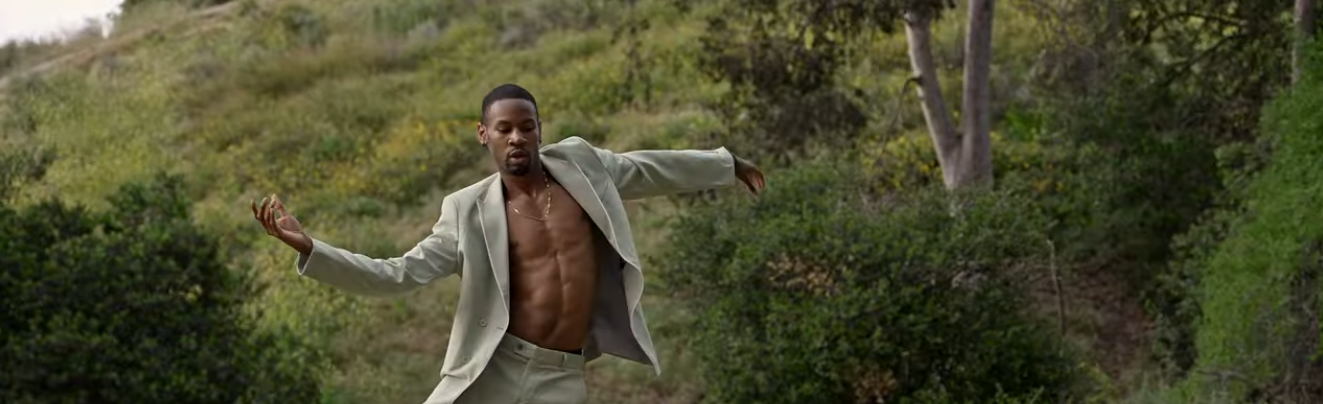
Connect Newsletter
The Beat Goes On
Life can be very unpredictable. Such is the story of G’bari “GQ” Gilliam ʼ16, a hip-hop dancer/choreographer at the height of professional success when a health trauma earlier this year…
Connect Newsletter
Why Not Westwood?
Connect Newsletter