Linda C. Garro
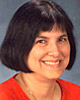
When Professor Linda Garro left a tenured faculty position at a medical school to join the UCLA Department of Anthropology in 1997, she sought not only the opportunity to teach in her field but to guide students as they developed and honed their own academic interests. With degrees from UC Riverside, UC Irvine and Duke University, Garro credits her commitment to teaching to several exceptional professors whose direct and personal style of mentorship offered role models while facilitating opportunities for Garro to engage in academic endeavors. Offering courses that range from medical anthropology and psychological anthropology to research methods and Native American health issues, Garro incorporates diverse readings and analytic styles in order to deepen her students’ appreciation of alternate perspectives on those subjects. One student remarks, “Dr. Garro literally and radically changed the way I think. She gave me new glasses with which to see the world, which I consider a rare education.”
Since arriving at UCLA, Garro has helped pioneer a number of teaching-related efforts, including the anthropology department’s Mind, Medicine and Culture (MMAC) interest group. With its roots in a student-run endeavor, MMAC transformed through Garro’s input into a weekly seminar that brings together faculty members, postdoctoral fellows, graduate students and undergraduate students. She has further bridged the divide between undergraduate and graduate students by bringing them together in classes organized around generating knowledge about health and well-being in family contexts using data collected by the UCLA Sloan Center. Garro also has teamed up with another faculty colleague to develop innovative courses that create bridges between psychological and medical anthropology, and linguistic anthropology. As she remains heavily committed to individual student mentoring, Garro currently serves as the chair or co-chair of seven doctoral committees and mentors several undergraduate students on individual research projects.
Garro’s own research has addressed a variety of topics, including representing cultural knowledge about illness; variability in cultural knowledge; health care decision making; health and well-being in everyday family life; illness narratives; and remembering as a social, cultural and cognitive process. Research sites include a Purépecha (Tarascan) community in Mexico, several Anishinaabe (Ojibway) communities in Canada and middle-class families in urban Los Angeles. She is co-author, with James C. Young, of Medical Choice in a Mexican Village and co-editor, with Cheryl Mattingly, of Narrative and the Cultural Construction of Illness and Healing. Her articles have appeared in American Anthropologist; American Ethnologist; Culture, Medicine and Psychiatry; Ethos; Medical Anthropology Quarterly; Social Science and Medicine; Transcultural Psychiatry and other journals. Her work has been honored with the Society for Psychological Anthropology’s Stirling Award and a five-year career award as a National Health Research Scholar for the National Health Research and Development Program of Canada.
Garro consistently is applauded by her colleagues and students for the unique combination of dedication and high academic standards that infuse her concern for student learning. A graduate student sums up Garro’s success as a mentor, noting that her “belief in my abilities pushes me to work harder and strive to be the best anthropologist I have the potential to be.”
Our Proud Partners


