Aegean Chan ’06
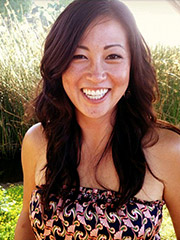
Living healthy and preserving your youthful appearance is an important issue for millennials. Aegean Chan ’06 is no different. As a dermatologist, she’s helped many people combat skin diseases and other harmful agents affecting the skin. But she feels her most important calling is to educate others on real preventative skin care.
Q: Why did you choose UCLA and what does it mean for you now?
For a girl from Thousand Oaks, UCLA is awfully close to home. But it really only took one visit for me to see past this. I distinctly remember how happy the students I met were with their educational experience and, beyond that, what an incredible time they were having outside of class. And in truth, that’s what really drew me to UCLA; the dynamism of the students and the opportunity to have so many unique experiences. It’s been almost nine years and I still get nostalgic when I think about my years at UCLA. They were some of the best times of my life.
A few of my Sproul freshman floor mates remain some of my closest friends - in fact, many moved out to NYC and we get together on a weekly basis. I also have a wonderful group of friends from my time working with Campus Events Commission. The fact that one could be a south campus major and still be a part of groups and projects that were distinctly different from those areas of concentration is an example of what makes UCLA such a special place. In my experience, the university fosters a culture that is open and welcoming. This culture provided me with the freedom to explore interests that were outside of my comfort zone. Even though I’m incredibly busy with my residency training now, I still have the drive to experience new things and constantly learn about everything - and I thank my time at UCLA for instilling those qualities in me.
Q: Where did your interest in medicine start?
When I was growing up, I always envisioned myself as a pediatrician, putting band aids on the imaginary boo-boos of my dolls. I fell in love with the human aspect of medicine while working at a free medical clinic for the uninsured during high school. Subsequently, my experiences volunteering at the UCLA medical center as an undergrad really helped me see the immense impact the physician has on a patient. Those encounters I had with stroke patients in the ER and speaking with lung cancer patients helped form the empathy that has sustained and motivated me throughout my training.
Q: When did you start developing a specific interest in dermatology?
I’ve always been a beauty/skincare junkie but never seriously considered it for my career. However, I kept an open mind throughout medical school and when I got the chance to experience the day to day work in dermatology, it clicked for me. I found that because you were focused on just one organ, the skin, you could afford to spend more time developing a relationship with your patient and addressing the psychosocial implications of their disease. People care about their skin because they can see it, it’s a medical issue that is immediately tangible for them, and I think being able to partner with your patient in that way makes dermatology unique.
Q: Do you feel like your work goes beyond dermatology?
Definitely. I think people are very affected by skin disease. Even though it may not be life threatening, it’s their quality of life, how they see themselves – it’s how they perceive people are seeing them. If you have a skin disease that is very visible, like psoriasis, it can affect their confidence in work and relationships. There are studies that have shown that the quality of life of patients with severe skin disease is affected just as much as other chronic diseases like diabetes or high blood pressure.
Q: What do you hope to do with dermatology?
To be honest, I’m still figuring that out, trying to see out what my niche will be. I feel the draw of academic medicine, as there are many skin diseases that are just beginning to be elucidated and there is still a lot of work to be done. I also really enjoy the teaching aspect of medicine. I became who I am through mentorship and the time people have taken to teach me so it’s important for me to give back that same way. At the end of day, I want to be a great doctor to my patients and if along the way, I can innovate the field and move it forward, that would be a bonus.
Q: Why did you start your blog?
Even before I started residency, people were always texting me or calling me to ask for my advice on various skin issues and what products they should be using. I realized that people were overwhelmed by all the hype and products out there and were looking for someone they trusted to guide them in the right direction. I started my blog because I wanted to help educate the consumer in an unbiased way. I am guided by evidence based medicine and have no loyalties to any companies in the suggestions I make. My biggest goal is to dispel the myth that you have to spend piles of money to achieve flawless skin.
Q: What’s the most important tip for skincare?
Be gentle to your skin. I think that people get too aggressive, and they treat their skin like a dirty countertop. Your skin is a living, breathing, dynamic part of your body as much as your heart or your muscles. For example, when people have rashes or acne, they tend to be aggressive and try to scrub it out using harsh products. It’s all about achieving a balance when you’re treating your skin and your dermatologist can help you with that.
Q: What are some big concerns for skin protection for young alumni?
Sun protection, sun protection, sun protection. I’m going to be honest, growing up in California, I did not always use sunscreen when I was out and about. Now, I always wear SPF 30 or more. Especially in southern California, even when you’re not at the beach, you are being exposed to harmful UV rays when you are in your car. The cumulative sun exposure can result in premature aging of the skin and skin cancers down the line.
At our age, vanity is one of the biggest motivators for people to stop going out in the sun. I see the skin of women who stay out of the sun, and their skin at 60 is impeccable. Then I see people who spend their entire lives in the sun, sunbathing or at tanning booths – and let me tell you, you don’t want their skin. It’s easier to preserve the skin you have, rather than trying to reverse the damage years down the line. The best thing is to avoid the sun, especially at midday. If you must go out, wear a hat and put on a generous amount of SPF 30, at least, with broad spectrum coverage. You don’t want to turn 40, look in the mirror and find that you have skin cancer that needs to be cut out.
Q: The skin is the biggest organ on the human body. Like the other important check-ups that we do once a year, should we be seeing a dermatologist once a year as well?
I think it’s important to have a relationship with a dermatologist, because you just never know when you might need one. We have a lot of patients who come in with rashes that have been untreated or inappropriately treated for months. It’s even more imperative for people who have fair skin, sensitive skin or have a family history of skin cancer to have their skin checked out regularly. There could be subtle things that they may not notice, especially in areas that are difficult to self-examine, like the scalp or the back.
People spend hundreds of dollars on over the counter fancy creams and your money is much better spent on paying your dermatologist’s copay, because they can give you more affordable and effective prescription medication. They can tailor a regimen for your skin instead of pouring hundreds of dollars down the drain on expensive products that may not do anything.
Q: What do you think is the next trend in skin care?
I don’t know what it’s going to be, but I know what it should be. People should embrace pale. Being pale is beautiful, that should be the next trend.
Our Proud Partners


