Amali Tower ’05
Bridge2Peace, Co-founder
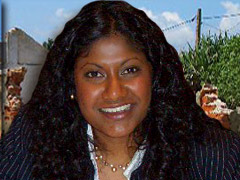
For Amali Tower ’05, world peace is not an abstract, unreachable dream. She co-founded Bridge2Peace to help make this vision a reality. Bridge2Peace provides schooling to the Sri Lankan children, many of them affected by the tsunami in 2004 and by the country’s ongoing civil war. Through education, these children are given the freedom and ability to build a life for themselves and lead others to pursue a more peaceful world.
1. What was your motivation for founding Bridge2Peace?
I like helping people. I think development and humanitarian assistance is something everybody can do, on any level. In fact , it’s something we all should do. The majority of the world lives in poverty, war and a lack of basic human rights – the world needs us all to make that situation better for the people living in it. Wouldn’t it be great if one day we weren’t needed in that capacity at all?
2. What advice do you have for people who want to create their own nonprofits?
See if your work can be done in collaboration with a nonprofit that already exists. Try not to re-invent the wheel. If you have a unique idea that cannot be incorporated into a partnership with an existing nonprofit, then proceed carefully, and have a very keen idea of your mission, vision and a clear idea of what you intend to accomplish and how to do so.
3. Why did you choose education as the avenue to make change in Sri Lanka?
It has always been my belief that education promotes critical thinking and opens minds. The more knowledge you have of different peoples, cultures, and communities, the more tolerance and understanding you can foster. The civil war in Sri Lanka is a long engrained conflict based on misconceptions, mistrust and a lack of understanding. I think education is a vital tool to counter this, and I believe that peace may have a chance to grow with the new generation of young Sinhala, Tamil and Muslim children of Sri Lanka.
4. How is Bridge2Peace different from other nonprofits?
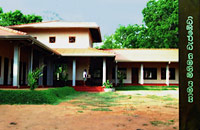
Bridge2Peace is completely volunteer run. That means that almost all the monies raised go directly to operational costs. Also, we are bridging long-standing political and ethnic divides through education. There is no common language amongst the Tamil and Sinhala people. Our hope is that through the promotion of a tri-lingual education – Sinhala, Tamil and English, we can bridge these ethnic divides and promote understanding amongst different peoples.
5. How do you choose the children that get to attend the school?
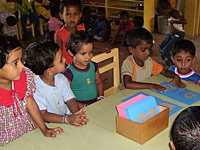
Everyone is welcome, but we can only accommodate about 55 to 60 children right now because of our limited funding. We invited all children, regardless of race and ethnicity, who are amongst the poorest of the poor in the Lunugamvehera village. At first, we had more children than we could accommodate. We limited the attendance to the poorest families in the village, and allowed an age range from 3 to 5, so as to accommodate the pre-school age range, and stagger the admissions levels, so we can take in as many children as possible in the next class.
6. Tell us about a child or an experience that makes doing what you’re doing worthwhile.
One of the sad features of the rural village is that chronic poverty and disenfranchisement have led to high rates of unemployment, alcoholism, low rates of school attendance, and a host of other socio-economic problems. With the arrival of our school, in this community, we have been heartened to hear from residents that they are inspired by the educational opportunities that we are providing for their children. These parents have come to expect that most of society has forgotten their problems, and have stopped investing in them and their children. They are so grateful for the investment that we are making in their children. Fathers tell us they are inspired to stop drinking and mothers are finding interest in seeking our help to find income-generating opportunities. In short, our investment is leading to residents taking charge of their own lives, and seeking investment in their own futures. To see this level of ownership, gratitude, and hope has been such a great encouragement to our work.
7. Bridge2Peace led to you meeting the Sri Lankan Prime Minister. What was that like?
It was a proud moment in my life. The Prime Minister was greeting many heads of state, UN officials and the like, in the aftermath of the tsunami. It was an interesting time to be in Sri Lanka, and meet the Prime Minister. He was very candid and gracious with his time.
8. What would you like people to know about the situation in Sri Lanka?
Sri Lanka only attained independence in 1948. In that time, over half of those years have been spent fighting a brutal civil war. Poverty has always been an issue, and nation building even harder. The war has only exacerbated the situation, and caused terrorism, child soldier recruitment, displacement and disappearance to rise at record rates.
I have worked in Africa as well, and one of the things that most people recognize about most Sub-Saharan African countries is the amount and degree of problems prevalent. Sri Lanka could get that way, but fortunately it is not yet. The time to act is now. We have a chance to turn the tide on poverty in Sri Lanka, if we respond now.
9. How did UCLA help you to pursue your passion?
Studying development at UCLA helped me to better understand the underlying reasons for poverty. Studying development means studying the complexities and interconnectedness of politics, economics, and human rights – this is vital to being able to work with different parties.
10. Funding is critical to nonprofits. What tips do you have for writing funding proposals?
Approach it like you would any college paper. It is a good idea to begin with a summary of what the situation is in the arena that you are trying to affect. Then, proceed with the basic who, what, when, where, and how of your proposal. Remember to provide details of the actions you are going to take, and measures on how and when you will accomplish the tasks. Also, provide estimates of your progress – for example: whether the actions are in progress, completed or to be implemented at a future date. The key is to provide an idea, and to support it with facts, but also to support it with quantifiable measures of how you will implement your plan and be successful.
11. If you received a million dollars for your organization, what’s the first thing you would do?
A million dollars is a lot of money in Sri Lanka, because $1 is 100 rupees, which stretches far in the country. One of the first things we would do is furnish the rest of the classrooms, build a primary school and high school, host as many children as we could and create college scholarships for the children at our school. With the rest of the money, we would likely build other schools in other neglected and poor parts of the island. Our vision is to see schools built around the island, in the Tamil, Sinhala and Muslim parts of the country. Our desire is to build an early education and peace curriculum that will be adopted by the government and shared around the country.
Our Proud Partners


