Eric Nakamura '93 and Martin Wong '90
At first glance, the garage-turned studio doesn't look like anything special. There is clutter everywhere: a stack of glossy and black-and-white magazines, a heap of CDs threatening to tumble, two fish tanks so murky that actual life in the tank is questionable, and a shelf of action figures and toys. With the walls covered in posters for Bruce Lee movies and the like, there is just enough space in the garage for a table and a desk with a couple computers blinking and ready for action. This is the control room for Giant Robot magazine, the purveyor of all things cool and the source for contemporary Asian and Asian-American pop culture, created by Eric Nakamura '93 and Martin Wong '90 .
While the setting is modest, it's a vast step up from when Nakamura and co-editor Wong started Giant Robot more than 10 years ago while still UCLA undergraduates. Initially, the two had no budget and modestly sold the first issue of their magazine, a photocopied and hand-stapled publication.
“It was just time to do our own 'zine,” Nakamura says matter-of-factly. “Everyone was doing punk rock things here and there, and we just figured we could apply that to Asian-American topics and culture.”
An English major, Martin met and befriended East Asian studies student Nakamura at various concerts hosted by UCLA Campus Events Commission. Through their shared love for punk rock, Asian television and movies (Giant Robo is a popular anime series that still boasts a huge following nearly 30 years after its creation), and a do-it-yourself ethos, the two quickly patched together the first few issues of Giant Robot while still studying and taking rigorous UCLA classes.
Discussing how the duo transformed the photocopied 'zine into its current incarnation as an internationally circulated, glossy quarterly publication, Wong explains, “We'd go to little bookshops and music stores and ask if they'd sell our magazine. They had no idea what we were selling. We only had one issue, no track record. It was incredibly humbling to start Giant Robot that way. We also sold a lot of copies of our magazine face-to-face at shows.”
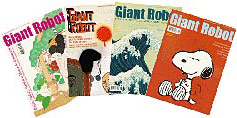
Despite its humble beginnings, Giant Robot is now one of the largest circulating 'zines, with 60,000 copies being sent across the country and around the world.
Compared to other similarly Asian-slanted publications, there really is no competition for Giant Robot . In fact, Nakamura and Wong admit that many budding publishers approach Giant Robot looking for advice. However, be it an issue of money or ambition, most of these magazines last for less than a year – if they even get an issue out in the first place.
Why is Giant Robot more successful than any other magazine with this focus? The answer is easy for Nakamura to explain: “We make a really great product. I'm very confident in Giant Robot as a product. A lot of the magazines that fail are bad; they lack focus.”
“It was also a heart issue,” Wong adds. “A lot of the magazines write about things they just don't care about. [Their theory is that] there's this market of Asian people with money, and they're going to write for them. They don't care about the movies or art or design. They'll just pick whatever's hot and write about it. We're really selective – we only write about things we like.”
Knowing that some of the products advertised and discussed in the magazine are hard to track down stateside, Nakamura and Wong began a mail order service to sell the Asian products as well as their own Giant Robot T-shirt designs. (The picture of Bruce Lee as a DJ is truly a classic). However, the small business venture soon proved more successful than either Bruin had anticipated.
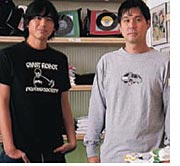
“We ran out of space in our back closet because it was so full of mail order products,” Nakamura says. “We just needed someplace to put everything. As the store grew we decided the second store was a good idea.” The result is a Giant Robot store and nearby art gallery, GR2, located just miles from the UCLA campus on Sawtelle Boulevard, a second Giant Robot store in San Francisco, and an online storefront.
“It was always going to be art based but running a store just on art is really sketchy. What if there's no rent money at the end of the month?” says Nakamura. “We decided to have a store in there as well - they have gallery/stores in Japan so we followed that model.”
Besides the hodgepodge collection of Kubrick action figures, Miyazaki paraphernalia, and über-hip T-shirts, the GR stores also sell many local artists' and designers' materials.
With the level of popularity the store has achieved, however, it was only a matter of time before larger corporations tapped into Giant Robot 's sixth sense of cool.
“It's out of our control,” Nakamura said. “Those stores' buyers scout our store big time. A lot of times, you'll see a product we've been carrying at Urban Outfitters six months later. I'm sure they could have looked elsewhere, but it happens all the time. A product at our store – once Urban Outfitters gets it – is commodified.”
While Giant Robot is unable to control their products being sold in chain stores nationwide, both Nakamura and Wong are advocates against exploitive commodification. Regular lecturers at various colleges, the duo has traveled all over the country discussing the importance of supporting quality Asian products and bolstering strength for the rather fickle Asian market. In their travels, more than once the two alumni have returned to UCLA to make presentations.
Ultimately, as much as the two are seen as the major contributors to defining and exploring Asian culture, they don't want Giant Robot to be seen as an exclusively Asian magazine.
“We don't aim to serve only Asian people,” Wong stresses. “It's really important that we're not exclusionary or elitist. We try and appeal to everyone – or at least anyone who's interested in cool stuff. That's pretty much how it's always been.”
Update November 2005: Things have changed for Giant Robot since this story was first published in May 2004. The year 2005 was big year for Wong and Nakamura. In addition to opening two new stores, one in Silver Lake in Los Angeles and one in New York City, the two launched restaurant, GR/EATS on Sawtelle Boulevard in West Los Angeles. The magazine continues to evolve its blended-cultural vibe. Wong interviewed seven Chinese-Jamaican musicians and examined how they have altered the musical landscape, and created a new genre, says Wong.-- Additional reporting by Nina Basu
Our Proud Partners


