Robert Platz ’74, M.S. ’83
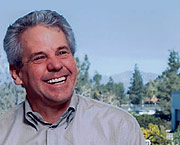
Robert Platz ’74, M.S. ’83, cofounder of Inhale Therapeutic Systems, has found that his dual background in chemical engineering and biology has served him well over the course of his career.
“When we were working on delivery of inhaled insulin, we needed to be able to find a way to deposit particles of only one to three microns deep into the lungs,” explains Platz. “We needed in-depth knowledge of particle transport and also how to make very fine, stable powders - it was a perfect problem for a chemical engineer from professor Sheldon Friedlander’s lab.”
Together with John Patton, Platz developed the revolutionary technology necessary to enable inhaled insulin for patients with type 1 and type 2 diabetes at what is now Nektar Therapeutics. Recently brought to market by Pfizer, their research into a new delivery system for insulin began in the late 1980s.
“We had been working together on a project for inhaled human growth formula,” notes Platz, “and decided to turn our attention to inhaled insulin because of the extensive need for alternative diabetes treatments.”
At the time, Platz was working at SRI International on aerosol development work for a number of companies, including Genentech where Patton was based. Platz was able to leverage his background and experience in biology and transport sciences to create new systems for pharmaceutical delivery.
After he developed the product concept, the team worked for several years to refine the technology necessary for conversion to respiratory drug delivery.
“People in the field had known for a long time that lungs were permeable to proteins,” says Platz. “The challenge was to develop a method that wasn’t overwhelming to the system.”
In addition to creating the protein formulation and determining the optimal particle size, Platz and his colleagues needed to devise room-temperature stable powders in high yields. They invented novel packaging techniques to control moisture, as well as filling equipment that could separate five milligrams doses with very high precision.
“The process presented several challenges for us. We needed to be able to reproduce consistent delivery of insulin in very small doses for diabetes patients,” says Platz.
Lastly, they had to devise a stable, stationary aerosol device that would keep the dose inert until inhaled by the patient, markedly different from typical aerosol sprays.
“I was responsible not only for the early concept work, but also for designing the commercial facilities,” explains Platz. “For me personally, it was rewarding and fun to take the technology from early concept in the lab to a large-scale commercial venture.”
Platz was at Nektar until 2001, and then took some time off before moving to Amgen, where, as scientific director, he is again working on early stage drug delivery research. His current focus is on monoclonal antibodies which pose some unique delivery issues because of the need for fairly high doses.
“One advantage to working at an advanced pharmaceutical company is there are a lot of product opportunities,” says Platz. “Amgen is committed to developing the appropriate modality for specific applications, and tailoring the delivery for proteins, synthetic small molecules, and other materials.”
“I had a great time at UCLA - while I was there, there was a very creative group of close-knit graduate students in chemical engineering who have done very well. I began to appreciate the science behind engineering, understanding that to develop predictive models you needed to base them on fundamental principles in transport engineering and thermodynamics,” adds Platz.
Our Proud Partners


