Roland Tetenbaum ’09
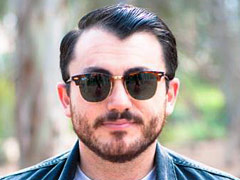
Like other UCLA students, Roland Tetenbaum ’09 enjoyed going to sporting events, eating in the dining halls with his friends and exploring UCLA’s academic resources. As a young alumnus, he now owns and operates Olivier Watch Company and co-founded a nonprofit called New Noise Group, providing musicians free recording time and music education for students. Read on to find out how UCLA helped shape him and the advice he has for recent graduates.
What did UCLA mean to you?
I feel that my UCLA experience provided me with fundamental skills that helped build my confidence. I’m not working within my history degree, but the persuasive writing and speaking skills I learned have really helped me with my personal and business relationships. The faculty interactions also helped me learn how to approach people when I need help and request something.
As a transfer student, it wasn’t difficult for me to acclimate and get involved. I was a part of a transfer community where I saw those who did not live on campus did not have a strong affinity to the university. Living in the residential halls made a difference for me to identifying with UCLA.
What classes did you take that you remember?
My favorite classes were always the more esoteric ones like the one I took about Japanese monster movies. It had little to do with my major, but it was all for pursuit of learning and knowledge.
The faculty we have on campus are also fascinating and world renown with their amazing achievements. It made me feel proud that I was a Bruin and justified why I worked so hard to get in to UCLA. It was all worth it.
There was always something happening on campus. One of my friends from high school visited me in the residential halls. We were hanging out in the lounge and he was very impressed with the fact that there was a Guitar Hero impromptu competition taking place. He was so enthralled by it and realized that college wasn’t simply about the academics. I think that experience inspired him to start going to community college. He’s since graduated from UC Riverside and works at an accounting firm. Now he is looking to pursue his M.B.A.
How did New Noise Group come about?
I have a childhood friend, Omid, who attended Berklee School of Music. In our teens, we both played instruments, practiced and recorded together. Recently, Omid and I reconnected and started playing together again. Omid is more the music engineer and I handle the business relationships.
Recording in a studio is costly, and we wanted to provide artists and students a space where they can achieve their artistic endeavors. We came up with this nonprofit idea where they can record free of charge. They can also learn about audio engineering and the music industry.
Our website has the application for those who are interested in recording. We are not here to judge or evaluate material. As long as you are ready to record, we want to help provide you the tools.
What is the goal of New Noise Group and why is it important to you?
I’ve been working for myself for a couples years. I love Olivier Watch Company, but I want to do something more. Trying to get something like New Noise Group started is very rewarding, and it makes me feel like I’m making a positive impact. It’s such a motivating factor. The end goal for me is to have this space where musicians and artists can come and create their art without dipping into their rent check or putting their life on hold because of the costs associated with recording. This is important to me because music needs a space to grow, unhindered.
How can others get involved or support Noise Group?
Right now we have a Kickstarter. Any donations, $1, $10, $100, are extremely helpful and appreciated.
We are also trying to seek grant funding for the arts. We welcome anyone who can provide suggestions or advice. This is a completely new experience and I’m learning so many new things.
You also have a watch company that you own and operate, single-handedly. What was that like starting out, and what advice do you have for others who want to start a business of their own?
I was lucky because my parents are artistic. They've owned a women’s clothing store for 30 years and my dad makes handmade watches for the store.
My watches are a little bit different; they are diving watches, sturdier and bolder. My father’s experience making watches was extremely helpful in connecting me to resources. I designed all Olivier watches myself, but I needed assistance getting to the right people who could help me with the production side.
It’s easy to procrastinate since there is no one to telling you what to do. I had to really find the motivation and the drive. My mother has always worked for herself, and I got a lot of inspiration from her. You really do have to have a strict work ethic. Finding that is crucial.
I reached out to a few Bruins who were starting their own companies as well. For those who are starting out, I would encourage them to reach out to everyone and anyone that they can. You never know where help or inspiration can come from.
How has your UCLA experience contributed to your current involvements with both your non-profit and your watch company?
UCLA plays a passive role in my life, but it is a constant role. I’m definitely very proud to tell people that I graduated from UCLA. I draw inspiration from my UCLA experiences. For my watches, the colors I pick are influenced by UCLA. I chose a bronze/gold color for a watch with an electric blue face for one of my designs as a silent 8-clap for Bruins everywhere.
Is there anything that you would like to share with recent graduates or graduating seniors?
I would suggest starting small. That’s how I did it. I have a passion for watches, but I found a small niche first: making watch buckles. This is similar to someone who loves working with leather and starts out making belts instead of jackets or someone who loves to sew and begins making bow ties instead of making a suit.
My first project was to make 300 watch buckles and shipped them out. I had to learn how to bill someone, how to set-up an online shop, how to ship and receive and how to process returns. This small production taught me how to quality control. These are all business fundamentals that I now utilize on a larger scale.
I graduated in 2009 and moved home. The job market was slim and unwelcoming. I didn’t get a job until four months after graduation. It was a scary time. I would want graduating seniors and recent graduates to know that it’s ok to start your young alumni life at half speed. It may feel like the most important thing is to get a job. However, don’t just get any job; get the job that will provide you a purpose. Otherwise you’ll just spend your time working at one job while searching for another job.
For questions about Young Alumni Programs or to suggest other young alumni doing exceptional things, contact Sandy Nguyen ’10, Assistant Director of Young Alumni Engagement at snguyen@support.ucla.edu.
Our Proud Partners


