Category Archives: Feature
Mandla Kayise '87, M.U.R.P. '23, Has Made Empowerment His Life's Work
Mandla Kayise’s UCLA journey began with ambition and activism. As an undergraduate in the late 1970s and early 1980s, he pursued engineering while immersing himself in campus leadership through the Black Student Alliance and student government. Balancing both proved difficult. Without clear guidance on how to navigate a rigorous academic track while pursuing high-level leadership, Kayise struggled with self-discipline and with institutional policies. During what would have been his junior year, two difficult quarters triggered an automatic academic dismissal.
He describes that period as transformative. “It was a wake-up moment for me. It was a game-changer,” he said. Though his overall academic record remained solid, he did not fully understand how university policies worked or how quickly one’s academic standing could shift. After his dismissal, he entered what he calls a survival period, working a series of jobs over three and a half years.
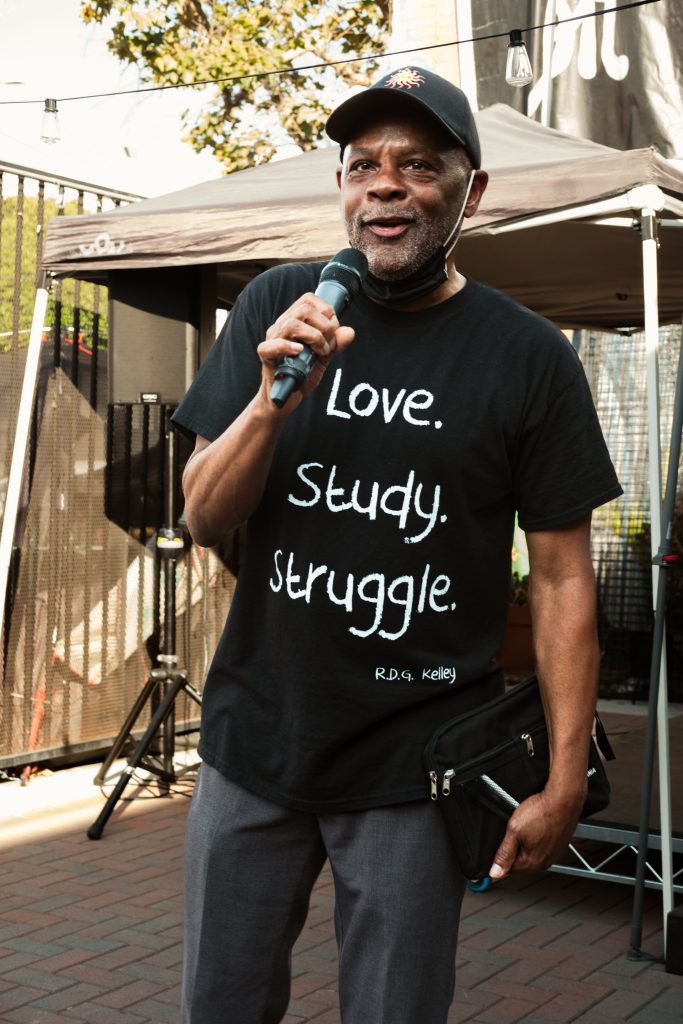
At one point, he held a coveted position as a junior engineer at Hughes Aircraft. For someone from his community, it was a rare opportunity. Yet the financial stability did not resolve the deeper issue. “I had this sense of an unfulfilled mission,” he said. That unfinished purpose eventually brought him back to UCLA.
When he returned, Kayise pivoted, choosing international economics so that his extensive calculus coursework would apply directly to his new major. The move was practical and forward-looking. His interest in quantitative analysis later led him to a UCLA graduate program in urban planning, where economic data intersected with social realities and community development.
Retention Through Empowerment
Kayise’s experience as a student who nearly became part of a statistic that institutions often failed to account for shaped his life’s work. He recalls learning that for Black students entering around 1980, the five-year graduation rate was roughly 22 percent. Students who stepped out and did not return often disappeared from the data and fell off the institution’s radar.
That reality became a driving force. “I kind of looked at retention through that lens,” he said. His question became clear: What does it actually take for students to persist in institutions that expect them to navigate complex systems independently?
As president and CEO of New World Education, Kayise centers his work on empowerment. Influenced by popular education frameworks he encountered in graduate school, he rejects top-down approaches that treat individuals or communities as problems to be fixed. “Empowerment has informed all of that work,” he said. “It’s very difficult to facilitate empowerment if you yourself are not operating from a place of empowerment.”
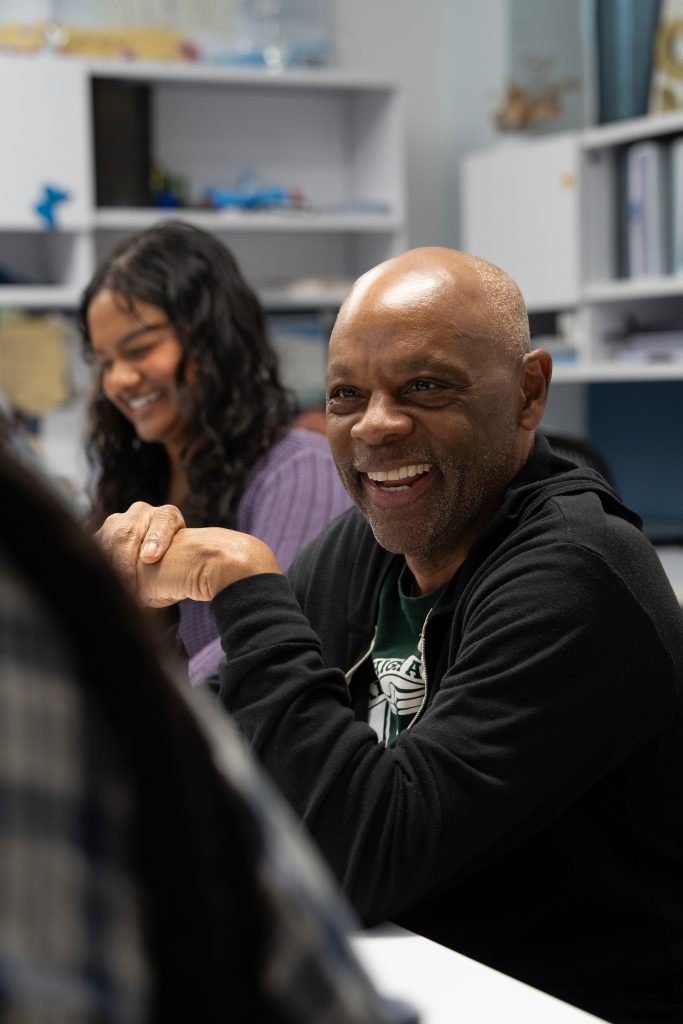
His professional development framework, the House Method, rests on four core practices: self-awareness, navigating professional spaces, holistic goal-setting and consistent self-reflection. Kayise encourages young professionals to conduct their own self-evaluations rather than waiting for formal feedback. In a rapidly changing workplace, he argues, growth must be proactive and self-directed.
From Deficit to Asset
Across K-12, community college and university settings, Kayise identifies the lack of nurtured self-awareness as a central barrier, particularly for students from under-resourced communities. Institutions often emphasize what students do not know or where they fall short, rather than building upon the skills and strengths they already have as a foundation for supporting future growth.
In contrast, Kayise guides students in explicitly recognizing their potential. He asks them to identify three interests, three skills and three personal qualities. Each person’s list is unique, forming what he calls an educational and professional DNA. “Everybody has them,” he said. The exercise shifts students from being defined by deficits to recognizing capacity.
“You know your floor,” he added. “But you never really take stock of what is your ceiling.”
By beginning with assets rather than gaps, students engage institutions from a position of agency rather than insecurity.
Ownership in Community Work
Kayise applies the same philosophy to community development. In under-resourced neighborhoods, he believes meaningful participation begins with ownership. Residents must see themselves not simply as recipients of services, but as decision-makers who can define how resources are used.
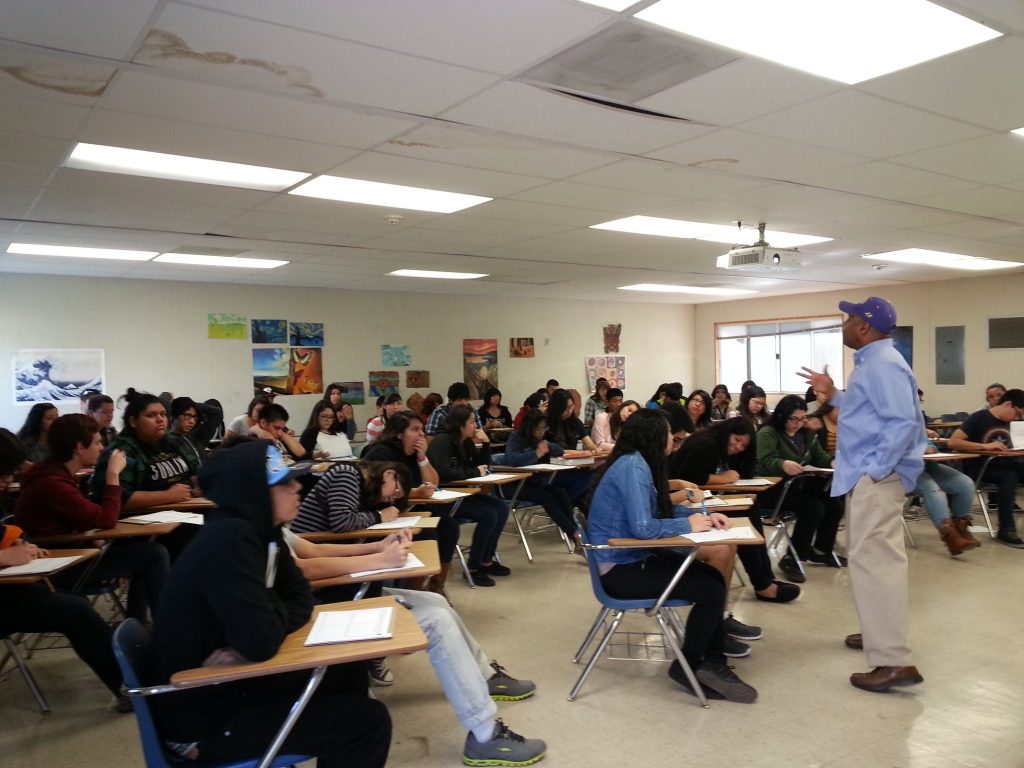
“Residents are ready to take ownership. They don’t know how,” he said. Providing education about land use, economics and resource distribution equips communities to understand how neighborhood conditions are shaped.
He also emphasizes inclusive engagement. Working only with homeowners, he argues, elevates a relatively privileged subgroup within an under-resourced neighborhood. Instead, he advocates for including tenants, transitory residents and individuals who have experienced homelessness or incarceration in neighborhood planning and decision-making about how communities are served and how resources are distributed. “These are people who paid the ultimate price,” he said. “So how do you take advantage of their knowledge?”
Local Context and Reparations
Kayise’s service on the Los Angeles Reparations Advisory Commission deepened his understanding of place-based harm. Examining housing segregation at the neighborhood level revealed how geographic confinement shaped access to education, economic opportunity and health care. It also intensified exposure to over-policing and racial violence.
“When you look at it at the neighborhood level, you realize the depth of the harm,” he said. Concentrated trauma, he noted, becomes compounded trauma when residents experience its effects daily within confined spaces.
As part of the commission’s outreach, Kayise helped deliver more than 80 presentations to churches, schools and community groups. While state and national conversations draw greater attention, he believes local dialogue is essential. “The evolving community-level conversation is essential to the outcome,” he said. The commission has since submitted its recommendations to the Los Angeles City Council, bringing reparations into formal policy discussions and outlining proposals addressing housing, economic opportunity and education.
Advice for Bruins
For UCLA students and alumni seeking to create positive change, Kayise’s guidance begins with reflection. “Know and mobilize your personal story,” he said. "Education should be grounded in a mission larger than individual advancement."
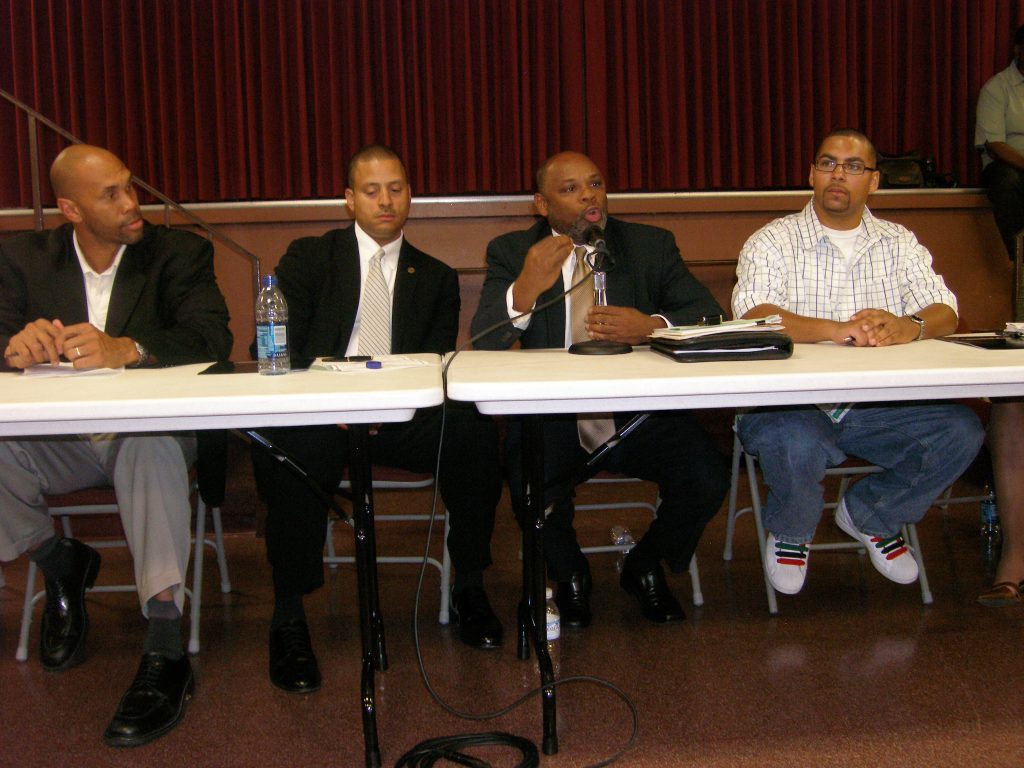
Many marginalized students carry an unspoken community expectation, he noted. Education is often seen not only as personal advancement but as an opportunity to uplift family and community. Professional culture often reinforces individual achievement, but Kayise rejects the idea that success requires separation from one’s roots. Instead, he encourages students to intentionally align their careers with ways to support and invest back into the communities that shaped them. “You’re likely going to have to carve that path out for yourself,” he said.
Alignment between career and community rarely happens by accident. It requires intention, self-awareness and sustained commitment.
Kayise’s engagement with UCLA did not end at graduation. After roughly a decade as a staff member supporting student-initiated outreach and retention programs, he left the University but remained connected. Former student leaders reached out, asking him to return as an adviser. He re-engaged through the UCLA Black Alumni Association viewing Alumni Affairs as an extension of a mission rather than a social network.
For Kayise, UCLA’s alumni community represents potential for long-term partnership and impact. His career reflects a consistent belief: education, when grounded in empowerment and accountability to the community, becomes a catalyst for systemic change.
Recent Articles
- UCLA AAP Alumni Spotlight - Adrianos Facchetti ’01, J.D.
- The Story Behind Jackie Robinson’s 1946 Reintegration of Organized Baseball

- UCLA Prytanean Celebrates Its Centennial
- Building Community: UCLA Disability Alumni Network Focuses on Belonging and Visibility
- Bruins@Work Program Fosters Community
- International Women of Courage
Our Proud Partners


