
The Story Behind Jackie Robinson’s 1946 Reintegration of Organized Baseball
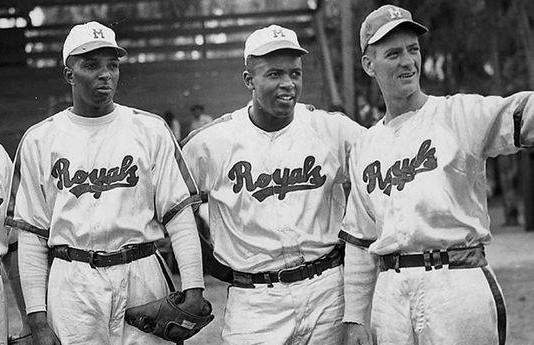
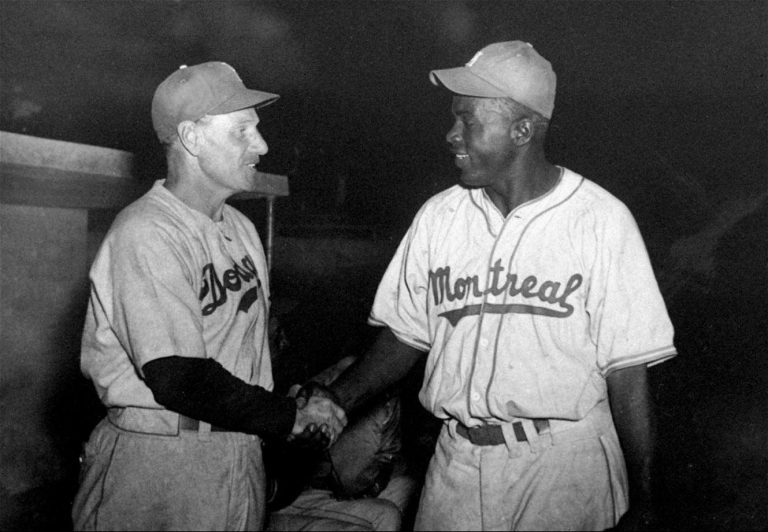
John Wright, Jackie Robinson and Clay Hopper, Montreal Royals, 1946 (AP Photos from Sporting News Archives)
Each year on April 15, Major League Baseball observes Jackie Robinson Day, honoring the man who, hired by Brooklyn Dodgers President Branch Rickey, reintegrated the national pastime in 1947, ending nearly 60 years of Black players being unofficially barred from “organized” (i.e., white) baseball.
That breakthrough was hardly the end of the story — its effect on American sports and society was still very much up in the air. Robinson had to prove he belonged and that he could handle the abuse he would receive, in order for Rickey’s experiment to succeed. He did so in spectacular fashion, winning the first Rookie of the Year award in 1947, the National League MVP award in 1949, leading the Dodgers to six pennants in his 10 years and paving the way for so many other great Black players who would grace the game over the ensuing decades.
But April 15, 1947, was not the beginning of the story, either. That monumental moment in American life was preceded by a significant milestone a year earlier, 80 years ago, on April 18, 1946. Before Robinson could break the color barrier in the majors, he had to do the same thing in the minors, with Brooklyn’s top farm team, the Montreal Royals.
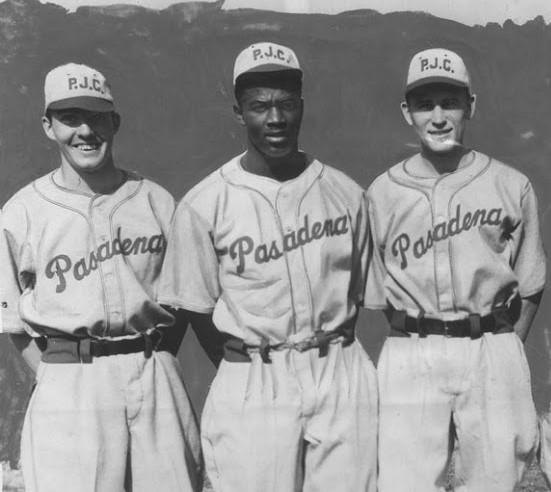
Robinson’s path to that moment, of course, had gone through UCLA, where he was a four-sport star recognized, in particular, for his ability in football, basketball and track. Although baseball was not his best sport at UCLA, he had shown his prowess on the diamond at Pasadena Junior College (PJC), now Pasadena City College.
As detailed in “The Black Bruins” by James W. Johnson, Robinson graduated from Pasadena’s John Muir Technical High School in 1937 but did not receive an offer from a four-year university. Even if he had, he would not have been able to play varsity as a freshman, due to the rules at the time. So, following in the path of his brother Mack, a decorated Olympian, Robinson enrolled in PJC, where he was considered the best shortstop in the league, one season hitting .417 in 23 games, while scoring 43 runs, stealing 23 bases and striking out only three times. After an exhibition game against the Chicago White Sox in which Robinson, playing for a Pasadena youth team, performed particularly well, the Chicago manager said, “If that kid was white, I’d sign him right now.”
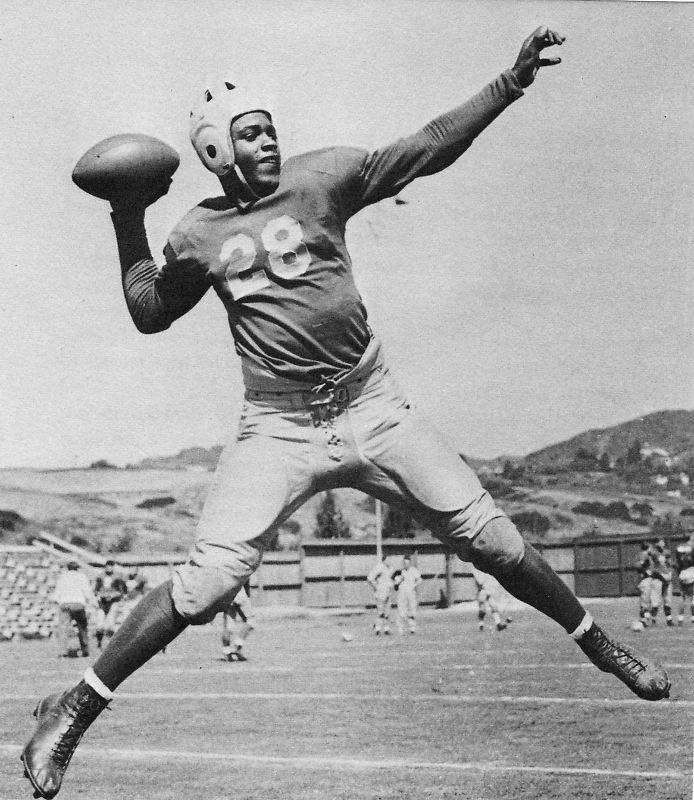
He was probably the best basketball player at PJC as well, but football might have been the sport for which he was best known. He was team MVP in 1938, but was subjected to racism from other teams as well as his own teammates, many of whom had come from Oklahoma and had never been out of the South. Some initially refused to play with him. In Phoenix, the Black players could not stay in the hotel with the white players; in Sacramento they were refused service at a restaurant. Teammate Ray Bartlett said that Robinson never looked for a fight but would defend himself whenever necessary.
After completing his two years at PJC, in 1939, Robinson did receive offers from four-year institutions — although some were not genuine and were merely designed to keep him from playing against them. Robinson chose UCLA, which had a student population less than 1% Black and no Black faculty. But it was close to home and had just hired a football coach who had starred at PJC as well. Those weren’t the only perks.
“When Robinson enrolled at UCLA in 1939,” writes Johnson, “he began taking advantage of the team’s training table. For a youngster who had little to eat, the bounty on the training table was a feast.”
In his autobiography, “I Never Had It Made,” Robinson wrote of his childhood, “Sometimes there were only two meals a day, and some days we wouldn’t have eaten at all if it hadn’t been for the leftovers my mother was able to bring home from her job. There were other times when we subsisted on bread and sweet water.”
Prior to embarking on his UCLA athletic career, during the summer of 1939, Robinson won the singles and doubles championships in the Western Federation of Tennis Clubs, which was restricted to Blacks. The doubles team did not lose a set the entire tournament. He started playing golf that summer, Johnson stating that he shot 90 at Pasadena’s Brookside course in the first round he played. He also excelled at badminton, soccer and handball.
Robinson had an immediate impact on UCLA athletics, starring on the football, basketball and track teams and establishing himself as one of the nation’s best in each discipline.
After the 1940 basketball season ended, he joined the baseball team. After getting four hits and stealing four bases in his first game, he got only two more hits the rest of the season and hit .097, with a fielding percentage of only .907. Despite this, those that saw him play still recognized him as a great player.
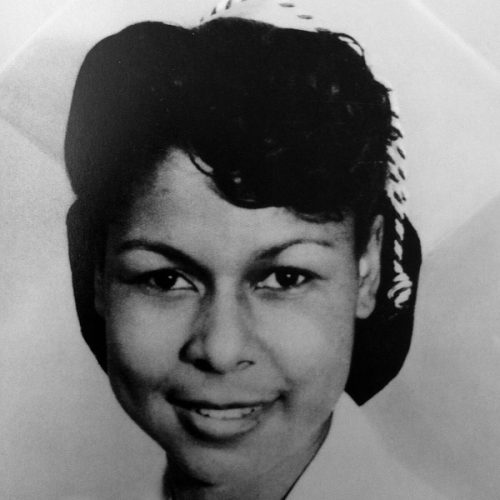
While playing with and against white players in college was certainly important for Robinson’s development, even more important for Robinson was his meeting UCLA freshman Rachel Isum ’42 on campus when he was a senior.
They were not UCLA students together for long; after the 1941 basketball season, Robinson decided to leave school, though he was very close to graduating, because he was convinced that “no amount of education would help a Black man get a job.”
He thus became the first Black player in organized baseball in the 20th century.
He wrote, “I had used up my athletic ability in the major sports at UCLA, but the university begged me to stay on and graduate; they even offered me extra financial support. Rachel, too, felt strongly about the importance of a degree. Despite all this, I could see no future in athletics and I wanted to do the next best thing — become an athletic director. The thought of working with youngsters in the field of sports excited me.”
He got a job as an assistant AD at a National Youth Administration work camp in Central California, but the war in Europe soon led to the government closing down their NYA projects.
Returning to Los Angeles, he briefly joined the semi-pro Los Angeles Bulldogs football team but was hurt early in his first game. Next, he got a construction job in Hawaii and on Sundays, played football for his first professional team, the Honolulu Bears. When the season ended, he decided to head back to California, leaving the island on Dec. 5, 1941, two days before the Japanese bombed Pearl Harbor.
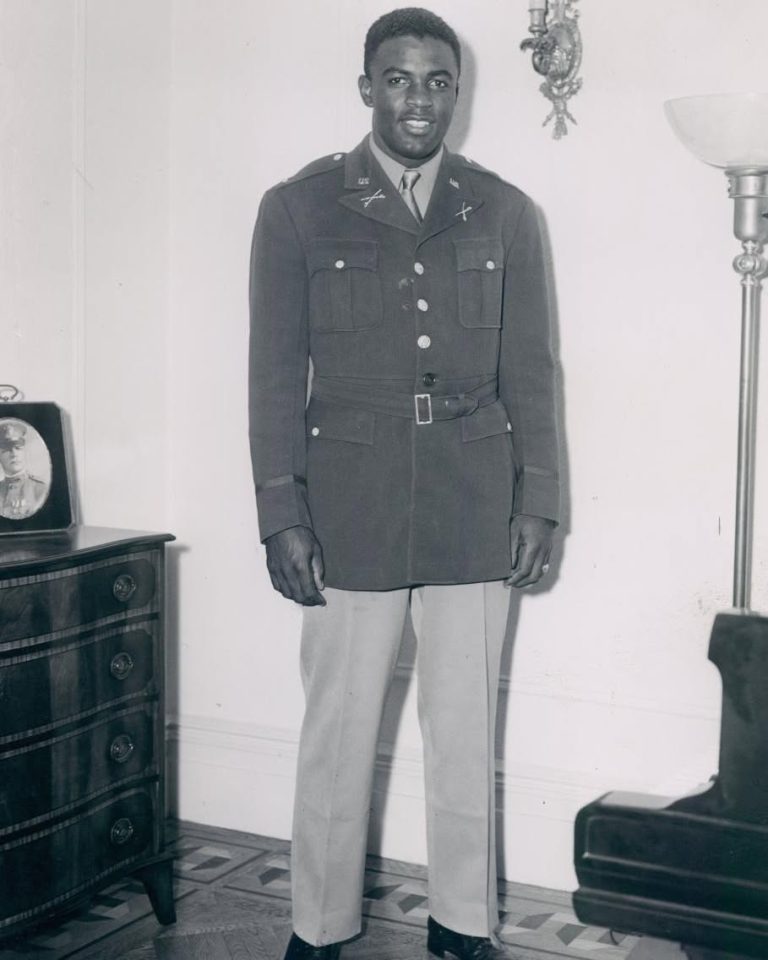
With the U.S. now officially at war, Robinson briefly worked at Lockheed Aircraft in Burbank, California, before being inducted into the Army in March 1942.
During his military service, he was subjected to the explicit segregation and discrimination that was so prevalent in those times. Even the athletic competition that was an important outlet was often denied him; at one point, he was prevented from playing on an Army post’s baseball team.
After refusing to move to the back of the bus on a military post, where segregation of this type was supposedly not allowed, he was court-martialed — and ultimately acquitted. Realizing that he wasn’t going to be allowed to make any meaningful contributions to the war effort as a soldier, he asked for and was given an honorable discharge in November 1944.
While waiting for his discharge, Robinson met a soldier who had played with the Kansas City Monarchs of the Negro American League and told Robinson that he might make some decent money playing for them. In the spring of 1945, he joined the club. That year, he led his team in batting average, as well as slugging and on-base percentage.
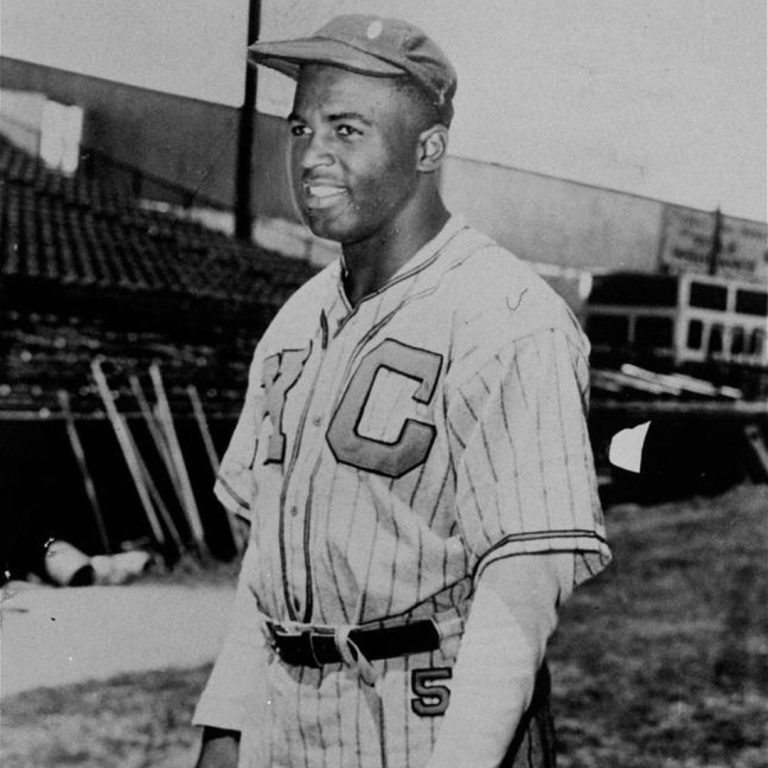
The timing of Robinson’s entry into Negro League baseball made him a prime candidate to break the six-decade long unofficial prohibition against Black players in organized baseball. The possibility of this had actually been brewing for several years. In early 1943, the Dodgers’ directors pledged their support to Rickey’s plan to integrate the Dodgers. With the end of World War II, the effort to integrate baseball gained momentum.
In New York state, the legislature passed the Ives-Quinn Law, creating the Commission Against Discrimination, with the power to fine and imprison violators. In New York City, Mayor Fiorello La Guardia, who had established the Committee for Unity, of which Rickey was a member, encouraged the three New York teams to hire Black players.
According to baseball historian John Thorn, as interviewed in Ken Burns’ “Jackie Robinson” documentary, “Rickey began to fear that his whole plan was going to unravel and that he would eventually be seen as [merely] responding to political pressures by signing an African American. Rickey wanted to do it his own way.”
If the color barrier were going to be broken, many thought Monte Irvin or Sam Jethroe would be the most likely candidates to do it, according to Thorn.
“Robinson was not in their league in terms of demonstrated ability at the Negro League level,” said Thorn. But Rickey was not shopping merely for baseball ability. He went shopping for character.”
Rickey told Clyde Sukeforth to scout Robinson, telling him he needed more than a great player.
“I need a man who will take abuse, insults,” Rickey told Sukforth. “A man who will carry the flag for the race.’”
Sukeforth came back with a glowing review. On Aug. 28, 1945, Rickey and Robinson met.
According to legendary Dodger broadcaster Red Barber, Rickey said, “The only way you can be the first man to do this is you will have to promise me that you will not answer back. You cannot win this with retaliation.”
Robinson wrote, “Could I turn the other cheek? I didn’t know how I would do it, but I knew that I must.”
“Robinson said, ‘Mr. Rickey, if you want to take this gamble, I promise you there’ll be no incident,’” Sukeforth remembered. “And that was just what Rickey wanted to hear.”
Rickey’s instruction to not fight back actually applied only to the first three years. Rachel Robinson elaborated, “He not only needed a talented person; he needed someone who, eventually, would fight back. He needed a soldier.”
Rickey had to go public with his plan, so, in October 1945, he announced that Robinson would try out for Brooklyn’s top minor league team, the Montreal Royals, the following spring.
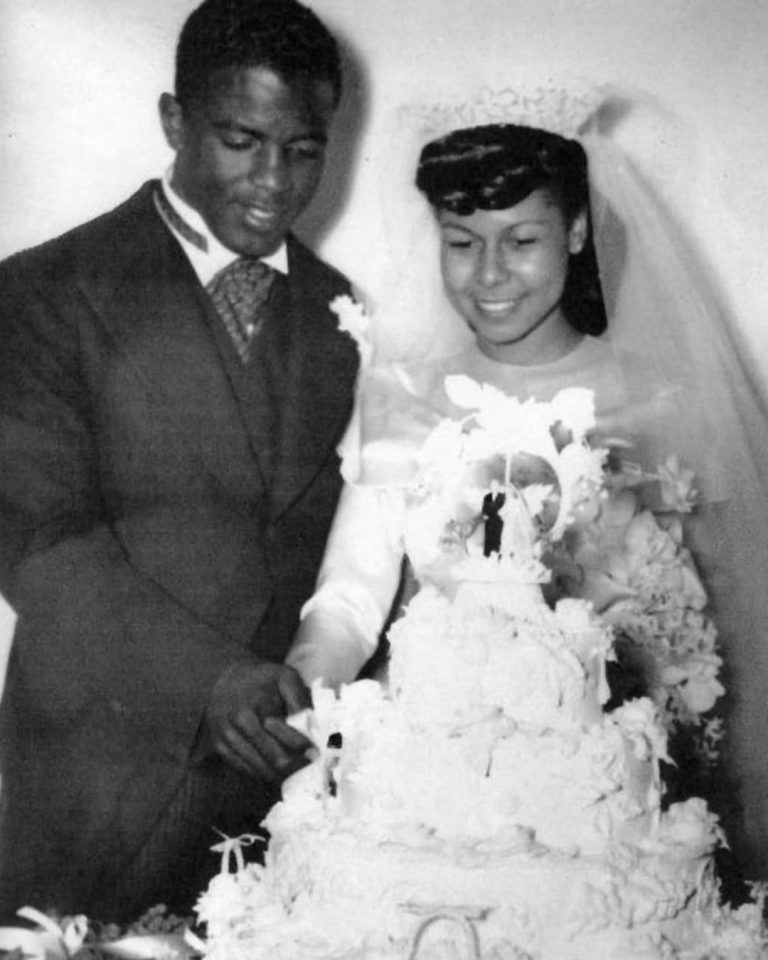
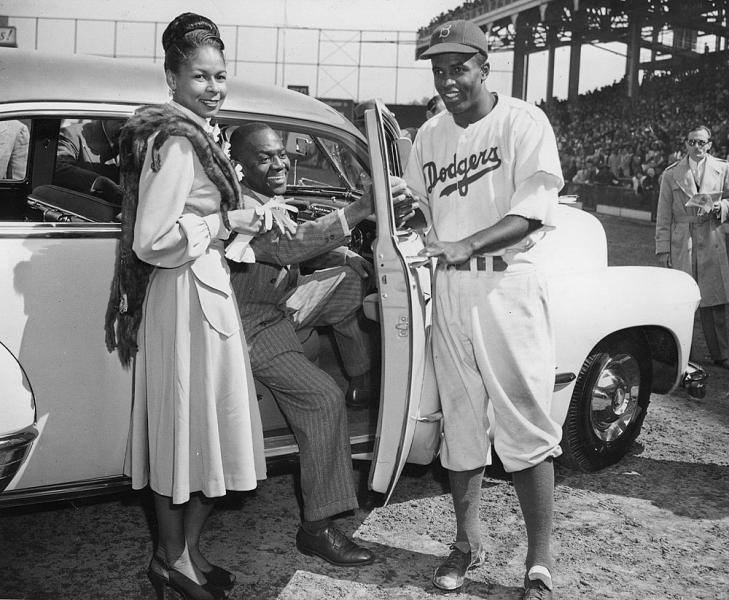
On Feb. 10, 1946, Jackie Robinson and Rachel Isum were married in Los Angeles. Then they left for spring training in Florida where he would try out for the Royals.
The couple, on their “honeymoon” in the Deep South, kept getting bumped off planes and had to take a bus to Daytona Beach from Jacksonville.
“We went to the back of the bus,” Rachel said. “And when it got dark, I started to cry, because I had felt my great husband, who had been a fighter and a dignified person, had been reduced by discrimination and by segregation, and he had sort of caved in to what society wanted in the South.”
When the press asked if Jackie could get along with his white teammates, he responded that he had played alongside white players at UCLA and been in the army with white soldiers during the war.
Also in camp was John Wright, a Black pitcher from New Orleans, who was signed by the Dodgers on Jan. 29, 1946.
A life is not important except in the impact it has on other lives.
However, during his brief and infrequent appearances both in spring training and then with the Montreal Royals, Wright’s control failed him. While Robinson excelled, Wright returned to the fading Negro Leagues in 1947, reluctant to talk about his place in history.
“Johnny was a good pitcher,” Robinson wrote, “but I feel he didn’t have the right kind of temperament to make it with the International League in those days. He couldn’t withstand the pressure of taking insult after insult without being able to retaliate. It affected his pitching that he had to keep his temper under control all the time. Later, I was very sad because he didn’t make the Montreal team.”
When the Royals went on the road during training camp, some teams refused to play them or made up excuses, such as claiming the lights didn’t work — even if they were playing a day game. In one game, the sheriff showed up and threatened to arrest the Montreal manager, Clay Hopper, for fielding a black player. Hopper complied, removing Robinson from the game.
Because of the indignities Robinson had suffered on the trip and skeptical that he would get a fair shot to make the team, he nearly quit before even trying out. He was convinced by Wendell Smith, a journalist and civil rights activist who had covered the Negro Leagues for the Pittsburgh Courier, to stick it out, because it might help pave the way for others.
Though Robinson struggled at the plate at the start of spring training, Rickey continued to support him. Eventually, his hitting improved and he made the team as a second baseman. The team travelled north and played their first game at Roosevelt Stadium in Jersey City, New Jersey, on April 18, 1946. Robinson went 4-5, with two stolen bases and four runs scored as Montreal won.
He thus became the first Black player in organized baseball in the 20th century. In 1884, Moses Fleetwood Walker had become the first Black player in Major League Baseball. He was also the last Black player in organized baseball, playing until 1889.
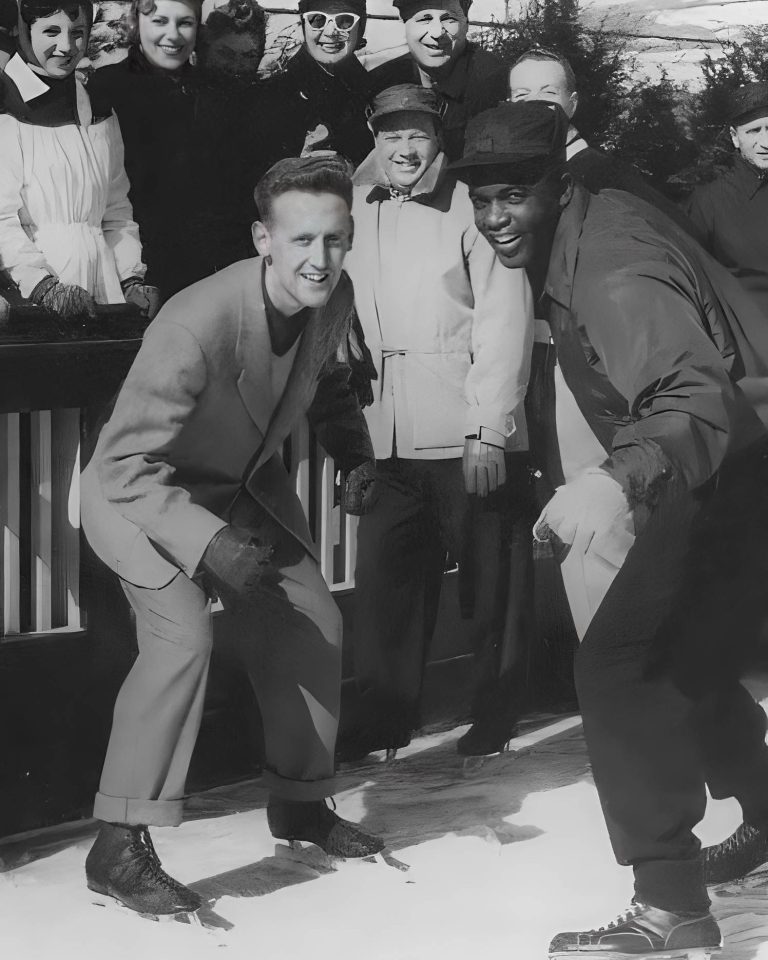
In Montreal, Robinson was treated like a hero; both he and Rachel enjoyed their time north of the border.
Robinson played brilliantly, leading the league in hitting at .349 and leading the team to the “Little World Series” championship. A Montreal mob picked him up after winning the title and carried him on their shoulders.
During that season, Montreal General Manager Buzzie Bavasi told Rickey that if Robinson was smart enough to pick Rachel as his wife, that’s the guy he should want.
Rickey agreed. Robinson went to spring training with the Brooklyn Dodgers in 1947 and made the team, debuting at Ebbets Field in Brooklyn on April 15, 1947. Brooklyn became Black America’s team, and Robinson was idolized to such a degree that in a poll that year, he was voted the second most popular American, behind only Bing Crosby.
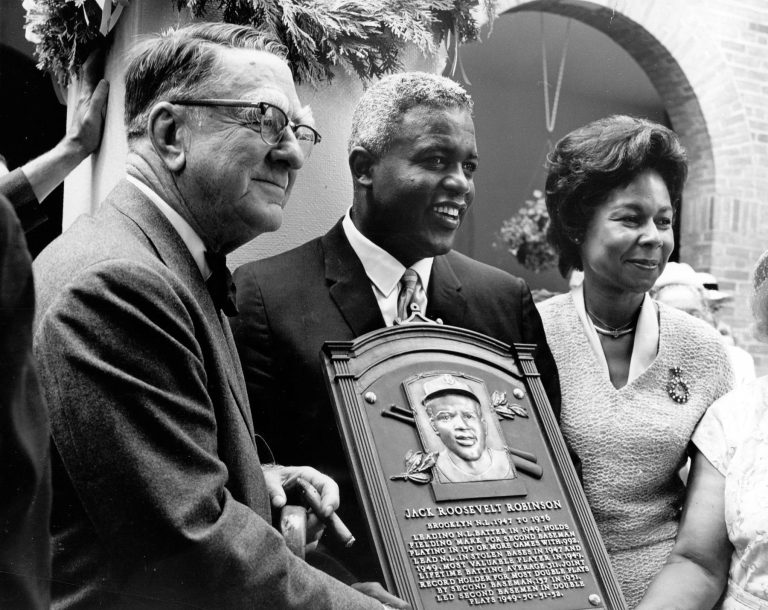
Jackie Robinson famously said, “A life is not important except in the impact it has on other lives.” His courage, ability, toughness and restraint transformed the national pastime, and made him one of the most important figures in the Civil Rights Movement . Future Bruin athletes such as Arthur Ashe ʼ66 and Kareem Abdul-Jabbar ʼ69 (born in New York City the day after Robinson’s Dodger debut), cite him as a reason they chose UCLA.
Through the struggle and sacrifice he shared with Rachel, Robinson overcame hate with talent and character, paving the way for generations of athletes of color to fulfill their American dream.
For more information on Jackie Robinson’s historical milestones, click here.
Bruin news
View All
Connect Newsletter
The Beat Goes On
Life can be very unpredictable. Such is the story of G’bari “GQ” Gilliam ʼ16, a hip-hop dancer/choreographer at the height of professional success when a health trauma earlier this year…
Connect Newsletter
Why Not Westwood?
Connect Newsletter