Category Archives: Footer
Adam Bell ’91, Cert. ’03, and Cushon Bell ’93 share the devastating impact of the Eaton Canyon wildfire on their Bruin family
UPDATE Dec. 17, 2025: Since sharing their story, Adam Bell ’91, Cert. ’03 and Cushon Bell ’93 have continued to make steady progress in their rebuilding journey. They recently secured long-term housing that will provide stability for the next two and a half years as they work through the recovery process. The Bells also shared that they are close to finalizing both an architect and a contractor for their home rebuild and hope to complete those arrangements by the end of December. Their commitment to returning to Altadena remains strong as they take the next steps toward rebuilding the home and community they love.
For Adam Bell ’91, Cert.’03 and Cushon Bell ’93, Altadena was more than just a place to live — it was home for over two decades. In this Diversity Digest spotlight, Adam and Cushon Bell recount how their Bruin family lost their home in Altadena to the Eaton Canyon wildfire and express the challenges that they face as they aim to one day return to their beloved neighborhood.
A Family Rooted in UCLA
Longtime Altadena residents Adam and Cushon Bell have deep ties to UCLA. The couple met on campus during their undergraduate years, and their connection to the university has remained strong — raising all three of their sons as a Bruin household, their youngest a current first-year at UCLA.
“They grew up going to football games at the Rose Bowl,” Adam Bell recalled. “We’ve been a Bruin family for a long time.”
Adam, a history major who later transitioned into software development, and Cushon, a sociology graduate who worked as an elementary school teacher and later in local government, chose Altadena as their home in 2001. It was an affordable, family-friendly enclave with a rich cultural history and strong community ties. They never expected a wildfire to change their lives overnight.


The Night Everything Changed
On the night of the fire, strong winds rattled their windows, but after years of experiencing windstorms and nearby fires in the foothills, they weren’t overly concerned. Power outages made it difficult to follow the news, and no official evacuation order had been issued for their street.

“We thought we’d ride it out like we always had,” Adam said. “We went to dinner when the power went out, thinking we’d be back home soon.”
But while they were out, texts from concerned neighbors started coming in, warning them of a rapidly spreading fire. By the time they returned to their street, the sky was glowing red in the distance. Even then, they believed they had time.
At around 3 a.m., still without an official evacuation order and unable to see through the thickening smoke, they made the decision to leave. Adam and Cushon packed a bag and grabbed their most critical documents and left their family home. By 6 a.m., their neighbor who had returned to grab some belongings reported back that their homes were engulfed in flames.
“We left maybe an hour before the fire reached our home,” Adam said. “We had no idea how close it was.”
Returning to Devastation
A few days later, Adam and Cushon were able to return to their address. What they saw was shocking.
“You have to see it in person to fully grasp the devastation,” Adam said. “Blocks and blocks of homes just gone.”
Even some of the oldest homes in the area — structures built in the late 1800s that had withstood over a century of storms, earthquakes and fires — were reduced to rubble. Their home, built in 1926, was no exception.
Adding to the heartbreak was the realization that firefighting efforts were severely hampered by the lack of water supply. “Some of our neighbors told us they had fireballs hitting their homes,” Adam said. “But when firefighters arrived, there was no water left in the hydrants.”


Rebuilding and Moving Forward Together
Since the fire, Adam and Cushon have been navigating the complexities of recovery. They established a GoFundMe, their insurance carrier has been helpful, but the process of finding architects, contractors and dealing with their mortgage company has been exhausting. They are currently staying with a family friend but are searching for a more permanent place to reside while they rebuild.
“We lost everything,” Cushon said. “But we’re determined to come back.”
One of the biggest concerns is the future of Altadena itself, a diverse and historically Black neighborhood. With developers eager to buy up land from displaced homeowners, there is a fear that the close-knit community they loved could change forever.
“A lot of people are saying, ‘Altadena is not for sale,’” Adam said. “But not everyone can afford to rebuild. Some people have no choice but to leave.”


Finding Strength in Community
Despite the overwhelming loss, Adam and Cushon have found strength in the outpouring of support from friends, family, and their extended Bruin network. Their sons’ universities, Morehouse College, Tufts and UCLA, reached out to support. Adam’s fraternity, Kappa Alpha Psi, also provided direct assistance. Even their longtime gardener, who had cared for their street’s homes for decades, was devastated by their loss and has checked in regularly.
“There’s been so much support, it’s been overwhelming,” Cushon said. “But it’s also a reminder that people care.”
Their message to others impacted by disasters like this: Accept help.
“People want to help, even if they don’t always know how,” Adam said. “Let them. It helps them as much as it helps you.”
For now, the focus is on rebuilding — not just their home, but their sense of normalcy. As they look toward the future, they hold onto hope that Altadena will retain the community spirit that made it home for so many years.
“We’ll be back,” Adam said. “We have to be.”
Recent Articles
- UCLA AAP Alumni Spotlight - Adrianos Facchetti ’01, J.D.
- The Story Behind Jackie Robinson’s 1946 Reintegration of Organized Baseball
- UCLA Prytanean Celebrates Its Centennial
- Building Community: UCLA Disability Alumni Network Focuses on Belonging and Visibility
- Bruins@Work Program Fosters Community
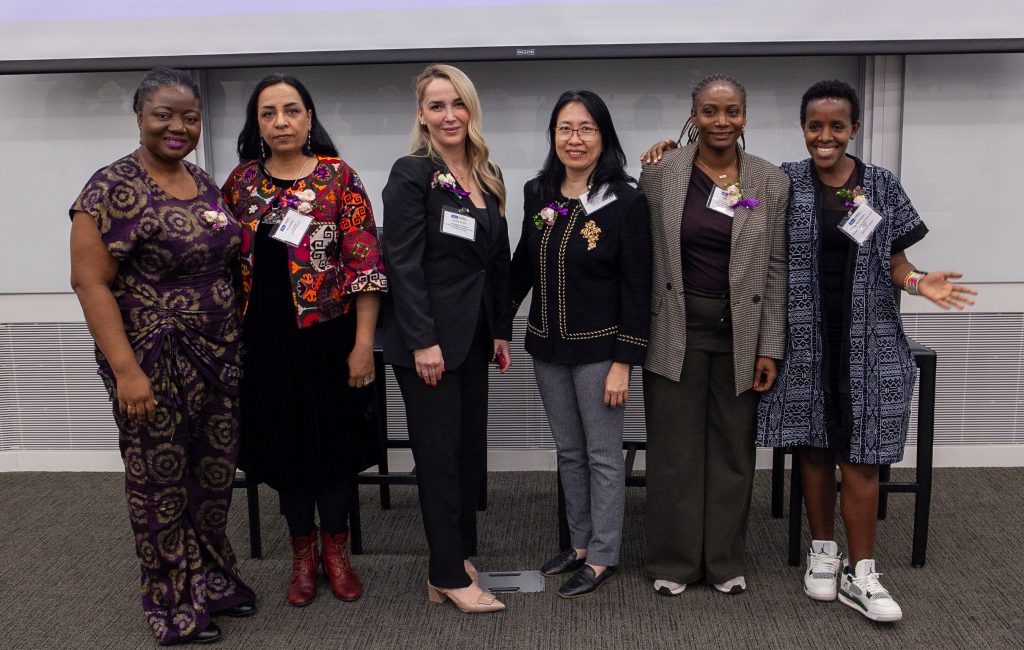
- International Women of Courage
UCLA AAP Alumni Spotlight - Dr. Efrain Talamantes '02, M.D. '08, M.S. '14

Class of 2002 – B.S., Psychobiology, UCLA
Class of 2007 – M.B.A., Emory University, Goizueta School of Business, Atlanta, GA
Class of 2008 – M.D., David Geffen School of Medicine at UCLA, Los Angeles, CA
Class of 2014 – M.S. in Health Policy and Management, UCLA Fielding School of Public Health, Los Angeles, CA
Q&A WITH DR. TALAMANTES
Can you tell us about your current professional role, the company you're with, and the industry you're part of?
I
serve as the Chief Operations Officer at AltaMed Health Services. AltaMed is the nation’s largest federally qualified health center (FQHC), with over 60 sites throughout Los Angeles and Orange County, where we serve over half a million patients annually. Our mission is to eliminate disparities in healthcare access and outcomes by providing quality health and human services through an integrated world-class delivery system for Latino, multi-ethnic, and underserved communities throughout Southern California. This organization's mission aligns with my purpose and core values as a Latino physician leader who grew up locally in Norwalk and is a first-generation college graduate from a mixed-status family.
What does AAP mean to you? What impact has it had on you personally or professionally?
I am proud to have participated in AAP while at UCLA. Like many of my peers, I am grateful for the services AAP offers and the relationships built during my participation. AAP served as a lifeline and offered services that positively impacted my experience as an undergraduate student. By participating in AAP, I was able to meet like-minded individuals who share similar purposes in serving historically disinvested communities.
How has AAP impacted your personal and professional development and success? Any specific ways you’ve seen AAP’s influence in your career or personal growth?
As an undergraduate, AAP gave me the foundation to excel at UCLA. Like many first-generation college students from low-income and diverse backgrounds, I struggled to adjust to the UC system and the rigor of UCLA. AAP’s peer mentorship, tutoring, counseling services, and resources helped me bridge the gap and maximize my potential. As the first physician in my family, I learned the importance of academic excellence through AAP and used what I learned through AAP to propel me throughout my academic journey.
How have you stayed connected to AAP? Do you participate in events, mentorship, or any other initiatives that keep you engaged with the AAP community?
Yes, I continue to engage with AAP leadership and alumni leaders to ensure we are able to support the next generation of leaders graduating from UCLA and participating in AAP. I firmly believe in the power of mentorship and support in various methods through networking with current students, offering professional development opportunities, and supporting the AAP scholarship fund as a donor. Furthermore, at AltaMed, we regularly offer internship and summer program opportunities for pre-health students and offer these opportunities to UCLA students and alumni.
For more information regarding these opportunities, students can contact:
altamedsummerprogram@altamed.org
Erick Leyva Bedolla – elbedolla@altamed.org
Recent Articles
- UCLA AAP Alumni Spotlight - Adrianos Facchetti ’01, J.D.
- The Story Behind Jackie Robinson’s 1946 Reintegration of Organized Baseball
- UCLA Prytanean Celebrates Its Centennial
- Building Community: UCLA Disability Alumni Network Focuses on Belonging and Visibility
- Bruins@Work Program Fosters Community
L.A. Wildfires: Bruins Helping Bruins
T
he January wildfires across Los Angeles County were the most destructive in California history, leaving behind immeasurable damage, displacement and a citywide sense of loss. The Pacific Palisades and Altadena neighborhoods have been devastated and the entire city is shaken, either by personal loss or by the scale of destruction and its impact on friends, family and coworkers. The fires have upended the lives of many in the Bruin community, and Bruins have responded with an outpouring of support.
After nearly a month of intense firefighting efforts, all the fires are 100% contained, but the damage is staggering. The Palisades Fire burned 23,707 acres, destroying 6,833 structures. The Eaton Fire burned 14,021 acres, and destroyed 9,418 structures. In all, 29 lives were lost and estimates show that 150,000 people were displaced. Thousands of families have lost their homes or cannot return to them until their neighborhoods are safe again. Artists lost their studios, small business owners lost their shops, housekeepers, gardeners and teachers lost their places of employment. As wildfires broke out across the city on Jan. 7, UCLA Chancellor Julio Frenk had just started his first full week in his new role. He quickly shifted his focus to leading UCLA’s response. While the UCLA campus was never in immediate danger, the University closely monitored the situation. Students, faculty and staff who lived nearby had to evacuate, and many learned their homes had been lost in the fire. The Bruin community immediately began organizing ways to help. Chancellor Frenk encouraged Bruins to “look out for one another and mobilize our reservoirs of kindness.”
IMMEDIATE NEEDS
As the winds shifted and the fire began to move towards campus, the Academic Senate made a decision to move classes online for a week out of an abundance of caution. To keep in touch with the Bruin community, Frenk began sharing personal video messages updating the community on UCLA’s efforts to keep health care facilities open and running, limit water use on campus and provide access to temporary housing, meals and support.
Chancellor Frenk announced a series of virtual Town Halls for staff, students, alumni and parents to answer questions from the community and provide updates on resources. UCLA also established a campus updates and resources page with up-to-date information.
Across campus, student groups, campus departments and other units jumped into action to support the community’s most pressing needs. The UCLA College Corps, a group of students who perform climate-related community service partnered with the UCLA Volunteer Center to mobilize the purchase of comfort and care items from an Amazon wish list, which were combined with donations from businesses. They distributed more than 500 care packages to UCLA community members affected by the fires.
UCLA ALUMNI
Bruins are finding ways to support each other and give back. Within the UCLA community, it is estimated that the fires affected more than 22,000 alumni. Alumni Affairs is working with various alumni networks to assess the needs of impacted Bruins, sharing resources and making plans to help in their long-term recovery. A large list was compiled of resources for affected Bruins, ranging from pet/animal care to temporary housing assistance to programs for small businesses.
Alumni who are searching for ways to help can directly assist displaced Bruins via GoFundMe, or volunteer their services through this interest form. Julie Sina, associate vice chancellor of Alumni Affairs, has said, “Your alumni community, 670,000 Bruins, are here to support you and lift you, through what we know will not only be today, but as time moves forward, through the recovery. Please don’t hesitate to reach out.”
DISASTER RECOVERY CENTER
In his message to the UCLA community on Jan. 14, Chancellor Frenk shared that the University would open space at its UCLA Research Park property, formerly the Westside Pavilion mall, for the Federal Emergency Management Agency to use as a Disaster Recovery Center. FEMA partnered with the City of Los Angeles and other federal, state and local government agencies and nonprofits to provide much needed services. Since then, the Center has served nearly 17,000 people with applying for disaster relief loans and replacing lost or destroyed birth certificates, passports and driver’s licenses. The UCLA Foundation and Alumni teams have organized a table staffed by UCLA and our alumni volunteers every day since the opening of the center. Nearly 2,500 Bruins have signed up to lend a helping hand. Volunteers are connecting alumni with resources, answering questions and sharing information about University job openings. UCLA graduates and graduates of any UC can request a replacement diploma free of charge. Kristine Werlinich, executive director of The UCLA Foundation says, “Volunteers have taken away that it’s good to be able to show up for people as a friendly face and an ear to listen, just being there for them when they're going through a tough time.”
The UCLA Alumni Association is collecting new or gently used Bruin apparel to share with Bruins who have lost theirs in the fires. Whether it’s a hoodie, a T-shirt or anything with Bruin flair, donations can be dropped off at the James West Alumni Center on campus. A pop up will be hosted in the spring by the Alumni Association to distribute the gear.
COMMUNITY
Bruins are using their skills in any way they can to help others. Alan Barasorda ʼ93 is the director of finance and human resources for the Pasadena Senior Center. He is also a longtime member and current president of the Rose Bowl Bruins. Basorda’s UCLA story begins in 1990 when he attended his New Bruin Orientation. He remembers someone asking the gathered students if they felt special, having received an acceptance to their dream school. They followed the question with a suggestion, “I want you to remember this feeling so that after you graduate you can show your gratitude by giving back to the community.” Basorda took that message to heart, and it has inspired him throughout his life.

The Pasadena Senior Center is a nonprofit working to improve the lives of low income and food insecure older adults. During the fire, the Center needed to close briefly, so they brought their supplies to share with the nearby Red Cross Center. In the meantime, the Center collected donations and when they reopened on Jan. 10, they were restocked and eager to provide much needed meals and services. The Altadena Senior Center burned in the fire, so the Pasadena Center extended a welcome to their seniors as well.
Barasorda has brought UCLA to the Senior Center, hosting Rose Bowl Bruin events and volunteer opportunities. He encourages others to volunteer at the Center, or find other ways to get involved. He says, “It’s about giving back, because that’s what we Bruins do.”
Among the heroes of the community were the firefighters and first responders. Nearly two dozen Los Angeles Fire Department battalion chiefs are UCLA Extension alums. Battalion chiefs coordinate resources and people, a job that requires excellent project management skills. The firefighters earned certified associate project manager certificates through the project management professional exam preparation course within UCLA Extension in 2019.
CAMPUS ORGANIZATIONS
Many Bruins need help coping with the aftermath of the fires, and UCLA has responded by mobilizing campus organizations and centers. The UCLA Homeless Healthcare Collaborative provided medical care to people who were displaced by the fires and dentistry students and others have mobilized to supply fire-impacted residents with essential relief items. The UCLA Community Programs Office worked with partners including Semel Healthy Campus Initiative Center, UCLA Residential Life and the local nonprofit Food Forward to hold regular food distribution events for students, faculty, staff and alumni. Student volunteers stepped up to help feed hundreds of Bruins and their families at events across UCLA.

UCLA also provided counseling for students. The Counseling and Psychological Services (CAPS) staff were made available to support mental health needs and have a 24-hour a day hotline. The UCLA RISE Center also provided support for mental and emotional wellbeing, and held specialized drop-in support and programming for those impacted by fires.
UCLA EXPERTS
As the focus shifts from immediate support for fire survivors to rebuilding and recovery, UCLA experts are helping guide policymakers and communities to address immediate and long-term challenges, including water supply, air quality, recovery planning, and the governance and politics of disaster response.
Gregory Pierce, one of the experts from the UCLA Luskin Center for Innovation, consulted with community members and politicians on increasing safety and trust in drinking water systems impacted by wildfires. He said, “We need to coordinate ASAP on testing, treatment and public communication and involve nonprofit organizations that are trusted in their communities. Otherwise, residents will be confused, concerned or worse regarding the safety of their water.”
Rachel Connolly, an air quality and environmental equity researcher at UCLA, recommended N95 masks and air purifiers to protect from contaminated air. The Campus Air Quality Dashboard allows anyone to access the information from five air quality sensors across campus. UCLA provided N95 masks at the Ashe Center and from residence halls during and after the fires.
FINANCIAL SUPPORT
As UCLA continues to expand the scope of its support for fire relief and recovery efforts, it has also established the Bruin Wildfire Relief Funds to assist students, faculty, staff and researchers who have been impacted by this tragedy. Rebuilding and recovery won’t be achieved in the coming weeks or months; it will take years and will require a large-scale mobilization. But if there’s one thing we can count on, it’s that Bruins are here to help.
Below is a list of UCLA opportunities.
- Economic Crisis Fund - students in need
- UCLA Employee Relief Fund – UCLA staff in need
- UCLA Health Employee Relief Fund - assist those who work in patient care and David Geffen School of Medicine faculty and employees.
- GoFundMe – UCLA alumni in need
- Volunteer Interest Form – Offer your time, resources or expertise
- UCLA Volunteer Center – Database of volunteer opportunities
If you are impacted by the fires and are in need of support, please reach out to community@alumni.ucla.edu.
Recent Articles
- UCLA AAP Alumni Spotlight - Adrianos Facchetti ’01, J.D.
- The Story Behind Jackie Robinson’s 1946 Reintegration of Organized Baseball
- UCLA Prytanean Celebrates Its Centennial
- Building Community: UCLA Disability Alumni Network Focuses on Belonging and Visibility
- Bruins@Work Program Fosters Community
- International Women of Courage
Q & A With Chancellor Frenk
O
n Feb. 12, Dr. Julio Frenk, UCLA’s seventh chancellor, spoke at the UCLA Alumni Town Hall, UCLA Connects: Developing a Collective Vision for UCLA’s Future. Interviewed by Julie Sina, associate vice chancellor of UCLA Alumni Affairs, the Chancellor answered some questions submitted by alumni participants. Due to the high volume of questions submitted, Dr. Frenk will provide his responses through this new series in the coming months.
1. What is your vision for UCLA and how do you see it evolving for the next decade?
A: “I’m hoping to craft a collective vision after going on this listening exercise. It would be pretentious on my part to come in after a month on the job to say 'Here’s what we’re going to do.' I want to listen, synthesize what I'm hearing and then share all I’ve learned in my inaugural address — where I hope to represent the community and not just my viewpoints.
Having said that, I think we have a number of important tasks. I think we need to defend some of our values. There have been a lot of challenges to the fundamental value of universities. We've regrettably fallen into some of the polarization that is characterizing our society. And we need to be able to make the case and earn the trust of the public — to show that we add value to society. We do that through the education we provide, through the research we undertake and through the public service we carry out, especially in healthcare. UCLA Health is the most visible way in which we serve the public. I think it is imperative that we are viewed as trustworthy by the rest of society.
2. What are your plans to support and invest resources into UCLA’s revenue-generating sports so they can succeed at the highest level and benefit the entire University?
A: First of all, I enjoy athletics, and I think athletics is a key component of universities. It's an avenue of access for some of our student-athletes who might otherwise find barriers to accessing higher education. It is really significant for those student-athletes to receive a well-rounded education. It is also a part of the student experience for the non-athletes as it enriches and it creates community. One way UCLA connects is through sports.
We're in the middle of a sea of change in college athletics. I'm a firm believer in the spirit of amateurism that has driven intercollegiate athletics. But you know there are valid issues that are being debated about ways to reward some of our students, especially in the few areas of football and men's and women's basketball, which generate revenue. Let's not forget that in the United States, universities are the place where Olympic athletes train, and therefore, we also need to approach athletics with a sense that part of the revenue we generate is invested back and helps us to have a comprehensive offering of all kinds of athletic disciplines, and be compliant with Title IX, to which I am absolutely committed. In that context, there's been a lot of reorganization, and of course, the movement of UCLA among other universities to the Big Ten is very important. I think it was a good move. I know it was controversial, but in the end I think it places UCLA in a stronger position to navigate this moment of transition.
We should keep our focus again on our values. This is why I'm also very excited that UCLA will host the Olympic Village in 2028. It is an incredible opportunity. Of course, the centerpiece is the games, but there's also a set of values which are totally consistent with the values of a university. It's a universal movement. It's very inclusive. It celebrates diversity. It's based on the principles of fair competition. So it is a moment to place the University in a global spotlight.
3. How is UCLA incorporating AI and other emerging technology into its undergraduate offerings to prepare our students for the future?
A: Education innovation has been one of my passions since I started this part of my career in higher education in the United States. Education was one of the few fields of endeavor that did not experience a technological revolution during the 20th century, compared to medical care, for example, or transportation. Today that revolution is happening as we speak, and that's been driven by advances in the learning sciences. We now have simulation technologies. For example, in the health professions, it has revolutionized the training of professionals, because when you have a simulator, like we do with airplane pilots, we train them so that they can learn from their mistakes without hurting anyone. That's what we're doing now with doctors and nurses and other health professionals.
AI has turbocharged this technological revolution. My position is we need to embrace it, not fear it, but do it in a smart way. We need to have a discussion about the social and ethical implications and make sure we mobilize that technology with a clear ethical framework and put up some guardrails, just like with any other technology.
I think we do two things, one is apply it to our own work. The potential in healthcare is huge, making teaching more efficient, making research more efficient and better focused.
While we apply it to ourselves, we also need to do our own research that advances the frontiers of AI. Then we need to educate the future workforce, not just of experts in AI, but the future workforce in any field. We cannot imagine today training an engineer or a physician or a lawyer or an accountant without the tools of AI, because increasingly, AI will be a tool that will enrich our lives if we apply it again, like every technology.
I'm very glad we have just appointed a new chief Artificial Intelligence Officer within our IT structure. We are determined to make AI a big part of the next stage as a driver of educational innovation. I think it's an opportunity to expand our reach, to touch the lives of many people who didn't have the chance to come to college and meet them where they are in the labor force. That includes alumni. We don't want you to feel that once you're done with your degree, that's it. We want you to see UCLA as your educational home for life.
4. In your time as UCLA chancellor, what are the biggest surprises you’ve encountered and what opportunities excite you the most about UCLA’s future?
A: It wasn't a surprise, because I knew this was a great university, but I was surprised by the extent to which this is a great university. I have really felt like I've been in a treasure hunt. Every dean is really at the top of their game. Every school has an incredible wealth of offerings. I've met with students. I've met with our faculty. I've met with the staff. All are incredibly devoted and loyal to the institution. Although I knew that this was already a wonderful university, a great brand in higher education in the U.S. and across the globe, I was blown away by the extent of that excellence and that commitment to the institution.
I've come to realize that for a young university, it's amazing how much UCLA has accomplished, but it also means that there is also incredible potential.
Recent Articles
- UCLA AAP Alumni Spotlight - Adrianos Facchetti ’01, J.D.
- The Story Behind Jackie Robinson’s 1946 Reintegration of Organized Baseball
- UCLA Prytanean Celebrates Its Centennial
- Building Community: UCLA Disability Alumni Network Focuses on Belonging and Visibility
- Bruins@Work Program Fosters Community
- International Women of Courage
Travel Journal - Bali, Singapore, Thailand, Cambodia
October 21 - November 5, 2024
Photos by Hon Hoang ʼ14

T
his photo gallery series highlights the captivating moments experienced by UCLA Alumni travelers during their tours. Explore upcoming trips by visiting UCLA Alumni Travel. Come experience the world with us!

UCLA Alumni Travel Group Photo in Cambodia
Rice Fields - Bali, Indonesia

Music Lesson at Arma Museum - Bali, Indonesia

Sea Lion - Singapore

The Grand Palace - Bangkok, Thailand

Ayutthaya Kingdom the Old Capital City, Thailand

Cambodian Circus - Siem Reap, Cambodia

Night Excursion by Tuk Tuk - Siem Reap, Cambodia

Photo Gallery


Recent Articles
- UCLA AAP Alumni Spotlight - Adrianos Facchetti ’01, J.D.
- The Story Behind Jackie Robinson’s 1946 Reintegration of Organized Baseball
- UCLA Prytanean Celebrates Its Centennial
- Building Community: UCLA Disability Alumni Network Focuses on Belonging and Visibility
- Bruins@Work Program Fosters Community
- International Women of Courage
Protect Life-Saving Research
A
s alumni and supporters of UCLA, your voice is crucial in urging Congress to support biomedical research at our institution and across the country.
As alumni and supporters of UCLA, your voice is crucial in urging Congress to support biomedical research at our institution and across the country.

The U.S. National Institutes of Health (NIH) is the single largest funder of research at UCLA and the University of California system. Our UC campuses compete nationally to conduct NIH research on behalf of the country, to find cures and develop therapies for diseases and other health afflictions.
On Feb. 7, the NIH announced an abrupt and unprecedented cut to funding for biomedical research. If allowed to continue, this cut will be crippling to the biomedical research efforts at UCLA and all the UC campuses. The proposed cut will the result in significant setbacks to our pursuit of science and our nation’s leadership in biomedical innovation.
Please use this link to reach out to your members of CongressUrge them to prevent this cut from moving forward.
Thank you for your support of UCLA and biomedical research.


Recent Articles
- UCLA AAP Alumni Spotlight - Adrianos Facchetti ’01, J.D.
- The Story Behind Jackie Robinson’s 1946 Reintegration of Organized Baseball
- UCLA Prytanean Celebrates Its Centennial
- Building Community: UCLA Disability Alumni Network Focuses on Belonging and Visibility
- Bruins@Work Program Fosters Community
- International Women of Courage
In Memoriam: Kelli Tani '17

Former Student Alumni Association board member Kelli Tani '17 has passed away in a tragic biking accident. She was 28.
A celebration of life service for the California-born resident of Colorado will be held on at 1 p.m. on Saturday, Nov. 23, at Riviera United Methodist Church, 375 Palos Verdes Blvd., Redondo Beach, CA 90277. Those wishing to attend are requested to RSVP for planning purposes by calling Tani's home church, Faith UMC, at 310-217-7000.
A communications studies major and member of Alpha Delta Pi sorority, Tani, who worked at NBCUniversal Media and Google, participated in UCLA Alumni's Entertainment Networking Night. At the time of her death, she was an MBA candidate at the NYU Stern school of Business.
Tani is survived by her parents, Gary and Cathie Tani; brother, Andrew; fiancé, Jon Hurwitz of Los Gatos, California; grandfather, Koichi Ono; uncles Daryl Ono and Dr. Lloyd Tani of Salt Lake City, Utah; aunt, Colleen Tani; cousins Ryan (Bronte) and Jaclyn Tani, and many family and friends. She was predeceased by her brother, Christopher; grandparents, Joe and Lorraine Tani and Hisako Ono, and other relatives.
News of Tani's passing prompted an outpouring of grief and remembrances from her friends and colleagues, some of which we share here.
There are no words that could encapsulate Kelli's spirit and her warm nature. Kelli was truly one of a kind. She was so energetic, fun, inclusive, kind, and bubbly. She made everyone feel seen and heard, and was able to fill a room with her light in a very special way - her light only made everyone else's shine brighter. Kelli was very diligent in her work and I always trusted in whatever she was delivering to be of very high quality. She was always someone I could count on. While I respected and admired her professional accomplishments, it was her zest for life and community building ability that made her truly special. She excelled at everything she put her mind to, and that included finding balance in her professional and personal life. Kelli was known to make you feel special and heard, and could connect with practically everybody. Kelli will truly be missed by so many of the lives she deeply touched.
— Eunice Jung, former president, Student Alumni Association
Kelli truly was the most incredible human. We bonded as a true family on Spring Sing together as we spent countless hours putting together an amazing show for UCLA students and becoming such a close knit unit. lli was always a bright light in any room. She was thoughtful, selfless, kind, bubbly and the life of the party. She was dedicated and hard working yet also knew how to not take life too seriously. She made any moment more fun and always brought an infectious positive energy that lifted everyone around her and brought people together.
— Abby Freemire
Kelli was my director on Alumni Relations during her senior year and was truly the piece that brought us all together. Our committee was very close that year and we all have Kelli to thank for that. She was incredibly thoughtful, funny, kind, and always there to listen. Her zest for life and those around her was so apparent. She will be deeply missed by us all.
— Grace Hunter
There were so many things I admired about Kelli, but one of the biggest ones was how she so effortlessly and genuinely built community with others. Whether it was her committees or friends, she had such a special way of bringing people together and making them a group that cared for and supported each other.
— Geena Shah
Without a doubt, Kelli was truly a rare and special person. She had the most vibrant and beautiful soul, with a contagious smile and laughter that would light up every room she walked into. She possessed the amazing gift of humor, cared tremendously for her friends and loved ones, and poured her heart and soul into all of her passions. She made an indelible impact on so many of our lives, and I know all of us lucky enough to know her will carry her in our hearts for the rest of our lives. I am grateful for our unforgettable memories and friendship, from the all-star cast we had in Career Networking to losing our voices together at football games to graduating together as SAAniors.
— Christian Tejeda
Her beaming smile that we all knew and loved was always the first thing you noticed about her, and then quickly after came her radiant light, warmth, and energy. I truly don’t have a single memory of her not smiling or being her happy self.
— Paulina Hernandez
Kelli and I were on Spring Sing committee together where we spent so many weekends and long nights preparing for the big show. We became one big family and Kelli was the light in the center of it. She brought so much joy, positive energy, and laughter into every moment. Kelli was such a rare person.
— Amir Ghowsi
Kelli was my co-Director on Spring Sing. We spent countless hours during one of the most monumental years of my college experience putting together a dream Stage Crew for the event. She was pure sunshine - not only to work with day after day, but to simply be around, laugh with, play with. Her genuine kindness and pure silliness was contagious, and I’ll always be grateful for that time spent with her as a partner in crime, Stage Crew mom and friend. May her unmatched light continue to shine bright on us.
— Ari Stanton
I am sending so much love to your family. Kelli was so sweet and always made me feel seen & included. I had what I know now was severe social anxiety, and she was quite literally one of the handful of people from my time in SAA with whom I immediately felt comfortable and got to connect with. I'll remember her dearly.
— Tunrayo
Kelli reminds me of the sun, radiating warmth on the days you need it. Big ol' smile on her face whenever I walked into meeting. Thank you Kelli. Your shine made Tuesday nights even better.
— Frankie
I met Kelli during my sophomore year at UCLA. Kelli was a senior and the director of my Student Alumni Association committee. I feel grateful to have met Kelli during this period of my life, because it was a formative time as I was exploring who I wanted to be. I instantly looked up to Kelli, and saw her as the older sister I never had...
— Read more of Catherine Zhang's tribute to Kelli here.


Recent Articles
- UCLA AAP Alumni Spotlight - Adrianos Facchetti ’01, J.D.
- The Story Behind Jackie Robinson’s 1946 Reintegration of Organized Baseball
- UCLA Prytanean Celebrates Its Centennial
- Building Community: UCLA Disability Alumni Network Focuses on Belonging and Visibility
- Bruins@Work Program Fosters Community
- International Women of Courage
Dialogue Across Difference Initiative
"Bring people together, and they'll awaken to their common humanity.”
- Dr. Jamil Zaki (War on Kindness, UCLA Common Book 2024)
T
he COVID-19 pandemic, political polarization and economic uncertainty have exacerbated growing divisions and we’re experiencing an erosion of discourse. Given the importance of robust communication to the work of a university, then-Executive Vice Chancellor and Provost Darnell Hunt, Ph.D. ’94, determined that as a public research institution, UCLA must fulfill its mandate to bridge these divides and foster open dialogue, critical thinking and empathy. He convened a committee chaired by UCLA professor David Myers, the Sady and Ludwig Kahn Chair in Jewish History and director of the Bedari Kindness Institute. Myers says, “The work of the University is to create the necessary friction to generate knowledge in order to serve society. We have to begin by imagining UCLA as a laboratory of experimentation to figure out how to engage people across differences in ways that can build a shared sense of community.”
The committee developed a plan to build a campus-wide culture of respectful communication, called the Dialogue across Difference Initiative (DaD). Interim Chancellor Hunt introduced the program as part of his Four-Point Plan for a Safer, Stronger UCLA. He said, “Part of our learning and growth comes from engagement with viewpoints we may not agree with or readily understand. While this may be uncomfortable, it is also what helps us deepen our thinking, weigh different approaches and consider new ways of looking at an issue.”
DaD is a long-term commitment to providing the tools and confidence necessary to increase understanding and empathy among Bruins. Open and respectful dialogue is essential to fostering the innovative, collaborative thinking that drives positive change.
Maia Ferdman ’15, M.A. ’15, is staff director of UCLA’s Dialogue across Difference Initiative and deputy director of the Bedari Kindness Institute. She says, “We are working to support our community to face the extraordinary divides of our time. The challenge for us is how the University can bring people together across differences with more resilience.”
“Part of our learning and growth comes from engagement with viewpoints we may not agree with or readily understand. While this may be uncomfortable, it is also what helps us deepen our thinking, weigh different approaches and consider new ways of looking at an issue.”
The Initiative has four prongs of engagement: cultivating student capacity to navigate differences; supporting faculty to teach across difference; public programs modeling dialogue and compassion; and training programs and workshops that will be available to students, faculty, staff and alumni interested in building their skills.
The prongs of activity include workshops for students, staff, faculty and alumni; training sessions; community-building exercises; public lectures, internships and fellowships. DaD will be compiling a digital clearinghouse of existing dialogue-related efforts and opportunities on and off campus so members of the UCLA community can easily find and access them. DaD is also exploring the launch of the Bruin Bridge Builders fund to support students in accessing workshops, internships and conferences. Ferdman says, “We want to elevate many different approaches to dialogue through the Initiative and bring in people from across campus audiences, because culture change requires an all-hands-on-deck approach.”
The Initiative has also partnered with national nonprofit Resetting the Table to bring their field-tested approach for navigating differences to campus. It is offering their Speaking Across Conflict workshop to various campus audiences, which focuses on effective communication with those who hold differing beliefs. In this training, participants learn a key communication skill for productive conversations. UCLA vice chancellors and deans have taken a version of this workshop, and it is being offered on a regular basis to faculty, staff and students. Ferdman also led a day-long advanced facilitation training for those who often lead groups, specifically around navigating political or other kinds of differences.
Co-founded by Eyal Rabinovitch, Ph.D. ’05, Resetting the Table supports "collaborative deliberation in the face of strong differences.” Rabinovitch says, “There isn't a substitute for actively engaging in the process of direct communication across differences. People want to gravitate towards areas of commonality out of fear that our differences are destructive. When you're able to share your views, that's much more productive and constructive.”
A cohort of eight UCLA staff members are participating in the Resetting the Table “Train the Trainer for Higher Education Administrators.” They are learning the program’s framework as well as how to run their own workshops. Cory Rosas ʼ16, director of UCLA Alumni Diversity Programs & Initiatives, is among the group who are participating and will be a resource for future alumni events.
In addition, there is a faculty fellowship in partnership with the Teaching and Learning Center consisting of 16 faculty members from across 11 disciplines including psychiatry, writing, law and disability studies. Members of this fellowship are either launching a new course or revising a course with an eye for advancing values including active listening, empathy and engagement across divides. The fellowship is convening multiple times a quarter to improve and deepen their skills for teaching across difference.
Denise Pacheco, M.A. ʼ04, Ph.D. ʼ11, senior director of UCLA Alumni Diversity Programs & Initiatives, has been a member of the DaD advisory committee since its formation, bringing an alumni perspective to these important conversations. She says, “We are at the table actively seeking to engage alumni as critical stakeholders, to elevate their influence and inform future programs and resources.” As part of her efforts to incorporate the alumni perspectives, to support the development of student leadership trainees, DaD invited alumni board leaders to share their insights.
“We want to elevate many different approaches to dialogue through the Initiative and bring in people from across campus audiences, because culture change requires an all-hands-on-deck approach.”
The Bedari Kindness Institute (BKI) is the administrative home for the Dialogue across Difference Initiative, along with the multidisciplinary research program Initiative to Study Hate. The Institute launched nearly five years ago to study and advance the practice of kindness in the world. Myers says, “This is a multiyear undertaking to transform our culture into one which could tolerate and, in fact, embrace debate and discussion across difference.”
BKI and Alumni Affairs have also partnered with The UCLA Common Experience, which fosters community and inspires activism at UCLA through its selection of a title centered around compelling social issues, to hold an event related to this year’s common book, “The War for Kindness” by Dr. Jamil Zaki. They are in the early stages of planning and hope to invite alumni to join students in discussion with the author. Future plans include expanding student-alumni connections to provide skill-building opportunities.
Since the DaD Initiative was rolled out in late 2023, there has been a strong demand for programming. Ferdman says, “The capacity to communicate constructively across differences is an essential leadership skill for the 21st century. We all need to be able to understand how to navigate differences because we are in a pluralistic, democratic and diverse society.”
***
We welcome your thoughts. If you have a suggestion or would like to get involved, please reach out to Dr. Denise Pacheco, Senior Director, Alumni Diversity Programs and Initiatives (dpacheco@support.ucla.edu). To learn more, visit the Dialogue across Difference website.
Recent Articles
- UCLA AAP Alumni Spotlight - Adrianos Facchetti ’01, J.D.
- The Story Behind Jackie Robinson’s 1946 Reintegration of Organized Baseball
- UCLA Prytanean Celebrates Its Centennial
- Building Community: UCLA Disability Alumni Network Focuses on Belonging and Visibility
- Bruins@Work Program Fosters Community
- International Women of Courage
Navigating Identity and Difference: A Journey Through Education and Activism with Daedra Staten, J.D. ’13
In our current moment marked by political polarization and a deep sense of division, we find it critical to listen to those individuals who are building connections across lines of difference and advocating for change in their communities. One such individual is Daedra Staten, J.D. ’13, who sat with Denise Pacheco, M.A. ’04, Ph.D. ’11, Senior Director for UCLA Alumni Diversity Programs & Initiatives, to share her journey into the powerful work of anti-racism education and equity, diversity and inclusion (EDI) consulting.
B
orn to a white mother and Black father, Daedra Staten, J.D. ’13 identifies as a Black woman. Her exploration of identity began unexpectedly during her time at the UCLA Law School, where she came across the Critical Race Studies (CRS) specialization.
The CRS program was developed at UCLA in response to the passage of Proposition 209 which abolished affirmative action in the state of California. Prop 209 led to admissions declines for applicants from underrepresented groups at UCLA and throughout the University of California system. Understanding the context of the program specialization ignited a deeper exploration of race and identity within Staten.

“Being at UCLA helped me figure out how the world views me and how I view my place in the world, and the Critical Rase Studies program was really integral in that education.”
Staten’s academic pursuits were not just theoretical; they became a lens through which she viewed the disparities in higher education.
"I have always thought of education as a tool,” Staten says. “A lot of people talk about their education and they feel like it didn’t actually prepare them for what they’re doing, even if they go into their intended [career] field. I feel like my education … prepared me not to necessarily fulfill a specific role, but to think in a way that I feel is so valuable and so important.”
Staten took the bar exam thanks to encouragement from her CRS program faculty, and upon graduation, Staten became a staff member at UCLA Law where she worked on recruitment and outreach initiatives for the school’s Master of Laws program. Through her efforts as a staff member engaged in outreach, she realized that what she was doing was actually diversity recruitment, traveling across the world to promote UCLA Law.
“I wanted to go deeper into what my roots are in, both educationally and identity-wise. So I started looking into how I could get into Chief Diversity Officer roles … what’s the trajectory, what’s the path into that role, and then 2020 happened.”
The COVID-19 pandemic and the racial reckoning that occurred in the United States in 2020 was an impactful moment for Staten who realized that doing work that solely focuses on identity, race and the conversations we have around these topics was her calling. In the summer of 2020 she took the leap to launch her own consulting business, and by the fall of that year she was fully self-employed as an equity, diversity and inclusion (EDI) consultant.
When engaging in her current work of anti-racism education and EDI consulting, Staten asks herself, “How do we make a thinker? How do we make someone who is capable of critical thinking, duality, of holding two truths at once, of confronting history - even if it is history that makes them feel [uncomfortable].”
Staten describes her work as more than just anti-racism and EDI work. “If you really pull away all the layers, what I am really invested in and committed to is [finding ways] for people to confront the truth, nakedly and honestly.”
Now, firmly engaged in this work, Staten grapples with the effects that being at a “predominantly privileged institution” had on herself and classmates from underrepresented and marginalized communities.
“I am a member of this community, of this prestigious space. I don’t always feel like I am a member of this community or prestigious space in the same way that some of my peers and classmates do. I have had moments where I think, ‘Did I lure students into an unsafe space for their identity? Did I entice people to come to a space that might not be the best mentally for them?’” On the other hand, Staten reflects, “I do feel a deep affinity for some of my classmates and professors, who I feel grateful, and even indebted to, for opening pathways and giving me [a] language to talk about my lived experience that I didn’t have prior.”
Understanding this, Staten describes our current moment as both terrifying and exciting.
“I think that there is a lot of hate. There is a lot of refusal to understand and intentional ignorance in our current moment,” Staten laments. Conversely, “What is energizing is that there are people who are taking issues on and putting their bodies, livelihoods and reputations at risk to take up the cause of others. I find that so incredibly inspiring. What is missing right now in the United States is more people that care about things that do not directly impact them.”
Staten's journey from student to advocate to educator exemplifies the power of leaning into one’s passions and embracing one’s own identity and the relentless pursuit of justice through education. When asked what advice she has for alumni and students, Staten says, “History, history, history. And ask questions about who is telling the history and why. Get comfortable with getting uncomfortable. Take a deep breath and fully lean in to the idea of choosing discomfort, because that is the only way forward. We have to burden share, and if we are not willing to share in that discomfort we are not going anywhere.”
Recent Articles
- UCLA AAP Alumni Spotlight - Adrianos Facchetti ’01, J.D.
- The Story Behind Jackie Robinson’s 1946 Reintegration of Organized Baseball
- UCLA Prytanean Celebrates Its Centennial
- Building Community: UCLA Disability Alumni Network Focuses on Belonging and Visibility
- Bruins@Work Program Fosters Community
“Art & Science Collide” at UCLA
P
ST ART, the largest arts event in the United States, returns this fall with the theme “Art & Science Collide.” The Getty’s arts event brings together 800 artists and 70 cultural institutions across Southern California to engage audiences in art as a way of understanding the natural world. UCLA received nearly $2 million in grants, making it the largest granted recipient. The collaboration between scientific research and artistic expression is a perfect forum for UCLA, with its long tradition of interdisciplinary, cross-campus research.
UCLA museums, professional schools and departments are all contributing to PST ART, including The UCLA School of the Arts and Architecture, the UCLA Film & Television Archive and The UCLA Art | Sci Center, founded to bridge the gap between media arts and bio/nano sciences.
Art | Sci is presenting “Atmosphere of Sound: Sonic Art in Times of Climate Disruption,” to explore how sound can connect audiences to a deeper understanding of the effects of climate change. The exhibit is co-curated by Victoria Vesna, artist, professor in Design Media Arts and founder of Art | Sci, and Anuradha Vikram, writer, curator and lecturer. As Vikram explains, “We are going for the heart to address the reality of a changing climate. We believe very strongly in the UCLA community, and we want to create a different sense of what is possible.”
“Atmosphere of Sound” will feature exhibitions by 13 artists who use sound and vibration to create innovative works of art. The exhibition will feature interactive installations, live performances and sound walks. For example, Katie Grinnan, M.F.A. ’99, created two copper cephalopod forms, “The Sensitives,” with touch-sensitive iridescent suckers. When pressed they play a tone that was derived from a fragment of an octopus’ genetic material. Amber Stucke’s sound art installation, “Talking to Plants,” uses two vinyl recordings played simultaneously that were created in response to the questions, “What is the idea of a plant and how would you talk to it?”
The power of sound and vibration creates art that goes beyond the visual, and engages the audience on a physical and emotional level. Vikram says, “Climate change is something that you can't always see, so we wanted to speak to people in different ways about these issues. We think of this exhibition as restorative to keep us going another day. This is a public campus, and we feel strongly that public art is important to reflect conditions that affect everyone.”
The inaugural piece in “Atmosphere of Sound” is the American premier of artist Bill Fontana’s “Silent Echoes: Notre-Dame and the Dachstein Glacier.” With a career spanning 50 years, Fontana uses sound as his medium. His piece is a duet between the sound vibrations of a melting glacier in the Austrian alps and the undamaged but dormant bells of Notre-Dame after the 2019 fire, which he recorded with a scientific vibrometer. The six-channel sound sculpture will be amplified from UCLA’s Royce Hall and at the Nimoy Theater from Sept. 14 through Oct. 5.
Fontana says, “Notre Dame is an incredible cultural icon that was nearly destroyed by fire. Climate change is like a fire that’s destroying the planet. So the idea of having Notre Dame’s bells bear witness to the melting glacier is a reminder of our interconnectedness and the fragility of our world.” He continues, “It makes sense to have Notre Dame’s resonating bells coming out of this historic building, although Royce’s towers have never held bells.”
You can find the PST ART exhibitions and events at UCLA through May 25, 2025.
UCLA Film & Television Archive in partnership with UCLA Cinema & Media Studies Program
“Science Fiction Against the Margins,” Oct. 4 - Dec. 14, 2024, Billy Wilder Theater
This 12-night series showcases innovative sci-fi films beyond the mainstream.
”Breath(e): Toward Climate and Social Justice,” ongoing through Jan. 5, 2025
This contemporary exhibit considers climate change, environmental justice and social justice through art.
”Sangre de Nopal/Blood of the Nopal: Tanya Aguiñiga & Porfirio Gutiérrez en Conversación/in Conversation,” ongoing through Jan. 12, 2025
A multivocal exhibition that focuses on immigration and labor justice through ancestral knowledge and technical experimentation.
"Fire Kinship: Southern California Ecology and Native Art," ongoing through May, 25, 2025
The exhibition argues for a return to Native fire practices, in which fire is regarded as a vital aspect of land stewardship, community wellbeing, and tribal sovereignty.
“Atmosphere of Sound: Sonic Art in Times of Climate Disruption,” Ongoing through May, 31, 2025
Thirteen artists bring interactive installations, live performances, sound walks and more experiences that demonstrate that ambiguities of sound can help audiences understand the rapidly shifting state of the climate and its effects on the physical world.
“Conscious Tether: Art and the Internet in LA,” Oct. 5 - 20, 2024
Contemporary artists living and working in Los Angeles respond to work on and with the internet.
The UCLA Center for the Art of Performance
“Live Night: Cruising Bodies, Spirits and Machines,” co-presented by CAP UCLA and REDCAT at The United Theater on Broadway, Dec. 7, 2024
A night of experimental performances by Rafa Esparza, MUXX collective, among others.
Getty's PST ART (formerly Pacific Standard Time) can be found throughout Southern California through May 2025. For more information, visit their website.
Recent Articles
- UCLA AAP Alumni Spotlight - Adrianos Facchetti ’01, J.D.
- The Story Behind Jackie Robinson’s 1946 Reintegration of Organized Baseball
- UCLA Prytanean Celebrates Its Centennial
- Building Community: UCLA Disability Alumni Network Focuses on Belonging and Visibility
- Bruins@Work Program Fosters Community
- International Women of Courage
Our Proud Partners


