
From UCLA to Cuddle Sanctuary — How Jean Franzblau Turned Platonic Touch Into a Career
Our Unconventional Jobs series spotlights Bruins who have built meaningful work outside traditional job paths and explores how curiosity, lived experience and their time at UCLA helped shape where they landed.
In this feature, we spoke with Jean Franzblau ’92, founder of The Cuddle Sanctuary in Los Angeles. What began as a deeply personal need for connection eventually grew into a wellness practice centered on comfort, consent and community. Jean’s work challenges assumptions about what well-being can look like and reminds us that sometimes the simplest things, like human connection, can have the biggest impact.
How did you get started with cuddle therapy?
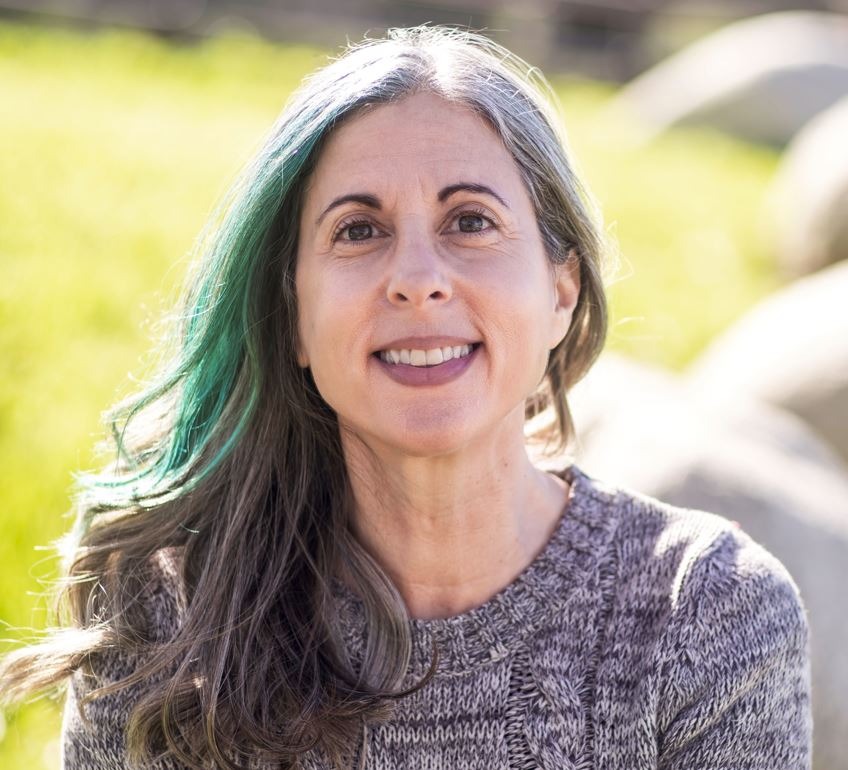
I’m so glad you asked. If you’d like, you can call me your Cuddle Consultant or maybe your Hug Homegirl. I’m the founder of The Cuddle Sanctuary in Los Angeles. You may be thinking, “What the what?” I know. It’s pretty unique. At times, I couldn’t believe it myself.
I laugh a lot these days, but it wasn’t always like that. For years, I was single, independent, and often depressed. Years ago, I was traveling solo for business and feeling incredibly lonely. I latched onto a guy, thinking what I needed was a hookup. That turned out to be completely wrong. Later, I realized I hadn’t been honest with him or myself about what I actually wanted.
What I came to understand is that people do have sexual needs. But we also have needs for connection, affection and simple hugs. For me, those needs weren’t being met. One day, while flipping through an in-flight magazine, I saw photos of people relaxing and platonically cuddling together. I thought, “That’s for me.” I kept Googling “Los Angeles” and “cuddle,” but I couldn’t find anything local.
So I founded The Cuddle Sanctuary. It started as something I needed just for myself, but it’s grown into a wellness practice serving many Angelinos. Now my basic need for affection is regularly met, and I have the connection, community, laughter and fun I always wanted in my life.
What does The Cuddle Sanctuary offer?
In a stressful, often isolating, high-tech world, The Cuddle Sanctuary helps people connect, find community, relax and support their mental health in three main ways.
- Hosting platonic, social cuddle events in West Los Angeles
- Offering individual cuddle therapy sessions
- Training professionals
The social events begin with an explanation of guidelines and include structured ways for people to get to know one another. They’re skillfully led so participants can engage at their own pace. There is no required touch, and people are free to leave at any time if they realize it is not for them. Events typically include about 20 guests, and roughly half are attending for the first time.
Individual cuddle therapy sessions offer a platonic, consent-based experience that can help reduce stress, loneliness and anxiety, while boosting feel-good hormones and overall well-being.
Training through The Cuddle Sanctuary includes online courses, mentorship and two certification programs. One program is for leading group cuddle events; the other is for working one-on-one with clients.
What’s one of the most common misconceptions people have about cuddle therapy?
Think about massage therapy for a moment. Today, you can name a place nearby that offers a therapeutic massage. Years ago, though, massage was often associated with massage parlors and happy endings. Massage therapists had to work hard to legitimize their profession, and it took time.
Professional cuddlers face similar skepticism. People ask, “Is it really possible to have cuddle sessions that are nonsexual?” The answer is a resounding yes.
Our attendees and clients are open-minded people from all walks of life. They include professionals, parents, students, retirees, neurodiverse individuals, introverts and extroverts, people navigating big life transitions, and more. They come from many different backgrounds and nationalities.
For someone booking their first session, what does the experience look like?
First-time clients go through a getting-to-know-you process. It starts with an agreement form, followed by a Zoom call where I ask about their goals, answer questions and make sure we are both comfortable moving forward. I request ID, review payment options and then we schedule the session.
Sessions vary widely depending on the client’s needs. Someone recovering from trauma may have a very different experience from someone grieving a loss. Sessions might include time to relax and breathe, hugs or hand holding, quiet moments, conversation or gentle caresses. I create a calm, relaxed environment where clients can drop their social masks and rest. While cuddles are common, touch is never required.
What does an individual cuddle therapy session typically cost?
I offer a sliding scale starting at $150 for 60 minutes. Factors that can affect pricing include the length of the session and whether the practitioner is hosting or traveling to see the client. Professionals with more training or experience may charge more as their careers progress.
How are boundaries and consent established?
I use The Cuddle Sanctuary’s Stay Safe With Eight protocol to ensure I only work with clients who are a respectful fit. I am deeply committed to practitioner wellbeing, which is why I offer my online Safety Tips for Professional Cuddlers class for free.
I am also a trauma-informed professional, which means honoring each client’s pace, respecting boundaries and checking in regularly. With first-time clients, I often use the Ask and Wait Method. For example, “May I put my arm around you?” or “Would you like me to caress your forehead?” The client decides yes or no. It really is that simple and that profound.
How does someone become a professional cuddler?
I always recommend doing plenty of research before jumping in. I created a free webinar because I get this question so often.
I developed an online certification program that includes 15 hours of class time with me. I have worked with students across Europe, North America, Australia and Africa, which has been incredibly rewarding. Students practice locally with trusted friends or loved ones who act as practice partners. They complete homework, learn trauma-informed care and develop the skills needed to offer high-quality cuddle sessions.
In addition to my own program, I am also a big fan of the training offered by my colleagues at Cuddlist.
What does “success” look like for your clients?
I often ask clients during intake, “How would you like to feel after our session?” For some, success means reduced stress, anxiety or loneliness. Others notice improvements in mood, self-esteem or confidence around giving and receiving touch. Many experience a greater sense of connection, humanity and hope.
How has the cuddle therapy industry evolved?
Over the past 10-plus years, my colleagues and I have done a lot of press to introduce this work to the wider world. When Rolling Stone reached out, I thought that would make cuddle therapy instantly mainstream. It didn’t. Even features in The Los Angeles Times, BuzzFeed, Dr. Phil, The Bachelorette and Keeping Up With the Kardashians were not enough.
Still, we quietly continue the work and change lives. In many places, cuddle therapy has evolved from a misunderstood punchline into a respected mental health modality. I am especially excited to see cuddle professionals and talk therapists working together to support clients. This approach is known as the triadic model.
How did studying communications at UCLA shape you?
I am grateful the UCLA Department of Communication exists. What I really wanted was to study acting, but at 17, communication felt more legitimate. I took acting classes in Hollywood while attending UCLA.
What I learned is that I am not built for traditional academics. I am bored by theory and thrive on experiential learning. My understanding of community came from living in a women’s boarding house on Hilgard Avenue and later through my sorority, AEPhi (hello, sisters!). My understanding of consent came years later through the BDSM community. That is a spicy journey beyond the scope of this article.
What advice would you give current UCLA students?
Be patient with yourself. Throughout school, I was rewarded for finishing the paper and getting the grade. Graduating cum laude was a big achievement. But a few years later, I found myself deeply depressed. I did not know how to slow down and ask, “Am I enjoying this?”
What I eventually learned through lots of therapy is that pleasure matters. With support, I have continued to heal old wounds and develop calm confidence. From that foundation, everything, including my business, has blossomed.
________________________________________________________________________
Previous Content Featuring Unconventional Jobs
- The Ancient Art of the Knife Massage and Holistic Wellness
- 10 Careers You’ve Never Heard Of
- Max Moy-Borgen ’08 Traces His Unconventional Career Path
If you know of a Bruin story for this Unconventional Jobs series, send it to connectfeedback@alumni.ucla.edu.
Bruin news
View All
Connect Newsletter
The Beat Goes On
Life can be very unpredictable. Such is the story of G’bari “GQ” Gilliam ʼ16, a hip-hop dancer/choreographer at the height of professional success when a health trauma earlier this year…
Connect Newsletter
Why Not Westwood?
Connect Newsletter