
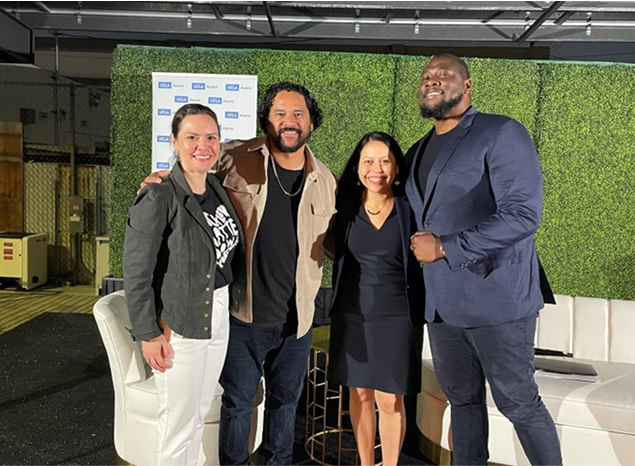
From UCLA to CEO: Shirley Torres ’03 on Healing, Kinship and Leading Homeboy Industries
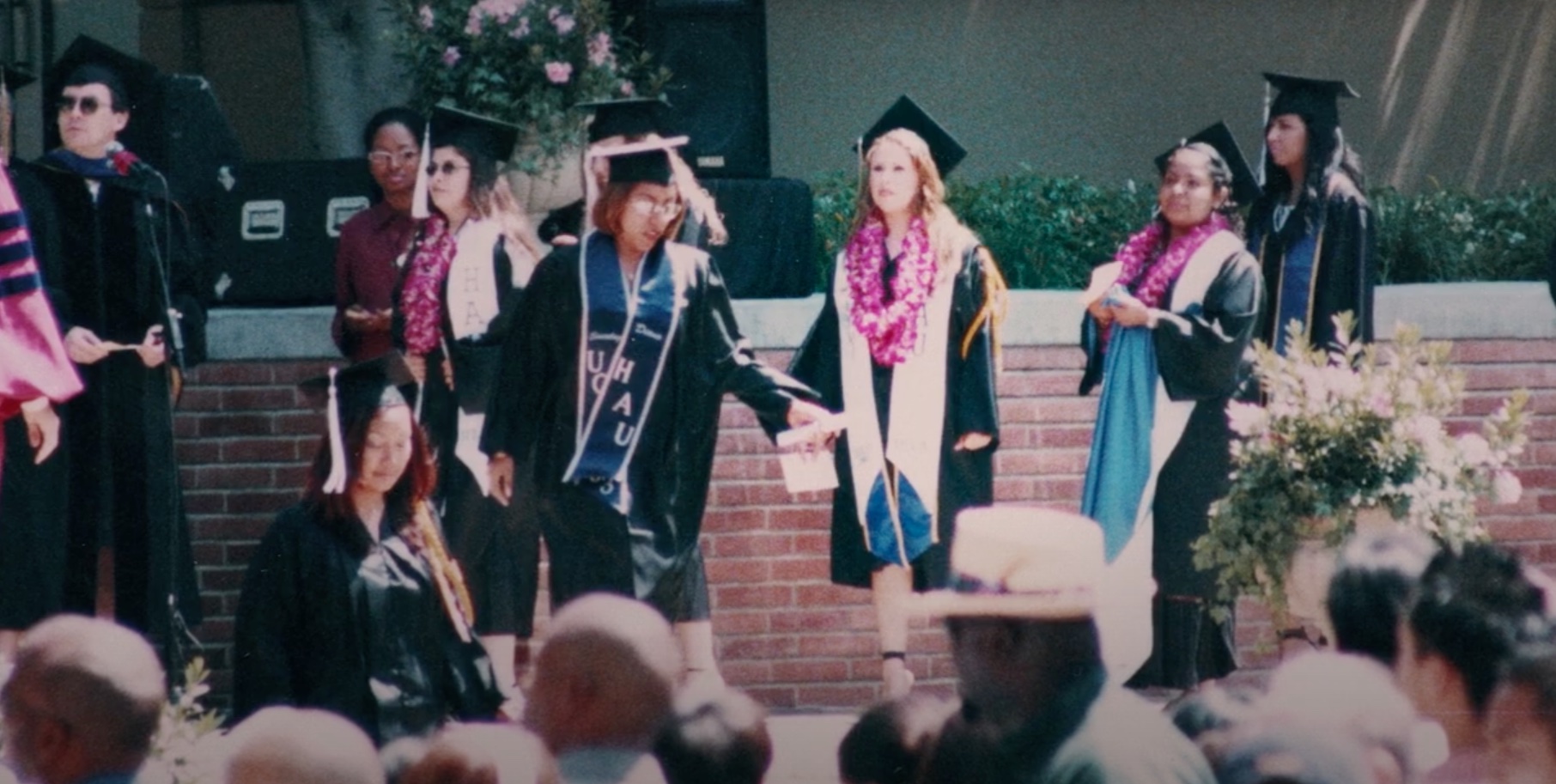
In August 2025, the UCLA Alumni Affairs Diversity Programs and Initiatives team interviewed Shirley Torres ’03 for the Diversity Digest in connection with the sold-out event Changemakers 2025: Radical Kinship in Action – A Day at Homeboy Industries.
Additionally, a Bruin story video highlighting Torres’ story of kinship was produced by the Digital Engagement team. Watch the video here.
Shirley Torres ’03 was 23 years old when she first walked through the doors of Homeboy Industries. A newly minted UCLA graduate with a background in counseling and a heart rooted in her South Central, Los Angeles upbringing, she thought she was stepping into just another job. Twenty-two years later, Torres is now the co-CEO of the world’s largest gang rehabilitation and reentry program — and she calls the work her life’s purpose.
Torres grew up in a large, tightly knit family where survival often meant relying on neighbors, faith, and kinship. Her grandmother’s home, at the corner of 29th and Central Avenue, was the anchor of that community. She describes it as “the house where the invitation was always, ‘come as you are.’” That open-door welcome, even when her grandmother had little to give, shaped the way Torres now leads Homeboy — with a commitment to radical kinship, unconditional love, and the belief that healing is possible for everyone.
“Our success, our healing, and our survival — it’s all connected” Torres said.
From Campus to Community
Torres began her higher education journey at Mt. San Antonio College before transferring to UCLA, where she studied education and sociology. At UCLA, she found a home in the Academic Advancement Program (AAP) and developed life-long friendships. Later she became a mentor for other transfer students, many of whom were also the first in their families to attend college. Torres credits the rigor and excellence demanded at UCLA, through professors and mentors like Drs. Kris Gutiérrez and Eric Avila, for nurturing her innate curiosity to imagine that another world is possible, and for cultivating her courage to disrupt the status quo.
But even as she pursued academia — once envisioning a Ph.D. and a career as a professor — Torres felt drawn back to the kind of community-based work that had shaped her childhood. She realized that success could not only be defined by degrees or titles, but by living in alignment with her values. That realization eventually led her to Homeboy.
A Movement Rooted in Love
Founded by Father Gregory Boyle in 1988, Homeboy Industries provides job training, mental health support, education, and a second chance to thousands each year. For Torres, its mission is clear: healing must come before everything else.
“The most important job here is an inside job,” she explained. “We want to help people to heal from trauma before anything else. Historically, healing hasn’t been afforded to the poor and marginalized.”
Torres credits the many years of walking alongside Father Greg and former gang members, learning from their courage and being shaped by their resiliency, for the leader she is today.
Under her leadership, Homeboy has expanded to include a continuum of care, from transitional housing to a forthcoming behavioral health campus in Hollywood. Projects like Hope Village are designed to meet people at the crossroads of incarceration and opportunity, offering sanctuary alongside skills.
Torres often reminds her team that their most important job is to “pay attention to the swing of the door.” Their role is to check the pulse rather than the box. “In 22 years, I’ve interviewed thousands of gang members. Most of them joined between the ages of 9 and 12,” she said. “Hopeful kids don’t join gangs.” That belief fuels her mission to disrupt cycles of trauma and incarceration, and to replace them with systems of care and opportunity.
Leading with Kinship
Today, Torres co-leads Homeboy Industries alongside co-CEO Steve Delgado. Together, they lead a team of over 300 staff who are responsible for receiving 10,000 clients each year and they employ 500 trainees in 13 social enterprises as part of their innovative 18-month work training program. They are proud to say that 70% of Homeboy’s staff were once clients. For Torres, these are not just statistics — they’re proof of Homeboy’s transformative model.
“People here didn’t always believe in themselves,” she said. “Now they’re leading this place. It’s a full-circle moment.”
That full-circle impact begins with the trainee program — the first entry point for those who walk through Homeboy’s doors. Torres often reminds Homeboy trainees that everything they need to succeed, they were already born with. Over the course of their training that first leap of faith become fact. She frequently receives messages from program alumni who are now taking their kids to college, becoming homeowners or launching businesses — they are living their wildest dreams. Earlier this year, Homeboy celebrated their largest graduating class with more than 100 graduates who completed vocational programs, high school, bachelor’s, and master’s degrees. This class includes two newly minted UCLA alumni.
A Global Mission
As Homeboy grows from a local nonprofit into a global movement, Torres remains grounded in the lessons of her grandmother’s porch and Father Greg: everyone deserves to be seen, welcomed, and loved.
“We belong to each other,” she said. “And we’re going to keep going forward — puro pa’lante.”
With projects like Hope Village, a transitional housing initiative for formerly incarcerated individuals, along with a growing global network of partner organizations, Torres sees Homeboy as a model for how communities can heal together. “Hope has an address,” she said. “And there is no ‘us and them’ — just us.”
the diversity digest
These alumni feature articles are developed by the Alumni Diversity Programs and Initiatives team to amplify the impact and reach of incredible Bruins across generations. They are published as part of the quarterly Diversity Digest newsletter, which highlights opportunities to engage with UCLA and the alumni community through a social justice lens.
Know a Bruin whose story should be told? We’d love to hear from you.
Questions? Reach us at diversity@alumni.ucla.edu
recent diversity digest articles
View All
Connect Newsletter, Diversity Digest
Bruin Bridge Building: Radical Listening and Ralina Joseph’s Vision for Inclusive Excellence at UCLA
Bruin Bridge Building: Radical Listening and Ralina Joseph’s Vision for Inclusive Excellence at UCLA For Ralina Joseph, UCLA’s inaugural Vice Provost for Inclusive Excellence and professor of African American Studies,…
Connect Newsletter, Diversity Digest
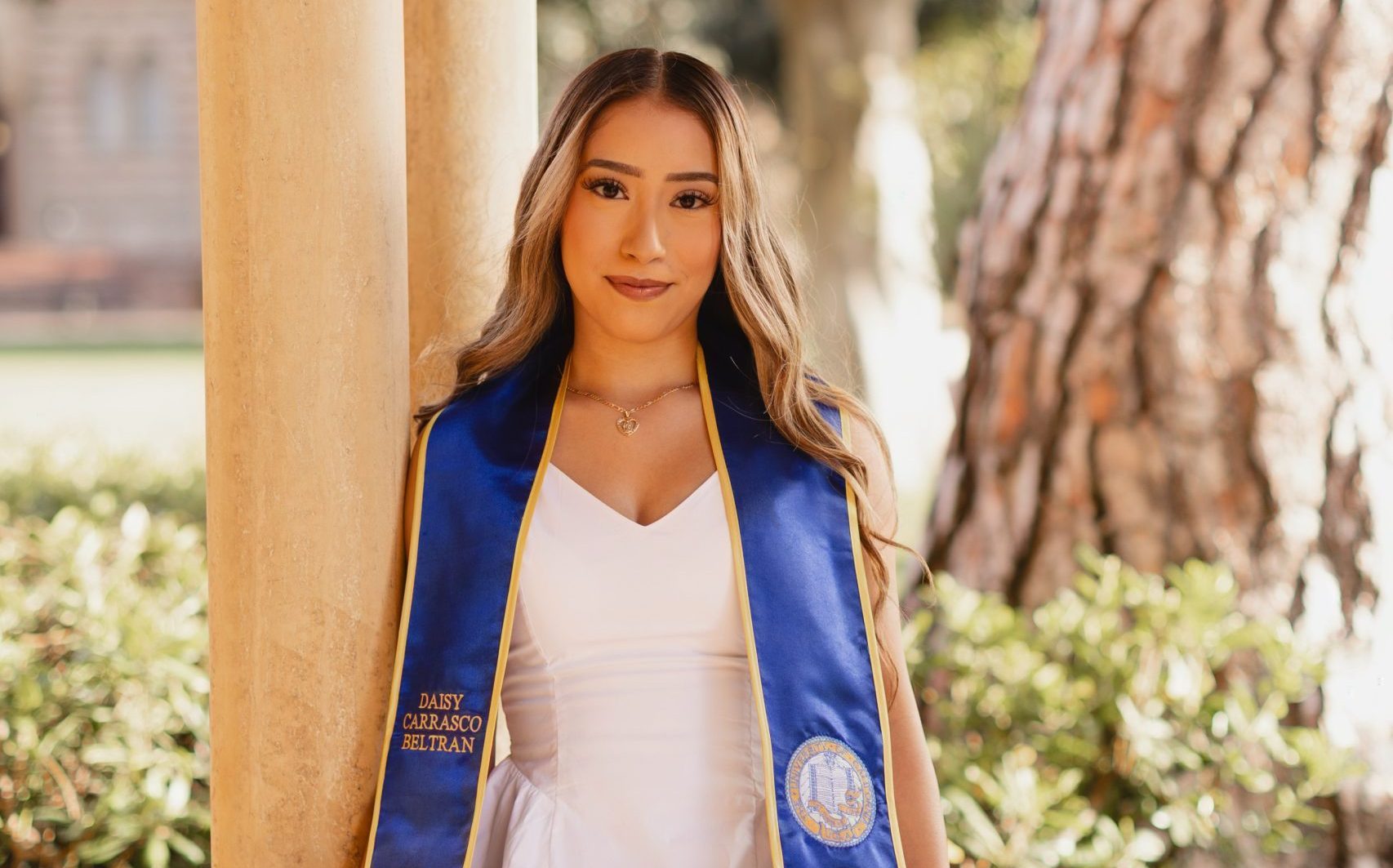
Daisy Carrasco Beltran ’26, Paying It Forward Through Education

Connect Newsletter, Diversity Digest