Meet the Prez - Ann Wang
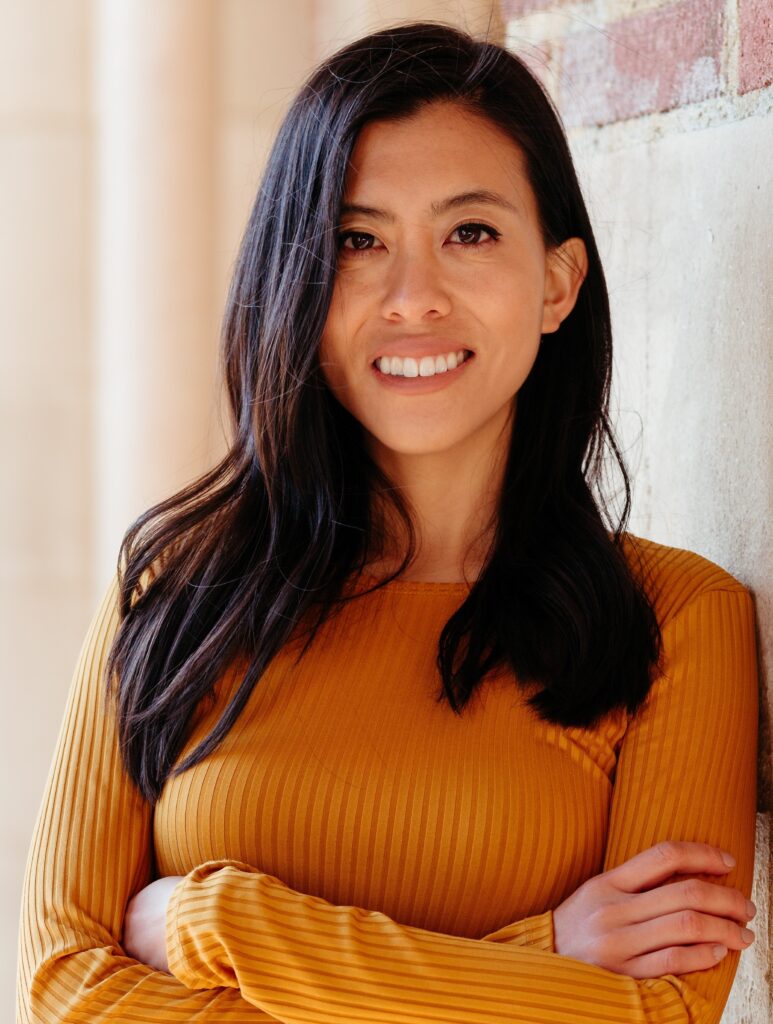
When Ann Wang ʼ13 won the UCLA Award for Recent Graduate Achievement in 2015, her future had limitless possibilities. At the time, she was co-founder and CEO of the socially conscious startup Enrou, an online marketplace that aims to create a positive social, financial and sustainable impact on global communities through the power of consumerism. The year prior, she had represented Enrou at the Forbes Under 30 Summit and won the "$400,000 Pressure Cooker" pitch competition. Notably, she was named a Forbes “30 Under 30” social entrepreneur in 2016, and she went on to build her own agency and creative studio that intersects entertainment, media, tech and nonprofits to generate lasting social and cultural change. That same year she joined the UCLA Alumni Association Board of Directors, and this past July, she became the first Asian American female and millennial to serve as the UCLA Alumni President.
Wang takes us through her journey from her early days as an uninvolved student to becoming the top officer charged with representing and engaging more than half a million UCLA alumni.
I chose UCLA because I wanted to focus on international development studies as well as have a city that had access to every industry and every opportunity. I didn’t really know what I wanted to do, but I wanted to be in a university that had vibrancy of opportunity, and for me that meant access to a lot of different industries.
I didn’t really know how to fit in. I grew up in Rancho Cucamonga, which is an hour east of L.A. but culturally, it was a different universe. UCLA was very intimidating, because it’s a massive school and I had never lived away from home before. The first couple of years was a transition from a mental health perspective and in learning how to live independently.
As a student, I honestly wasn’t very engaged. I wasn’t part of many organizations, maybe a couple of clubs, but my main priority were my studies and being a student worker. My freshman year I started working for the UCLA Volunteer Center which was brand new at the time. It was built by these amazing, innovative women, who taught me the importance of how to create and innovate within the UCLA ecosystem, which can be pretty bureaucratic at times. After a couple of years of learning and growing, I became a UCLA External Affairs intern under Rhea Turteltaub (Vice Chancellor for External Affairs), which was where I really honed my professional skills — by watching these powerful women move people forward towards impact. This set me up to be an entrepreneur.
By the time I was a senior, we accidentally built this company that was later called Enrou. I grabbed my best girlfriend (co-founder Jessica Wilson ʼ13) and gathered a group of passionate and talented Bruins to build within our own space in the UCLA ecosystem. The idea was to source these amazing products from developing countries that had a story behind them, and then create an online marketplace where socially conscious people can invest in artisans and makers through microfinance, supporting education and providing scholarships. Ideally, these financial investments would have a social and cultural impact in those regions.
Obviously, we had no idea what we were doing. We didn’t know how to find investors. We didn’t know how to put a business plan together. We didn’t know how to pitch anything. We eventually got into StartUp UCLA and started learning about pitching, how to raise money and how to think about our product. On a whim, we applied off Twitter for this pitch competition at Forbes Under 30 Summit in Philadelphia. The top prize was $400,000. We found out we got the opportunity to compete only 48 hours before the conference, so I slept very little trying to prepare. We pitched in front of a thousand people — and we won.
UCLA, Startup UCLA and our community of Bruins prepared us every step of the way without us even knowing it. Without the knowledge and support we gained from UCLA, we could not have told that story on stage. I credit this accidental catalyst that happens at UCLA when you are passionate, optimistic, impact-driven and you can bring people together.
After Enrou experienced rapid growth, capital raise and our fair share of challenges, we decided to slow down our build. And in a few years I knew it was time for me to step away. Once again, I was in a period of transition much like my entry into collegiate life. It was that first transition where I learned to prioritize a deeper level of self-awareness and my mental health, which is an important life lesson that I carry with me to this day.
I am now a creative consultant in a lot of ways. I built an agency and creative studio called Mindful Ambition where I work with artists, corporations, organizations to think about both their social impact and their tech investing strategy. I love trying to move the needle on really big social or cultural issues like mental health, API discrimination (Stop Asian Hate), recidivism and incarceration. I try to build bridges among different industries — entertainment, tech startups, nonprofits or corporations — so they can all work together towards those particular goals.
I wasn’t a rah-rah Bruin, but my connections to UCLA ran deep. My first job out of college was assistant director with Alumni Scholarships. After I left to work full-time with Enrou, we continuously hired many Bruin interns. We had customers and investors, venture capitalists who were alumni. My mentors Rhea (Turteltaub) and Julie (Sina, Associate Vice Chancellor of Alumni Affairs) were very big supporters, and it was then that I was nominated to join the Alumni Board. UCLA had given me so much and was critical to the position where I found myself — how could I say no? I was only 23 years old when I sat on my first board.
I felt like an impostor on this board of incredible, but slightly wiser, slightly older individuals. It took some time to get my footing and understanding of where my value was and how my voice and skill sets could be impactful. When I first joined there was no one on it who had graduated within 10 years, so I was the lone millennial voice. I was tasked with working with the Careers Committee where we established an Entertainment Industry Cabinet that connected top tier entertainment professionals with alumni and students. Later, as more young alumni joined the board, we moved towards new forms of innovation and engagement with alumni in the post-COVID era, where I was able to utilize my knowledge of tech. I didn’t want a ton of leadership roles, I just wanted to find a place that I felt I can make the most impact.
After six consecutive years, I was about to term off the board, when I felt this deep feeling that my work was not yet done. We are in this unprecedented post-COVID era with unique alumni and student needs. Our University, our amazing Association staff and the collaborations happening across campus have never been this strong and innovative, so pairing that with this season of need will redefine how alumni engagement works for the next generation. Focusing on meeting their needs was the catalyst for me to want to lead the board in the next couple of years. We’re about to embark into a period of innovation, building and resources, driven by technology, driven by data and driven for alumni across their lifespan. So that’s why I raised my hand (to run for president).
As the first Asian American woman to serve as president, I have a platform. Sure, outside of those labels I am who I am and my mentality has always been how can I be valuable; how can I be impactful? But I have also been on this journey of embracing, understanding and elevating my voice as an Asian American woman. That was not the case for me growing up. I never wanted my Asian identity to be this source of loud amplification of who I was. But I came to realize that I now have this ability to serve the University and our alumni, while representing the young, female Asian American voice who is not afraid to show up and fight for the amplification of our multi-cultural community and for the challenges we face, whether it’s discrimination, access, equity or whatever the needs may be. I accept this responsibility with great joy, and hope to make an impact through the Association Board and as a future UC Regent.
What impresses me most about alumni is how diverse and humble we are as a group. We are passionate and optimistic. We showed up for each other during the pandemic. We’re committed to solving some of the world’s biggest challenges and contribute in ways that are impactful, driving culture and society towards progress and evolution. But given all that, there’s not a lot of verbal shouting of all that we do. There’s an opportunity for us to share our stories more broadly and with pride. It’s a consistent theme that I’ve seen with alumni whom I’ve met who are change-makers and impact-drivers, and yet who are still pretty humble about it.
The next two years will be driven by our board’s commitment to the strategic plan. The environment we’re in right now is the needs of alumni have changed the last couple of years and continue to change. Our goal is to identify and address those needs across their lifespan. With the Chancellor’s Bruin Promise, we’re offering opportunities for lifelong learning and open access to UCLA’s resources. The two main priorities are: 1) Align and amplify the Alumni Association identity, and 2) Reimagine alumni engagement. We’ll be utilizing research data and technology to achieve these goals. We aim to elevate alumni relationships with each other, with UCLA, with the community and have a bigger presence globally.
At the end of my term, I want my legacy to be a noticeable change in how alumni perceives UCLA and the Alumni Association. I want alumni to feel a clear difference in how the University and the Association are showing up to support them. Secondly, I want alumni to feel seen and empowered by the UCLA story; for UCLA to not be perceived as just a bubble, but as one that reaches out to different industries, makes new partnerships, engages new alumni communities, so that their identity and their story is also the UCLA story.
Recent Articles
Our Proud Partners


