
Never Give Up: Finding a Cure Is Worth Fighting For

Each year on a Saturday in October, thousands come to the UCLA campus to be part of the L.A. Cancer Challenge, a Halloween-themed 5K walk/run benefiting pancreatic cancer research. The day brings patients, family members and supporters together to raise funds for a cause that touches thousands of lives.
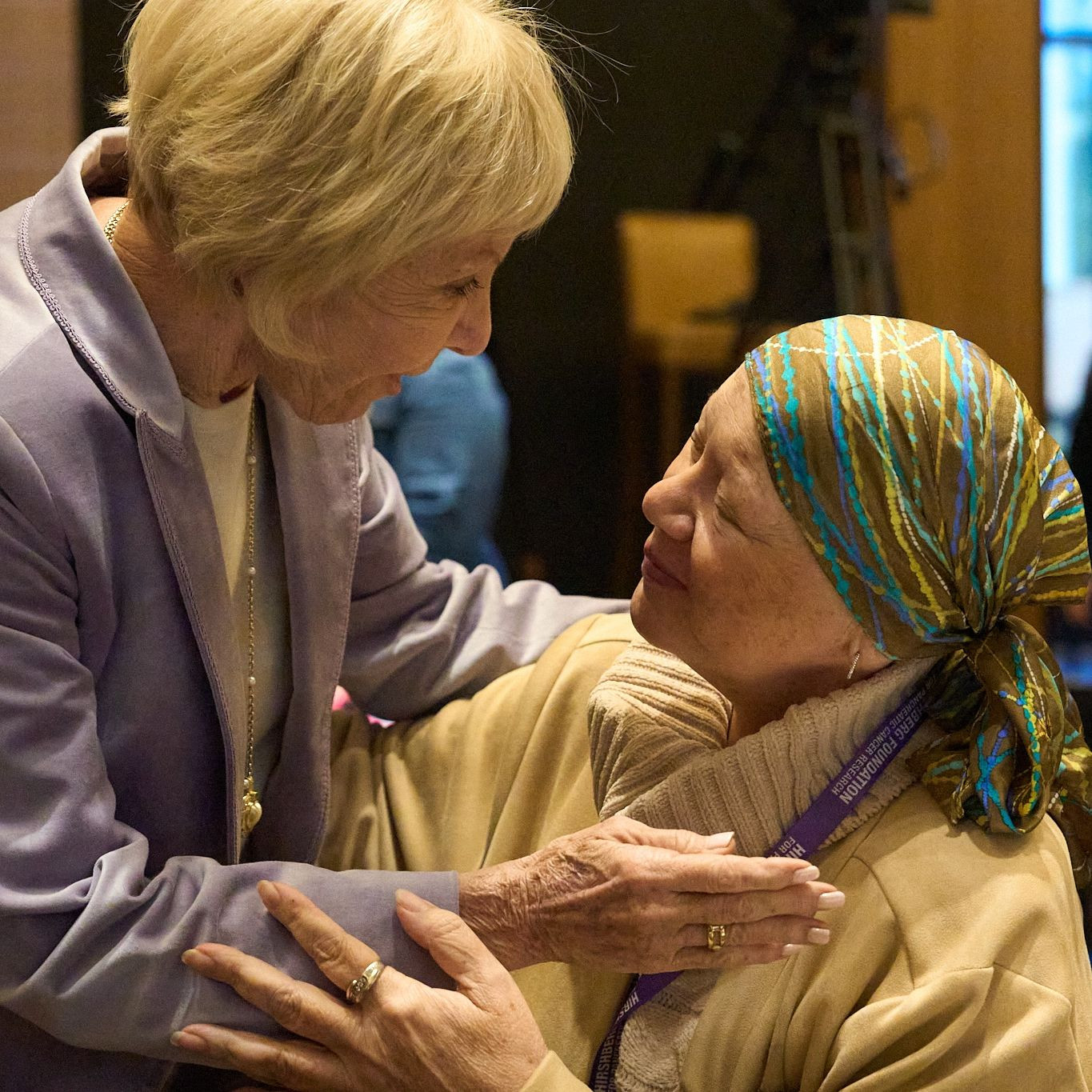
The event, now in its 29th year, is hosted by the Hirshberg Foundation for Pancreatic Cancer Research, a national nonprofit dedicated to fighting the disease. Agi Hirshberg founded the organization in 1997 following the death of her husband, Ronald Hirshberg, at age 54 from the disease. Hirshberg was known as a “retail genius.” He began his career as a buyer at Filene’s, a New England department store, and rose to found and run several successful businesses. He was also a fun-loving adventurer, sailing in international competitions and riding Harley Davidson motorcycles.
Although the pancreatic cancer survival rate is increasing, it is currently the third leading cause of cancer-related deaths in the United States. According to the American Cancer Society, in 2025, an estimated 67,440 Americans were diagnosed with this aggressive and difficult-to-detect disease, and tragically, nearly 52,000 will die from it.
Nearly 30 years ago, there were few treatment options available to Ron Hirshberg. After his death, as a gesture of gratitude for his care, his wife, Agi Hirshberg, wanted to support UCLA Health’s pancreatic cancer program. To her surprise, no such program existed at UCLA or anywhere else. Determined to find a cure, Hirshberg vowed to continue her husband’s fight against this disease.
Agi Hirshberg’s daughter, Lisa Manheim ’91 is the executive director of the Hirshberg Foundation. Manheim studied history and business at UCLA. When she graduated, she began working at the Westwood Macy’s. She says, “I was one of the youngest store managers in the company, and I loved it. I didn’t know what I wanted to be when I grew up, I just knew that I wanted to be in business.”
“if somebody’s going to cure pancreatic cancer, we want it to be UCLA”
In 1999, Manheim was pregnant with her first child. Her mother asked if she would help with the foundation during her maternity leave. What began as a temporary arrangement turned into an indefinite stay. “We started in my mom’s living room,” Manheim recalls. “Almost 30 years later, we’ve built our foundation at UCLA. I always say there’s no better person to work for than your child’s grandmother, and the opportunity to stay connected to UCLA is a wonderful bonus.”
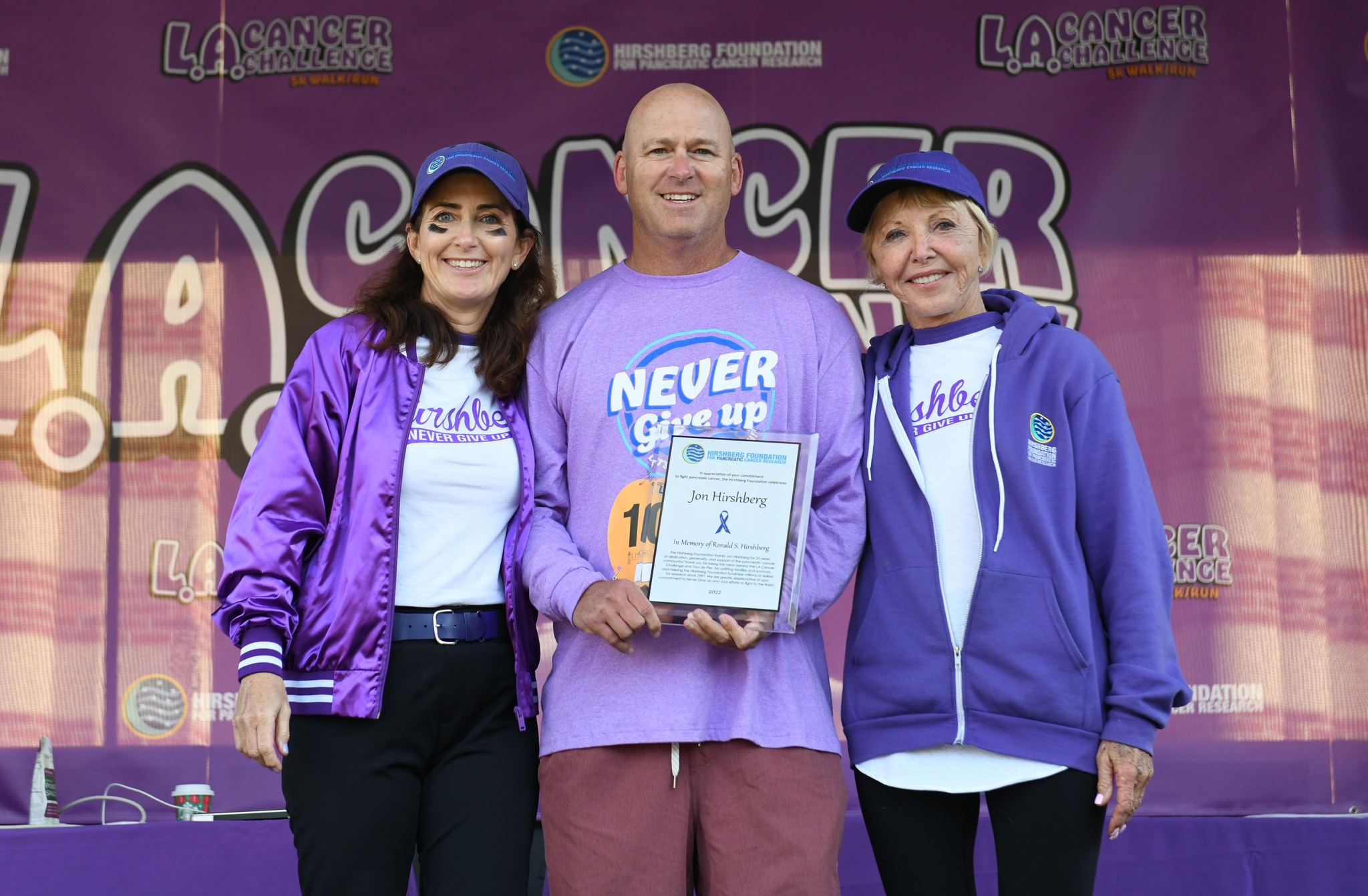
Manheim’s office is painted a vibrant UCLA blue. Her connection to the University is strong: all three of her sons were born at the UCLA Medical Center, and she is a season ticket holder for four different UCLA teams. “We’ve always said if somebody’s going to cure pancreatic cancer, we want it to be UCLA,” she says. “What a gift that would be!”
One of the first things Manheim and Hirshberg did was to establish the Hirshberg Foundation five pillars mission statement, a decision that has guided their work from the outset. The first pillar focuses on creating a place where patients can receive all their treatment options in one place. In 2015, the first Center opened, and in 2024 it moved into a state-of-the-art facility within the UCLA Medical Plaza to achieve this goal.
The second pillar is dedicated to funding improved patient care, enhanced treatments and increased survival rates. With the funds they raise, the foundation fuels innovation, awarding “seed grants” to institutions across the country for initial research support and “catalyst grants” for longer-term initiatives. Notably, the seed grant program has generated over $130 million in funding from the National Institutes of Health (NIH).
The third pillar is to be a resource for patients and their families. Their director of patient programs, Amy Reiss, is available to guide patients throughout their journey, from sharing resources to connecting the newly diagnosed with survivors. In addition, the Foundation funds a dedicated patient navigator at UCLA to greet patients and assist them with navigating their treatment. Manheim says, “My mom wanted to make sure that patients have somebody holding their hand, both physically and practically.”
For two decades, the Foundation has organized a patient symposium at UCLA every spring. The event evolved from presentations by doctors on their research into a collaborative forum where patients, families, doctors, caregivers and survivors share information and address questions together. The event is free of charge, entirely funded through sponsorships.
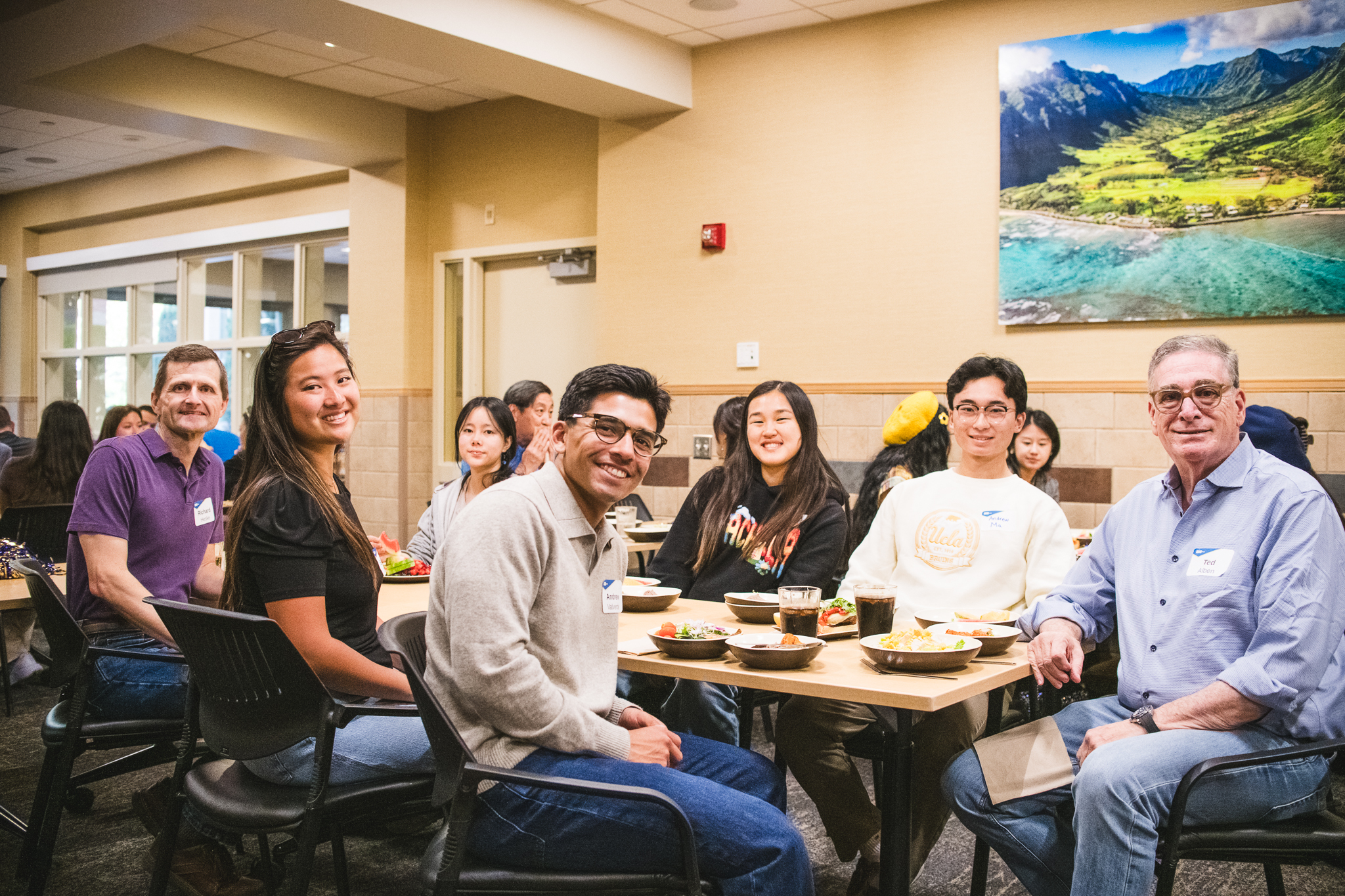
A pancreatic cancer diagnosis carries a mental toll for everyone involved. To build connection and hope, Agi Hirshberg welcomed survivors, doctors and caregivers to her home to share a meal. The event became a beloved yearly tradition known as “Casual Sunday at Agi’s.”
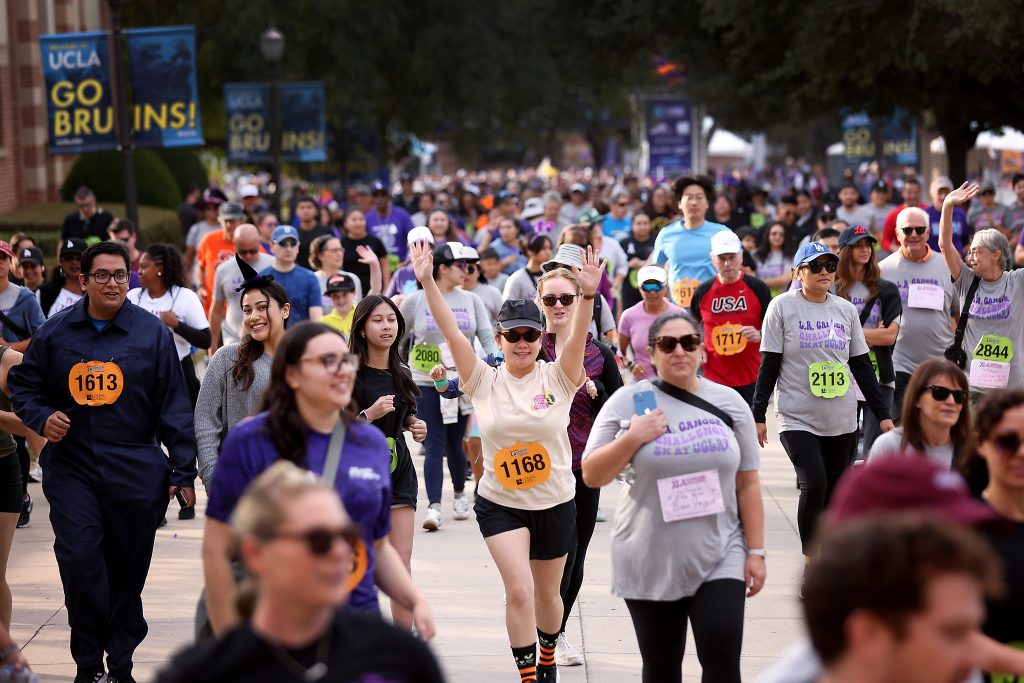
The fourth mission pillar is to bring people together through physical fitness to build awareness and support. Inspired by Ron Hirshberg’s love of adventure, Manheim explains, “We started the L.A. Cancer Challenge 5K because we knew Ronnie would not have wanted to go to a sit-down banquet.” The 2025 event raised more than $734,000 for cancer research.
Each year, the 5K highlights the work of an honorary medical chair — a UCLA doctor or researcher who addresses participants before the race, offering a direct connection to the work being funded by their donations. Manheim says, “I’d love to have more UCLA alumni participate. It’s a great event on a spectacular campus; I get goosebumps every time.”
The fifth pillar is to find a cure in memory of Ron Hirshberg and all pancreatic cancer patients. “The work we’ve funded has led to improved patient care, better outcomes and promising treatments on the horizon — work that would not have happened without my mom’s determination,” Manheim affirms. “Our motto is ‘never give up’ because finding a cure is worth fighting for.”
There is hope for future developments. In 2025, UCLA researchers developed a nanoparticle that carries a combination treatment with an mRNA vaccine and a small immune-boosting molecule to the liver, reprogramming it to attack pancreatic cancer. UCLA scientists are running trials on off-the-shelf cancer immunotherapies that don’t need to be custom-tailored for each patient. These treatments could ultimately be mass-produced, expanding access and reducing costs.
“Our motto is ‘never give up’ because finding a cure is worth fighting for.”
Thanks to the work of the Hirshberg Center, UCLA Health has become a leader in pancreatic cancer care and research. Five-year survival rates have been rising slowly, from 7% a decade ago to approximately 13% today. UCLA’s surgical oncologists perform more pancreatic surgeries than any other hospital in Southern California.
“With the progress we’ve made, we now have a community of people who are multi-year survivors. They’re the ones who are able to tell the newly diagnosed, or the people who are about to go into surgery, ‘We’ve been there. What questions do you have? You’re going to be okay.’” Manheim says, “There’s nothing like it.”
To learn more about how you can help fight pancreatic cancer, visit pancreatic.org.
Bruin news
View All
Connect Newsletter
The Beat Goes On
Life can be very unpredictable. Such is the story of G’bari “GQ” Gilliam ʼ16, a hip-hop dancer/choreographer at the height of professional success when a health trauma earlier this year…

Connect Newsletter
Why Not Westwood?
Connect Newsletter