Category Archives: Diversity Digest Spotlight
Mandla Kayise '87, M.U.R.P. '23, Has Made Empowerment His Life's Work
Mandla Kayise’s UCLA journey began with ambition and activism. As an undergraduate in the late 1970s and early 1980s, he pursued engineering while immersing himself in campus leadership through the Black Student Alliance and student government. Balancing both proved difficult. Without clear guidance on how to navigate a rigorous academic track while pursuing high-level leadership, Kayise struggled with self-discipline and with institutional policies. During what would have been his junior year, two difficult quarters triggered an automatic academic dismissal.
He describes that period as transformative. “It was a wake-up moment for me. It was a game-changer,” he said. Though his overall academic record remained solid, he did not fully understand how university policies worked or how quickly one’s academic standing could shift. After his dismissal, he entered what he calls a survival period, working a series of jobs over three and a half years.
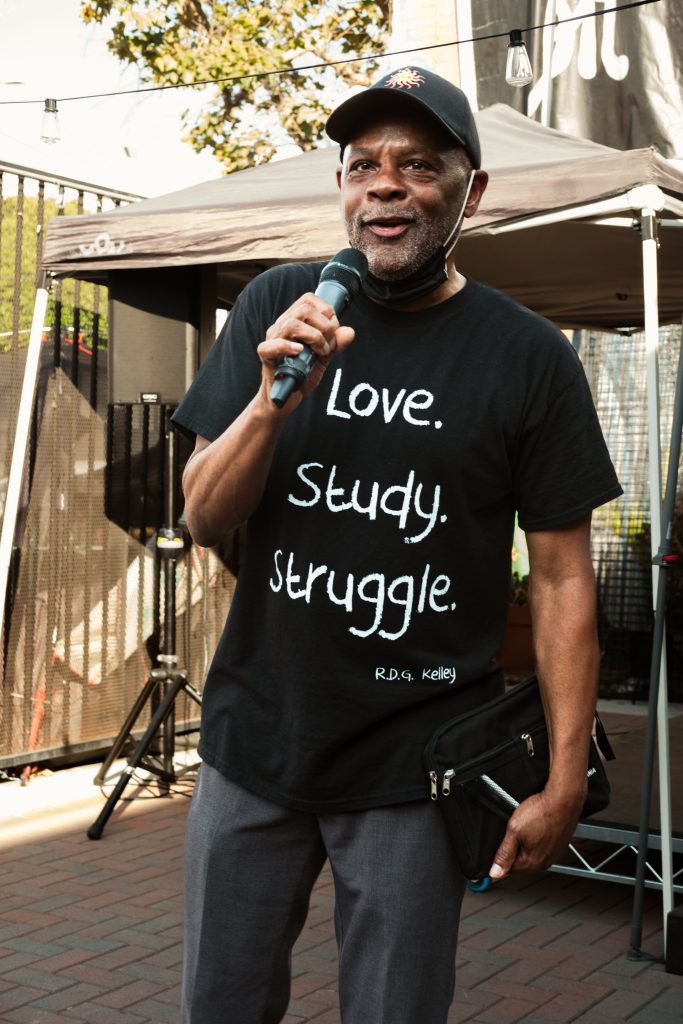
At one point, he held a coveted position as a junior engineer at Hughes Aircraft. For someone from his community, it was a rare opportunity. Yet the financial stability did not resolve the deeper issue. “I had this sense of an unfulfilled mission,” he said. That unfinished purpose eventually brought him back to UCLA.
When he returned, Kayise pivoted, choosing international economics so that his extensive calculus coursework would apply directly to his new major. The move was practical and forward-looking. His interest in quantitative analysis later led him to a UCLA graduate program in urban planning, where economic data intersected with social realities and community development.
Retention Through Empowerment
Kayise’s experience as a student who nearly became part of a statistic that institutions often failed to account for shaped his life’s work. He recalls learning that for Black students entering around 1980, the five-year graduation rate was roughly 22 percent. Students who stepped out and did not return often disappeared from the data and fell off the institution’s radar.
That reality became a driving force. “I kind of looked at retention through that lens,” he said. His question became clear: What does it actually take for students to persist in institutions that expect them to navigate complex systems independently?
As president and CEO of New World Education, Kayise centers his work on empowerment. Influenced by popular education frameworks he encountered in graduate school, he rejects top-down approaches that treat individuals or communities as problems to be fixed. “Empowerment has informed all of that work,” he said. “It’s very difficult to facilitate empowerment if you yourself are not operating from a place of empowerment.”
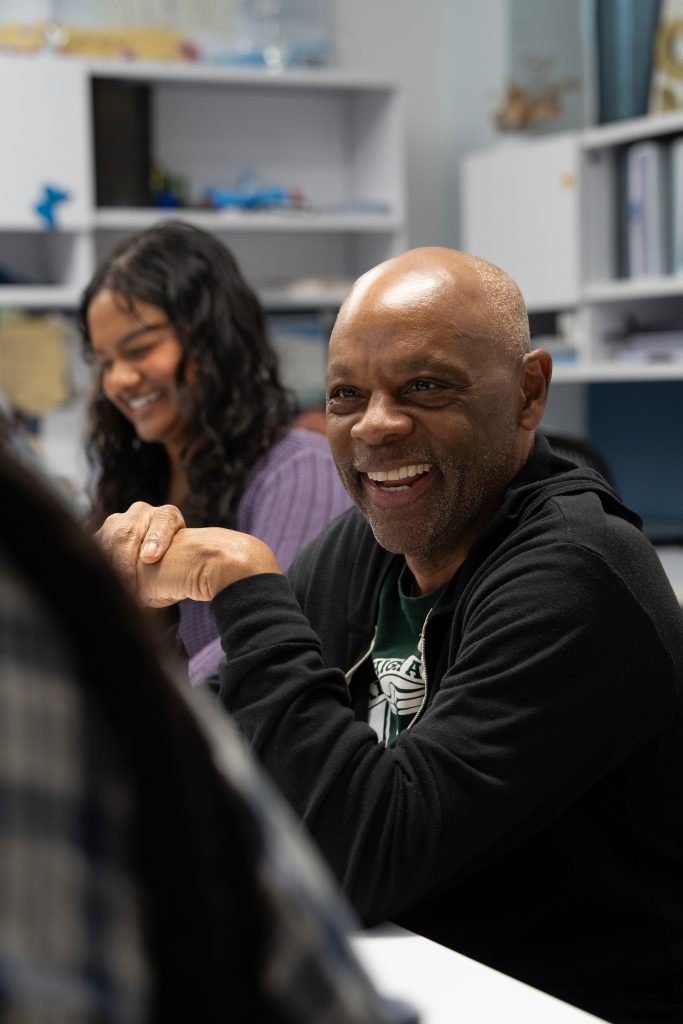
His professional development framework, the House Method, rests on four core practices: self-awareness, navigating professional spaces, holistic goal-setting and consistent self-reflection. Kayise encourages young professionals to conduct their own self-evaluations rather than waiting for formal feedback. In a rapidly changing workplace, he argues, growth must be proactive and self-directed.
From Deficit to Asset
Across K-12, community college and university settings, Kayise identifies the lack of nurtured self-awareness as a central barrier, particularly for students from under-resourced communities. Institutions often emphasize what students do not know or where they fall short, rather than building upon the skills and strengths they already have as a foundation for supporting future growth.
In contrast, Kayise guides students in explicitly recognizing their potential. He asks them to identify three interests, three skills and three personal qualities. Each person’s list is unique, forming what he calls an educational and professional DNA. “Everybody has them,” he said. The exercise shifts students from being defined by deficits to recognizing capacity.
“You know your floor,” he added. “But you never really take stock of what is your ceiling.”
By beginning with assets rather than gaps, students engage institutions from a position of agency rather than insecurity.
Ownership in Community Work
Kayise applies the same philosophy to community development. In under-resourced neighborhoods, he believes meaningful participation begins with ownership. Residents must see themselves not simply as recipients of services, but as decision-makers who can define how resources are used.
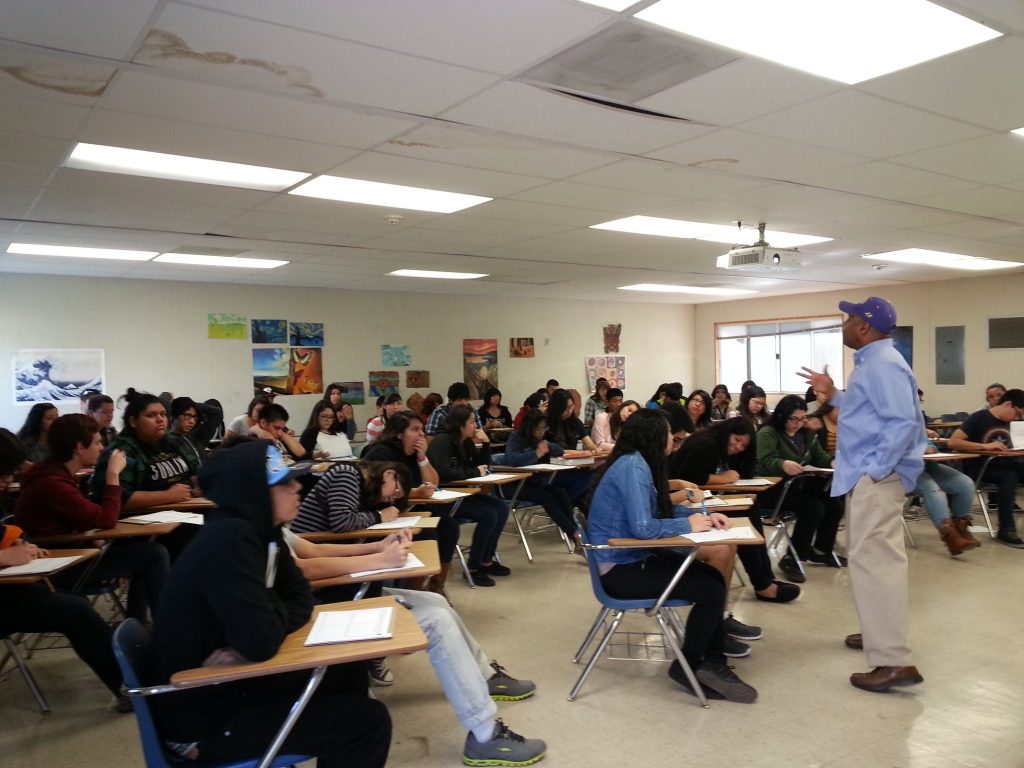
“Residents are ready to take ownership. They don’t know how,” he said. Providing education about land use, economics and resource distribution equips communities to understand how neighborhood conditions are shaped.
He also emphasizes inclusive engagement. Working only with homeowners, he argues, elevates a relatively privileged subgroup within an under-resourced neighborhood. Instead, he advocates for including tenants, transitory residents and individuals who have experienced homelessness or incarceration in neighborhood planning and decision-making about how communities are served and how resources are distributed. “These are people who paid the ultimate price,” he said. “So how do you take advantage of their knowledge?”
Local Context and Reparations
Kayise’s service on the Los Angeles Reparations Advisory Commission deepened his understanding of place-based harm. Examining housing segregation at the neighborhood level revealed how geographic confinement shaped access to education, economic opportunity and health care. It also intensified exposure to over-policing and racial violence.
“When you look at it at the neighborhood level, you realize the depth of the harm,” he said. Concentrated trauma, he noted, becomes compounded trauma when residents experience its effects daily within confined spaces.
As part of the commission’s outreach, Kayise helped deliver more than 80 presentations to churches, schools and community groups. While state and national conversations draw greater attention, he believes local dialogue is essential. “The evolving community-level conversation is essential to the outcome,” he said. The commission has since submitted its recommendations to the Los Angeles City Council, bringing reparations into formal policy discussions and outlining proposals addressing housing, economic opportunity and education.
Advice for Bruins
For UCLA students and alumni seeking to create positive change, Kayise’s guidance begins with reflection. “Know and mobilize your personal story,” he said. "Education should be grounded in a mission larger than individual advancement."
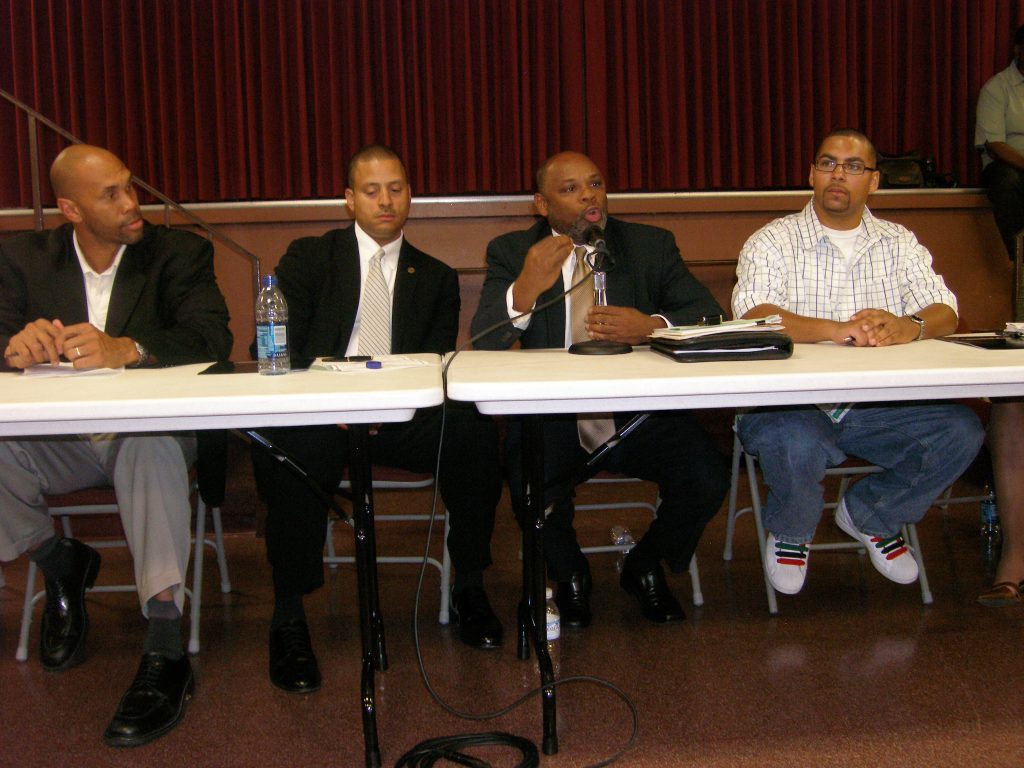
Many marginalized students carry an unspoken community expectation, he noted. Education is often seen not only as personal advancement but as an opportunity to uplift family and community. Professional culture often reinforces individual achievement, but Kayise rejects the idea that success requires separation from one’s roots. Instead, he encourages students to intentionally align their careers with ways to support and invest back into the communities that shaped them. “You’re likely going to have to carve that path out for yourself,” he said.
Alignment between career and community rarely happens by accident. It requires intention, self-awareness and sustained commitment.
Kayise’s engagement with UCLA did not end at graduation. After roughly a decade as a staff member supporting student-initiated outreach and retention programs, he left the University but remained connected. Former student leaders reached out, asking him to return as an adviser. He re-engaged through the UCLA Black Alumni Association viewing Alumni Affairs as an extension of a mission rather than a social network.
For Kayise, UCLA’s alumni community represents potential for long-term partnership and impact. His career reflects a consistent belief: education, when grounded in empowerment and accountability to the community, becomes a catalyst for systemic change.
Recent Articles
- The Fire Within: Leo Rochman’s Story of Resilience

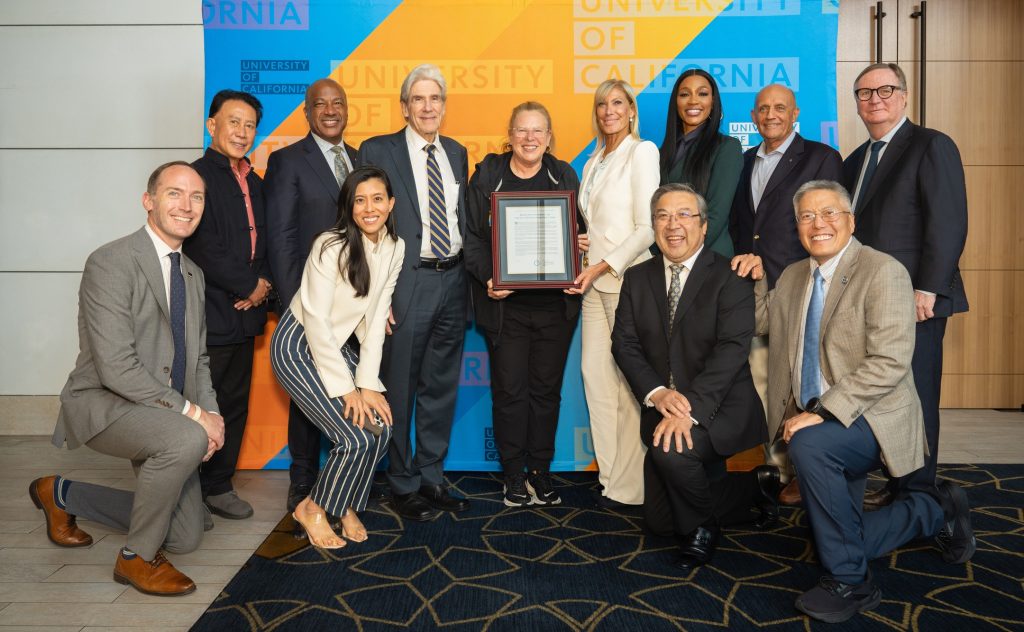
- UC Inspires Honors UCLA Alumni
- UCLA AAP Alumni Spotlight - Adrianos Facchetti ’01, J.D.
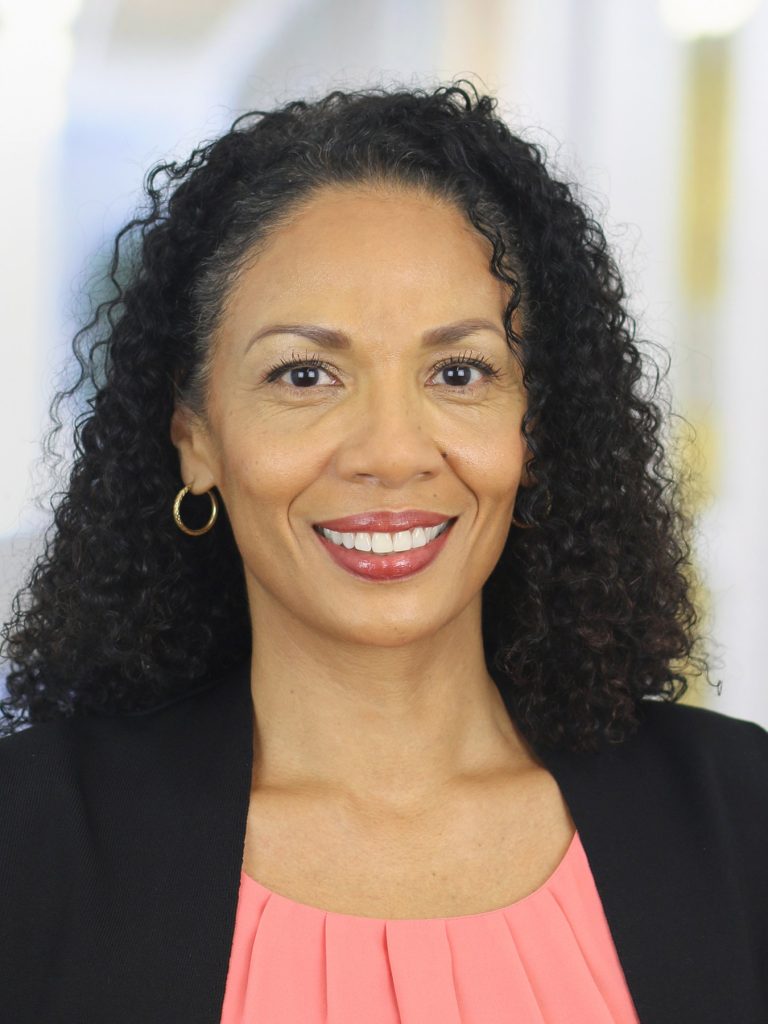
- The Story Behind Jackie Robinson’s 1946 Reintegration of Organized Baseball

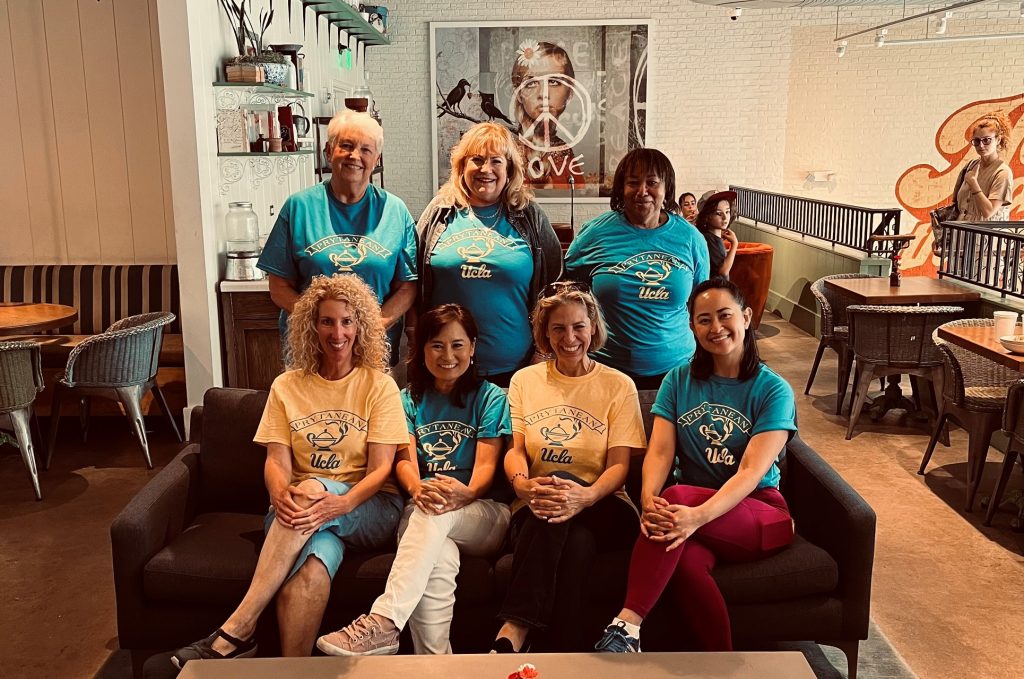
- UCLA Prytanean Celebrates Its Centennial
- Building Community: UCLA Disability Alumni Network Focuses on Belonging and Visibility

How DemocraShe Builds Civic Engagement for All
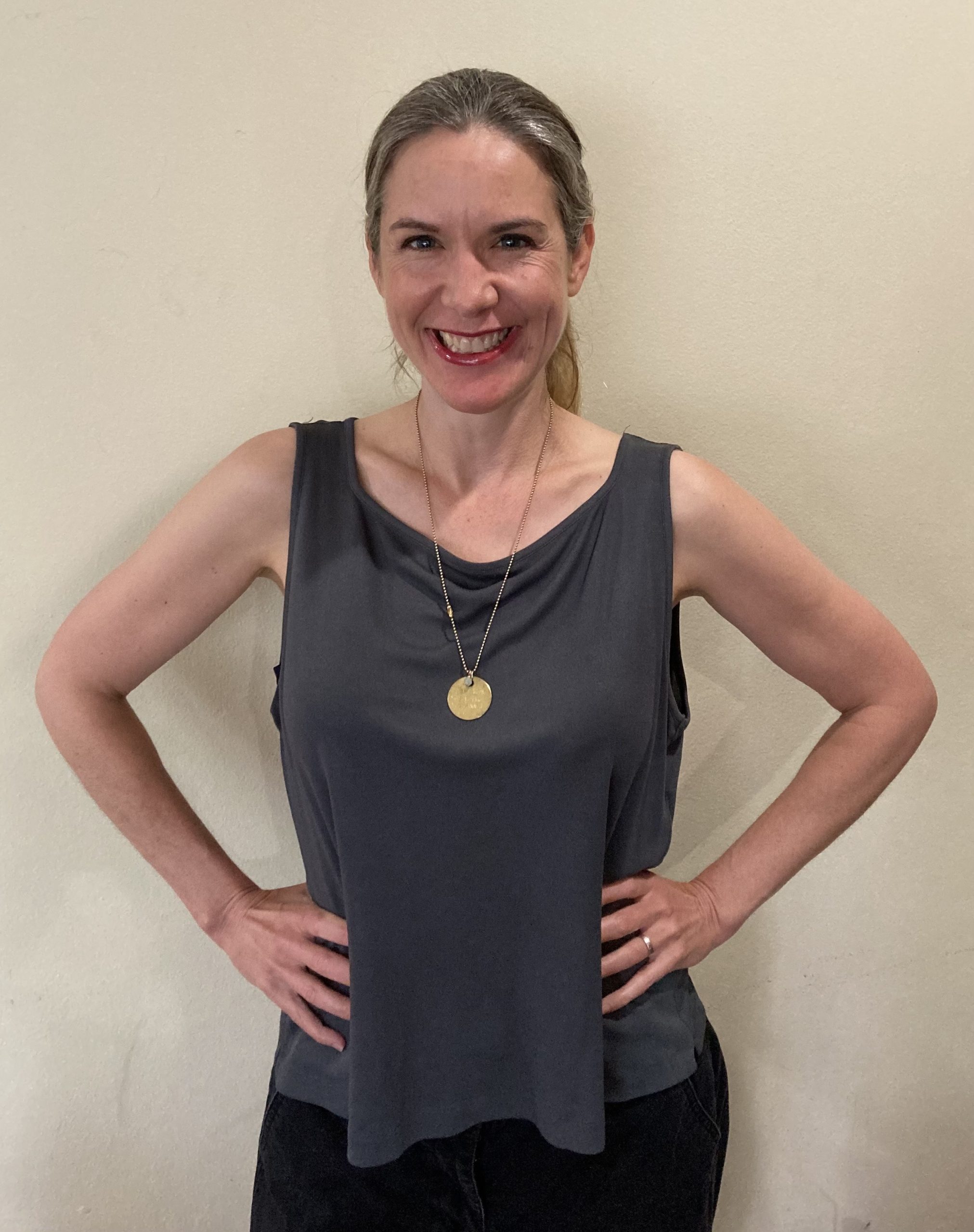
Sarah Jakle, M.P.P. ’04 (she/her) has always believed that leadership must support the whole human being. Her commitment to women’s civic empowerment began long before she founded her organization DemocraShe, but the seeds were planted in the classrooms and mentorship circles she experienced as a graduate student at UCLA.
Jakle studied literature as an undergraduate before beginning her early career working with unhoused communities and individuals living with mental illness. This included an internship at U.S. VETS in Long Beach, where she worked directly with veterans experiencing homelessness, trauma and complex behavioral health needs. The work highlighted the barriers that individuals face when navigating unstable housing, mental health challenges and limited resources.
“I was working with unhoused veterans who had survived extraordinary adversity,” Jakle said. “Trauma was everywhere. It became clear that understanding trauma was essential to understanding how to really help people.”
Although she was making an impact one person at a time, Jakle saw how structural policies often determined whether meaningful change was possible. That realization brought her to graduate school, where she sought to understand the systems that shape people’s lives.
She earned a master’s in public policy from the UCLA Luskin School of Public Affairs and later completed a master’s in social work at USC with a concentration in military social work. The dual training created what she describes as a “Venn diagram” of her interests. The public policy curriculum equipped her with analytical and quantitative tools, while her social work training gave her trauma-informed frameworks for understanding the emotional experiences of people navigating public systems.
At UCLA, Jakle took several courses that fundamentally shifted her perspective, including the statistics and evaluation courses that she initially found intimidating as a non-STEM student.
“I was a literature major, so taking calculus-based economics and statistics was a shock,” she said. “But those classes transformed me. They taught me that you cannot assume you have impact. You have to measure it.”
Another defining experience came from her mentorship with former Massachusetts Governor Michael Dukakis, one of her professors at UCLA Luskin. Dukakis invited her to his home, where she met his wife, Kitty Dukakis. Learning about Kitty’s treatment in the press during the 1988 presidential election had a lasting influence on Jakle.
“Kitty was brilliant and compassionate, but she had been deeply mistreated during the campaign,” Jakle said. “It was the first time I truly understood that the emotional experience of being in politics could be as consequential as any policy outcome.”
The experience opened Jakle’s eyes to how women experience public scrutiny, and how often their emotional well-being is overlooked in discussions about civic leadership. This realization stayed with her as she continued her work after graduate school.
From Theory to Practice
Jakle’s graduate training and early career experiences directly shaped the creation of DemocraShe, a nonpartisan leadership program for young women. The organization serves a diverse group of students, with the majority identifying as girls of color and many as first-generation Americans.
DemocraShe teaches students foundational civic knowledge, leadership skills and what Jakle calls “amygdala skills,” which are basic neuroscience tools that help young women regulate fear, discomfort and internalized barriers when stepping into unfamiliar or high-pressure spaces.
“Women are socialized to be perfect, and stepping out of your comfort zone can trigger the amygdala,” Jakle said. “That discomfort often shows up as hesitation or self-doubt, which people call imposter syndrome. We teach girls how to regulate those feelings so they can pursue opportunities that match their ambition.”
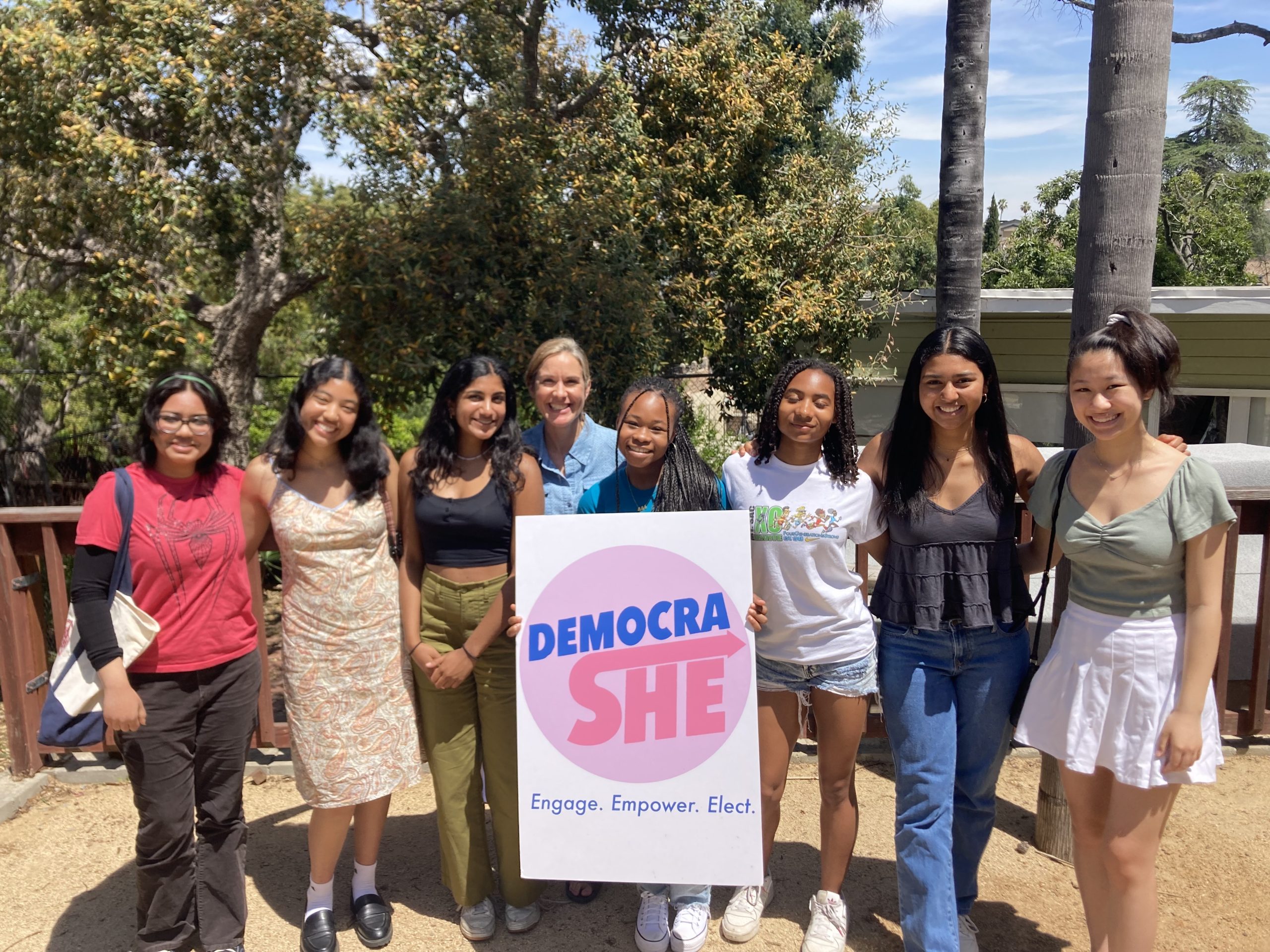
Grounding and resourcing are two of the trauma-informed techniques that students learn. Grounding involves returning to the present moment through sensory awareness. Resourcing involves cultivating an inner supportive voice to counteract internalized criticism. Both practices are drawn from trauma research and help to calm the amygdala, allowing the prefrontal cortex to re-engage.
“We teach girls that the brain is constantly scanning for threat and safety,” she said. “If they can regulate the amygdala, they can make choices from a place of confidence and clarity.”
DemocraShe integrates rigorous evaluation into its programming, a discipline Jakle attributes to her training at UCLA Luskin. Students complete anonymous pre-program and post-program surveys so the team can track changes over time. For the full 2025 cohort, 37% of students reported understanding how to move forward as active participants in American democracy before the 10-week flagship program. After completing the program, that figure rose to 99%.
Another key metric asks whether DemocraShe helped students do something they were previously afraid to try; 92% say yes. Examples range from delivering public remarks in religious spaces, to running for school leadership positions, to asserting themselves in instances of workplace conflict.
“These findings tell us that our work is shifting both leadership skills and resilience skills,” Jakle said. “We are helping young women navigate adversity while stepping into the roles they deserve.”
Mentorship and Civic Leadership
Although UCLA shaped her academic foundation, one of Jakle’s most influential mentors came through her political organizing work. She credits Ada Briceño, labor leader and former chair of the Democratic Party of Orange County, as someone who demonstrated what courageous leadership looks like.
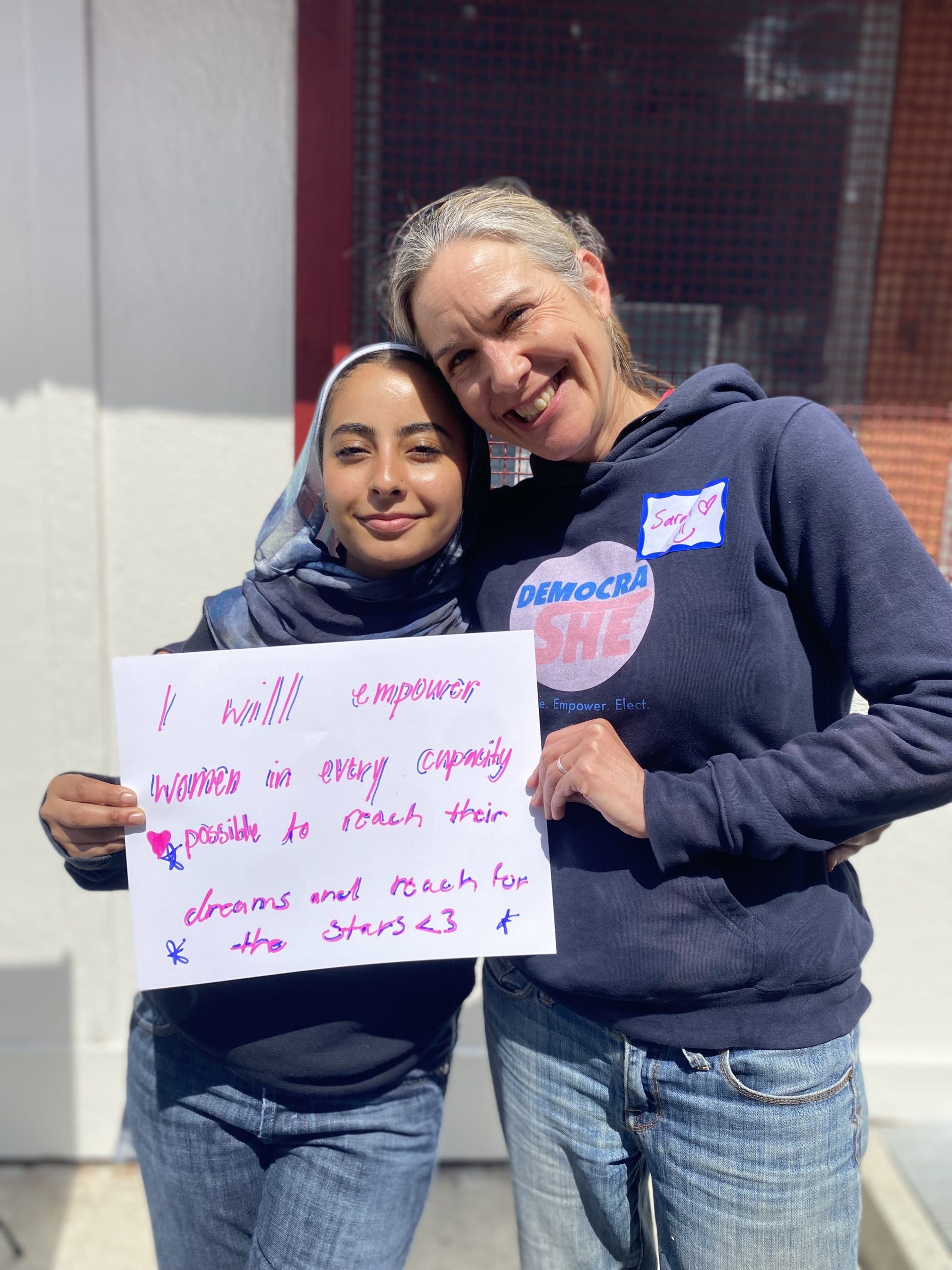
“Watching Ada, I saw firsthand how women, especially women of color, experience systemic pushback in civic spaces,” Jakle said. “It made me passionate not only about strengthening our democracy but also about protecting the emotional lives of the women who lead.”
Jakle has also worked as the Get Out the Vote director for the California National Organization for Women. During that time, she heard many women receive vague warnings that political life would be difficult, without being offered any tangible tools to manage the challenges ahead.
“For me, that felt like a missed opportunity,” she said. “We have decades of research on how people can self-regulate during stress. We should not send women into public life without these tools.”
Navigating the Present and Looking Ahead
Jakle believes that civic engagement extends far beyond voting. She encourages students from all academic backgrounds to understand how policy affects their educational pathways, professional fields and daily lives. She also believes that higher education institutions can play a significant role in preparing the next generation of civic leaders.
One of her priorities is advocating for paid opportunities for students to participate in policy work. She notes that many early political pipeline programs are unpaid, which often prevents students who need to work from participating.
“There are meetings happening right now about the future of the UC system,” she said. “Students should be in those rooms, and they should be paid for their time. Otherwise, only students with financial flexibility will get access to those spaces.”

As part of that commitment, DemocraShe pays all participants who take part in its 10-week program or its one-day summer intensives held live on Zoom.
Jakle also recognizes that many young people feel overwhelmed by political uncertainty and social change. She emphasizes the importance of joy as a protective factor for the brain. She teaches a practice called “savoring,” in which individuals spend a few moments each morning noticing two joyful or beautiful things to counter the brain’s negativity bias.
“When there is so much suffering, it can feel like experiencing joy is a betrayal,” she said. “But joy protects the brain. It helps people stay engaged instead of burning out.”
Her advice for those seeking to remain informed and active is simple. She encourages people to find community, participate in local action, and take small, consistent steps that contribute to positive change. She also recommends looking at diverse sources of information and listening to students and young organizers who are at the center of campus activism.
“Democracy is woven through everyday life,” she said. “Small actions matter. Community matters. And every person has a role in shaping the world around them.”
Jakle’s journey from social work to public policy and civic empowerment illustrates how trauma-informed leadership can strengthen democracy. Through DemocraShe, she continues to uplift young women and equip them with tools that support both their public leadership and their inner resilience.
Recent Articles
- The Fire Within: Leo Rochman’s Story of Resilience
- UC Inspires Honors UCLA Alumni
- UCLA AAP Alumni Spotlight - Adrianos Facchetti ’01, J.D.
- The Story Behind Jackie Robinson’s 1946 Reintegration of Organized Baseball
- UCLA Prytanean Celebrates Its Centennial
- Building Community: UCLA Disability Alumni Network Focuses on Belonging and Visibility
From UCLA to CEO: Shirley Torres '03 on Healing, Kinship and Leading Homeboy Industries
In August 2025, the UCLA Alumni Affairs Diversity Programs and Initiatives team interviewed Shirley Torres ’03 for the Diversity Digest in connection with the sold-out event Changemakers 2025: Radical Kinship in Action - A Day at Homeboy Industries .
Additionally, a Bruin story video highlighting Torres’ story of kinship was produced by the Digital Engagement team. Watch the video here.
Shirley Torres '03 was 23 years old when she first walked through the doors of Homeboy Industries. A newly minted UCLA graduate with a background in counseling and a heart rooted in her South Central, Los Angeles upbringing, she thought she was stepping into just another job. Twenty-two years later, Torres is now the co-CEO of the world’s largest gang rehabilitation and reentry program — and she calls the work her life’s purpose.
Torres grew up in a large, tightly knit family where survival often meant relying on neighbors, faith, and kinship. Her grandmother’s home, at the corner of 29th and Central Avenue, was the anchor of that community. She describes it as “the house where the invitation was always, ‘come as you are.’” That open-door welcome, even when her grandmother had little to give, shaped the way Torres now leads Homeboy — with a commitment to radical kinship, unconditional love, and the belief that healing is possible for everyone.
“Our success, our healing, and our survival — it’s all connected” Torres said.
From Campus to Community
Torres began her higher education journey at Mt. San Antonio College before transferring to UCLA, where she studied education and sociology. At UCLA, she found a home in the Academic Advancement Program (AAP) and developed life-long friendships. Later she became a mentor for other transfer students, many of whom were also the first in their families to attend college. Torres credits the rigor and excellence demanded at UCLA, through professors and mentors like Drs. Kris Gutiérrez and Eric Avila, for nurturing her innate curiosity to imagine that another world is possible, and for cultivating her courage to disrupt the status quo.
But even as she pursued academia — once envisioning a Ph.D. and a career as a professor — Torres felt drawn back to the kind of community-based work that had shaped her childhood. She realized that success could not only be defined by degrees or titles, but by living in alignment with her values. That realization eventually led her to Homeboy.
A Movement Rooted in Love
Founded by Father Gregory Boyle in 1988, Homeboy Industries provides job training, mental health support, education, and a second chance to thousands each year. For Torres, its mission is clear: healing must come before everything else.
“The most important job here is an inside job,” she explained. “We want to help people to heal from trauma before anything else. Historically, healing hasn’t been afforded to the poor and marginalized.”
Torres credits the many years of walking alongside Father Greg and former gang members, learning from their courage and being shaped by their resiliency, for the leader she is today.
Under her leadership, Homeboy has expanded to include a continuum of care, from transitional housing to a forthcoming behavioral health campus in Hollywood. Projects like Hope Village are designed to meet people at the crossroads of incarceration and opportunity, offering sanctuary alongside skills.
Torres often reminds her team that their most important job is to “pay attention to the swing of the door.” Their role is to check the pulse rather than the box. “In 22 years, I’ve interviewed thousands of gang members. Most of them joined between the ages of 9 and 12,” she said. “Hopeful kids don’t join gangs.” That belief fuels her mission to disrupt cycles of trauma and incarceration, and to replace them with systems of care and opportunity.
Leading with Kinship
Today, Torres co-leads Homeboy Industries alongside co-CEO Steve Delgado. Together, they lead a team of over 300 staff who are responsible for receiving 10,000 clients each year and they employ 500 trainees in 13 social enterprises as part of their innovative 18-month work training program. They are proud to say that 70% of Homeboy’s staff were once clients. For Torres, these are not just statistics — they’re proof of Homeboy’s transformative model.
“People here didn’t always believe in themselves,” she said. “Now they’re leading this place. It’s a full-circle moment.”
That full-circle impact begins with the trainee program — the first entry point for those who walk through Homeboy’s doors. Torres often reminds Homeboy trainees that everything they need to succeed, they were already born with. Over the course of their training that first leap of faith become fact. She frequently receives messages from program alumni who are now taking their kids to college, becoming homeowners or launching businesses — they are living their wildest dreams. Earlier this year, Homeboy celebrated their largest graduating class with more than 100 graduates who completed vocational programs, high school, bachelor’s, and master’s degrees. This class includes two newly minted UCLA alumni.
A Global Mission
As Homeboy grows from a local nonprofit into a global movement, Torres remains grounded in the lessons of her grandmother’s porch and Father Greg: everyone deserves to be seen, welcomed, and loved.
“We belong to each other,” she said. “And we’re going to keep going forward — puro pa’lante.”
With projects like Hope Village, a transitional housing initiative for formerly incarcerated individuals, along with a growing global network of partner organizations, Torres sees Homeboy as a model for how communities can heal together. “Hope has an address,” she said. “And there is no ‘us and them’ — just us.”
Recent Articles
- The Fire Within: Leo Rochman’s Story of Resilience
- UC Inspires Honors UCLA Alumni
- UCLA AAP Alumni Spotlight - Adrianos Facchetti ’01, J.D.
- The Story Behind Jackie Robinson’s 1946 Reintegration of Organized Baseball
- UCLA Prytanean Celebrates Its Centennial
- Building Community: UCLA Disability Alumni Network Focuses on Belonging and Visibility
Mary Nguyen M.P.P.’23, M.S.W. ’23: Championing Social Justice and Policy Reform
Mary Nguyen (she/her) has always been driven by a passion for community advocacy. Growing up in Garden Grove and later Stanton, she was surrounded by a diverse cultural community that shaped her awareness of social and economic disparities. As a first-generation college graduate, Nguyen pursued a degree in Human Services at Cal State Fullerton before earning dual master’s degrees in Social Welfare and Public Policy from the UCLA Luskin School of Public Affairs.
Her early career in mental health as a housing specialist exposed her to the systemic barriers that many individuals face, particularly those experiencing homelessness. Nguyen worked closely with clients diagnosed with substance use disorders and mental health conditions, assisting them in navigating Section 8 housing and shelter programs. However, she soon realized that despite her best efforts, structural issues within housing policies often prevented real, lasting change.
"There were too many people applying for too few housing opportunities," Nguyen said. "Even when individuals followed every requirement, sudden policy shifts could push them further down the waiting list. It was then that I realized real change happens at the policy level."
This realization led her to UCLA, where she sought to bridge the gap between macro-level policy work and micro-level social services. At Luskin, Nguyen immersed herself in student leadership, becoming chair of the Asian American and Pacific Islander (AAPI) caucus. She also led the Public Policy Leadership Association, stepping into roles that challenged her to advocate on a larger scale.
"I wanted to connect with my identity and my peers," she said. Although there were few Asian American, Native Hawaiian, and Pacific Islander (AANHPI) students in my dual program, there was still a disconnect, where I wanted to foster a greater sense of community and build lasting connections."
Taking on leadership roles was initially outside her comfort zone. "As a Vietnamese woman, I grew up with the expectation to be quiet and not make waves," Nguyen said. "The programs and opportunities at UCLA helped me break out of that mindset. I stepped into leadership, first with the AAPI caucus and later as chair of the Public Policy Leadership Association."
She also participated in the global policy exchange program, Hertie, in Germany, which broadened her perspective on policymaking. "It made me realize how small our world is within the U.S., and how much we can learn from other countries' approaches to governance," she said.
From theory to practice
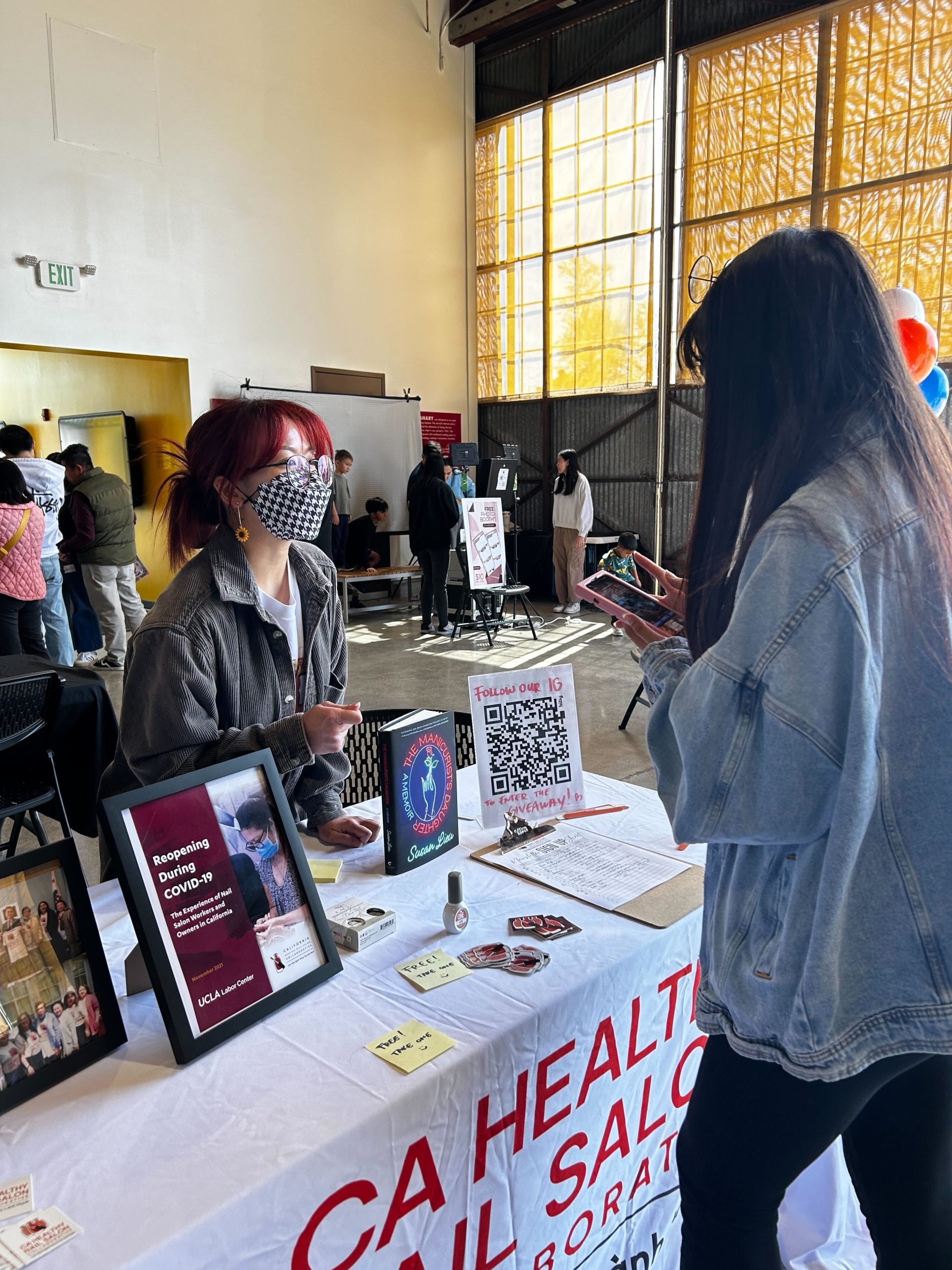
Nguyen's work at UCLA directly informed her current role as Policy and Research Manager at the California Healthy Nail Salon Collaborative. The organization advocates for social justice issues, particularly for low-income Vietnamese immigrant and refugee nail salon workers.
"Our organization is a statewide grassroots coalition that advocates for social justice issues," Nguyen said. "We provide civic engagement, educational workshops on health and workers' rights, and lead policy campaign efforts."
One of her significant policy efforts was Assembly Bill 2444, known as the Justice in Beauty Bill, authored by Assemblymember Alex Lee. The bill aimed to enhance language access for labor rights materials and required in-language announcements for licensed manicurists when labor laws changed. Though the bill was held in appropriations, Nguyen found the process invaluable.
"It was an empowering experience to mobilize our community members—our 'aunties' as we call them—to Sacramento for lobby days," she said. "They shared their testimonies and learned how to advocate for themselves in legislative meetings."
Nguyen, whose second language is Vietnamese, played a crucial role in ensuring the policy language was accessible to community members. "Policy terms can be jargony, so translating them in a way that maintains their full meaning was a challenge," she said. "But it was necessary to ensure our members understood their rights and could advocate for themselves."
Navigating the Present and Looking Ahead
Nguyen continues to engage in advocacy beyond her work, participating in community actions and rallies. "I find solace in spaces where people understand the work we do," she said. "Being in community spaces, talking about real issues, and engaging in creative outlets like music and drawing helps me navigate these challenging times."
She also advises people to diversify their sources of news. "Western media narratives are often biased, so it's important to seek out diverse perspectives," she said. "Listen to students who are organizing on campus — they're in the belly of the beast when it comes to political activism."
Her advice for those looking to stay informed and engaged is simple: "Support local businesses, engage with your community, and do what you can to make a difference. Even small actions contribute to meaningful change."
Nguyen's journey from social work to policy advocacy exemplifies how grassroots activism can influence systemic change. As she continues her work at the California Healthy Nail Salon Collaborative, she remains committed to uplifting marginalized communities and ensuring their voices are heard in policymaking spaces.
Resources from the CA Healthy Nail Salon Collaborative
How to protect yourself from ICE at your home, in public and in the workplace (English and Vietnamese)
Reports from CA Healthy Nail Salon Collaborative
Recent Articles
- The Fire Within: Leo Rochman’s Story of Resilience
- UC Inspires Honors UCLA Alumni
- UCLA AAP Alumni Spotlight - Adrianos Facchetti ’01, J.D.
- The Story Behind Jackie Robinson’s 1946 Reintegration of Organized Baseball
- UCLA Prytanean Celebrates Its Centennial
- Building Community: UCLA Disability Alumni Network Focuses on Belonging and Visibility
Adam Bell ’91, Cert. ’03, and Cushon Bell ’93 share the devastating impact of the Eaton Canyon wildfire on their Bruin family
UPDATE Dec. 17, 2025: Since sharing their story, Adam Bell ’91, Cert. ’03 and Cushon Bell ’93 have continued to make steady progress in their rebuilding journey. They recently secured long-term housing that will provide stability for the next two and a half years as they work through the recovery process. The Bells also shared that they are close to finalizing both an architect and a contractor for their home rebuild and hope to complete those arrangements by the end of December. Their commitment to returning to Altadena remains strong as they take the next steps toward rebuilding the home and community they love.
For Adam Bell ’91, Cert.’03 and Cushon Bell ’93, Altadena was more than just a place to live — it was home for over two decades. In this Diversity Digest spotlight, Adam and Cushon Bell recount how their Bruin family lost their home in Altadena to the Eaton Canyon wildfire and express the challenges that they face as they aim to one day return to their beloved neighborhood.
A Family Rooted in UCLA
Longtime Altadena residents Adam and Cushon Bell have deep ties to UCLA. The couple met on campus during their undergraduate years, and their connection to the university has remained strong — raising all three of their sons as a Bruin household, their youngest a current first-year at UCLA.
“They grew up going to football games at the Rose Bowl,” Adam Bell recalled. “We’ve been a Bruin family for a long time.”
Adam, a history major who later transitioned into software development, and Cushon, a sociology graduate who worked as an elementary school teacher and later in local government, chose Altadena as their home in 2001. It was an affordable, family-friendly enclave with a rich cultural history and strong community ties. They never expected a wildfire to change their lives overnight.


The Night Everything Changed
On the night of the fire, strong winds rattled their windows, but after years of experiencing windstorms and nearby fires in the foothills, they weren’t overly concerned. Power outages made it difficult to follow the news, and no official evacuation order had been issued for their street.

“We thought we’d ride it out like we always had,” Adam said. “We went to dinner when the power went out, thinking we’d be back home soon.”
But while they were out, texts from concerned neighbors started coming in, warning them of a rapidly spreading fire. By the time they returned to their street, the sky was glowing red in the distance. Even then, they believed they had time.
At around 3 a.m., still without an official evacuation order and unable to see through the thickening smoke, they made the decision to leave. Adam and Cushon packed a bag and grabbed their most critical documents and left their family home. By 6 a.m., their neighbor who had returned to grab some belongings reported back that their homes were engulfed in flames.
“We left maybe an hour before the fire reached our home,” Adam said. “We had no idea how close it was.”
Returning to Devastation
A few days later, Adam and Cushon were able to return to their address. What they saw was shocking.
“You have to see it in person to fully grasp the devastation,” Adam said. “Blocks and blocks of homes just gone.”
Even some of the oldest homes in the area — structures built in the late 1800s that had withstood over a century of storms, earthquakes and fires — were reduced to rubble. Their home, built in 1926, was no exception.
Adding to the heartbreak was the realization that firefighting efforts were severely hampered by the lack of water supply. “Some of our neighbors told us they had fireballs hitting their homes,” Adam said. “But when firefighters arrived, there was no water left in the hydrants.”


Rebuilding and Moving Forward Together
Since the fire, Adam and Cushon have been navigating the complexities of recovery. They established a GoFundMe, their insurance carrier has been helpful, but the process of finding architects, contractors and dealing with their mortgage company has been exhausting. They are currently staying with a family friend but are searching for a more permanent place to reside while they rebuild.
“We lost everything,” Cushon said. “But we’re determined to come back.”
One of the biggest concerns is the future of Altadena itself, a diverse and historically Black neighborhood. With developers eager to buy up land from displaced homeowners, there is a fear that the close-knit community they loved could change forever.
“A lot of people are saying, ‘Altadena is not for sale,’” Adam said. “But not everyone can afford to rebuild. Some people have no choice but to leave.”


Finding Strength in Community
Despite the overwhelming loss, Adam and Cushon have found strength in the outpouring of support from friends, family, and their extended Bruin network. Their sons’ universities, Morehouse College, Tufts and UCLA, reached out to support. Adam’s fraternity, Kappa Alpha Psi, also provided direct assistance. Even their longtime gardener, who had cared for their street’s homes for decades, was devastated by their loss and has checked in regularly.
“There’s been so much support, it’s been overwhelming,” Cushon said. “But it’s also a reminder that people care.”
Their message to others impacted by disasters like this: Accept help.
“People want to help, even if they don’t always know how,” Adam said. “Let them. It helps them as much as it helps you.”
For now, the focus is on rebuilding — not just their home, but their sense of normalcy. As they look toward the future, they hold onto hope that Altadena will retain the community spirit that made it home for so many years.
“We’ll be back,” Adam said. “We have to be.”
Recent Articles
- The Fire Within: Leo Rochman’s Story of Resilience
- UC Inspires Honors UCLA Alumni
- UCLA AAP Alumni Spotlight - Adrianos Facchetti ’01, J.D.
- The Story Behind Jackie Robinson’s 1946 Reintegration of Organized Baseball
- UCLA Prytanean Celebrates Its Centennial
- Building Community: UCLA Disability Alumni Network Focuses on Belonging and Visibility
Navigating Identity and Difference: A Journey Through Education and Activism with Daedra Staten, J.D. ’13
In our current moment marked by political polarization and a deep sense of division, we find it critical to listen to those individuals who are building connections across lines of difference and advocating for change in their communities. One such individual is Daedra Staten, J.D. ’13, who sat with Denise Pacheco, M.A. ’04, Ph.D. ’11, Senior Director for UCLA Alumni Diversity Programs & Initiatives, to share her journey into the powerful work of anti-racism education and equity, diversity and inclusion (EDI) consulting.
B
orn to a white mother and Black father, Daedra Staten, J.D. ’13 identifies as a Black woman. Her exploration of identity began unexpectedly during her time at the UCLA Law School, where she came across the Critical Race Studies (CRS) specialization.
The CRS program was developed at UCLA in response to the passage of Proposition 209 which abolished affirmative action in the state of California. Prop 209 led to admissions declines for applicants from underrepresented groups at UCLA and throughout the University of California system. Understanding the context of the program specialization ignited a deeper exploration of race and identity within Staten.

“Being at UCLA helped me figure out how the world views me and how I view my place in the world, and the Critical Rase Studies program was really integral in that education.”
Staten’s academic pursuits were not just theoretical; they became a lens through which she viewed the disparities in higher education.
"I have always thought of education as a tool,” Staten says. “A lot of people talk about their education and they feel like it didn’t actually prepare them for what they’re doing, even if they go into their intended [career] field. I feel like my education … prepared me not to necessarily fulfill a specific role, but to think in a way that I feel is so valuable and so important.”
Staten took the bar exam thanks to encouragement from her CRS program faculty, and upon graduation, Staten became a staff member at UCLA Law where she worked on recruitment and outreach initiatives for the school’s Master of Laws program. Through her efforts as a staff member engaged in outreach, she realized that what she was doing was actually diversity recruitment, traveling across the world to promote UCLA Law.
“I wanted to go deeper into what my roots are in, both educationally and identity-wise. So I started looking into how I could get into Chief Diversity Officer roles … what’s the trajectory, what’s the path into that role, and then 2020 happened.”
The COVID-19 pandemic and the racial reckoning that occurred in the United States in 2020 was an impactful moment for Staten who realized that doing work that solely focuses on identity, race and the conversations we have around these topics was her calling. In the summer of 2020 she took the leap to launch her own consulting business, and by the fall of that year she was fully self-employed as an equity, diversity and inclusion (EDI) consultant.
When engaging in her current work of anti-racism education and EDI consulting, Staten asks herself, “How do we make a thinker? How do we make someone who is capable of critical thinking, duality, of holding two truths at once, of confronting history - even if it is history that makes them feel [uncomfortable].”
Staten describes her work as more than just anti-racism and EDI work. “If you really pull away all the layers, what I am really invested in and committed to is [finding ways] for people to confront the truth, nakedly and honestly.”
Now, firmly engaged in this work, Staten grapples with the effects that being at a “predominantly privileged institution” had on herself and classmates from underrepresented and marginalized communities.
“I am a member of this community, of this prestigious space. I don’t always feel like I am a member of this community or prestigious space in the same way that some of my peers and classmates do. I have had moments where I think, ‘Did I lure students into an unsafe space for their identity? Did I entice people to come to a space that might not be the best mentally for them?’” On the other hand, Staten reflects, “I do feel a deep affinity for some of my classmates and professors, who I feel grateful, and even indebted to, for opening pathways and giving me [a] language to talk about my lived experience that I didn’t have prior.”
Understanding this, Staten describes our current moment as both terrifying and exciting.
“I think that there is a lot of hate. There is a lot of refusal to understand and intentional ignorance in our current moment,” Staten laments. Conversely, “What is energizing is that there are people who are taking issues on and putting their bodies, livelihoods and reputations at risk to take up the cause of others. I find that so incredibly inspiring. What is missing right now in the United States is more people that care about things that do not directly impact them.”
Staten's journey from student to advocate to educator exemplifies the power of leaning into one’s passions and embracing one’s own identity and the relentless pursuit of justice through education. When asked what advice she has for alumni and students, Staten says, “History, history, history. And ask questions about who is telling the history and why. Get comfortable with getting uncomfortable. Take a deep breath and fully lean in to the idea of choosing discomfort, because that is the only way forward. We have to burden share, and if we are not willing to share in that discomfort we are not going anywhere.”
Recent Articles
- The Fire Within: Leo Rochman’s Story of Resilience
- UC Inspires Honors UCLA Alumni
- UCLA AAP Alumni Spotlight - Adrianos Facchetti ’01, J.D.
- The Story Behind Jackie Robinson’s 1946 Reintegration of Organized Baseball
- UCLA Prytanean Celebrates Its Centennial
Diversity Digest Spotlight - Exceeding Expectations: Volunteering as a Recent Grad with Giovanny Machado ’19
Denise Pacheco, M.A. ’04, Ph.D. ’11, Senior Director for UCLA Alumni Diversity Programs & Initiatives connected with UCLA Latino Alumni Association University Relations Co-Chair, Giovanny Machado ’19 to learn about what motivates him to volunteer with the UCLA Latino Alumni Association and be a leader as a young alumnus.
G
iovanny Machado is one of five children born and raised by Mexican immigrant parents in the Inland Empire in Fontana, California. While studying Psychology and Sociology at UCLA, Machado co-founded Reforming Education to Diminish Incarceration (REDI). Having been system-impacted himself, Machado developed leadership skills through REDI to help formerly incarcerated, or system-impacted individuals gain access to prestigious universities like UCLA through various workshops, tutoring and outreach.

“I find great fulfillment in motivating individuals from similar backgrounds to exceed their own expectations,” Machado says.
The lasting memories and opportunity to contribute to a meaningful program like REDI deepened Machado’s commitment to stay involved with the university by volunteering with the UCLA Latino Alumni Association (ULAA) in the years following his graduation.
Machado currently serves as the University Relations Co-Chair on the ULAA board of directors. In his role he has continued to motivate UCLA students and alumni to exceed expectations by organizing career panels and programs to promote and inform the alumni community about UCLA’s goal of becoming a Hispanic-Serving Institution. Machado fosters authentic connection with both students and alumni through his shared identity, experiences and his volunteerism with ULAA.
“UCLA Latino Alumni Association has definitely contributed to my professional development and network. I have been introduced to leaders and entrepreneurs who are making a difference on all levels, Machado said of his experience being a young alumnus on the ULAA board.”
Machado acknowledges that it can be challenging as a recent graduate to balance career goals, family commitments and volunteerism.
“As a young professional, I balance my career, personal life and volunteer commitments by practicing the cultivation of my inner garden. There are various ways I plant seeds such as practicing mindfulness, meditation, journaling, or incorporating daily movement by running, hiking and weight lifting. I think it is important to cultivate your inner garden and plant the seeds of habits that will make you a better person internally and externally.”
Machado encourages alumni to get involved in alumni activities as their capacity allows — whether it be through volunteer leadership on a board, attending alumni events and programs or by simply staying informed about alumni activities. He hopes that by volunteering with ULAA he is able to create a community that provides mutual support and growth for all Bruins.
You can learn more about the UCLA Latino Alumni Association by visiting the network’s website. The nomination period for the 2024-2025 ULAA board of directors is currently open through April 12, 2024.
Recent Articles
- The Fire Within: Leo Rochman’s Story of Resilience
- UC Inspires Honors UCLA Alumni
- UCLA AAP Alumni Spotlight - Adrianos Facchetti ’01, J.D.
- The Story Behind Jackie Robinson’s 1946 Reintegration of Organized Baseball
- UCLA Prytanean Celebrates Its Centennial
Diversity Digest Spotlight - UCLA Chicano Studies Research Center: Research for Community with Veronica Terriquez, M.A. ’04, Ph.D. ’09
Denise Pacheco, M.A. ’04, Ph.D. ’11, Senior Director for UCLA Alumni Diversity Programs & Initiatives connected with professor and Director for the Chicano Studies Research Center at UCLA, Veronica Terriquez, M.A. ’04, Ph.D. ’09 to learn about her work with the Center and its impact on community.
T
he Chicano Studies Research Center (CSRC) emerged in the midst of social protest against profound disparities in educational access for the Mexican-descent population in the United States. Established in 1969 as a result of student organizing, the CSRC formalized a directorship in 1971. Today, that director is alumna Veronica Terriquez, M.A. ’04, Ph.D. ’09.

From the San Gabriel Valley in Los Angeles County, Veronica Terriquez earned her master’s degree and Ph.D. in Sociology from UCLA. She now proudly works toward advancing ethnic and racial justice on campus and in the greater California community as the director of the Chicano Studies Research Center. As a graduate student, Terriquez worked in the school of education’s Institute for Democracy Education and Access conducting quantitative research benefiting the public. The skills Terriquez gained through her graduate studies have served her well in leading a center that conducts research to advance public knowledge and non-partisan civic engagement.
“The CSRC is accountable to the university and broader community. I am a public servant and have been trained in conducting research for societal benefit,” says Terriquez.
She takes great pride in the Center’s commitment to foster multidisciplinary research efforts. One priority of hers is to promote diversity in Science Technology Engineering and Math (STEM).
“There is so much opportunity to make UCLA the number one institution in STEM for Latinx, first-generation and other scholars of color.”
In other work, the CSRC has led collaborative, cross-disciplinary research on young people and their experiences in California. Latinx youth outnumber their peers in other racial and ethnic groups in California making the Center’s sponsored research even more critical for the state.
“The COVID 19 pandemic really laid bare how much young people were suffering in the lowest income communities which are disproportionately Latinx, African American, Southeast Asian, Pacific Islander and American Indian. Our participatory action research addresses educational disparities, health and mental health issues, workforce development and labor rights, as well as opportunities for civic engagement.”
The CSRC's initiatives aim to address social inequalities and promote a healthy multiracial democracy. This work includes the California Freedom Summer (CFS) Participatory-Action Research Project and the Latina Futures, 2050 Lab. Through university-community partnerships, CFS trained 114 college and high school students as Summer 2022 fellows and youth action researchers in 501(c)3 nonprofit organizations to mentor other young leaders, conduct voter education and exploratory research that could inform future grassroots campaigns. In collaboration with the UCLA Latino Policy and Politics Institute, in 2022 the CSRC launched the Latina Futures, 2050 Lab( LFL), which envisions a society in which Latinas have an equal opportunity to lead and everyone thrives. This initiative is driven in part by the fact that Latinas experience a significant wage gap and also remain extremely underrepresented in critical fields that will determine the future of our state, our country and our planet.
“Through our initiatives, we are supporting research, community programing and leadership development opportunities that center equity and inclusion,” said Terriquez.
Learn more about and contribute to the Chicano Studies Research Center and the programs highlighted by Dr. Terriquez in this article by visiting the following websites:
- Chicano Studies Research Center
- California Freedom Summer Action-Research Project
- Donate to the California Freedom Summer
- Read a feature story on the California Freedom Summer Action-Research Project
- Latina Futures, 2050 Lab
- Latina Futures Law & Policy Symposium
- Latina Equal Pay Day study analysis and handout
- Contribute to the CRSC Director’s Fund (select CRSC Director’s Fund from the dropdown menu)
Recent Articles
- The Fire Within: Leo Rochman’s Story of Resilience
- UC Inspires Honors UCLA Alumni
- UCLA AAP Alumni Spotlight - Adrianos Facchetti ’01, J.D.
- The Story Behind Jackie Robinson’s 1946 Reintegration of Organized Baseball
- UCLA Prytanean Celebrates Its Centennial
Diversity Digest Spotlight - Bruins in Sustainability: The Intersectional Environmentalism of Nisha Bansal '20
Cory Rosas ’16, Director for UCLA Alumni Diversity Programs & Initiatives (DPI) connected with recent graduate and featured speaker for DPI’s upcoming program Mixin’ It Up: Empowering Communities for a Sustainable Tomorrow, a program that will bring alumni and students together to engage in conversation around intersectionality and sustainability inspired by the 2023-24 UCLA Common Experience selection “Intersectional Environmentalist,” to learn more about her experience at UCLA and how intersectionality has impacted her work in, and passion for, sustainability.
N
isha Bansal is a recent graduate who majored in environmental science and public affairs at UCLA where she worked for UCLA Housing’s sustainability team as a sustainability associate on The Hill and was involved with the Undergraduate Students Association Council (USAC) facilities commission focused on underutilized campus spaces. Following graduation, Bansal began working as an environmental science consultant with a private company and has recently transitioned to working with Partnership for Growth LA (PFGLA), an intersectional community development corporation that seeks to address issues such as food access, job and economic security, primary education support, and workforce development in a manner that builds community ownership.

Bansal credits her South Asian background as inspiration for her investment and interest in environmental issues from a young age, “My parents shaped a lot of my early environmental and conservationist thinking. They immigrated to the United States from India with very little, which instilled in me the importance of making the best use of our resources. Culturally, we don’t always think of it as being environmentally conscious, it’s more so about embodying a way of living that happens to be more connected to nature. As a kid, my mom was always growing fruits and vegetables in our backyard, and family road trips to national parks were a summer staple.”
Seeing connections between her own South Asian culture, particularly as it relates to food and the community built around food, and her coursework at UCLA drove her to seek out professional opportunities in sustainable food systems. As the program manager for Freedom Farms, a program tasked with creating a network of local urban farms to offer more food access and healthy food focused education to Los Angeles community members, particularly South and West LA community members experiencing food insecurity, Bansal has been able to fulfill her passion for sustainable food systems while supporting local communities.
"The goal of Freedom Farms is to establish 37 urban farms or community gardens in the city of LA in the next 3 years. I am interested in how we can make our food systems more local and community-centric, so that we can engage the folks in our city who have historically lacked access to fresh produce and to equitable, sustainable spaces like this.”
A recent demographic profile conducted by the City of Los Angeles Department of City Planning tells us that South LA is a multicultural community with 64 percent of residents identifying as Hispanic or Latino and 25 percent identifying as Black or African American. South LA is also a known food desert, places where there is a lack of access to fresh foods and a lack of supermarkets available to serve the surrounding population, making the work of Freedom Farms critical in providing access to fresh produce.
“My goal is to establish a program that is self-sustaining and can be replicated across other cities. I’m looking forward to the impact that this program will have, not just in terms of improving food access, but also in shifting perspectives around food sovereignty and what it means to be connected to what’s on your plate.”
Bansal will be a featured speaker for UCLA Alumni Diversity Programs & Initiatives’ upcoming program Mixin’ It Up: Empowering Communities for a Sustainable Tomorrow, a program that will bring alumni and students together to engage in conversation around intersectionality and sustainability inspired by the 2023-24 UCLA Common Experience selection “Intersectional Environmentalist.”
You can learn more about Mixin’ It Up and other Diversity Programs & Initiatives signature programs by visiting our website.
Recent Articles
- The Fire Within: Leo Rochman’s Story of Resilience
- UC Inspires Honors UCLA Alumni
- UCLA AAP Alumni Spotlight - Adrianos Facchetti ’01, J.D.
- The Story Behind Jackie Robinson’s 1946 Reintegration of Organized Baseball
- UCLA Prytanean Celebrates Its Centennial
Diversity Digest Spotlight - Re-Emergence: Learning and Leading with AAPAN President Kiet Lam
Denise Pacheco, M.A. ’04, Ph.D. ’11, Senior Director for UCLA Alumni Diversity Programs & Initiatives connected with 2023 Volunteer of the Year and UCLA Academic Advancement Program Alumni Network (AAPAN) president, Kiet Lam ’98, M.P.H. ’00, to learn more about his experience at UCLA, his connection to the UCLA Academic Advancement Program (AAP) and the launch of its official alumni network.
K
iet Lam is the founder and CEO of Climb Healthcare Consulting in the San Francisco Bay Area where he prioritizes client service while helping improve the financial health of hospitals and health systems. Named the 2023 Volunteer of the Year by UCLA Alumni, Lam serves as the inaugural president of the UCLA Academic Advancement Program Alumni Network (AAPAN). Founded in 2021, AAPAN seeks to establish an association that furthers philanthropy for experienced Academic Advancement Program (AAP) alumni, offers professional development opportunities for recent AAP graduates and expands upon the academic and leadership excellence that is the hallmark of the AAP program to continue to support first-generation professionals.
When Lam arrived at UCLA as a first-generation college student he had already overcome many obstacles. He was five years old when he traversed the South China Sea for four days on a fishing boat with his mother and two older brothers, escaping Vietnam for a refugee camp in Malaysia. He and his family were able to seek amnesty in the United States through sponsorship with his aunt. His refugee background and subsequent upbringing in San Diego and other parts of Southern California led him to UCLA as a first-generation college student where he was first acquainted with the University through the UCLA Academic Advancement Program and its Freshman Summer Program.

Lam credits the AAP with his success at UCLA and beyond: “AAP is a lifeline to those like me, who just don’t have the knowledge, experience or resources to adapt to and then navigate college.” It is that same lifeline that Lam aims to offer alumni of the AAP program through the work of AAPAN. Leveraging the determination, success, passion and experience of UCLA Academic Advancement Program graduates, he hopes that alumni like himself can impact the lives of recent graduates through networking and mentorship. “I am a living example of the power of opportunity and access and what it can result in. There are many examples like myself when you look at the many years of AAP alumni,” Lam said.
During the early stages of the COVID-19 pandemic, Lam found many opportunities to reflect on the privileges that he currently holds. “Access to food, health care, and higher education are among things that we take for granted daily. I found myself asking, ‘What can we do more to help our community.’” Launching the AAP Alumni Network in 2021 at the height of the pandemic was one way that Lam sought to support his community. For Lam AAP was the first extension of his personal network that helped him navigate the University and set a foundation for success. He believed that an established alumni network could help “pandemic graduates” entering the workforce by offering networking and mentorship opportunities with other AAP graduates.
The pandemic’s shift to remote, and sometimes hybrid, activity and work brought many challenges and opportunities as well. “As leaders we need to get creative and provide opportunities to re-engage in a hybrid setting,” he said. “I have learned to be more patient with initiatives, and rolling them out so we can take these things into consideration.” Since its launch, the network has hosted both in-person and fully remote programs to reach AAP alumni wherever they are.
Lam has a lot of optimism for the future of the AAP Alumni Network and aims to continue to learn and grow as the network develops. Through his work with the founding board members and UCLA Alumni Affairs staff, AAPAN was successfully launched at the Academic Advancement Program’s 50th Anniversary Gala in December of 2021.
“There are people like myself who are now making efforts to be cognizant of their privilege and resources and want to make a positive impact. Some need guidance on how they can help, or nudges in the right direction. Through AAPAN, I hope to find these people and organize them to collectively make a bigger impact.”
You can learn more about the Academic Advancement Program Alumni Network and how you can get involved by visiting our website.
Diversity Programs & Initiatives
Recent Articles
- The Fire Within: Leo Rochman’s Story of Resilience
- UC Inspires Honors UCLA Alumni
- UCLA AAP Alumni Spotlight - Adrianos Facchetti ’01, J.D.
- The Story Behind Jackie Robinson’s 1946 Reintegration of Organized Baseball
- UCLA Prytanean Celebrates Its Centennial
Our Proud Partners


