Tag Archives: Footer
UCLA Campus Protests
L
ike many universities across the country and around the world, UCLA is experiencing a period of unrest. The Oct. 7 attack and ensuing conflict in Gaza have led to protests, encampments, violence, vandalism, arrests, remote learning, canceled events and calls for change. The following is a compilation of excerpts from University announcements and AP News alerts addressing these events as they unfolded. Click on the links to read the full statement.
Oct. 9, 2023
Chancellor Gene Block issued a message regarding recent violent attacks abroad and shared a statement from UC President Michael Drake and UC Board of Regents Chair Richard Leib:
“I write to share the below message from University of California President Michael V. Drake and UC Board of Regents Chair Richard Leib about the horrific and heart-wrenching terrorist attacks on Israeli citizens that took place over the weekend. These attacks led to an escalation of violence in the region that has since claimed many additional Israeli and Palestinian lives…”
Oct. 13, 2023
Chancellor Gene Block shared this message about the recent events in Israel and Gaza and the resources available to our community:
“I write to share reflections at the end of a very challenging week for both our UCLA community and the world. Only six days ago, a heinous assault was perpetrated upon Israeli civilians by the terror organization Hamas, a despicable attack that included the killing of children and the elderly as well as the taking of innocent hostages. Earlier this week, I joined UC leadership in condemning this attack, and as new details have emerged, I can only denounce it further: This was a grievous act of malice and hate. It was, I am pained to say, the largest one-day killing of Jews since the end of the Holocaust...”
Oct. 27, 2023
This message was shared with the campus community by vice chancellor for Student Affairs Monroe Gorden Jr. ʼ94, CERT. ʼ09, administrative vice chancellor Michael Beck and interim vice provost for Equity, Diversity and Inclusion Mitchell Chang:
“As violence continues in the Middle East, and as events and rallies related to the conflict take place on our campus, we have heard from members of our community who are concerned about their safety. We write today to share some of the actions UCLA is taking to promote security, respect and well-being within our community while ensuring our university remains true to its commitment to freedom of expression...”
Chancellor Gene Block shared this message with the campus community about the importance of tolerance, mutual respect and maintaining a safe environment on campus:
“The ongoing conflict in the Middle East has stirred very deep emotions in many of us. But this does not in the least give anyone in our community — or anyone visiting our campus — license to make our students, staff or faculty feel unsafe.”
Nov. 10, 2023
Chancellor Block shared the following message with the campus community condemning incidents of bigotry, intolerance and intimidation that have taken place on UC campuses, including UCLA, over the past several weeks:
“Periods of conflict in the Middle East have time and again been linked to a global rise in reprehensible acts of Antisemitism, Islamophobia and anti-Arab hate. I am extremely disheartened to say that this has proven true once again, and the UCLA campus has by no means been spared…”
Feb. 21, 2024
UCLA statement on resolutions by the Graduate Student Association and the Undergraduate Students Association Council which have called for divestment from Israel:
“These resolutions run counter to the position of the University of California and UCLA, which, like all nine other UC campuses, has consistently opposed calls for a boycott against and divestment from Israel. This has been the longstanding position of all 10 UC campus chancellors and the UC Office of the President. We stand firm in our conviction that a boycott of this sort poses a direct and serious threat to the academic freedom of our students and faculty and to the unfettered exchange of ideas and perspectives on our campuses…”
March 28, 2024
UCLA issued a statement in response to an appalling and hateful display at a UC Board of Regents meeting:
“We are appalled, offended and deeply frustrated by the ugly antisemitic caricature that was displayed as part of a protest targeting a University of California Board of Regents meeting on our campus in mid-March. The protest ended on March 21 and the display has been removed. Hateful and racist depictions like this are a complete affront to UCLA’s Principles of Community and True Bruin Values, and to the diverse, inclusive academic community we aim to cultivate….”
April 25, 2024
Campus activity update: “Demonstration with encampments formed early this morning in Royce Quad.”
Mary Osako ʼ96, vice chancellor for UCLA Strategic Communications, shared the following statement regarding the demonstration:
“Our top priority is always the safety and well-being of our entire Bruin community. We’re actively monitoring this situation to support a peaceful campus environment that respects our community’s right to free expression while minimizing disruption to our teaching and learning mission...”
April 26, 2024
Mary Osako ʼ96, vice chancellor for UCLA Strategic Communications, shared a statement regarding the encampment:
“Yesterday morning, demonstrators established a physical encampment on a lawn in Royce quad, joining similar groups that have set up presences at universities across the country. UCLA’s approach to the encampment is guided by several equally important principles: the need to support the safety and wellbeing of Bruins, the need to support the free expression rights of our community, and the need to minimize disruption to our teaching and learning mission. These same long-standing principles have allowed UCLA to uphold a history of peaceful protest…”
The University of California shared the following statement:
“The University of California has consistently opposed calls for boycott against and divestment from Israel. While the University affirms the right of our community members to express diverse viewpoints, a boycott of this sort impinges on the academic freedom of our students and faculty and the unfettered exchange of ideas on our campuses…”
April 27, 2024
Campus activity update: “Regular campus activities continue uninterrupted by the encampment demonstration… Safety personnel in Student Affairs Mitigators (SAMs) and Public Safety Aides (PSAs) uniforms are around the encampment site, and CSC security teams are also located throughout campus. While in the area, you may also hear helicopter activity that is associated with the news media covering the demonstration.”
April 28, 2024
Campus activity update: “Regular campus activities continue uninterrupted by the encampment demonstration…UCLA is following University of California systemwide policy guidance, which directs us not to request law enforcement involvement preemptively, and only if absolutely necessary to protect the physical safety of our campus community.”
11:22 a.m.: Mary Osako ʼ96, vice chancellor for UCLA Strategic Communications, shared a statement:
“This morning, a group of demonstrators breached a barrier that the university had established separating two groups of protestors on our campus, resulting in physical altercations. UCLA has a long history of being a place of peaceful protest, and we are heartbroken about the violence that broke out.”
April 29, 2024
Campus activity update: “We are heartbroken to report that yesterday, some physical altercations broke out among demonstrators on Royce Quad. We have since instituted additional security measures and increased the numbers of our safety team members on site, including our uniformed Student Affairs Mitigators (SAMs), Public Safety Aides (PSAs), CSC and campus security.”
April 30, 2024
8 a.m., Campus activity update: “Events and activities are being evaluated on a case-by-case basis and we are working to maintain our regular campus life as much as possible. Event organizers will communicate with participants directly regarding changes, cancellations or alternative access accommodations.”
4:25 p.m., Campus activity update: “Access to Royce Hall is now closed through Friday. Alternate locations are being identified as options for classes taking place in Royce. Instructors will inform students about further information regarding class location. Faculty should reach out to their departments for possible classroom reassignments.”
5 p.m.: Chancellor Gene Block shared a message with the campus affirming UCLA’s support of peaceful protest and condemning incidents of bullying and threatening behavior:
“Many of the demonstrators, as well as counter-demonstrators who have come to the area, have been peaceful in their activism. But the tactics of others have frankly been shocking and shameful. We have seen instances of violence completely at odds with our values as an institution dedicated to respect and mutual understanding. In other cases, students on their way to class have been physically blocked from accessing parts of the campus. In response… we have significantly increased our security presence in the area… we have also engaged law enforcement to investigate the recent acts of violence. The barriers that demonstrators used to block access to buildings have been removed, and we have staff located around Royce Quad to help ensure that they will not go up again… I recognize that the suffering in the Middle East has had a profound impact on our campus, and we continue to hope for a peaceful resolution. While Bruins hold a variety of perspectives on this conflict, we must all protect the wellbeing of our peers and maintain an environment safe for learning. This is a commitment I call on our community to uphold as we navigate the weeks ahead.”
A statement from UC President Michael V. Drake, M.D., on free speech and campus protests:
“The right to protest and demonstrate against policies and practices of governing authorities is among the most important privileges of a democracy. This right is not, however, absolute. We must exercise our rights within the broad confines of the laws and policies we ourselves have established. Earlier today, the UCLA campus sent out a message for those in the UCLA encampment informing them that the encampment is unlawful and violates university policy...”
Officials at UCLA declared the pro-Palestinian encampment illegal for the first time on Tuesday and warned protesters that they faced consequences if they did not leave.
May 1, 2024
12:12 a.m.: Mary Osako ʼ96, vice chancellor for UCLA Strategic Communications, shared a statement about the attack at the encampment on campus:
“Horrific acts of violence occurred at the encampment tonight and we immediately called law enforcement for mutual aid support. The fire department and medical personnel are on the scene. We are sickened by this senseless violence and it must end.”
1:10 a.m., AP News: “Pro-Palestinian and pro-Israeli protesters clashed in Los Angeles on the campus of UCLA on Wednesday in the latest escalation of demonstrations against the Israel-Hamas war that have spread to college campuses nationwide.”
6:59 a.m., AP News: “Police move to separate pro-Palestinian and pro-Israeli demonstrators at UCLA. Police in riot gear moved onto the UCLA campus in Los Angeles amid violence between pro-Palestinian and pro-Israeli protesters on Wednesday.”
8 a.m.: Campus activity updates: “Due to the distress caused by the violence that took place on Royce Quad late last night and early this morning, all classes are canceled today.”
2:15 p.m.: Chancellor Gene Block shared a message with the campus community about recent violence and restoring a safe learning environment at UCLA:
“Late last night, a group of instigators came to Royce Quad to forcefully attack the encampment that has been established there to advocate for Palestinian rights. Physical violence ensued, and our campus requested support from external law enforcement agencies to help end this appalling assault, quell the fighting and protect our community. However one feels about the encampment, this attack on our students, faculty and community members was utterly unacceptable. It has shaken our campus to its core and — adding to other abhorrent incidents that we have witnessed and that have circulated on social media over the past several days — further damaged our community’s sense of security.”
6:07 p.m., AP News: “Students speak out about overnight violence at UCLA protests… after counter-protesters ‘forcefully’ attacked a pro-Palestinian encampment at UCLA early Wednesday.”
6:30 p.m., Campus activity update: “Campus operations will be limited tomorrow and Friday. Please continue to avoid campus and the Royce Quad area… Per Academic Senate guidance on instruction, all in-person classes are authorized and required to pivot to remote tomorrow and Friday.”
8:39 p.m., AP News: “Tension grows on UCLA campus as police order dispersal of large pro-Palestinian gathering… A large crowd of students, alumni and neighbors gathered on campus steps outside the barricaded area of tents, sitting as they listened and applauded various speakers and joined in pro-Palestinian chants. Overheard television cameras showed students in the barricaded area passing out goggles and helmets, as well as setting up medical aid stations.”
May 2, 2024
12:09 a.m., AP News: “Police in riot gear massed on the UCLA campus and ordered a large group of pro-Palestinian demonstrators inside a fortified encampment to leave the area or face arrest late Wednesday.”
2:59 a.m., Bruin ALERT: “AVOID THE AREA of Dickson Plaza due police activity; Police have ordered an evacuation of Dickson Plaza due to an unlawful assembly. DO NOT re-enter the area of Dickson Plaza & follow the direction of public safety personnel. UCLA has modified campus operations.”
7:10 a.m., AP News: “Police and protesters clash at UCLA in tense scene as pro-Palestinian encampment is dismantled. Police removed barricades and have begun dismantling the fortified encampment of pro-Palestinian demonstrators in a chaotic and tense scene at the University of California, Los Angeles.”
9:25 a.m., AP News: “Tense clashes at UCLA between pro-Palestinian protesters and police lead to arrests. Police removed barricades and began dismantling pro-Palestinian demonstrators’ fortified encampment early Thursday at the University of California, Los Angeles, after hundreds of protesters defied orders to leave, some of them forming human chains as police fired flash-bangs to break up the crowds.”
1:41 p.m.: Chancellor Gene Block shared a message with the campus community about the immense toll the events of the past week have taken on Bruins:
“Our community is in deep pain. We are reeling from days of violence and division. And we hope with all our hearts that we can return to a place where our students, faculty and staff feel safe and, one day, connected again… To preserve campus safety and the continuity of our mission, early this morning, we made the decision to direct UCPD and outside law enforcement officers to enter and clear the encampment. Officers followed a plan that had been carefully developed to protect the safety of protesters at the site. Those who remained encamped last night were given several warnings and were offered the opportunity to leave peacefully with their belongings before officers entered the area. Ultimately, about 300 protesters voluntarily left, while more than 200 resisted orders to disperse and were arrested.”
May 3, 2024
Campus activity update: “Campus operations will be limited through the weekend, and are expected to resume in full on Monday. Classes continue remote through the weekend. Work, events and research activities are encouraged to remain remote or be rescheduled wherever possible during that period.”
May 5, 2024
Chancellor Gene Block sent a message to the Bruin community outlining an organizational change which will administer policing and emergency management:
“Effective immediately, I am moving oversight and management of UCLA PD and the Office of Emergency Management from the Office of the Administrative Vice Chancellor to a newly created Office of Campus Safety, whose leader reports directly to me. It is clear that UCLA needs a unit and leader whose sole responsibility is campus safety to guide us through tense times… Leading the Office of Campus Safety as its inaugural associate vice chancellor is Rick Braziel, who brings to the position more than 30 years of public safety service, including five years as chief of police for the City of Sacramento. Braziel has also served as an instructor in community policing and has led reviews of law enforcement agencies and police responses.”
Campus activity update: “The campus will return to regular operations tomorrow, Monday, May 6, and plans to remain this way through the rest of the week.”
May 6, 2024
8:30 a.m., Campus activity update: “Classes and work in Moore Hall will be remote today due to ongoing disruptions.”
10:15 a.m., Campus activity update: “All classes are moving remote today and campus operations are limited due to ongoing disruptions.”
4 p.m., Campus activity update: “Due to ongoing disruption, the campus has returned to limited operational status. Therefore, per Senate guidance (link is external), classes will move remote May 6-10.”
6:38 p.m.: Chancellor Gene Block shared a message with the campus community about an investigation to identify the perpetrators and hold them to account:
“Last Tuesday night, a group of instigators came to Royce Quad and violently attacked students, faculty and staff members who were encamped to advocate for Palestinian rights. This was a truly despicable act, and in my message to the campus the following day, I committed to finding those responsible and bringing them to justice. This remains an important priority. To that end, inaugural Associate Vice Chancellor and Chief Safety Officer Rick Braziel is leading a law enforcement investigation to identify the perpetrators of the violence and hold them to account...”
May 7, 2024
“Today, the University of California announced that 21st Century Policing Solutions (21CP) will lead the independent investigation of the actions that led to violence on the UCLA campus last week. 21CP is a nationally recognized consultant known for expertise…”
May 9, 2024
The University of California Office of the President announced guiding principles for use by UC campuses in determining disciplinary actions:
“UC campuses support and protect nonviolent and lawful protests. We do all we can within the law to facilitate freedom of expression and a vibrant exchange of ideas, while also maintaining a safe environment and access to university facilities for all members of our community… Any member of the university community who is arrested for unlawful behavior or cited for a violation of university policy must go through the applicable review process, such as student code of conduct or employee disciplinary process. UC community members found to violate university policy or campus codes of conduct will be held accountable in a manner appropriate to the situation and consistent with campus processes.”
UCPD Statement Regarding 5-6-24 Incidents:
“On Monday, May 6, 2024, at about 5:50 a.m., a UCLA community member reported a large group of people at Parking Structure 2. UCLA PD officers responded to the location and found a group of approximately 40 individuals inside the structure wearing masks and in possession of metal pipes… At about 6:05 a.m., while the group at Parking Structure 2 was still detained, a group of at least 30 individuals were seen inside Moore Hall. Moore Hall was closed to the public at that time. UCPD learned via social media that a UCLA registered student organization had just posted a statement encouraging people to occupy Moore Hall… After approximately 25 minutes of announcements… a group of about 60 individuals exited the building and left the area.”
AP News: UCLA faculty and staff denounce University’s handling of student Gaza protest. “Some professors at UCLA are demanding that the University stop its plan to punish students recently arrested while protesting the ongoing war in Gaza at a tent encampment on campus.”
May 11, 2024
Campus activity update: “ALL CLEAR - Dickson Plaza (Royce Quad) has reopened to the public. Please follow the direction of facilities & public safety personnel as the affected area(s) reopen. Law enforcement and other security personnel continue to be on campus to help promote safety and actively monitor conditions. The campus has returned to regular operations. - ALL CLEAR.”
May 20, 2024
Chancellor Gene Block shared a message reflecting on several very difficult weeks for our UCLA community:
“The events of the past several weeks have fractured both our sense of community and our sense of security. They have bred anger and mistrust between Bruins, and they have led to marked frustration with how we have administered campus safety at UCLA. I am deeply sorry to see our community in so much pain... This week, I will be testifying before a Congressional committee focused on the topic of antisemitism on college campuses. I will speak honestly, and personally, about the challenges UCLA faces and the impact of this pernicious form of hate. I will continue to insist that antisemitism – as well as Islamophobia, anti-Arab hate and any form of bigotry, hostility or discrimination – is antithetical to our values, corrosive to our community and not to be tolerated... In my final few months as chancellor, I am dedicated to doing all I can to address these challenges and help shepherd the process of rebuilding trust and dialogue within our community. This includes ongoing discussions with student and faculty leaders of all perspectives, with the aim of ensuring our campus can be a place where advocacy does not lead to antagonism.”
As developments unfold, visit the UCLA Newsroom Campus Statements and Bruins Safe Online pages for the latest updates.
Recent Articles
- The Fire Within: Leo Rochman’s Story of Resilience
- UC Inspires Honors UCLA Alumni
- UCLA AAP Alumni Spotlight - Adrianos Facchetti ’01, J.D.
- The Story Behind Jackie Robinson’s 1946 Reintegration of Organized Baseball
- UCLA Prytanean Celebrates Its Centennial
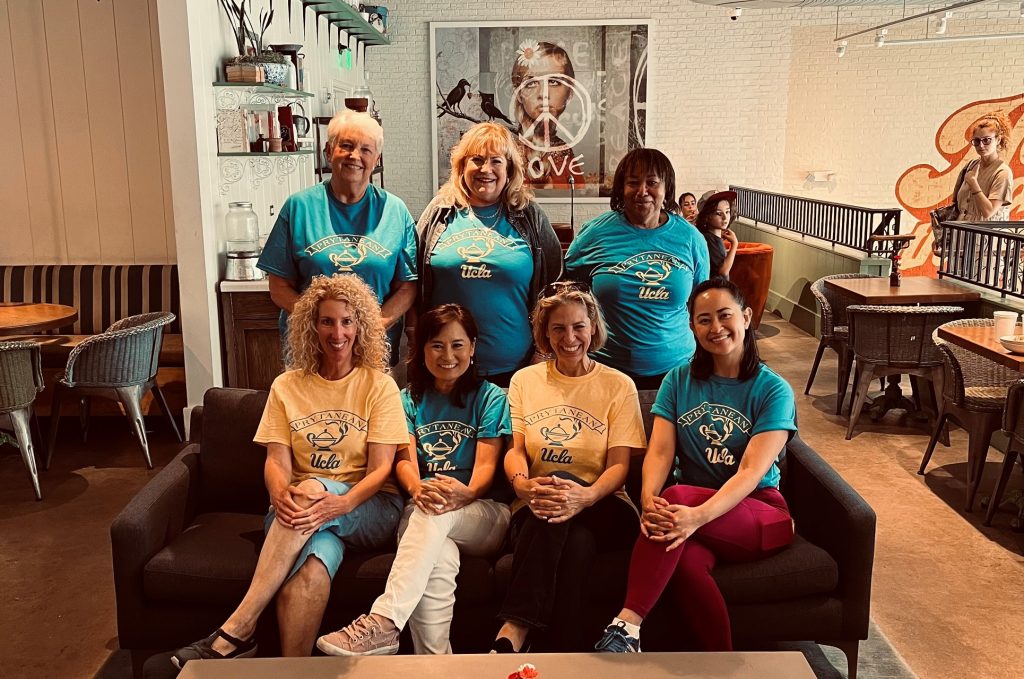
- Building Community: UCLA Disability Alumni Network Focuses on Belonging and Visibility
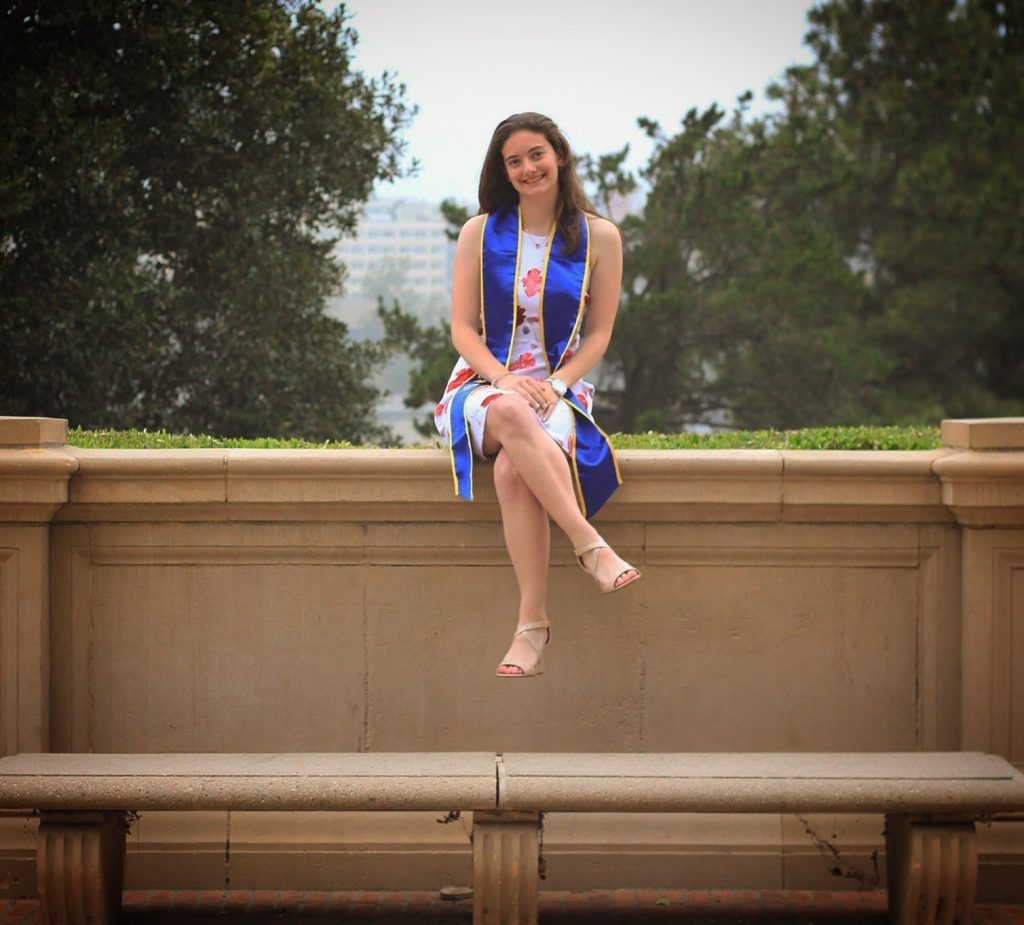
Bruin Shelter Seeks Help Providing Students’ Basic Needs
A
recent UCLA survey found that 5% to 20% of California’s public college and university students experience homelessness. Bruin Shelter is a student-led organization that relies on donations to provide “a safe and supportive environment for all, providing basic resources, and helping students pursue their academic goals.”
Emerald Wong Exp. ’24 and Rachel Xu Exp. ’25 are Bruin Shelter student volunteers who believe there is an urgent need to address this important issue. Xu says, “Something that we try to emphasize is that the residents are just students. If you're sitting in a 300-person lecture hall, one of every 20 students in that lecture with you is facing housing insecurity.”

Emerald Wong is Bruin Shelter’s current vice president. She is majoring in human biology and society and minoring in public health, and plans to apply to medical school after a gap year working as a clinical research coordinator. She says, “We believe that there should be no barriers to higher education, especially housing. I’ve learned how we as students can mobilize to create change on our campus, especially ethical, long term, sustainable change.”
Rachel Xu is the shelter’s co-director of staff and will be next year's incoming president. She is a human biology and society major with plans to apply to medical school and become a physician. She says, “I've come to really feel so passionately about securing basic needs for students. Seeing how food, access to medical care and housing are so intertwined has given me a more comprehensive view of healthcare and basic needs.”
Bruin Shelter was founded in 2016 by Louis Tse, M.S. ’14, Ph.D. ’16, and Luke Shaw to address the lasting economic impact of the 2008 recession. At that time, the estimated cost of running the 10-bed shelter was $25,000 per year. Since then, the shelter located in Mt. Olive Lutheran Church in Santa Monica has housed a total of 51 Los Angeles college students.

More information on the shelter’s history can be found in our 2016 story on the founding of Bruin Shelter. The nonprofit organization Students4Students (S4S) oversaw shelter operations, and expanded to include Trojan Shelter at USC and Aggie House at UC Davis.
Bruin Shelter pairs students facing a lack of housing with case managers recruited from the David Geffen School of Medicine and the Luskin School of Social Work who connect them with resources to find permanent supportive housing, employment opportunities and health care. Xu says, “I think when you have access to basic needs, it goes unnoticed and taken for granted. But having secure access to basic needs is so important, especially on college campuses.”
In 2020, the shelter paused operations as a result of unprecedented challenges brought by the COVID-19 pandemic. Although they couldn’t house students, volunteers launched a remote case management program to connect students experiencing housing insecurity with available resources. They also created a basic needs resource guide, which they provide to all applicants. Following the pandemic, as the shelter prepared to reopen, S4S let them know that they were facing financial challenges and chose to dissolve their organization. Seeking a solution, Bruin Shelter volunteers reached out to founder Louis Tse, who now runs the nonprofit organization, Student MOJO. Student MOJO accepted it as a project under their fiscal sponsorship.
Student-volunteers are searching for a new shelter location, and continue to provide essential services and resources. Wong says, “We really want to emphasize that we're looking for a new space to accommodate us and our mission.” Xu continues, “It's always been our priority to make sure we can offer housing free of cost. We're looking for financial support and job opportunities for our service recipients. These students have bright futures ahead of them, and they need housing to get there.”
“It's always been our priority to make sure we can offer housing free of cost. We're looking for financial support and job opportunities for our service recipients. These students have bright futures ahead of them, and they need housing to get there.”
In the absence of a physical shelter, volunteers have focused on initiatives to help students in other ways. In 2023, they raised nearly $6,000 in a UCLA SPARK campaign to continue their efforts to provide basic needs for unhoused college students. As part of their food resource program, volunteers shop for and deliver groceries to Los Angeles college students facing food insecurity and assemble backpacks containing hygiene, clothing and medical items which they donate to organizations that serve Los Angeles’ unhoused community. They also attend research conferences and share their mission through presentations and events.

Bruin Shelter partnered with other service-oriented student groups to create a Community Service Commission of the Undergraduate Students Association Council. The group successfully advocated for UCLA to eliminate dining hall restriction for students with overdue tuition fees.
UCLA students Wong and Xu have come away from this experience with a deeper understanding of the complex issues surrounding housing insecurity and the importance of addressing basic needs for their peers, along with the power of getting involved and working for a better world.
Xu says, “I've been able to see these tangible changes that we've made, and it reminds you that as a student, you have so much power to effect change in your community. No action is too small and we should all use that to our advantage to create a more equitable environment.”
Wong says, “You are only in college for such a short time, I think you should really spend that time doing something that is both impactful to the broader community and meaningful to you. As students, we have so much more power than we realize; what you do really matters to other people.”
Donations to Bruin Shelter go towards providing basic needs to students experiencing housing insecurity, including hygiene and first aid products, groceries, clothing and school supplies. They are seeking a new shelter location, and in the meantime, they are working to connect college students with rent-free and supportive housing options. If you would like to donate, please click here and be sure to indicate your donation is on behalf of Bruin Shelter.
Recent Articles
- The Fire Within: Leo Rochman’s Story of Resilience
- UC Inspires Honors UCLA Alumni
- UCLA AAP Alumni Spotlight - Adrianos Facchetti ’01, J.D.
- The Story Behind Jackie Robinson’s 1946 Reintegration of Organized Baseball
- UCLA Prytanean Celebrates Its Centennial
- Building Community: UCLA Disability Alumni Network Focuses on Belonging and Visibility
A Fitness Examination of Sound Body Sound Mind
I
t started as a nonprofit organization in 1998 founded by Cindy and Bill Simon with a focus on supporting public schools. Their first installation was a fitness center at Palisades High School under the Los Angeles Unified School District (LAUSD). They immediately saw a change in students’ attitudes towards exercise, which snowballed into a mission to open more fitness centers across the city. Bill Simon, an assistant adjunct professor in both the UCLA Department of Economics and the UCLA School of Law, and recipient of the Marty Sklar My Last Lecture Award, told UCLA, “Our ultimate goal is to ensure that every student has the opportunity, knowledge and tools to pursue a healthy lifestyle through physical fitness.”
Since its creation, Sound Body Sound Mind (SBSM) has grown to 152 centers and impacts nearly 200,000 students each year. Along with the fitness center, SBSM develops an exercise curriculum and provides professional development training.
Its mission: “To promote self-confidence and healthy lifestyle choices among today’s youth.” Amelia Sherman, manager of communications and programming at SBSM, is deeply connected to this mission. She attended an LAUSD school, and although she didn’t know it at the time, her school’s fitness center was one of SBSM’s first.
“Our ultimate goal is to ensure that every student has the opportunity, knowledge and tools to pursue a healthy lifestyle through physical fitness.”
The organization merged under the UCLA Health Foundation in 2020. Since the transition coincided with the COVID-19 pandemic, Sherman says there were adjustments to how the organization partnered with schools, pivoting from “opening as many fitness centers as possible” to “nurturing current schools and setting up the foundation to grow.”
Now in their 25th year, they are pushing to revamp their current fitness centers. Sherman and her colleague recently visited all the 152 schools in SBSM’s network and determined the state of each of the centers. They are working to review the currently active programs and ensure that their funding dollars go to the sources that need it the most. They use metrics, derived from Health and Human Services and CDC data, to see the areas where the health disparities are the greatest, so they can focus their funding there. Since the program has been in existence at some of these schools for close to 25 years, Sherman says, “UCLA plans to repair any equipment or train new teachers and make sure that they have the knowledge of the science behind the fitness centers.”

Sherman explained how SBSM uses state-mandated physical fitness tests as beginning and end markers to determine if the program is successful. According to the SBSM website, “Since 2017, across 30 schools that completed data collection, the average FitnessGram pass rate before our program was 39%. After implementing our program for an eight-week period, passing rates improved to 59%.” This data shows the correlation between the centers and curriculum that Sound Body Sound Mind implements.
Along with the physical testing, they also have students complete a wellness survey which asks about resources and support within their community regarding physical education awareness and their attitudes towards it. Both the fitness tests and the surveys are used to measure the effectiveness of the centers and the organization’s partnership with the schools.
Since SBSM works with local public schools, they often face the problem of overextended administrators and teaching staff. Even after they partner with a school, the staff may not be able to fully utilize the resources provided to them, leaving the resource untouched. Sherman explains, “Before initiating the program, [SBSM] trains all PE teachers. Teachers are the stewards of the program to promote healthy lifestyles with their students. They are the ones receiving the resources, so it is beneficial when they completely understand how to use them.” She says, “Once we give a fitness center to a school, it is the responsibility of the school site to maintain and repair it, but it's often forgotten, unfortunately. So we see a lot of schools that don't receive the best care.”
Another challenge the organization has faced is the long-lasting impact of the COVID-19 pandemic. She says, “We see in the data that student fitness levels have taken a nosedive after the pandemic.” Sherman explains that it is beyond the control of just one program, but she hopes that based on their positive results, SBSM can help students return to a stable baseline.
“If you exercise more, you feel better.”
The name Sound Body Sound Mind was based on research that showed “if you exercise more, you feel better.” In 2021, the organization created a mindfulness education curriculum with the Mindful Awareness Research Center at UCLA. Despite the curriculum’s proven benefits, it was difficult to implement because the video lessons required students to lose their exercise period. However, they have used this challenge to refocus on physical education and its benefits to mental and physical health.
Sherman shares a similar sentiment regarding the current state of fitness education across Los Angeles. “Going to all these schools, going to different neighborhoods, you can really see the divide in the resources that each school site has.” She says, “It's so important that students have the ability to walk into a room and feel confident in a gym setting so they can have lifelong fitness.”
Having grown up in Los Angeles, Sherman enjoys the close connection she has to the program and sees it as a “legacy of giving back to her community.” She says many UCLA alumni attended SBSM schools and now have a chance to make a difference for the future. “If alumni want to give back to their community, they can make a contribution. But on a personal level, they can always just get out and keep moving.”
***
To learn more about Sound Body Sound Mind and ways to help, visit https://www.uclahealth.org/programs/soundbodysoundmind.
Recent Articles
- The Fire Within: Leo Rochman’s Story of Resilience
- UC Inspires Honors UCLA Alumni
- UCLA AAP Alumni Spotlight - Adrianos Facchetti ’01, J.D.
- The Story Behind Jackie Robinson’s 1946 Reintegration of Organized Baseball
- UCLA Prytanean Celebrates Its Centennial
- Building Community: UCLA Disability Alumni Network Focuses on Belonging and Visibility
The Classroom Q&A With Amy
I
n 2023, a Forage study found that “nearly half of college students don’t feel career-ready.” Many of the students surveyed didn’t feel confident they had the skills and resources to land their first job.
At UCLA, the Alumni Office of Professional Programs and Services is trying to change this deficiency with the advent of The Classroom. Created and led by veteran executive recruiter Amy Rueda, The Classroom is a two-part virtual six-week course, tailored specifically for the graduating Class of 2024.
In this interview with Rueda, we sought to understand what makes this course unique and beneficial for this year’s newest crop of job-seekers.
Can you tell us about your background and your role at UCLA?
I was an executive recruiter for 15 years and used to work for large search firms. I have a specialty in higher education and have placed lots of executives, including university presidents, deans, faculty, CFOs, CEOs, etc. I helped placed six of the UC chancellors, including our very own, Chancellor Block. I have a passion for education and wanted to have an impact on an institution. And what better place than UCLA?
I came to UCLA in 2008 and helped place development officers for the Centennial Campaign. Once that campaign concluded, I joined Alumni Affairs and have focused on providing products and services for Bruins across the career spectrum, ranging from recent grads all the way to C-suite alumni. I am currently the executive director of the UCLA Alumni Office of Professional Programs and Services.
How did the concept of The Classroom come about?
I developed The Classroom for a couple of reasons.
First, the marketplace was describing a lot of the behaviors and attitudes of Gen Z in their transition into the workforce. What I quickly realized is their philosophies could at times be incomplete with the realities of the workforce, and it was really important to me that we spend some time with them, post-graduation, to help them learn how to compete for jobs and how to proceed in career management throughout the course of their professional endeavors.
The second motivator was there were some articles released by various universities where their students said that they learn their subject matter well, but there were no classes to actually prepare them to transition into the workforce. That was very alarming to me. After researching some of the country's top universities, I could not find one that offered post-graduation career management courses. It seems that students are left on their own to navigate this very complicated process that can be very discouraging at times.
We also learned that alumni are applying for hundreds of jobs and not really finding a lot of success. This told me they may not be focusing their efforts in a really productive way. So I wanted to curtail that process for them and help them focus on what it is they're trying to achieve, the kind of work-life balance they hope to find and ways in which they could advocate for themselves as they move through their career.
What’s the difference with this upcoming Classroom course versus previous ones?
We learned a lot from our first course. The audience was a group of alumni who were looking to transition into the C-suite. Because I specialize in that I could actually describe, explain and help them strategize how to enter, navigate and succeed in the executive search process.
The next one was a specific audience of former student athletes. What we learned is their whole experience at a university is very much curated for their sports activities, as well as their learning efforts. What we also found is they're the most motivated, the most dedicated, the most focused and they make some of the best leaders in the workforce. That was a group that was very interesting to learn from. They were inspiring as well because they had the intellect, the discipline, the desire and the ambition to achieve their goals.
Gen Z is really important to me, because they’re the future. Without teaching them how to make good, proper business philosophical decisions, they might inadvertently derail their career. And if they’re not particularly focused they could miss out on some really important opportunities.
But we also wanted to extend some grace to them, because coming into your early professional career, you don't know anything. You're learning and you're finding yourself. You're finding your work style and you're learning how to narrate your work, its progress and its impact. So teaching them how to advocate for themselves is another portion of this program.
The difference with this course is for the first time students can make the decision to make an investment and participate in the class in real time. They'll have direct access to the instructors, to the guest speakers and to the energy of their peers. Then the very next day after each class, we will release the recorded version of the class for free on our website. It was very important for us to make sure that this was affordable and accessible to students. Most importantly, once a Bruin, always a Bruin; we will always be accessible to them and help them achieve their professional goals.
What is the cost of The Classroom?
Class 1
Before June 26 - $20.24
After June 26 - $30
Class 2
Before Aug. 16 - $20.24
After Aug. 16 - $30
Registering for both Class 1 and Class 2 before June 26 will cost only $15 each or $30 total.
What are the topics that will be discussed during the course?
Each course consists of six weekly sessions. For the first course, we are going to bring in The Classroom alumni from the Class of 2023 to talk about the impact the class had on them in terms of their job search. We’re going to talk about the process. Their experience is shooting out a bunch of résumés, but not getting a ton of responses. We’re going to help them compose their résumés and cover letters in a way that narrates their academic experience and any work experience they gained while at UCLA. We'll focus on the anatomy of the job description and how important it is to match those skill sets.
We will focus on job search and networking, which is really important because it expands their knowledge of our overall offerings. Our Alumni Career Engagement team (ACE) offers a ton of supplemental offerings. They have a mentorship program. They have a national and international database of Bruins in UCLA ONE. They have guest speakers that can come and talk about various professions. We're not just focused on this part of their career management; we will be with them throughout their career and share multiple offerings through the Alumni Association.
We’ll also discuss interviewing strategies. The etiquette of interviewing is one that you don't know until you're in the interview. You can make some accidental mistakes or not feel prepared to answer really difficult questions. We’ll discuss those questions they fear most and practice how to answer them.
We’ll talk about salary negotiations. I was surprised to learn they didn’t know what an exempt or non-exempt employee was, or the difference between paid time off and vacation time. It will be hard for them to understand their job offer unless we break it down for them. What’s in a comprehensive package? They should be aware of things that are not included in a comprehensive job offer so it helps them make more informed decisions.
We’ll also offer a mental health component. What we’ve found is that Gen Z struggles with FOMO (Fear of Missing Out). They’re also dealing with the pressures from home to hurry up and land a job. But the truth of the matter is, this is not a market that’s particularly friendly to this generation. At the moment they’re going through an economic transition and finding their place in the workforce will be a little bit challenging for them. We’ll help them learn how to get motivated and manage their emotional stress, how to give them themselves some grace during their search process, and some space to learn about themselves and what kinds of jobs are going to be of greater interest to them, where they think they'll succeed.
In the second course, we’ll cover when is the right time to leave or not to leave a job? How can they advocate for themselves when seeking promotions and raises? We’re teaching them language and concepts that they can use from their first job and throughout the rest of their career.
What is the advantage of participating in the class in real time versus watching it the following day?
They will experience the energy of the class in real time. They’ll go into breakout rooms and meet their peers. Those relationships will end up being the start of their network. They’ll start sharing with each other and learning about job openings at different places because now they’re interacting with active job seekers.
They will also have access to the guest speakers where any question they ask is valid. Those same questions may be on the minds of participants who only watch the free video the next day, but being there in real time is going to give them the best access to the information.
We will also have what I call “after school” where students have the opportunity to stay online after class to ask the questions they weren’t able to ask during the hour-long class. That’s another benefit of participating in real time. In addition to this we’ll offer office hours for 30 minutes each week where we can cover anything they want to talk about.
What can participants in The Classroom expect from your style of teaching?
My teaching style tends to be interactive, informative and comprehensive. I bring my background to this class in helping them understand every stage of the search that they're going to navigate. I'm direct in providing real life examples, not just philosophical concepts. What are the issues they will face in landing a job? I want to focus on practical solutions as well as help them understand a philosophical perspective to some of the decisions they will face.
What can participants expect to take away from the course when it’s all done?
I think one of the things that’s very apparent is how scared they are and how they lack confidence. They don’t understand the impact of getting into UCLA, graduating from UCLA and the way in which they’re going to be pursued in the marketplace. When we put that out there, they start to understand how they can be competitive compared to everyone else in the marketplace. They’re getting knowledge and information no one else is getting. Instilling that level of confidence is one of the most important takeaways because without feeling secure in their decisions and the way in which they want to succeed, it’s going to be really hard to find a career path that’s going to make them happy.
We’re also teaching them a clear sense of what work expectations are and how they’re going to be perceived; how they should navigate political situations and stay out of them. They’ll learn about workplace etiquette and the hazards of participating in office gossip. What does office politics look like and how should they behave when faced with a difficult situation like that for the first time? In employee evaluations, how can they best present their accomplishments and how much progress they’ve made? There’s also no shame in stating your mistakes so long as you learn from them because it show accountability. Everyone throughout every stage of their career is going to face that.
Is there any follow-up with participants after the course is completed?
The best part about this class is their access to experts during the course and after it's done. But it’s up to each student to be motivated to learn more and seek out the information. Through office hours, we are making ourselves available throughout the day and up to one year after the course is completed. That’s like having access to a career coach at no additional charge.
Plus, we’ll be sharing helpful career articles and inviting them to career events for alumni for years to come. We’re not going to abandon them. We’re going to stay with the Class of 2024 long after they graduate.
***
To learn more about The Classroom, visit the website at https://alumni.ucla.edu/the-classroom/. Registration for this course only be available to the Class of 2024 and is not active at this time.
Read Amy Rueda’s other career-related advice columns in https://alumni.ucla.edu/career-engineering/.
Recent Articles
- The Fire Within: Leo Rochman’s Story of Resilience
- UC Inspires Honors UCLA Alumni
- UCLA AAP Alumni Spotlight - Adrianos Facchetti ’01, J.D.
- The Story Behind Jackie Robinson’s 1946 Reintegration of Organized Baseball
- UCLA Prytanean Celebrates Its Centennial
- Building Community: UCLA Disability Alumni Network Focuses on Belonging and Visibility
Blue and Gold Make Green – Sustainability Throughout Westwood and the World
I
n its 105-year history, UCLA has grown from being a small, Southern Branch of the University of California in then-rural Los Angeles to a sprawling 40-plus acre campus consisting of approximately 200 buildings amid one of the world’s largest cities. This growth provides UCLA with multiple environmental challenges as it welcomes an estimated half-million people to its campus each year. But with these challenges come opportunities for UCLA and its alumni to be leaders in environmental sustainability.
Nurit Katz, MBA ’08, M.P.P. ’08, UCLA’s Chief Sustainability Officer, recognizes this.
“A lot of the work that we and many of our alumni do is centered around thinking about how we can do sustainability in a smarter way?” Katz said in a recent forum at UCLA. “There is a lot of pollution and traffic when pursuing sustainability in urban settings, and we’ve been working on these issues in L.A. and around the world.”
Katz has led this “smarter way” with the development of UCLA’s first comprehensive sustainability plan, which encourages collaboration across the leading public universities to advance sustainability through education, research, operations and community partnerships.
A notable step in achieving sustainability that both Katz and UCLA have recently taken is highlighted in UCLA’s Sustainable LA Grand Challenge, which is “an interdisciplinary university-wide initiative aimed at applying UCLA research, expertise and education to help transform Los Angeles into the world’s most sustainable megacity by 2050 — making it the most livable, equitable, resilient, clean and healthy megacity, and an example for the world.”
Since its launch in 2013, over 250 UCLA faculty, researchers and scholars have helped bring some of the goals of the Sustainable LA Grand Challenge to fruition.

“The biggest impact we have as a university is through our thought leadership, education and research,” said Katz. “But we also see our physical campus as a ‘Living Laboratory for Sustainability.’ We want to make sure that we are practicing what we teach as a lot of our work in sustainability at UCLA is about that: creating a demonstration for our region and for the world.”
One active component of being a “Living Laboratory for Sustainability” can be found on top of Parking Structure 9. A solar microgrid was recently installed there that connects solar panels to smart EV charging stations and to battery banks at the bottom of the structure. This microgrid ultimately utilizes electronic vehicles to serve as supplementary storage for the grid during peak times.
“Being able to create electric vehicle charging for students, staff and faculty while also doing cutting edge research that can translate into real policy and real programs is what we’re all about,” said Katz.
UCLA’s landscape has also been changing in light of the University’s sustainability goals…literally.
In 2022, UCLA released a landscape plan that has since transformed areas of campus that used to consist of decorative grass and repurposed them into beautiful areas filled with native plants, encouraging biodiversity to flourish in an urban setting. This plan has also taken out ivy and replaced it with a variety of pollinator plants.
“We have some amazing wildlife on our campus, including horned owls that can be seen nesting on one of our buildings,” said Katz. “Our students are also creating a hummingbird garden on campus. Sustainability is in our hands, and making these kinds of changes helps support a meaningful transformation for our faculty, staff, students and wildlife.”

Other campus changes include a state-funded decarbonization study on its cogenerate power plant, which aims to further advance the future of energy. Also, a wastewater treatment plant that will include a laboratory and research components is currently being developed.
Outside of Westwood, UCLA has been actively making a global impact on sustainability through its alumni.
One such alumna who has been leading the charge in sustainability is Jaime Nack ’98, M.P.P. ’02. Nack is the president and founder of Three Squares Inc. (TSI), “an award-winning environmental consulting firm that designs sustainability into the DNA of organizations.”
Since 2008, the Santa Monica-based TSI has been a global leader in developing and implementing sustainability strategies for complex, high-profile projects involving governments, corporations, investors and industry groups. The 100% woman-owned Environmental, Social, and Governance (ESG) firm has worked on all seven continents and communicated in 13 languages.
“ESG is a relatively recent acronym,” said Nack at the same UCLA forum last March. “However, it’s long-standing criteria, or performance criteria, for investors and other stakeholders to rate the performance of companies across three spheres — Environment, Social and Governance. It's a great way to not only just look at the financial performance of companies, but also see how they are having a positive or negative impact on society, on the environment and how they govern their operations.”
TSI carries an extensive list of clients such as United Airlines, Surf Air, Honda, Lamborghini, Nike, Louis Vuitton, Guici, Disney, Universal Music, Sony Music, Warner Music, AEG, Live Nation, Coachella, Stagecoach, the Oscars, the Emmys, the Television Academy and the Los Angeles Marathon.

“We are truly industry agnostic as we work across competitors in a variety of industries,” said Nack. “Sustainability is a way to bridge the gap where competitors usually don't speak or don't work together. However, we're able to both work with them individually and in some cases pull them together to work together.”
Elsewhere, Nack and TSI help educate influencers and Hollywood A-List celebrities on how they can help bring awareness to climate change and other environmental issues.
“I have a relationship with the World Economic Forum and a community called Young Global Leaders,” said Nack. “Every year I co-host an Arctic expedition with a diverse group of 20 people - 50% male, 50% female - up to Greenland. We talk about how they can apply a climate-action lens to their countries and their work.”
According to Nack, her team educates attendees so that they can understand the background of climate, climate science and where it stands today. Expeditions often include journeys to glaciers like the Jakobshavn Glacier, one of the largest glaciers in the world.
“We have to get there by helicopter,” said Nack. “When we land, it looks like you're landing on the moon. There are these two research pods by NASA where we can learn more about the environment and climate.”
Reflecting on her time in Westwood, Nack, who was a two-term board member of the UCLA Alumni Association, attributes much of her success today and experience in running a company to her time as a student. During her time with USAC student government, Nack helped organize the Jazz Reggae Festival and saw it grow from a 5,000-person festival to a 30,000-person festival over three years.

“I learned a lot about how to run an operation and how to run a business,” she said. “I credit those years and those lessons learned the hard way. UCLA allowed me to learn those lessons, which have played a key role in my success today as a business owner.”
In 2011, Nack was named a Young Global Leader by the World Economic Forum. She also received an appointment under the Obama administration to serve on the National Women’s Business Council, an advisory council to the President and the federal government on economic issues of importance to women business owners. Currently, Nack also serves as one of former Vice President Al Gore’s presenters for The Climate Reality Project.
Despite her outstanding accomplishments, Nack ultimately knows that it will take more than herself and her firm to help achieve sustainability in Westwood and throughout the world.
“We are extremely focused on achieving sustainability,” said Nack. “You don't have to be a climate scientist, a chief sustainability officer, or the head of a consulting firm to make a difference and include sustainability in your work. That's really what we want to share. We’re very open to connecting with folks and helping them figure out ways of applying this lens to all forms of work.”
Nurit Katz summed it up best, “Ultimately, sustainability is really about thinking about our kids, our grandkids and our future, as well as the future of our institution and the future of the world.”
Learn more about how Sustainability at UCLA and Three Squares Inc. are making an impact on our campus community and around the world.
Recent Articles
- The Fire Within: Leo Rochman’s Story of Resilience
- UC Inspires Honors UCLA Alumni
- UCLA AAP Alumni Spotlight - Adrianos Facchetti ’01, J.D.
- The Story Behind Jackie Robinson’s 1946 Reintegration of Organized Baseball
- UCLA Prytanean Celebrates Its Centennial
- Building Community: UCLA Disability Alumni Network Focuses on Belonging and Visibility
The Climb Is Its Own Reward
A
lice Kao ’01 is not afraid of taking the steep climb to achieve an end. In fact, what others might view as obstacles, she sees as potential footholds in scaling the heights of entrepreneurship, as well as achieving personal growth and satisfaction.
This story is about one of the fastest-growing trends in sports and recreation: indoor climbing. Recently, Kao opened her fourth Sender One Climbing location in Southern California on the site of the former Mann Festival Theater on Lindbrook Drive in Westwood Village. But this is about more than just a facility; it’s also about Kao’s life and career path with its unexpected twists and turns, guided by a philosophy that it is essential to be passionate about what you do.

“The purpose of our company is to discover yourself and connect with others through climbing,” Kao said. “That came from my story, because through climbing, I found myself again. And I found other people through climbing.”
Raised by her grandparents in a traditional Taiwanese family who came to the United States when she was 12, Kao was an economics/international area studies major at UCLA. She initially followed a typical career trajectory for an econ major, working as an investment banker for Lehman Brothers in Downtown Los Angeles before they moved to the Oppenheimer Building in Westwood.
“I wanted to do the thing that I thought was so cool and sexy – work on Wall Street. But it just wasn’t me,” Kao said. She pivoted into the toy industry, which took her overseas and, eventually, to the first glimpse of a new path forward.
“In ’06, my ex-boyfriend and I broke up and climbing was a thing that helped me feel better. I was living and working in London at the time, selling toys, and I walked into a climbing gym, since it was rainy all the time and I was looking for an indoor thing to do – and that’s how I got into it. I share the story because a lot of times when I’m climbing, I’ll ask somebody, ‘Hey, how did you start?’ and a lot of people will say, ‘Well, I’d gone through this terrible breakup, this terrible thing happened to me and then I discovered this thing.’ Sometimes it takes a life change for you to try something new or to disrupt your routine.”
Returning to Southern California, Kao continued her climbing activities, then set out to turn her recreational/therapeutic passion into a career, opening the first Sender One in Santa Ana in 2013. Locations at LAX and in Playa Vista followed, before the Westwood facility began to take shape.
“We've been trying to open this gym since 2019,” Kao wrote in a blog post on her website. “There were delays due to COVID, then delays due to the city permitting issues. We were supposed to open this past summer but we ran into a major permitting issue halfway through construction and we had to stop work, rip out some of our work and re-do a bunch of work.”
UCLA has played an important role in navigating this process, both in the life skills Kao garnered during her student days, as well as with a more immediate, tangible contribution.
“Anderson Real Estate [in the UCLA Anderson family] is our landlord. They have been incredible. They are the most reasonable, understanding landlords,” Kao said in an interview on the day of the facility’s pre-launch open house. “With the city it’s been really challenging, but my landlord and I have been working together – we’re on the same team.
“Before this was a theater, it was a grocery store [a Ralphs supermarket, one of the original buildings in Westwood Village]. While we were in the permitting process in 2019 or 2020, the historical committee wanted us to take the marquee down so it could restore the historical nature of the grocery store. It was going to cost at least $200,000 to take it down and I said, ‘I don’t have that in my budget.’ Anderson Real Estate helped us fight to keep the marquee. I’m really glad we were able to keep it, because it looks really beautiful.
“Our logo for this building is actually a film strip, because we wanted to acknowledge the historical nature of this building.”
The Westwood location is Sender One’s second bouldering-only facility. The 8,000-square-foot climbing center also includes a 2,000-square-foot upstairs mezzanine with training boards, fitness and yoga.

“When I started climbing, about 18 years ago, it was a different sport,” Kao said. “Now, climbing is one of the fastest-growing sports in America. It’s actually in the Olympics; we have six athletes going to the Olympics this summer in Paris, so that’s helped get the awareness of climbing up.
“In our other locations – in L.A. and Orange County – we really focus on a family-oriented experience,” Kao said. “We have a dedicated climbing area with a birthday party space; a lot of people find out about us through the birthday parties they come to.
“Here in Westwood and in Playa, we are targeting an audience of students and young professionals. That’s why here it’s a bouldering-only gym (shorter walls, 14-18 feet). Bouldering is the fastest-growing climbing segment, with a demographic of roughly age 18 to 35.
“We’re doing a lot of different things, like outreach with student groups, working with the UCLA Climbing Club. We made a very intentional choice that what we build has to serve this community. It would be great if people came into Westwood to come [to Sender One], but I have to count on this community to support us.”
Kao is active with her alma mater – and not just as a tenant. She loves giving back to a university that she considers instrumental in her personal and professional ascent.
“I’m on the advisory board for Startup UCLA, I’ve mentored students, gone to demo night and it’s been awesome,” she said. “One of the things I’m passionate about is the idea that there’s no linear career path. I think if you pursue something you’re passionate about, the money will come. You have to really love what you do, because you spend way too much time at work – it’s not worth just going for a job. I think this generation is getting it.
“What I always tell my husband, who went to Harvard, is, ‘You know what I learned at UCLA? I learned how to make it work. I learned how to live.’ Because, as opposed to going to a small, liberal arts college [where they’re kind of shepherding you through], this is the world. ‘You know what students, you want to know what it’s like? There’s not going to be a counselor sitting you down. You’ve got to figure it out here.’ That’s what people need to learn – to figure out how to live in the world, work the system.”
Kao has found firm footing in her life and career – and is helping others, in the classroom, office or gym, to find theirs.
“There are so many resources at UCLA – if there’s something you want, you will find someone who will help you, but no one’s going to feed it to you, you have to find it. I tell students, ‘Don’t sit around waiting; there’s no one coming to rescue you.’
“This is my way of giving back; coming here and opening a business trying to help a community that helped me.”
Learn more at https://www.senderoneclimbing.com/westwood.

Recent Articles
- The Fire Within: Leo Rochman’s Story of Resilience
- UC Inspires Honors UCLA Alumni
- UCLA AAP Alumni Spotlight - Adrianos Facchetti ’01, J.D.
- The Story Behind Jackie Robinson’s 1946 Reintegration of Organized Baseball
- UCLA Prytanean Celebrates Its Centennial
- Building Community: UCLA Disability Alumni Network Focuses on Belonging and Visibility
The Interview Assignment
T
he world can feel like a scary place for university students seeking to learn about themselves and what’s out there for them. So when Professor Lauri Mattenson ʼ92, M.A. ʼ98, gave her students the assignment to interview at least two people about their professional experience, there was a collective feeling of excitement and apprehension at the thought of speaking to adult strangers about their careers. But as it turns out, this simple assignment resulted in a deeply rewarding experience for many of its 112 participants, opening minds, gratifying hearts and creating new opportunities from these alumni-student connections.
The class — Honors 50: Creating Your Roadmap — outlined multiple objectives, including:
- Engage in self-authorship and narrative processing in order to facilitate identity formation, clarify scholarly and professional goals, and better understand the relationship between our values and choices within a larger sociopolitical context
- Construct meaning using a variety of critical and creative approaches; share process and results in order to practice professional self-presentation and nurture a collegial, collaborative environment
The instructor, Lauri Mattenson, a 30-year veteran faculty member who earned her undergraduate and graduate degrees in English literature at UCLA, used this as her guide to get creative and tap into her Bruin resources. She said, “My main goal is always student empowerment. ‘Who are you? What do you want to say? What’s the best way to say it? Who are you talking to and why?’ I’m passionate about helping students find their voice and use it in meaningful ways.”

She came up with this interview assignment for the first time as a way to get her students to practice professional self-presentation, while attempting to clarify their scholarly and professional goals, because many of them were afraid to talk to people. The assignment’s instructions stated, “Take the time to find someone who might be helpful to you at this stage of your career exploration and development. Don’t be shy. Take initiative and be resourceful. Even if they don’t know you personally, most people will respond favorably when you show interest in their work.”
And respond they did. When Mattenson put the call out, 80 people volunteered to be interviewed by her 32 students. She had reached out to her contacts on social media, colleagues, former Bruin classmates, personal friends and even family members, like her husband and father, who are also both Bruins. Most of the volunteers were alumni in diverse fields and some were sourced from UCLA ONE, the University’s online professional networking platform.
After assembling this interview pool, Mattenson made it available for her students to select their top three preferences. She then paired each student with two interviewees and they were left to arrange the time and place to hold the interview, be it in person, over the phone or on Zoom.
Mattenson provided detailed guidelines to her students on how to prepare for, conduct and follow up on their interviews. Everything was covered from pre-interview research and safety precautions to Zoom etiquette and thank you notes. She tried her best to ensure her students were properly prepared and armed with confidence going into their interviews. She said, “The post-pandemic experience for a lot of young people is distance between them and everybody else. So this professionally intimate conversation, one-on-one, getting rid of that intimidation factor and feeling supported was transformative for them.”
She indicated that the before and after experience of these interviews was pretty dramatic. “They went from the feeling of ‘Am I bothering this person? Am I wasting their time? Who would want to talk to me?’ to ‘Oh my goodness! This was eye opening for me.’” Furthermore, after each interview she kept receiving texts from the volunteers extolling their wonderful experience.
Arni Daroy ʼ20, a recent Berkeley Law School graduate, remarked, “I was excited to talk to Ella about what it's been like as a new practicing lawyer. I was initially worried that maybe I wouldn't be as helpful in answering her questions, but my worries were then replaced with gratitude for the ability to reflect on my own journey and how far I've come since I too was a student in Professor Mattenson's honors seminar… Programs like this make me so proud to be part of the Bruin community and proud of UCLA for continuing to foster such meaningful connections.”
In turn, Ella Konkel shared her takeaways from the interview. “Arni offered me a few pieces of advice to consider: be open to change, pursue old interests combined with the new and to always keep my core beliefs at the forefront of my mind. In the context of determining my path forward from here, I think her advice is incredibly important to remember.”
Emily Siegler ʼ18, a resident at the Mayo Clinic, found the experience to be incredibly rewarding and nostalgic. Her favorite part was being able to share with students how much UCLA had an impact on her personally and professionally. “The people I met, ideas I encountered and values I gleaned from UCLA influence me to this day, and getting to share examples of this with current students is awesome.”
Kelly Truong ʼ22, a UX design consultant, said she had a fun conversation with her student interviewer Martina de los Rios. She was also complimentary of Professor Mattenson’s approach, saying, “The assignment was well organized to practice networking skills, such as scheduling, outreach, sending thank you notes and asking well-structured questions to better understand the industry and the person.”
"This professionally intimate conversation, one-on-one, getting rid of that intimidation factor and feeling supported was transformative for them."
On the student side, there were several success stories that went beyond the assignment. Becca Walker interviewed Nic Rinella ʼ14, a clinical scientist for the biotech company Xencor, and the interview went so well he offered to be her alumni mentor through the UCLA ONE portal. She said, “We’ve had several follow-up meetings already where he has given me advice and talked with me about my plans and the current steps I’m taking. He has recommended a lot of future steps for me to take. He has been super helpful and supportive and I am really glad I had this initial opportunity to connect with him because it has really panned out in a way I did not expect!”
Perhaps the biggest success story is from Cheridyn Leverette’s interview of Cheri Kempf, a sports broadcaster at ESPN and vice president of Athletes Unlimited. Leverette, a student-athlete, was nervous coming into the interview but was put at ease by Kempf’s humor and easy-going style. The conversation was so enjoyable, the interview time passed quickly and they ended up chatting for two hours. A few weeks later, Leverette was offered an internship at ESPN, her dream job.
For Reid Sperisen, a second-year political science major, two interviews were not nearly enough. He went the extra mile and conducted six interviews. By then, it was no longer about the assignment; it became about learning from people about what made them passionate about their jobs. At first, he felt intimidated and nervous about the assignment, yet appreciated the challenge and the resources provided by the professor. After each interview, his comfort and confidence levels grew and his curiosity led him to explore more fields that interested him. He said, “I thrive off of other people’s passions.” Doing these interviews allowed him to self-reflect about the direction he was heading, and learn about the perks and pitfalls that come with the job.
Most notably, the once nervous Sperisen became a more confident and polished interviewer. Gina Eskigian ʼ91, an entertainment lawyer who was interviewed by Sperisen, commented, “He was so well prepared and asked the best questions. I was very impressed! I hope I helped him in some way, and I also hope we keep in touch because I'm always happy to be a resource for Bruins even after they graduate.”
There were many more inspiring anecdotes that came about from this assignment. Nearly all of them followed the same pattern for students: feeling nervous, making a human connection, learning from the interview, contemplating career goals and gaining the confidence to do it again.
"These interviews are helping them clarify their goals and make more informed career choices."
That’s what the assignment was all about for Lauri Mattenson. Giving her students the tools they needed to make educated decisions about their career aspirations. She lamented, “I can’t tell you how many students I’ve had who will apply to law school but never had a conversation with an attorney. Or pre-med students who have never shadowed a doctor for a day. But they’ve probably watched a lot of ‘Law and Order’ and ‘Grey’s Anatomy.’”
Now that they’ve gone through this exercise, she said some of her students have gone through a bit of a crisis because the class forced them to ask themselves, “What do I really want to do? What are my skills and talents? How do I want to contribute in this world?” She explained, “They may have been determined to go to law school but then realized, ‘Wait! I’m not interested in that.’ These interviews are helping them clarify their goals and make more informed career choices.”
Mattenson acknowledged how much work went into coordinating the alumni-student connections. She said, “It’s a labor of love for sure and I love doing it. Honestly, it connects me with a broader community and makes me feel like I am deeply connected in ways I didn’t even realize….The whole thing was productive and purposeful and soul-satisfying for everyone.”
*** The interview assignment will be offered again in Mattenson’s Honors 50 course in the future. For alumni willing to be interviewed and offer career advice to UCLA students, sign in to UCLA ONE and edit your profile by checking the boxes under Offer Help in the ways you wish to give assistance.
Recent Articles
- The Fire Within: Leo Rochman’s Story of Resilience
- UC Inspires Honors UCLA Alumni
- UCLA AAP Alumni Spotlight - Adrianos Facchetti ’01, J.D.
- The Story Behind Jackie Robinson’s 1946 Reintegration of Organized Baseball
- UCLA Prytanean Celebrates Its Centennial
- Building Community: UCLA Disability Alumni Network Focuses on Belonging and Visibility
When I Was at UCLA Archive
A collection of UCLA memories from generations of Bruins
A B C D E F G H I J K L M N O P Q R S T U V W X Y Z
A
Dr. Jonpatrick Anderson ’79
When I was at UCLA, I learned so much in the Army ROTC program. I thought that I knew so much because I was already a Vietnam Veteran when I enrolled in the program. I learned about accepting responsibility for my actions and not blaming others. My UCLA experience helped me a lot in my career as an educator. Thank you UCLA for all you have done for me and in the community as well as the world to make a difference.
Sean Anglon ’96
When I was at UCLA, I clearly remember the filming of John Singleton's "Higher Learning" on campus. Since this was the early '90s, UCLA was still a major tourist destination for many people from around the globe. At least five times while strolling down Bruin Walk, I was stopped by random strangers either asking for my autograph or inquiring my opinion about filming on the UCLA campus. Nevermind the fact that I was carrying my book satchel or talking to some friends.
B
Reuben Bending ’81
When I was at UCLA as a beginning student in September 1976, I remember seeing a fellow student ride his skateboard down the path of Bruin Walk from the dorms to the Student Union building.
Dina Berg ’98
When I was at UCLA I took the Big Blue Bus to school from my rent-controlled apartment in Santa Monica. Studied to and from school. BTW, my rent was $400!!
Jim Birge '76, M.A. '81
When I was at UCLA, I received my bachelor's and master's in theater arts. Then I became the undergraduate counselor in theater, and at the same time I moved into Dykstra Hall, covering the faculty-in-residence position of Professor Tom Wheatley, while he was on sabbatical. It was in Dykstra where I created the UCLA Comedy Club, made up of student comedians, and headlined by professionals such as Garry Shandling and Bob Saget, to name a few. Some of our amazing student comedians were Shane Black (who went on to write the “Lethal Weapon“ movie), Jim Herzfeld, later the scribe of both “Meet the Parents” and “Meet the Fockers" and Ed Solomon, who penned “Men in Black.” Ed was also half of a comedy duo, along with Chris Matheson, calling themselves Bill and Ted. They later wrote the scripts for that series of movies. Yeah, really great and fun times at UCLA.
Beth Blok ’95
When I was at UCLA, the Northridge quake hit, Men’s Basketball won the title (I lost my voice for most of February ’95), and I was in Sports Illustrated (crowd shot at the Arizona game).
“What sheer heaven it was to disappear at midday down into the silent dungeon of knowledge and read the afternoon away.”
- Janet Jones, Ph.D. ’89
Glenda Braxton-Brown ʼ98
When I was at UCLA, I met my future husband. We've been married for almost 24 years! Go Bruins!
Margaret Brittingham ’66
When I began my journey through UCLA in the summer of 1963, I had the privilege of studying modern dance with Merce Cunningham. One evening I walked up the unlighted hill from the student union to Royce Hall to see Cunningham's performance at the end of his residency. A young man, an engineering student, joined me, and, as we chatted, he agreed to go to the performance as well. He was new to modern dance but sat through the evening with interest.
That path up the hill has been illuminated for many years now. I reminisce about that dark, safe time on campus when I met a stranger and introduced him to my future major.
Chelle Brown ’62
When I was at UCLA, I heard future president John Kennedy speak, saw the new student union open and took a bowling class in it. Rafer Johnson was my hero. Besides winning the gold medal in the 1960 Olympics, he rescued me at the Coliseum when UCLA beat USC. A USC band member was driving his car into UCLA students rallying in the tunnel. Rafer lifted me up and moved me away from the fender of the car that trapped me against the wall.
Ed Bush ’59
When I was a freshman, Westwood Boulevard went through to Sunset Boulevard and I parked in front of the Men’s Gym. Joe E. Brown baseball diamond was where Pauley Pavilion now stands. Ducky Drake track and field stadium was Parking lot #10 after Westwood Boulevard was closed. The then new Chemistry Building was the furthest south building on campus. Addendum: my first semester cost was $64.
C
Mike Carrillo
Campus Cuts!
Alan Chan ’89, M.D. ’94
When I was at UCLA, there were two memorable earthquakes (Whittier and Northridge), one citywide riot followed by a weeklong curfew, heat wave and power outages before finals week, a measles outbreak before the UCLA-USC football game, a loss to Wisconsin in the Rose Bowl and Mardi Gras was still a thing. Those were some of the best years of my life though.
KJ Chang
When I was at UCLA, I lived in the best dorm on earth, Mira Hershey Hall.
Ellen Cohen ’68
When I went to UCLA, we read the most diverse literature as English majors in 1965-1969. No politician interfered and censored the books to be covered. Tuition was $75 per quarter. Go UCLA and CALIFORNIA!
Paul Cooley ’58
There was an organization named the UCLA Bruin Mountaineers, a part of the University Recreation Association, then housed in Kerckhoff Hall. I was part of it for the five years I was there, and its president for three of those years. The Mountaineers taught me so very much about the mountains and deserts of California and led to membership after graduation in many conservation organizations. It was also a wonderful social organization for this commuter.
The Mountaineers eventually became an Angeles Chapter Sierra Club Section and finally faded. I remember our sponsor, Dr. Leon Knopoff of the School of Geology.
Henderson Cooper ’73
When I was at UCLA…
As shown in the photo there was the “big field” as we called it on the Track team. We did our warm up jogs there. It was huge. We then ran up the Sunset hill to Veteran and continued around the perimeter of the campus for a roughly four-mile warm up. There was the “parking thing!” Or lack thereof. I never got a parking permit each quarter…so I paid on the back end with parking tickets. And the ultimate penalty…the police! I’ll leave it at that!
And then there was the Vietnam War and related campus unrest, Black unrest demonstrations and the campus murder (leave it at that too)!
And yet I do have fond memories of education, fun, our great BB and track teams and friends.
Bear with me for another memory… I recall being in Dykstra Hall, on the upper floors, which were female only, visiting a lady friend. While “socializing” we were shocked to reality by the fire alarm. My first response was “Oh Shiite!” My moment of panic at possibly being caught in violation of rules. But happily the next thing I heard was several male voices exclaiming “#&$%” multiple spicy profanities as they too were caught with their pants down. I survived! Got caught and reported, but I survived to tell numerous variations of that story. Not sure which one is closer to the truth. Ah, youth!
Brian Craig ’71
When I was at UCLA, I had an interesting part-time job as a driver for the University. The University had a pool of cars that could be checked out by authorized people, but often people just needed someone to drive them to their meeting. I was their driver, using a University vehicle.
A common task was picking up visiting professors and lecturers at LAX. But I had a couple of interesting people who would ask for me as their driver.
One was Chancellor Charles Young. He had a team of five or six of us and would rotate us, asking us to drive him to his off-campus appointments. In reality, we were a traveling focus group, as he peppered me with questions about campus life, academics, whatever was on his mind. The other drivers got the same battery. Our conversations were quite interesting and I can quote a number of things he said to me, still to this day. He was in the process of closing down the B.A. level programs in a number of departments. He said “An undergraduate education should teach you how to think and reason. Learn that and you can go do anything you want.” Those are close to his exact words, more than 50 years later. A benefit was that if the trip were early in the morning, I would pick him up at the Youngs’ home on the north edge of campus, and the Youngs’ cook would feed me while I waited for the chancellor.
My other regular was Mr. Edwin Pauley. He was CEO of Pauley Petroleum and a UC Regent. He often had business on the campus or other University business. I would go to his home in Holmby Hills and his butler would greet me and seat me in the library to wait for Mr. Pauley. Again, I was peppered with questions about campus life, as he felt (understandably) detached from campus. I was one pair of eyes for him in terms of student life. He was quite conservative politically, and let me know it, but at the same time, he was quite generous. He gave substantially for the Pavilion and gave his time as a Regent, among other things.
I was at UCLA for four years and lots happened during that time. Meeting and getting to know these two men was a special part of it. I was honored that they asked for me to drive them.
Steve Cristiani, M.S. ’74
When I was at UCLA, I remember the premiere of “The Exorcist” at the National Theatre in late 1973 with a bedroom window mounted on the wall and the crowds down the block waiting to buy tickets. I also remember the McDonald’s giving away free French fries when the Bruin Basketball team scored 100 points and seeing Bill Walton ride his 10-speed around campus. I remember my queuing theory classes in Boelter Hall taught by Professor Leonard Kleinrock and his excellent discussions of how the material was being used in the design of the ARPANET.
D
Cheryl Davies ’78
When I was at UCLA, I loved every moment of my psychology classes, took the Santa Monica bus to the beach every afternoon during spring quarter, loved being a waitress at Bon Appetit in Westwood (tips helped pay for tuition and housing) and absolutely loved my sisters at Alpha Chi. I graduated in 1978, but it seems like just a few years ago.
Susan DePace Shaikh, M.A. ’93
When I was on campus, people still had free speech.
Paul Downing ’92
When I was at UCLA, Sinead O'Connor came to speak, answer questions from the students and even sing a short tune a capella.
“I didn’t realize then how lucky I was to be there but I am grateful for all of it now.”
- Rona Browne Gordon ’70
Maria Dungo ’90
Winter quarter, freshman year, January 1986. Walking to south campus, it was eerily empty on campus mid-morning. I remember passing the snack machines near Boelter Hall when I heard the broadcast from a transistor radio of a janitorial staff announcing the Space Shuttle explosion shortly after takeoff.
Frozen in my tracks, breathless, silent, my heart broke to pieces. Arrived late to class, in tears and completely distracted.
Dudley Dunlavey ’79
My most lasting memories of life as a UCLA Bruin involve massive, crowded lecture halls, class waiting lists, limited on-campus parking, never-ending remodeling projects and feeling like a washer in a barrel of 40,000 of 'em. I wouldn't recommend it to anybody.
(I should have graduated in '78, but had to wait for the classes I needed to complete my major.)
E
Ron Eaton ’82
During the entire time I was at UCLA, I worked a full-time job and frequently one or two paid consulting gigs on the side. Los Angeles is somewhat expensive, but fortunately my employers paid for all my tuition and books. It was a good time of life and now I even get decent retirement money.
Ron Enfield ’66
As a film student at UCLA in 1965, I attended class sometimes in MacGowan Hall, sometimes in the wooden bungalows next to it. For our cinematography class one semester, Academy Award winner Haskell Wexler parked his Rolls Royce Silver Cloud in the nearby lot and taught us lighting and scenes. One of the graduate students, Bill Kerby, later went on to write and produce “The Rose." Me? I got a job in computers...
I was leaving an acting class at MacGowan Hall (it was 1966) with Donna De Verona, the Olympic Gold Medalist swimmer who came to UCLA. She and I were among the worst actors in the class, but inspiration struck her as we walked across the green south of MacGowan, next to a library with an outdoor deck. She pulled out a starter's pistol she had from her swimming, and when I saw it, I feigned backing away in terror, as she screamed “You [expletive]!” and discharged a blank round. I fell to the ground as if shot, and she stood over me in triumph, then walked away.
The graduate students who were on the outside deck looked on in disbelief and horror, until I stood up and walked away with her.
Robert Ewing ’57
When I was at UCLA, many of us were commuters. Three of us commuted from Montebello, where we all lived and had attended different high schools. Timing was crucial for getting a parking place, and I frequently parked off campus after dropping off my two ride-sharers. In those early 1950s I could drive right up to the flag pole near Haines Hall and drop off two people who had 8 a.m. classes, then cruise around for a parking spot and get to my 9 a.m. class. One of my passengers dropped out after one semester, but the other stayed with me, shared the ride and we married before the start of our last semester in 1957. We shared 60 years of marriage until her death in 2017. So, I love UCLA because just getting there every day led to the best thing in my life.
F
Jay Fam
When I was at UCLA, parking permit for a quarter was $300, Diddy Riese was the happening place for dessert and Hedrick Hall was not yet a summit.
Norma Flores ʼ98
When I was at UCLA, the Men's Basketball team won the national title and a little riot broke out in Westwood because of all the celebrations.
Michael Givens ’83
When I was at UCLA, in the Dykstra Hall dorm, I met the RA of my floor… and I married her. We had 34 amazing years together, and two children. It was a wonderful life — until I lost her to breast cancer.
G
Jerry Glass ’68
When I was at UCLA the all dormitory football team defeated the all fraternity football team for the first time ever. The year was 1967. The dorm team was coached by Norm Dow, the UCLA varsity team’s backup quarterback. When the Daily Bruin totally ignored the story, Norman Dow wrote a scathing editorial to the Daily Bruin, which, to their credit, they published in full. To those of us who lived in the dorms, it was a big deal - like David slaying Goliath.
Rona Browne Gordon ’70
When I was at UCLA (1966-1970) I worked the entire time – in the Dykstra Hall cafeteria, the student store, an office in the chemistry department and in the little town of Westwood Village. I learned about music, concerts, basketball, history, people, standing up for what you believe and life. I didn’t realize then how lucky I was to be there but I am grateful for all of it now.
“I would stop by the courtyard in front of Royce Hall and Powell to decompress. The grandeur of these buildings made the stress of college life feel temporary.”
- Arianna Rivera Lee ’17
Jenny Grossgold ’93
When I was at UCLA, I was part of the first freshman class to select classes via telephone enrollment (yes, telephone!).
Steve Grubman ʼ71
When I was at UCLA, there were anti-war protests and classes were cancelled during my junior year. Angela Davis was a big deal. The Bruins won the NCAA Basketball championship all four years.
Daniel Gutierrez ’78
When I was at UCLA, I got my start with teaching. As an incoming freshman, I found the UCLA Computer Club located in 3514 Boelter Hall (the club no longer exists). I volunteered to teach one of the free computer classes the club offered in the evenings. I found that I loved to teach. I taught classes through the club nearly every quarter I was a student. After graduating, I started to teach for UCLA Extension where I still teach to this day. And I still love teaching!
Ismael Gutierrez ’73
When I was at UCLA, social revolution was in the air and things had to be “relevant.”
H
Gary Hahn ʼ70
I became president of Rieber Hall for 1968. We won four national championships, and only lost two regular season games.
Wouldn't trade this for anything else. Go Bruins!
Joe Hilberman ’70, J.D. ’73
When I was at UCLA for college and law school, the basketball team won seven consecutive national championships. I feel guilty for leaving….
J
Angela Linares Jacobson ʼ97
When I was at UCLA, we all stood in long lines at the computer labs to check email! Oh, and also when I was at UCLA, the Men's Basketball team won the NCAA championship! Go Bruins!
Janet Jones, Ph.D. ’89
When I was at UCLA, my favorite place on campus was in the stacks below Powell Library. It took my breath away the day I discovered it as a first-year graduate student from a tiny college of 700 souls. There, in an enormous deep basement, were hundreds of thousands of books on shelves placed about 18 inches apart and ranging for what felt like a half mile. You could sit down on the floor and literally immerse yourself in your chosen discipline, with books on that topic surrounding you. Was I supposed to be down there? I'm not sure, but there were no signs forbidding it and the unmarked doors were not locked. During my time at UCLA, books in the stacks were moved to warehouses all over Los Angeles, for earthquake safety. But what sheer heaven it was to disappear at midday down into the silent dungeon of knowledge and read the afternoon away.
K
Ann Kelsey, M.L.S. ’69
It was the summer of 1968 when I started graduate school at UCLA at what was then the School of Library Services located in the College Library, now Powell Library. Martin Luther King Jr. and Bobby Kennedy had just been assassinated.
While working at my summer job at the Reserve Book Room, we watched the war zone that was the 1968 Chicago Democratic Convention. Kareem Abdul-Jabbar, then known as Lew Alcindor, one of the stars of John Wooden’s legendary Bruin Basketball team, often appeared at the small window to pick up reserve materials for his classes. He had to bend over double for me to see his face.
I was a commuter student. As I walked from the parking lot along Bruin Walk to the library, very loud members of the Students for a Democratic Society (SDS) shouted their disapproval of the Vietnam War and exhibited significant hostility toward anyone they identified as military or a veteran. It was a daily gauntlet that was very upsetting as I had several friends and family in the military, including some fighting in Vietnam.
In the spring of 1970, a few months before receiving my M.L.S., recruiters from the Army Library program visited the library school. They were not in the military. They were civilian civil service employees of Army Special Services, the Army’s morale and recreation agency. After almost a year of witnessing the hostile behavior of anti-war protestors toward soldiers, I saw a way to put my training as a librarian to work to support these soldiers. I went to work for Army Libraries as an administrative librarian managing recreational libraries for the soldiers in base camps in Vietnam. That year changed my life and my world view forever. It made me a better librarian and a better person. What I learned at UCLA about libraries librarianship, and life skills helped me succeed in job responsibilities that just-graduated librarians normally don’t encounter for years. In very real ways, UCLA helped to shape the rest of my life as a librarian and as a person. I won’t ever forget that.
Michael H. Keslin ’63, M.D. ’67
Nov. 2, 1959, was the end of my third week at UCLA. I was walking toward the main library when I saw students lining both sides of Bruin Walk. I stopped and asked an older student next to me why everybody was lined up. He told me that John Kennedy, the junior senator from Massachusetts, was visiting campus to give a speech at the UCLA Convocation on nuclear weapons. He added that he thought that Kennedy was running for president. I looked up the path toward the Student Union and saw a thin, boyish looking man with a full head of red hair heading up the path toward me. His eyes caught mine and for unexplained reasons he headed straight for me and extended his hand. I shook it as he introduced himself to me. After he passed I continued my journey to the library to review my notes for Philosophy 6A. In the back of my mind I knew that something important had just happened but of course I had no idea what was to come. And this was only my third week as a Bruin.
“ I was a mother of five and married. It was during Coronavirus. I had one class on campus the entire time. I made the best of a hard situation and I succeeded.”
- Ayanna Robinson ’22
Daniel T. Kresteller ’76
When I was at UCLA in 1972, I lived on the 7th floor of Rieber Hall. The women’s wing was on the southern side. Each side had a study room which butted up in the center of each wing. For those of us who were lucky enough to enjoy relations with girls on the other wing it was often embarrassing when the ladies had to go back down the elevator, and walk across the hall to their wing. Guys who had nothing better to do would sit next to the vending machines waiting to harass the ladies walking back to their rooms. Needless to say, many of us used our ingenuity to put an end to this issue. One day we decided to break open the wall connecting the two wings that attached. A few days later, Travis Clark wrote a letter to everyone living on the 7th floor indicating that “if the wall wasn’t restored within 24 hours everyone would be suspended.” All of the roommates got together, took that letter, slapped it on the wall where the hole was and painted it Honolulu Blue! To our surprise Dean Hansen and Dean Locklear (yes, Heather’s dad) determined that the few exits were a fire hazard and installed doors on each floor creating access to all residents to each side. Needless to say, we were back in business. Now that is Bruin ingenuity!
Each year a different celebrity was chairman of the Mardi Gras, a nonprofit program during the spring break to raise money for a children’s summer camp for underprivileged children. In 1973, Jack Benny was given the honor and in April he spoke at Ackerman Union to the student body. After speaking, many of the students lined up to obtain his signature. I lined up like so many others but only had a $20 bill for him to sign.
When I got on stage and asked for his signature he said, “son, how about if we donate the $20 and I sign a $1 bill for you." That signed bill is framed and a treasure of mine.
Bill Krone ’72
When I was at UCLA, the shooting of innocent students at Kent State happened on May 5, 1970. The next day as I ascended Bruin Walk there was mass tumult and anxiety filling the air. Within two hours, there were mass protests and violence pervading the campus. Governor Reagan ordered the campus closed and 500 LAPD surrounded the campus, ordering everyone to leave or be arrested. Many students who didn't hear or participate in the protests were put upon by the police, even arrested in Powell Library and severely injured. Campus was closed for over a week. Heavy days.
L
Roberta Lagomarsini ’78
When I was at UCLA, I was commuting from an hour away. We got a parking permit at the top of the hill by the dorms. My carpool and others and dorm students would walk down to our 8 a.m. classes. In the field in front of the student store, the ROTC students would practice. In the fall of 1974, they were pretty terrible! Still we all persevered. By the end of the school year they had gotten much better. One morning they told us to be there the next day half an hour earlier. My carpool and I dutifully left for school a half an hour earlier to arrive in time. They did their whole routine, marching in many formations, twirling their guns and shouting out marching calls. We were all mesmerized and when they were done, we all cheered and applauded. A great moment.
Arianna Rivera Lee ’17
When I was at UCLA, I would stop by the courtyard in front of Royce Hall and Powell to decompress. The grandeur of these buildings made the stress of college life feel temporary.
Lesley Lee ’93, M.Ed. ’94
When I was at UCLA, you could always count on herb baked chicken and fire station casserole in the dining halls.
Stan Lieberson ’69
After graduation, I turned my half-time job into a full-time job. Working on campus was great! In addition to the atmosphere, so unlike a corporate atmosphere, I could enjoy my lunch at the botanical gardens, at north campus (I worked in the engineering building) or attend talks by acclaimed speakers. On one occasion I went to hear a talk by an author I knew a little about. He was a Black writer who had once been sent by Playboy Magazine to interview the head of the KKK -- and Playboy hadn't told the racist organization who was going to do the interview! This fellow spoke in a large auditorium during lunchtime, and the room was full. He talked about his background, noting that his grandparents had been slaves in the Antebellum South, and how difficult that was for them. He related stories passed down by them, and said he realized this information would be lost unless he documented it. He told a fascinating tale of how he researched his family tree, including flying to Africa to deepen his research. And this is how I heard the captivating story of the as-yet not published "Roots," described by Alex Haley himself, one fine day at UCLA.
Sally Lindsay ’80, M.A. ’86
I was born at UCLA Medical Center (1958) and we lived in the married student housing for my first four years. They tore down this housing to build Pauley Pavilion. I remember watching through a chain link fence as people put up the rides and stands for Mardi Gras (an annual thing for a while). I remember sitting in a basket on the front of my mom's bike as she rode down Westward Boulevard and I remember walking and playing at various places on campus.
I returned to UCLA as an undergraduate in biology. I loved the campus and walking back and forth between north and south campus. I took SCUBA lessons in the pool at Sunset Rec. Center and participated in the Marine Biology Program at Catalina Island (1980). I loved it! I went on to graduate school in biology, working under David Chapman. The camaraderie I had with my fellow graduate students is something I will always treasure. I met my husband at UCLA. After earning a master's degree, I left UCLA for about a year and then came back to work in the undergraduate biology office with Annie Alpers for four years. Then we moved with our young daughter to Oregon.
I will always remember with fondness all the years I spent at UCLA.
Henry H. Lo ’98
When I was at UCLA, we all tried to smash as much meat into a bowl at Mongol’s as we could, then balance a mountain of noodles on top!
Andrew Lueder ’91
When I was at UCLA, there was no Internet, there was "arena registration" for classes that was a huge scrum; there were interest groups of every stripe competing for attention on Bruin Walk; there were no "brand name" dining options; movie showings at Melnitz could become heated back-and-forth conversations with the director present; the music library was a cool refuge; film premieres in Westwood were common; and the gingko trees in Dickson Plaza had a distinct signature scent at certain times of the year. And the cafe on the first floor of Kerckhoff made you feel you were in a different place altogether.
M
Cherie Magnus
I wrote a whole book about when I was at UCLA 1960-65.
A good time to remember the ’50s.
“Arabesque: Dancing on the Edge in Los Angeles (DEATH DANCE DESTINY MEMOIR TRILOGY)”
Authur Maletz ’82
We had the "every man, woman and child" cheerleader at every UCLA football game. I miss him…
Jessica Manriquez
When I was at UCLA, we had to check out laptops from the library. WiFi was not available all over campus so we had to take notes on paper.
Derek Mateo ’96
We never lost to ʼSC, won banner 11 and founded LCC Theatre Company.
Michelle Fisher May ʼ95
When I was at UCLA, Royce Hall was closed after the Northridge quake, I watched our basketball team arrive at LAX with the national championship trophy and we beat ’SC in football the entire time I was a student.
N
Laureen Lazarovici Narro ’89
The Luskin conference center was a parking lot - my beloved Lot 6.
Susan Muscarella Newcomer ’75, M.L.S. ’77
In 1976, when I was a student in the Graduate School of Library and Information Science, there was an interesting event sponsored by a group called Asia Focus that was part of a wide variety of activities in conjunction with the year of bicentennial celebrations. On Bruin Walk, the group put on a Dharma Demolition Derby that included Zen Buddhist priests, led by Brian Daizen Victoria, who was a grad student in Asian languages, plus guest appearances by author Ken Kesey and comedian Wavy Gravy who had been the master of ceremonies at Woodstock.
O
Sam Oman '67, MBA '69, Ph.D. '75
When I was at UCLA I drove, parked (for free) on the other side of Wilshire Blvd and walked to class. When JFK was assassinated I was in the French Department office - the secretaries started shouting/crying in French, and all I understood was that it had something to do with the president.
After getting my B.A. in math in 1967, to make money I switched from selling shoes at Leeds to programming computers part time at North American Aviation. After two years they required me to work full time; but I wanted to continue for a Ph.D. I managed to get a part time programming job at Rand Corporation, and my wife and I moved from married student housing to a small rented house in Santa Monica (734 Cedar Ave. - I visited LA a few months ago, drove by and it looked EXACTLY the same!)
After finishing my MBA I wanted to do a Ph.D. in applied math, chose probability theory and got Sidney Port as my advisor. He gave me a complicated, abstract paper by him and Charles Stone dealing with stochastic processes, and said I should generalize their results. Whenever I asked for a suggestion on how to do this, he just told me to think of something. Although it took me five years to finish my thesis, this trained me to do research on my own. I still remember the moment when I came up with how to prove my theorem - I was running track in Spaulding Field, looking at the clouds to relax my brain, and the answer popped up. To a certain extent I continue with that today - when I want to prove a theorem or solve a problem, relaxing the brain helps.
While working on my thesis, I also took courses in statistics from Tom Ferguson, Bob Jennrich and Donald Ylvisaker. After finishing, I taught at Case Western University for three years, and then in 1978 came to teach statistics at the Hebrew University in Jerusalem - where I am now a professor emeritus. I visit the U.S. whenever I can to see my extended family; and in fact, this spring I gave a seminar in the UCLA Department of Statistics and Data Science.
Dave Osuna ’83
When I was at UCLA, we had four dorms, Dykstra, Sproul, Rieber and Hedrick… we didn’t have dining halls. We went through the line with your tray and a woman wearing a hairnet plopped food in your tray and that was breakfast, lunch and dinner. You could not go to another dorm unless you got authorization.
P
David Paras ’88
There was a bowling alley and a treehouse.
R
Ayanna Robinson ’22
When I was at UCLA, I was a mother of five and married. It was during Coronavirus. I had one class on campus the entire time. I was a transfer student and I was still the best student I have ever been. I made the best of a hard situation and I succeeded. I had GRIT and I graduated with a 3.93 GPA. It was a dream come true and it was home to me. Go Class of 2022! I am proud to be in your graduating class.
Corrie Roozee
When I was at UCLA, you had to spend the night in the stairwell of Pauley to get good seats for the Duke game!
When I was at UCLA, I ate either Buck-Fitty or Mongols every day (and they were right next to each other).
And Diddy Riese was 25¢.
Jon Ruiz
When I was at UCLA a critical part of one’s education was the debates you could engage in with all kinds of people on Bruin Walk.
Gene Russell
When I was at UCLA the most impressive thing to me was office hours with brilliant professors. Google Raymond Redheffer for example. Or Brian Ellickson, Susan Woodward. Econ 81.
Libby Anne Russler ’76
We still used slide rules and watched as the controversy over whether bringing a calculator into the classrooms would be allowed.
We had a Playgirl centerfold as a Chemistry TA.
We lived on the 10th Floor of Dykstra Hall - restricted to girls only.
We learned that if you study the syllabus and actually do the assigned reading for class, the lectures all made sense and exams weren’t hard at all.
We took the famed History of Jazz “mick” in the largest lecture hall on campus which was, of course, filled to the brim.
And so much more.
S
Therese Santalo
When I went to UCLA, everyone had scooters and we'd do late night take out from Tomy's in Westwood.
Bob Schneider ’56
When I was at UCLA from 1952 to 1956 not all parking lots were paved. One morning I parked at an unpaved parking lot in the northeast part of the campus that had a bit of a slope. It rained while I was attending classes. When I returned to my car late that afternoon it was about 30 yards from where I had parked it, having slid down the slippery surface of the lot. Fortunately, it didn't contact any other vehicles on the way down as the lot was mostly empty by then.
“I would stop and listen to Swami X for a few minutes as a bit of an escape. I remember thinking he was pretty cool for an old guy.“
- Roberta Stambaugh ’76
Joanne Hirsch Serin ’70
A few sad national events occurred. First, on April 4, 1968, while strolling down Bruin Walk, I heard that Rev. Martin Luther King was assassinated. Then, in the evening of June 6, I was watching the California Democratic primary in my friend's room on the 3rd floor of Rieber Hall. We were thrilled that Bobby Kennedy won. Right after that, I went back up to my broom on the 5th floor. What a change in the atmosphere. In the time I was in the elevator, RFK had been assassinated by Sirhan Sirhan. We were all so shocked and sad. On May 4, at the end of my senior year two years later, National Guardsmen killed four students at Kent State who were peacefully protesting the U.S. incursion into Laos. One victim had even put a Daisy into one soldier's rifle. After that, everything on campus changed. My Italian prof moved our classes onto Dixon Hall square. Then, instead of a final exam, we had a pizza party at her apartment.
Happy memories, too - I enjoyed and am grateful for my education, even physics for liberal arts majors, a pass-fail class in which I was able to pay attention because the prof looked like David McCallum, the handsome actor who played Ilya Kuryakin on “The Man from U.N.C.L.E.”
At the beginning of my freshman year, my best friend, Suzy, and I went to a Hillel dance. I met a nice guy, but Suzy didn't. A couple days later, Robert, the guy I met, told me he had a friend for Suzy. Long story short, Suzy met Robert's friend Norm, married him right after we graduated, and have been married for 53 happy years. BTW, Robert and I didn't work out, but Suzy and I are still close friends.
The legacy continues. My daughter graduated from UCLA in 2001 and has made sure her son knows the 8-clap and wants to go to UCLA in 2034.
Melanie Lipman Skikne ʼ85
My dad used to say “when I went to UCLA I could park in front of the math building.”
Michael Slater ’80
When I was at UCLA, I used to like the energy on Bruin Walk in the morning. So many people were headed to class with their backpacks filled with books so they could study in one of the many libraries between and after classes. Swami X was a familiar face on Bruin Walk in my day – what a character he was!
Mitchell Sodikoff ’89
1: I was walking with a friend in '89 along the pathway from Ackerman to Pauley (between West Center and Morgan Center), sharing with him why I felt we lost the Men's Basketball '80 national title game vs. Louisville (Kiki VanDeWeghe missing a layup taking off from the foul line towards the end of the game), when, out of nowhere, a gentle, eavesdropping voice behind us chimes in with, "Well, you do remember that he was double-teamed, right?" It was Coach Wooden.
2: During my freshman year in Spring '85, the on-campus protests against apartheid in South Africa, applying pressure on the UC Regents to divest, culminated in a shanty village being built in the quad outside of Schoenberg Hall (across from Murphy), giving us a flavor of fervent student political action, similar to that of the '60s and '70s.
3: I was in the Marching Band, and within the first weeks of my freshman year, we played for the dedication of the Bruin Bear statue, with award-winning composer Bill Conti leading us in the first-ever public performance of "Mighty Bruins", which he wrote.
Bart Sokolow ’69, M.S. ’70, Ph.D. ’77
Following my undergraduate studies, I pursued and completed my M.S. in energy and kinetics at UCLA Engineering. Subsequently, I obtained my D.Env. (Doctorate in Environmental Science & Engineering) from UCLA. I then embarked on a career as a professor in the UCLA Environmental Science & Engineering Doctoral Program. Eventually, I ventured into the realm of entrepreneurship and established my own company, Environmental Advisors, Inc. I am pleased to share that I have recently published the second edition of my book, titled "How to Avoid Environmental Litigation."
Juli Urrizola-Solaegui ’85
I loved everything about UCLA! It’s a gorgeous campus with wonderful memories. I loved getting coffee in the early hours before going to my classes near Bunch Hall! I loved the student store, where I collected much Bruin memorabilia. One of my favorite things was Westwood when everything was open and not blocked off.
Bruins Rock!
Roberta Stambaugh ’76
When I was at UCLA, I would stop and listen to Swami X for a few minutes as a bit of an escape. I remember thinking he was pretty cool for an old guy.
Tom Stindt ʼ65, J.D. ʼ70
I moved into Rieber when the dorm first opened. It was my junior year, in September of 1963, that some 600 of us moved into the brand-new Rieber. Everything was sparkling fresh and new, and it seemed so plush to us that it was more like a resort than a college dorm. Each floor had a theme name drawn from Irish history and folklore, and each floor or "house" developed its own personality.
In those warm September weekends, there were dances in the rec room which spilled outdoors into the plaza and parking lot. If you didn't like the band, you could walk down the hill to Sproul, where you might like their band better. You had choices. The next year, my senior year, I was elected house president of Cork, 6th floor men, and we had group trips, dinner dances, trips to the Cal game in Berkeley. We also studied, of course.
Many good friendships were made. Fifty years later, more than a few of us remain in touch with each other. I don't know how new residents were placed into the various residence halls, but returning residents could select a dorm. Did you know there was a bit of scuttlebutt in 1965 about the nature of the dorms as then existed at UCLA? It was said that "all the pretty girls live in Rieber;" and "the study-a-holics live in Dykstra." It was common knowledge that the "general all-around student types live in Sproul." The "demure, quiet-type girls live in Hershey across campus." Those were just stereotypes of course and there were no real distinctions. But I suppose even the Greek houses had their stereotype reputations too.
The only thing negative about the dorms in that era was the food wasn't so good. When I entered the Army after graduating from UCLA, surprisingly I found the army chow to be much better than the dorm food!
All things considered, life at Rieber helped make my college years a memorable experience.
T
Phil Tacata ’99
When I was at UCLA, our football team never lost to USC.
Atom Tayo
That is the great ivory tower I so much love.
David Tenebaum ’75, J.D. ’82
When I was at UCLA, I learned to think critically and question everything. Professors like the late Dr. Malcom Kerr challenged me to rethink and see the Middle East in an entirely different way. His insights have proven to stand the test of time.
V
Lesa van Daalen ’79
This picture shows the view I enjoyed walking to classes each day from Hedrick Hall.
W
David H. Walter ’65, MBA ’66, Ph.D. ’73
When I was at UCLA in 1961, the last year of semesters before transitioning to quarters, I vaguely remember my registration and tuition fees were in the vicinity of $100, give or take a few dollars! What an amazing deal!
When I was at UCLA, my first freshman semester, September 1961, parking on campus was free. Soon thereafter a fee of 25 cents was instituted — as memory serves. I don’t remember any parking structures, only large paved and unpaved lots (e.g., the entire northeast corner of campus at Sunset and Hilgard was a dirt parking lot).
When I was at UCLA on Nov. 22, 1963, while walking past Murphy Hall toward the old Business School north of Dodd Hall at approximately noon, having been at UCLA for more than two years, I first became aware that campus had a loudspeaker system. As I recall, “May I please have your attention, we regret to report that President John Kennedy has been shot. Classes are cancelled for the rest of the day; please leave campus at this time, thank you.”
When I was at UCLA, my undergraduate graduation ceremony on June 11, 1965, was the inaugural event in Pauley Pavilion, even before any basketball games had been played there — a fitting christening for the Wooden era that was about to develop.
When I was at UCLA on Jan. 17, 1969, I was on my way to the old (original) Business School. Walking past the east side of Campbell Hall, I noticed a commotion outside a classroom on the first floor; it appeared that the window was shattered. I soon heard that two men, Black Panthers (students?) had been shot (through the windows?) and killed. I continued on to class. Accounts of this event are readily available on the internet; I did not read them, I was there.
When I was at UCLA as student at the Graduate School of Management, I was on campus one afternoon in the early 1970s, when I noticed a group of dignitaries in the Franklin Murphy Sculpture Garden. They were there to dedicate the donation of a Rodin sculpture by Norton Simon. Among them were (former) Chancellor Franklin Murphy, Norton Simon and Governor Ronald Reagan. A couple of years before I attended a wedding of my friend Paul Simon (no, not that Paul Simon) whose father was Norton’s first cousin. At the wedding I met Norton’s mother. So, wanting to meet this giant of industry, I nervously approached and said something like, “Hello Mr. Simon, I recently met your mother at Paul Simon’s wedding. I’m a student at the Business School and wanted to meet you." He responded, “Oh yes, I heard about the wedding,” and asked a few questions about my studies at GSM (before it was Anderson). Governor Reagan and Chancellor Murphy were standing by. Paul loved the story of my encounter. The Rodin sculpture is at the top of the steps in the Northwest corner of the Sculpture Garden.
When I was at UCLA in the mid-1990s I used to go running at Drake Stadium. On one occasion, I noticed John Wooden there also running laps. Wanting to meet and shake his hand, when he had stopped jogging I nervously walked over and muttered, “Hi Coach Wooden, I was a student here during all of our National Championships and just wanted to meet you.” He shook my hand, asked me a few questions about my studies, and wished me well...or something like that; I had met Coach Wooden, the greatest collegiate basketball coach of all time.
“I love UCLA because just getting there every day led to the best thing in my life.”
- Robert Ewing ’57
Scott Weaver ’96
When I was at UCLA, the Bruin Fitness Center and the step classes were my escape from the law school.
Ellen Bohm Weber ’78
When I was at UCLA, disco and 8-tracks were in. The football team never beat ‘SC, but the Men's Basketball team always won the Pac-8. We registered for classes at Murphy and got our list of classes in the mail…Good times!
Susan Weiner
When I was at UCLA I used to jog round the track in the early mornings before classes. I knew I was doing it wrong though when the boxers who used to train there passed me by as if I were standing still. And they were running backwards.
Y
Bill Younglove, Ed.D., ’83
When I was at UCLA (1978-1983), I realized a dream come true: amazing research/library facilities; incredible, famed speakers; basketball giants (literally!); and a doctoral advisor/chair second to none (John McNeil).
My main memory is the absolutely stellar professor educators I interacted with over a period of five years…
***
Do you have a favorite “When I was at UCLA” memory? Write to us at connectfeedback@alumni.ucla.edu.
Recent Articles
- Class of 2026 Sendoff
- The Fire Within: Leo Rochman’s Story of Resilience
- Bruins Who Played in the Men’s FIFA World Cup
- UC Inspires Honors UCLA Alumni
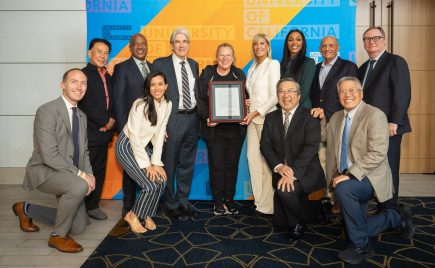
- Volunteer Gratitude Experience - 2026
- Alumni Mentor Program: Dinner in the Dorms
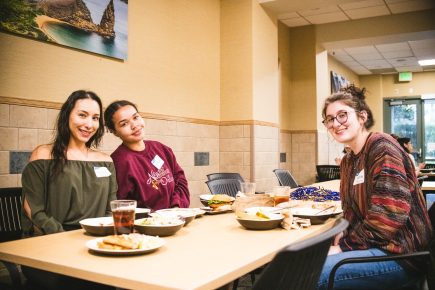
Healing the Wounds of War
U
CLA’s Operation Mend is dedicated to improving the quality of life for wounded service members, veterans and their families. It is the only program in the nation dedicated to plastic and reconstructive surgery, and medical and psychological treatment for post-9/11 military service members. The program has helped more than 850 patients and 450 caregivers at UCLA Health’s top-ranked medical facilities with world-class experts and the latest in medical technology.
Operation Mend warrior Misty Rose Sow was inspired by her family’s military service to enlist in the U.S. Air Force. She served as an Aircraft Guidance and Control Specialist with the 552nd AGS and the 71st Rescue Squadron during Operation Enduring Freedom. By the end of more than three years of service, Misty's mental health was in crisis. She said, “I had so much trauma stored in my body, it felt like the physical body could barely contain the buried emotions, and the body itself was having challenges to function at even 30 percent."

A fellow veteran told her about UCLA’s Health’s Operation Mend program. At UCLA, a holistic approach that blends Eastern and Western medicine resonated with Misty as she began her healing journey. Misty said, "There are stages of healing after trauma, and I used to believe it was surviving, existing and living; I had no idea thriving was even possible until Operation Mend.”
The program was born when Ronald Katz and his late wife, Maddie, both Bruins, were watching a news report about Marine Corporal Aaron Mankin, who was burned on more than 25 percent of his body when his vehicle drove over an improvised explosive device in Iraq. Inspired by his story of resilience, the couple decided they needed to find a way to help.
Operation Mend at UCLA was launched in 2007 through this vision and the couple’s generosity. UCLA brought together stakeholders including Ronald Reagan UCLA Medical Center, Brooke Army Medical Center in Texas and the U.S. Department of Veterans Affairs to provide medical, surgical and psychological treatment to post-9/11 veterans and service members injured in the line of duty. An inventor and entrepreneur, UCLA recently honored Katz with the Fiat Lux Award for his philanthropic giving and volunteer service to the university.

Operation Mend helps to eliminate barriers to treatment and provides services free of charge to qualified patients, as well as providing travel and lodging for warriors and their families. The program receives no financial support from government agencies and there are no co-payments, cost or authorization requirements for care at UCLA. To continue this important work, Operation Mend has received approximately $75 million from more than 5,000 donor contributions.
Corporal Mankin became Operation Mend’s first patient. To provide extra care and support, Todd Katz ʼ83 and his wife, Dana, created the Operation Mend Buddy Family Program. The program matches warriors with local individuals or couples, who offer social support, arrange outings, share meals, and help the warrior and their caregivers through the process. The Katz family not only created the program, but together with their children, they served as the first “buddy family” for Corporal Mankin.
This hands-on opportunity for volunteers to make a meaningful difference in an injured person’s recovery is rewarding for everyone involved. Dana Katz told UCLA, “It's been a great thing to be a part of over all these years. To watch people connect, watch people heal and get back to life."
The Katz family continues to be deeply involved in ensuring Operation Mend achieves its goals. Ron and Maddie’s sons, Todd and Randy Katz, together with their families, established the Ronald A. Katz Center for Collaborative Military Medicine at UCLA in 2013. The program furthers the work of Operation Mend by building partnerships between the University and the U.S military to address the unique challenges of caring for wounded veterans.

UCLA has a longstanding commitment to supporting veterans and service members, and has been U.S. News and World Report’s No. 1 Public University for Veterans seven years in a row. This past November, Chancellor Block along with health care professionals and leaders from UCLA Health joined Operation Mend patients and their families to march in the New York City Veterans Day Parade. In his message to the UCLA community he said, “America’s Veterans reflect an extremely diverse group of backgrounds and identities, but they are bound together by their selfless service to our nation. This Veterans Day, let us honor them and take inspiration from the example they set.”
Operation Mend gives wounded service members a chance to rewrite their future. U.S. Army Staff Sergeant Darius Johnson was severely wounded in Afghanistan, suffering burns to 30 percent of his body, a traumatic brain injury, punctured lung, broken jaw and severe arm injury. He came to Operation Mend through a friend’s referral, and was treated for his physical injuries. He also completed the Intensive Treatment Program for Post-Traumatic Stress. Today, Darius is married and pursuing a master’s degree. He says, "The program gave me the tools to accept that what happened wasn't my fault; it was beyond my control. You can't do this stuff on your own, and you can't do it halfway."
For more info, visit uclahealth.org/programs/operationmend.
Recent Articles
- The Fire Within: Leo Rochman’s Story of Resilience
- UC Inspires Honors UCLA Alumni
- UCLA AAP Alumni Spotlight - Adrianos Facchetti ’01, J.D.
- The Story Behind Jackie Robinson’s 1946 Reintegration of Organized Baseball
- UCLA Prytanean Celebrates Its Centennial
- Building Community: UCLA Disability Alumni Network Focuses on Belonging and Visibility
Timeless Tailgaters
O
ne of America’s greatest pastimes is the college football tailgate party. It’s a tradition like no other. The atmosphere is rife with school spirit, the savory smell of food on the grill fills the air, and laughter and music can be heard all around. The Rose Bowl Fun Zone in Lot H has become the gathering place for real Bruin fans, where friends become family, and families pass down a time-honored tradition to succeeding generations. This is where the die-hards come to live it up.

Set against the backdrop of a perfect Southern California day, the highly-anticipated Homecoming game against the Colorado Buffaloes and Coach Prime (Deion Sanders) brought Bruin Nation out in full force. For brothers Richard ʼ79 and Gary ʼ81 Bacio, this has been a family affair dating back to 1965 when their father first brought them to UCLA games at the Los Angeles Memorial Coliseum, when they were only nine and six years old, respectively. Richard recalled that the tailgates started with their parents and their friends, until he and his brother came of age and kept the tradition going, When the Rose Bowl became the home of UCLA Football in 1982, they were able to secure their prime tailgate location next to the Alumni Band, and they became a staple in this tight-knit community. He said, "To put it in perspective, I have not missed a Bruin home game since October 1978, which was my senior year at UCLA." Regardless of the team’s record in the standings, you can always expect to find the Bacio brothers, along with their wives, friends and children, spending their fall Saturdays at their favorite spot. "What makes tailgating special to me is all the great people I’ve met through the years. Most of those lifelong friends I have tailgated with for over 35 years! In fact, we say that we are all 'family.' What we all share, like a family, is our love of UCLA and, specifically, UCLA Football."

Not too far away, at the other end of the row of blue and gold canopies was a large crowd of mixed-age Bruins at the Kappa Sigma Bruins tailgate. Hosted by the fraternity’s advisor for the L.A. region, Mark Anderson ʼ80, this tent was alive with energy along with food and a beverage offered to Kappa Sigma members and guests free of charge. The tent hosts anywhere from 25 to 75 people each game, which includes Kappa Sigma alumni, current undergrad members, sometimes their parents and occasionally a sorority from UCLA. Anderson has been tailgating for over 43 years. He started with four people, a few lawn chairs, some tables, snacks and coolers, and later added canopies, flagpoles and a barbecue. They originally set up next to the alumni band to support them and enjoy their spirit and music and have stayed next to them the entire time.
Across the way from the Kappa Sigma tailgate was a row of 10 Bruin tents, each with different decorations, food offerings and cultural makeup. According to Desarie Martinez, host for one of the tents, this was a blended family that’s been coming together to tailgate at the same location for over 32 years. They shared food, played games and laughed out loud over drinks. It began with Oscar McCullar and his wife around 35 years ago, and the trail of tailgate tents only grew. Despite many of them not having graduated from UCLA, their love for the school is undeniable. Oscar’s 36-year-old grandson, Rich McCullar Jr., has been tailgating with the family since he was four and even sports an intricate tattoo of his grandfather, Oscar, wearing a Rose Bowl shirt on his left arm. His father Rick McCullar summed up their dedication, “It’s all about love and family. That’s why we come here year after year no matter how the Bruins are doing.”

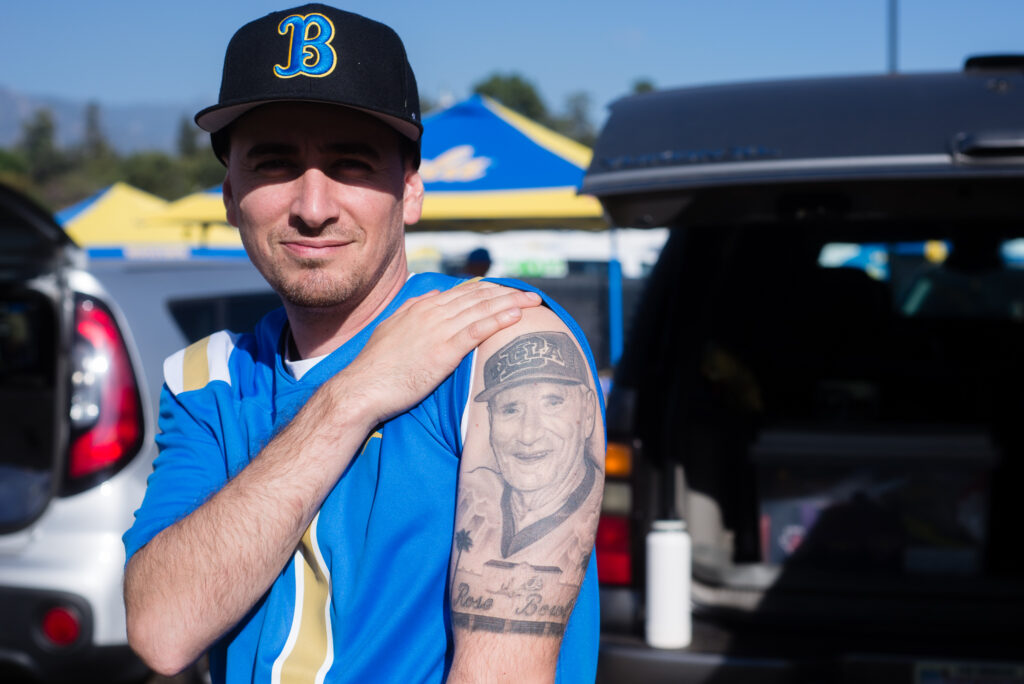
Situated next to the Alumni Band, there’s a group of Bruins who specialize in the food served at their tailgates. On this day, they were frying up a pair of steaks on the grill paired with some good wine from Strasburg, France. Other days, depending upon the time of the game, they’ve served paella, gourmet pizza and tamales for breakfast. Ed Alvarez ʼ70, Anna Magini ʼ74, M.N. ʼ77, Gary Phillips, Cert. ʼ91, and his wife Nancy, have been tailgating since 1988, a tradition that began with Danny Gant who was with the Santa Clarita Bruins. They’ve traveled to away games, attended tailgates at other schools, and they’re convinced there’s no better place than the party at the Rose Bowl. Gary said, “You can’t beat the weather, the gorgeous mountains in the background, the grass under your feet and the band playing next to you. What’s not to love?”
The love for UCLA is apparent at every Rose Bowl tailgate. Generations of Bruins, whether by degree or fandom, showcase the rich diversity of the Bruin community, bringing with them the spirit of friendship and sharing of food and drink and good times. With music blaring, drinks flowing, flat screens showing the day’s football highlights, and tailgate games like foosball, cornhole and beer pong underway, these parties are a Bruin tradition like no other.


Recent Articles
- The Fire Within: Leo Rochman’s Story of Resilience
- UC Inspires Honors UCLA Alumni
- UCLA AAP Alumni Spotlight - Adrianos Facchetti ’01, J.D.
- The Story Behind Jackie Robinson’s 1946 Reintegration of Organized Baseball
- UCLA Prytanean Celebrates Its Centennial
- Building Community: UCLA Disability Alumni Network Focuses on Belonging and Visibility
Our Proud Partners


