Category Archives: Uncategorized
story of support: he built his dream with the support of others. now this $100,000 endowment is his way of returning it
Russell Stong IV heard no at every turn and had just enough support to never take it as a final answer. Not everyone does. His $100,000 endowment exists to change that.
Giving back usually comes later: after the career is built and the legacy secured. For Russell Stong IV, later has never been part of the plan. He's a 20-something from Northridge, two years out of UCLA, working at Holman Growth Ventures in Philadelphia on investments in AI, robotics, and green energy. For Stong, a boundary has never been a wall. It's just a defender, and he's spent his whole life finding the way around.
"Even with all that hard work, I still need a support system," Stong says. "I still need an avenue toward my opportunities. And I recognize that for others as well. If the only thing limiting [an incoming student] is their financial means, I don't really think that's fair."
It is worth noting that Stong has never once told this story as something he did alone. For all his tenacity, he is the first to point to the people who made it possible. When asked why now, his answer is characteristically direct: "Why wait? My platform is hot." It's the same logic he has applied to every chapter of his life: don't wait for permission, don't wait for perfect conditions. Find the window and go.
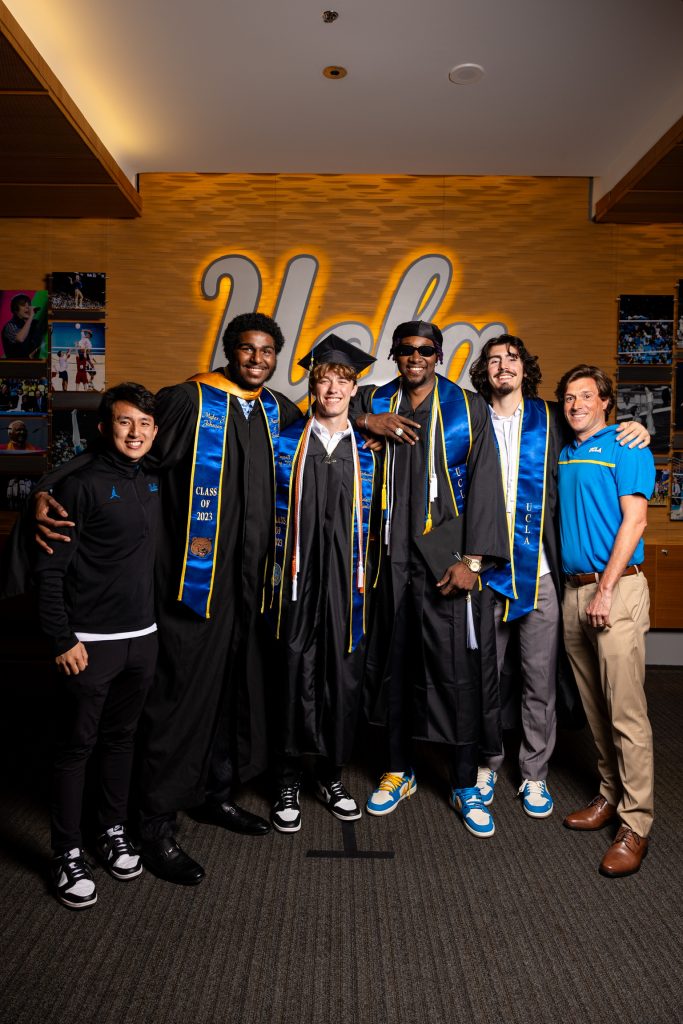
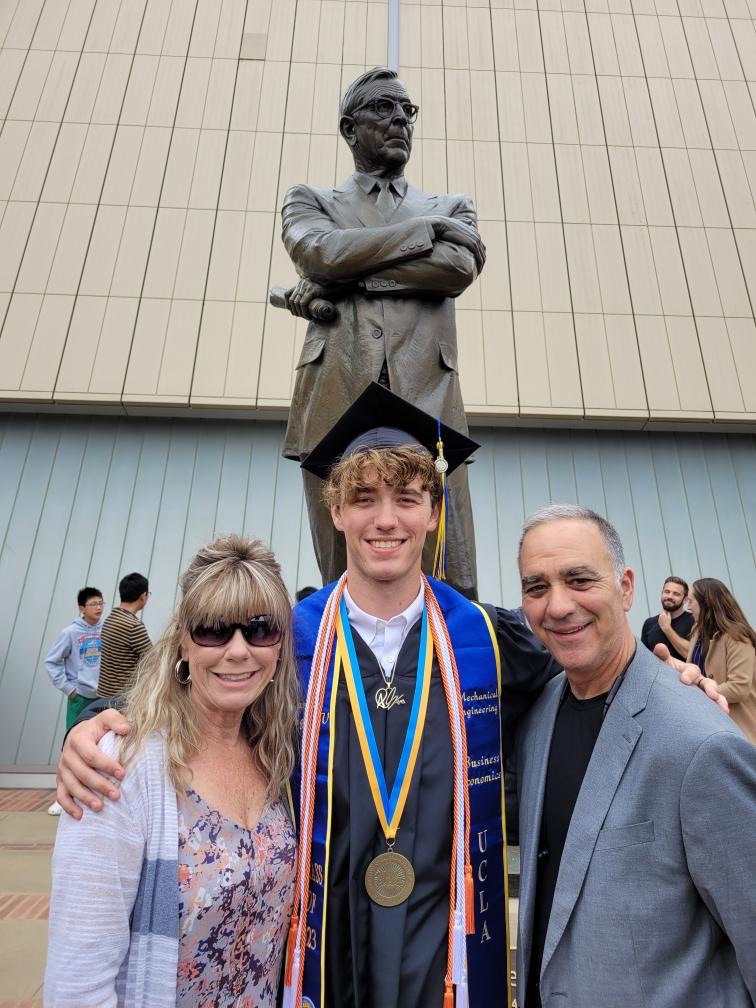
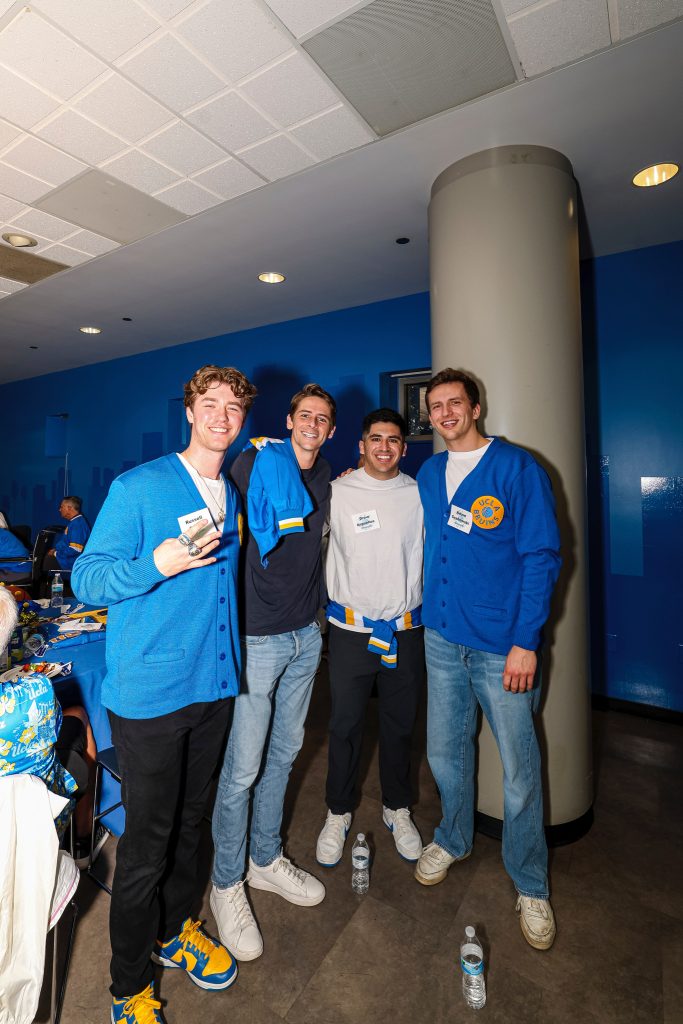
For Stong, a boundary has never been a wall. It's just a defender, and he's spent his whole life finding the way around.
Stong grew up in the San Fernando Valley dreaming of two things that rarely go together: Division I basketball and an engineering degree. He attended Crespi Carmelite, made straight A's, and watched his teammates get recruited while his own phone stayed quiet. So he applied to UCLA through regular admissions, got in, and called the basketball coach. Cold.
That call got him a job offer as team manager. Stong turned it down, respectfully but without hesitation.
"My dream is to be a UCLA basketball player," he told the coach. "So that's what I want to do and how I want to do it."
Tenacity is part of the game. He followed up for a month and finally, one afternoon in Powell Library, mid-Physics midterm prep, his phone rang.
"They called me when I was in the middle of Powell Library and told me to come to practice the next day," he says. "I was on the team ever since."
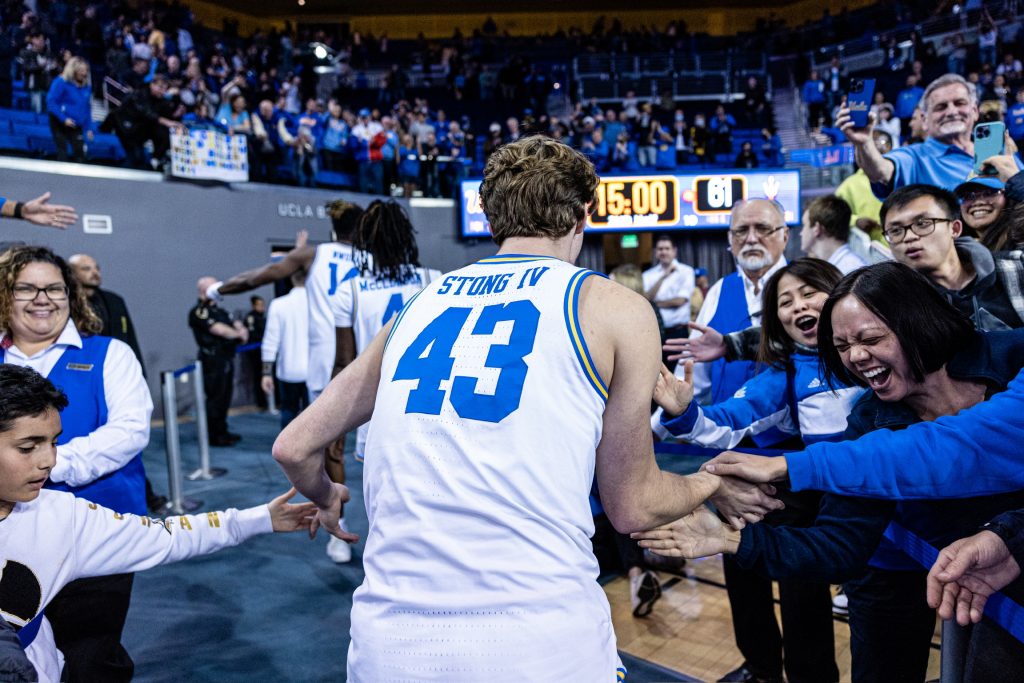
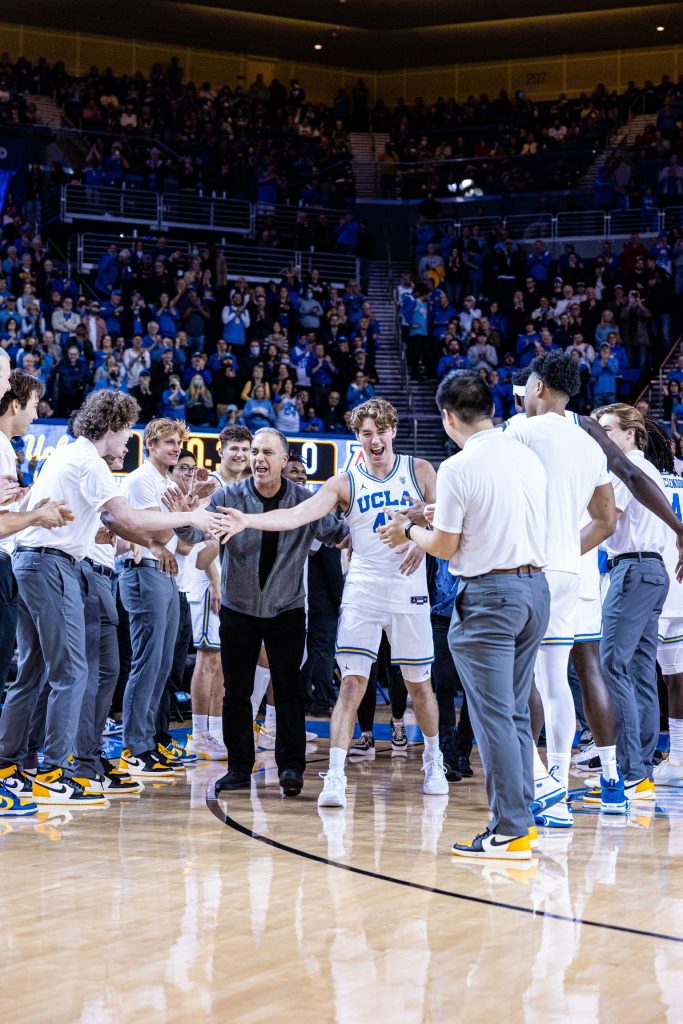
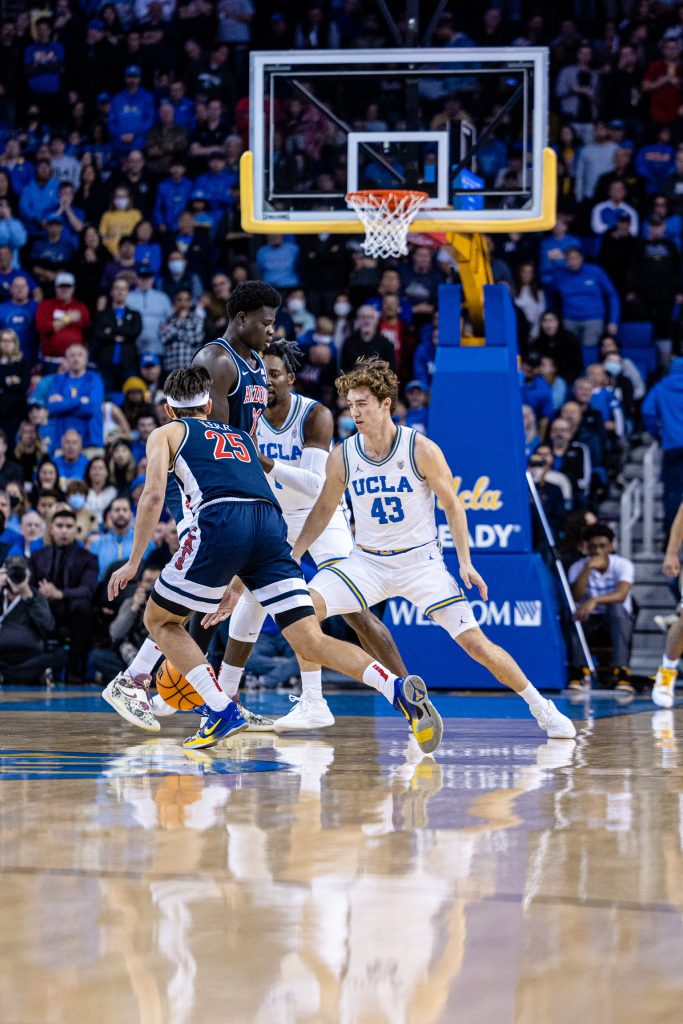
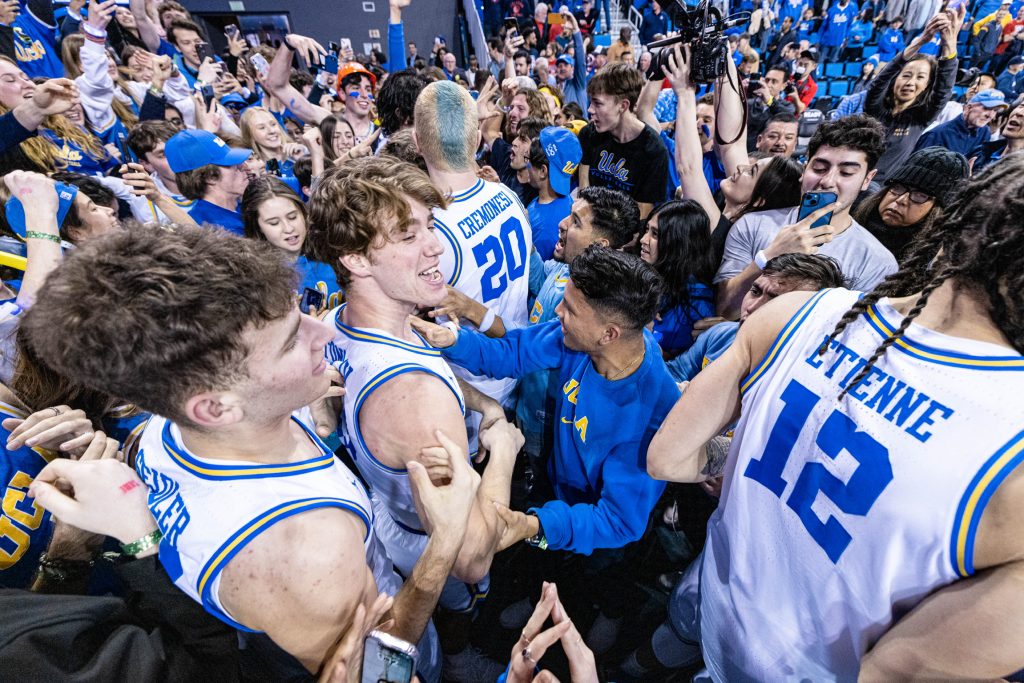
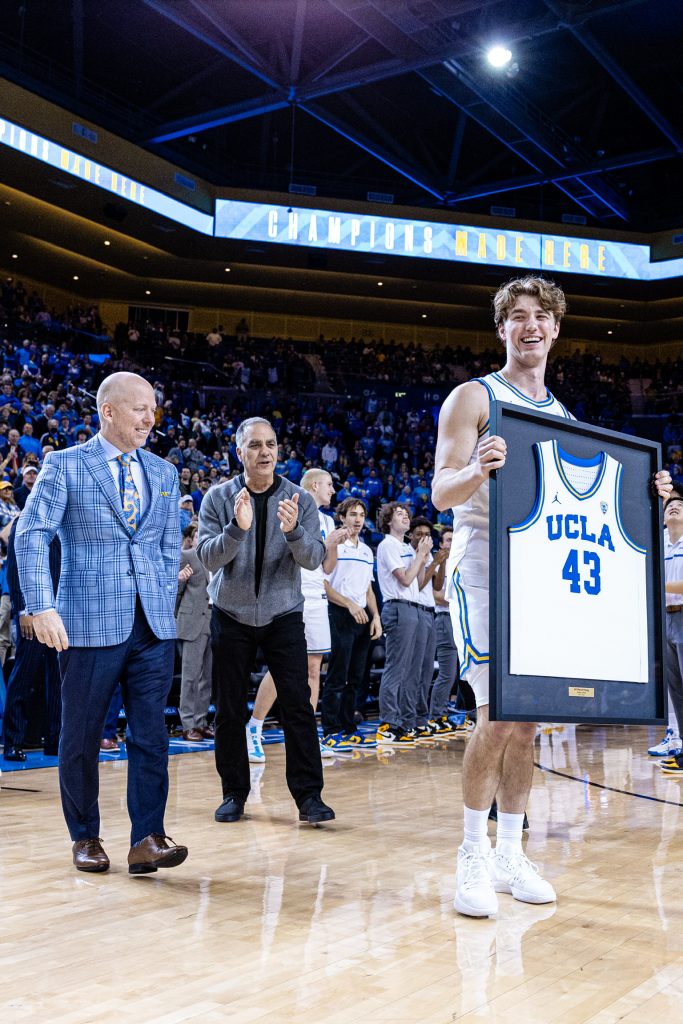
But nothing is ever that simple. Stong has elevated blood pressure; genetic, monitored,and managed. Under normal circumstances this is a non-issue, but UCLA's medical staff—operating during the same period as Shareef O'Neal's heart condition—wasn't taking chances. So came more tests, more waiting, and another hill to climb. Which, if you know Stong, is just an average Tuesday.
The approval still hadn't come by the exhibition game. He sat on the bench in street clothes and was told before tipoff that his blood pressure would be taken after the final buzzer. That number would decide his fate.
"First I'm going to be watching this game, hype and nervous on the bench, and then you tell me this is going to decide if I'm on the team?" he says. "Of course it's going to be high!"
The final buzzer rang and they took the test. The results were in. The first people he needed to tell were the ones who had gotten him there. He walked out into a strange night, the marine layer dropped low, fog sitting just above the ground. His parents were somewhere outside waiting. He called their names into the dark.
"I remember running to them," he says. "And I told them I was approved to play."
The support that carried him to that foggy night outside Pauley is exactly what he is now building for someone else. His parents are one of the reasons he fought so hard to get there. And why he is now fighting to make sure the next Bruin gets the same chance.
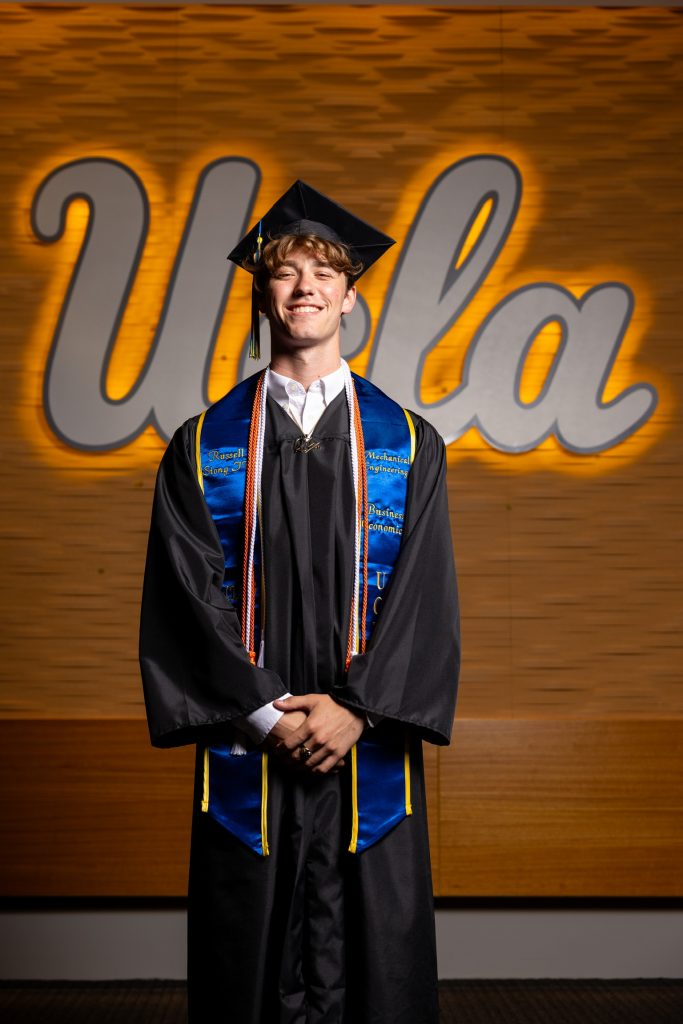
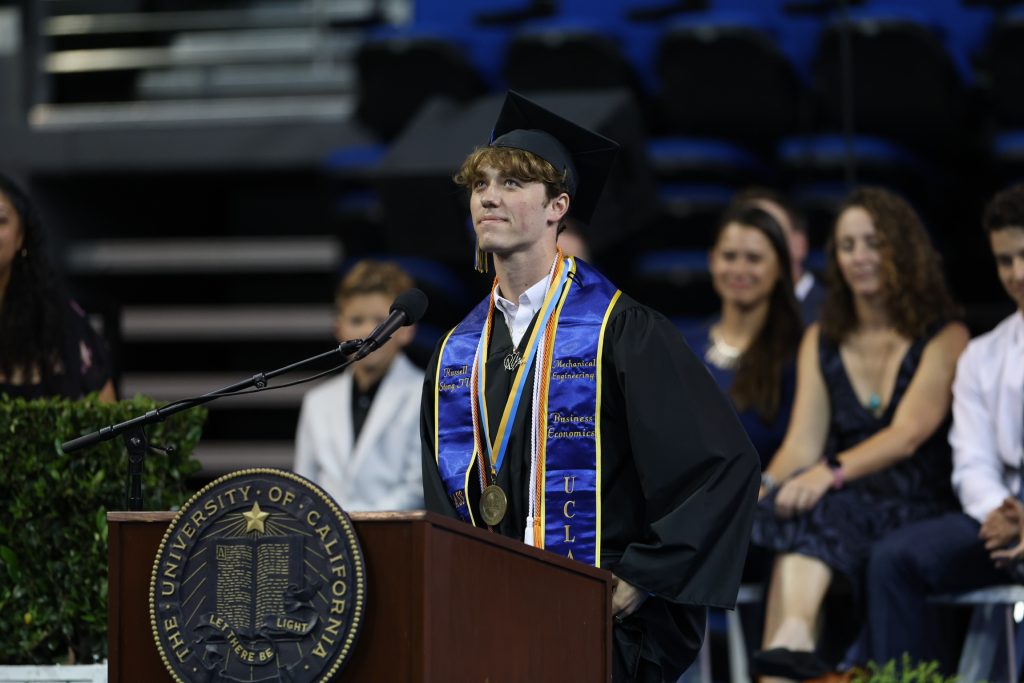
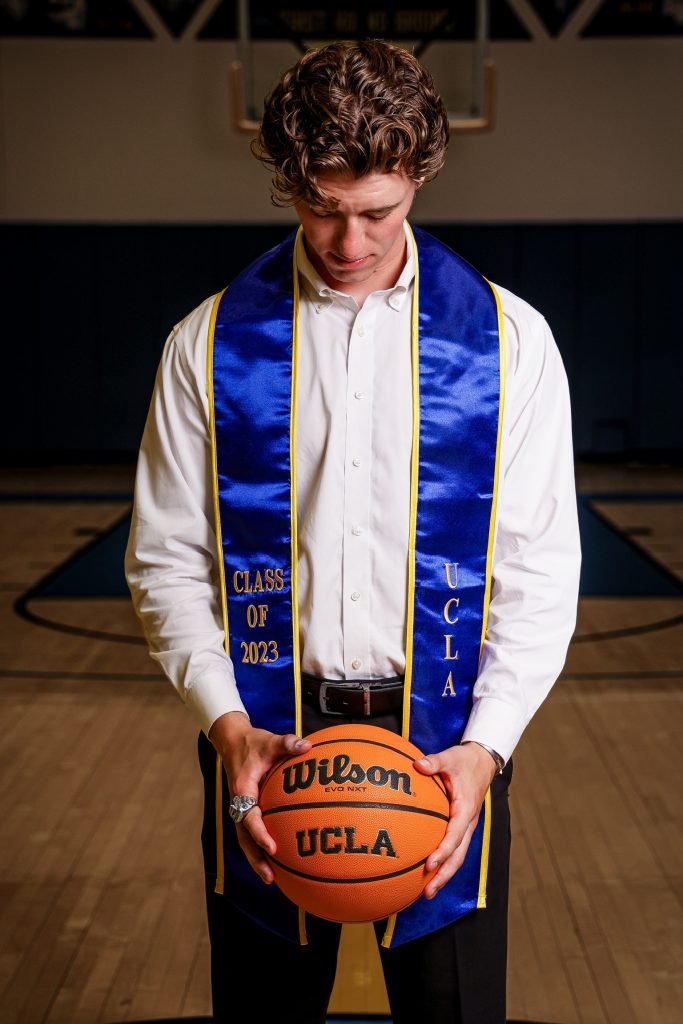
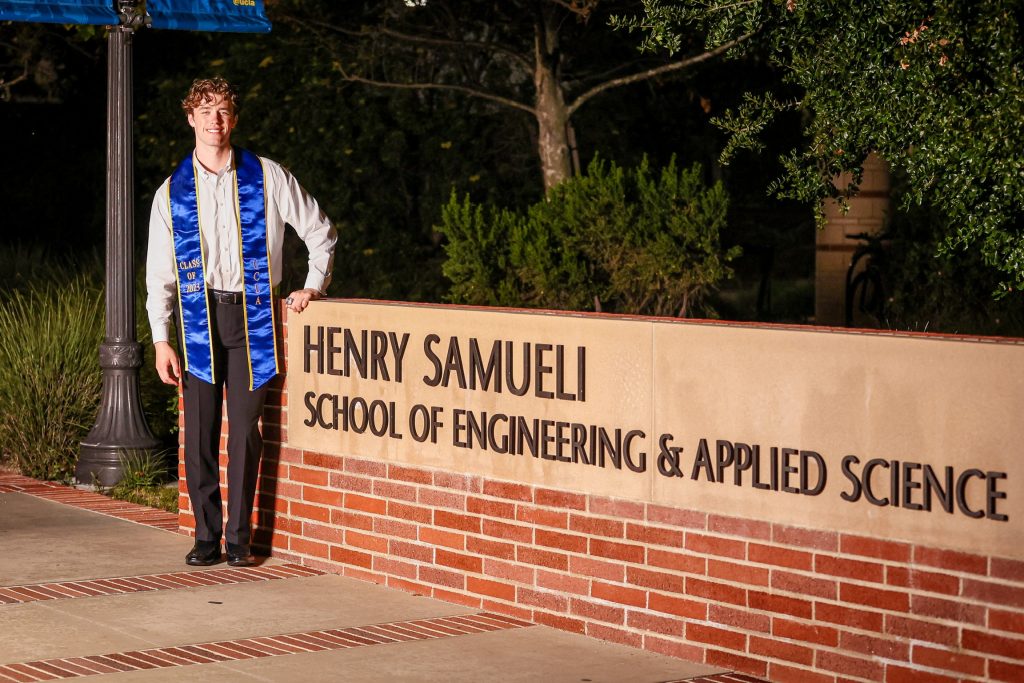
Stong stayed at UCLA for six years, coming out the other side with dual degrees, a master's in autonomous systems, and several rings. At the Final Four, NCAA representatives walked onto the court and presented him with the Elite 90 Award, given to the student-athlete with the highest GPA across all 90 NCAA championship sports. He hadn't known it existed before he won it.
Reflecting back, he’s aware that many attempted to ground his dreams. But that’s not in Stong’s vocabulary.
"’Getting into UCLA—good luck. Oh, you want to be a basketball player? Good luck. But you won't stay an engineer. Now you finished your undergrad—you won't double major. Done. Now you want your master's?’ Did that too."
He pauses. "So really, when I look at raising this endowment—yeah, it's not normal."
But nothing about Stong’s journey has been. And he's not about to start now.
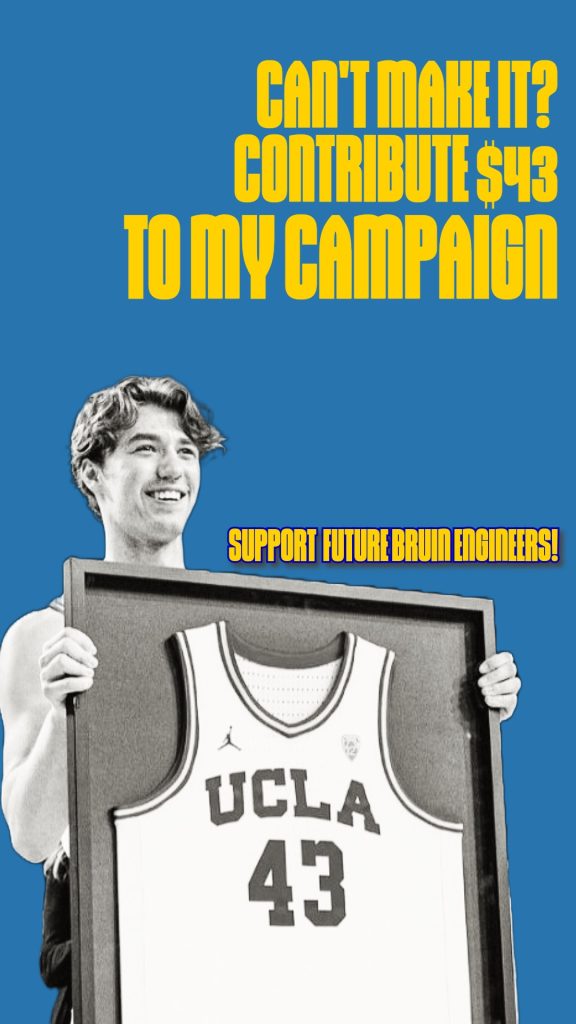
The Russell Stong IV Scholarship at UCLA Samueli is for engineering students who have everything it takes to be a Bruin, except the financial means to walk through the door. He has raised $43,000. He needs $57,000 more. He has until April 15th and once fully funded, the endowment exists in perpetuity. Not a moment, but a mechanism. One that will outlast his legacy.
"If a financial barrier is the only thing deterring them from being a Bruin," Stong says, "then they should be a Bruin. We're just here to give them that yes."
The next Bruin engineer is waiting.
To support the Russell Stong IV Engineering Scholarship at UCLA Samueli, visit here. Gifts can be made as multi-year pledges or stock donations.
For questions, contact Gustavo Callejas in Engineering External Affairs at gcallejas@support.ucla.edu.
story of now: a simple framework for seizing your 2026
Listen below to UCLA Anderson alum Brian Dubow '23 share his story of now -- an invitation to notice the moment you’re in and choose how you want to live it.
“I’ve learned in life that the path unfolds as we walk on it. You have to be willing to take the first step and pair that with a bit of trust in yourself and faith in the world.”
-Brian Dubow '23
As the clock struck midnight, I realized how quickly the past year had come and gone. In the blink of an eye, it was January 1, 2026: a new year full of infinite possibility, waiting to be claimed. The question was: how would I claim it?
One of the greatest gifts we can have in life is a sense of urgency: the awareness that time is limited, that we don’t have forever, and that we are living in what will one day be called “the good old days.” It’s only when we truly understand this that we begin to live fully.
That perspective didn’t come naturally to me. Before becoming a happiness and performance coach, I was a CPA who spent years working as deals consultant at a big four accounting firm. On paper, everything looked right, but intuitively, something felt off. Choosing to step away from that path eventually led me to UCLA Anderson, where I earned my MBA and began asking deeper questions about how we define success, fulfillment, and a life well lived.
Urgency grew out of those questions. It forced me to take an honest look at how I was investing my time. It pushed me beyond dreaming and into action, challenging me to stop waiting for permission and to start living in closer alignment with my most authentic self.
A Simple Framework for Seizing 2026
At the start of this new year, I urge you to choose urgency. Not the kind of urgency that asks you to add more to an already full plate, but an urgency that asks you to act on what matters most. To stop postponing the things your soul is already asking for, and to loosen your grip on what the world expects.
That clarity came when I stopped overthinking and started acting, guided by three simple ideas that have shaped how I approach time, gratitude, and action.
I’ve come to think about urgency through three simple ideas. They are not revolutionary, but they are grounding and they have helped me move from intention to action.
Many of those insights took shape during my time at UCLA Anderson. Being surrounded by driven, high-achieving people forced me to look honestly not just at what I was accomplishing, but at how I felt while accomplishing it. That reflection eventually led me to build a career focused on helping others reconnect with what makes them feel alive through coaching, speaking, and teaching. It also led me to co-create a course at UCLA Anderson called Alive, where we help students explore their values, intuition, and personal definitions of success beyond titles and timelines.
1. Recognize that you’re already living part of the dream
If you have your health, a roof over your head, and at least one person who truly cares about you, whether a family member, a friend, or a partner, then life is already pretty good.
It is easy to lose sight of that while running on the hamster wheel. We tell ourselves we will be happy once we land the next promotion, buy the faster car, or move into the bigger house. But happiness does not arrive all at once. It accumulates when we take time to notice what is already here.
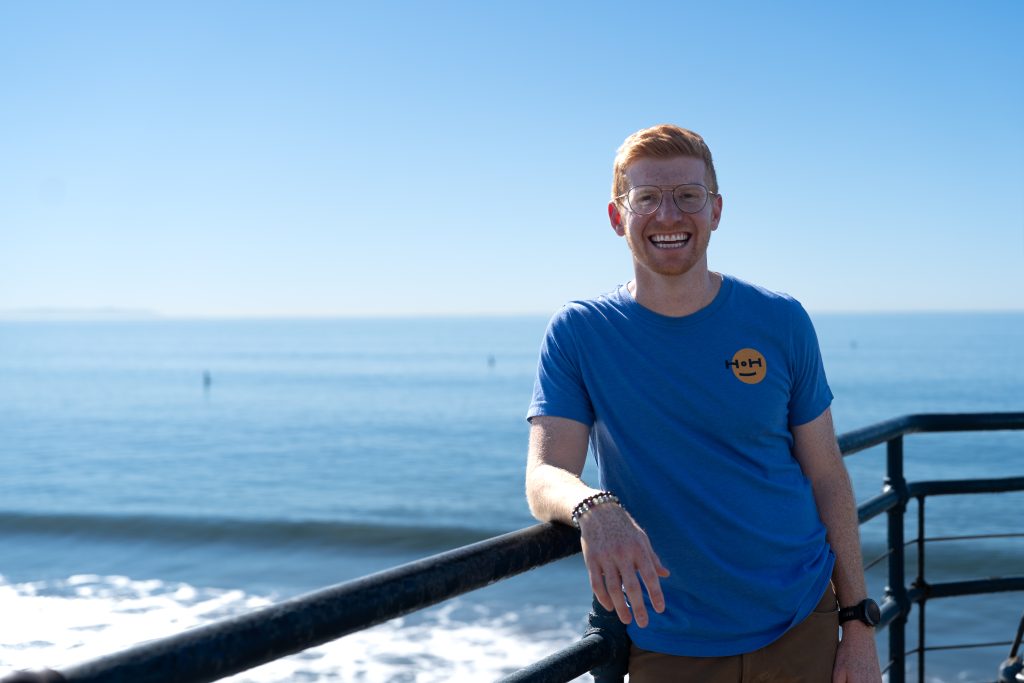
I was recently asked, “What would it take for you to be living your dream life?” I paused, and then it hit me: I’m already living the dream I imagined five years ago. Since then, I’ve earned my MBA, built a successful coaching and speaking business, completed an Ironman, traveled the world, and built a meaningful relationship with my partner. And still, I want more. That’s because the goalposts of success are always moving, expanding to include the next achievement, the next milestone. But I’ve come to believe that many of us spend so much time chasing the dream that we miss this truth: we’re already living it. Gratitude and presence help me remember how much is already here, and that this, right now, is the dream.
Practicing gratitude is not about lowering ambition. It is about grounding yourself long enough to recognize that much of what you are chasing is already present in some form.
As Robert Brault once wrote, “Enjoy the little things, for one day you may look back and realize they were the big things.”
2. Accept the truth about time
None of us are getting any younger, and time is not slowing down.
We have all known someone who worked tirelessly at a job they disliked, promising themselves they would start living once they retired. That story weighed heavily on me as I considered my own path. Choosing to leave a stable consulting career to start my entrepreneurial journey while pursuing an MBA at UCLA Anderson forced me to confront the reality that waiting for the perfect moment is often just another form of delay. The time is never right, and stepping onto the pathless path will always feel uncomfortable. But sometimes we have to choose what makes us feel alive over that which makes us feel comfortable. I made that choice, partially out of fear of anticipated regret. A fear of looking back on my deathbed one day wishing I had taken the chance.
Death is the one thing we all share, yet it is the thing we avoid thinking about most. Instead of fearing it, I have learned to let it sharpen my focus. We cannot control how long we are here, but we can choose how we spend our days. That realization pushed me to make changes before I felt fully ready, rather than postponing life for a future that was never guaranteed.
When you zoom out and look honestly at your weeks, months, and years, ask yourself: Am I proud of how I am spending my time?
As Tom Cruise put it simply, “Someday is a dangerous word. It is really just a code for ‘never.’”
3. Don’t wait
Do not wait to book the trip.
Do not wait to sign up for the race.
Do not wait to tell people you love them.
Do not wait to ask for the promotion.
Do not wait to write the book.
Do not wait to start the company.
Do not wait to leave what no longer serves you.
Do not wait for permission.
Do not wait to live authentically.
If you are waiting, it is probably because you are scared. Scared of failing. Scared of being judged. Scared of not living up to your potential. Or sometimes, scared of what happens if you do.
Staying on the familiar path is easier. But easier does not always mean better.
Do not wait to do the thing you already know you are meant to do. If it excites you and scares you at the same time, you’re probably on the right track!
When I signed up for my ultra-marathon on January 1st, I had no idea how to accomplish this goal, and I still don’t know for sure that I can do it, but I trusted that I could figure it out. My next call was to a running coach to help me build a training plan and hold me accountable for bringing this goal to life.
When I started my business, I had no idea what I was doing. I didn’t know where my next client was coming from and I made tons of mistakes. But each of those mistakes were valuable lessons that got me closer to my next win.
We tend to get caught up in the logistics and paralyzed by the uncertainty. We want to have all the answers before we take the first step. But I’ve learned in life that the path unfolds as we walk on it. You have to be willing to take the first step and pair that with a bit of trust in yourself and faith in the world.
One of the most important lessons I’ve learned is that no one figures this out alone. There’s a direct correlation between how much help we ask for and how much success we achieve.
As Steve Jobs said, “Your time is limited, so do not waste it living someone else’s life.”
If you’re reading this, you’re likely part of the Bruin network—one of the most thoughtful, driven, and accomplished communities I know. Don’t wait to ask for help. Don’t wait to reach out. Don’t wait to lean on the people who’ve walked this path before you.
And if you’re someone who’s achieved a version of success but still feels like there’s more—more presence, more purpose, more joy—I’ve been there too. That’s why I do this work.
This is your reminder: the life you’re imagining is closer than you think. But it won’t wait forever.
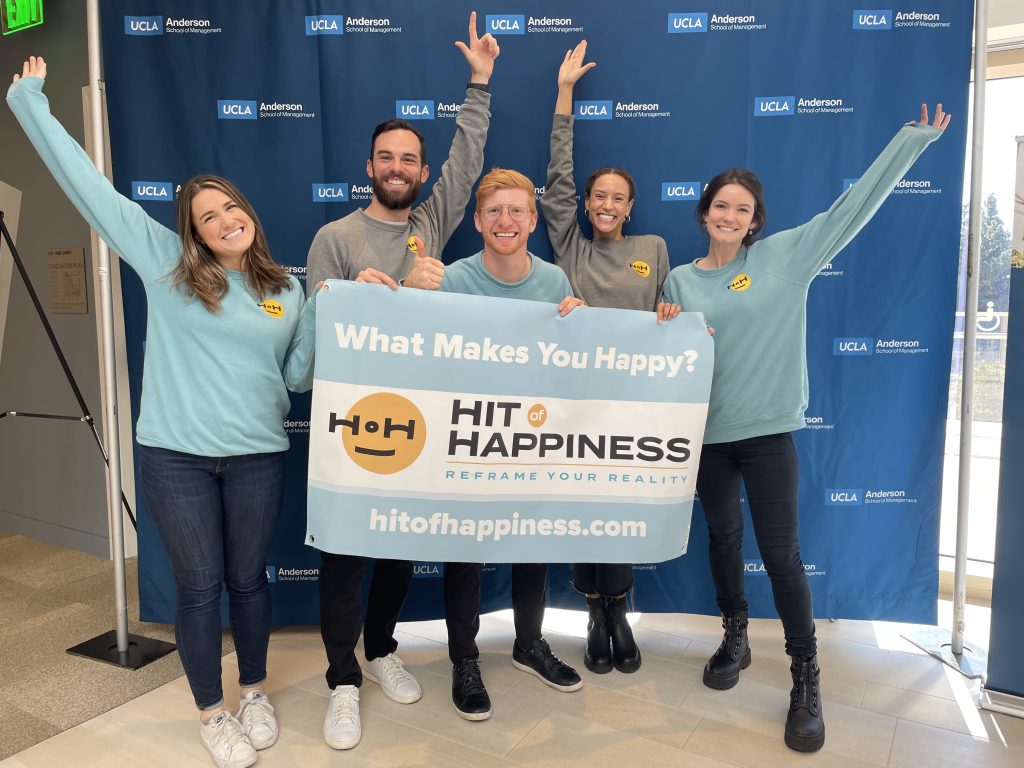
You can learn more about my work as a happiness / life coach and keynote speaker at Hit of Happiness or reach me at brian@hitofhappiness.com. I’d love to support you or your company in unlocking happiness, gaining clarity and reaching your potential!
Story of Support, Professor Terry Kramer
In a classroom of roughly thirty students, each pair of eyes stays fixed on Professor Terry Kramer ’82. They’re enthralled by his words as he animates his lessons, pacing from whiteboard to desk and back again with each new idea. The atmosphere is charged. These UCLA Anderson students know that at any moment they could be cold-called: randomly selected to participate in the discussion with perfect recollection of key-stats and figures.
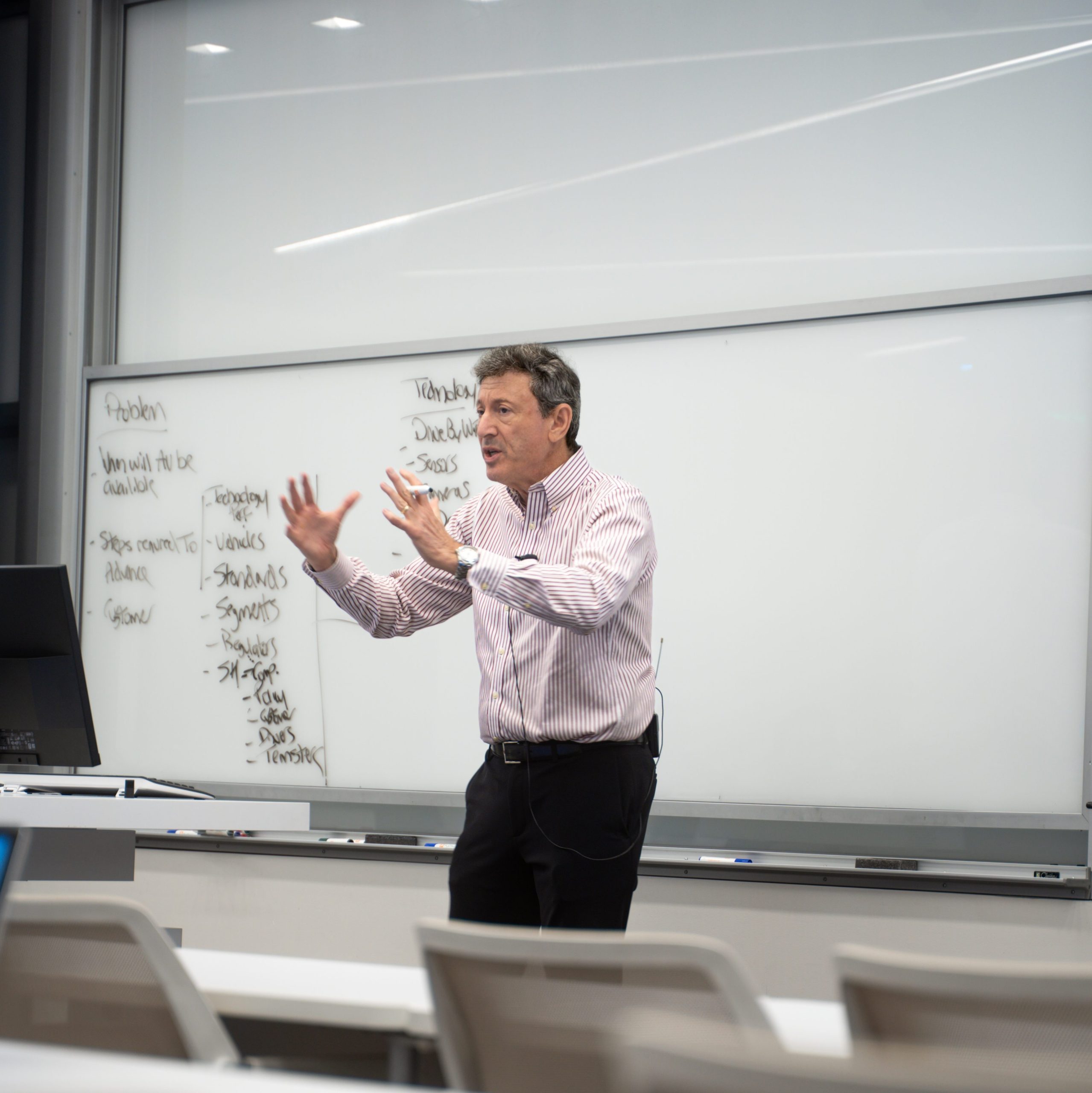
That expectation is by design.
“In my class, it’s very case-analysis oriented,” explains Kramer. “Students have to give their views. And it’s got to be one sentence, action-oriented, laser-like focus.” Clarity isn’t just an academic exercise, according to the professor. It’s a survival skill for leaders. He expects his students to have an intimate understanding of the material in order to make explicit decisions, just as any leader would.
Kramer’s standards in the classroom echo the lessons he absorbed during his own career. After earning his bachelor's degree from UCLA and eventually his MBA from Harvard Business School, he entered the telecom industry. He was quickly challenged by his mentors to move beyond analysis and into leadership.
“I would do all this great graphical analysis about how the market is performing and what’s going well and what isn’t in sales and network,” explains Kramer. “One day, [my boss] took my work and he threw it on the floor and he said, ‘I don’t think you know what your job is as a general manager. I’m paying you to make sure those salespeople are motivated and can sell our products well… I’m evaluating you on your impact on other people.’”
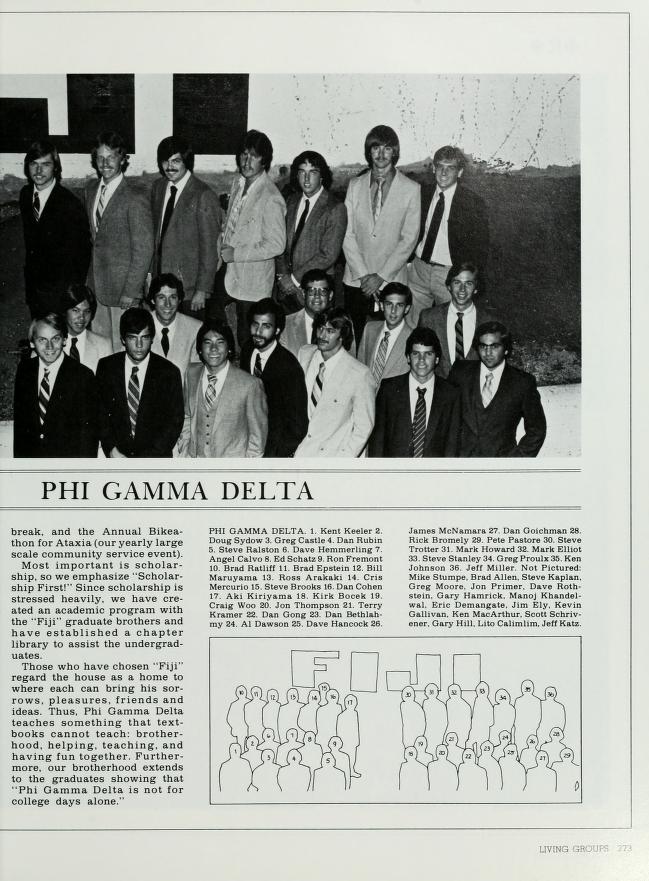
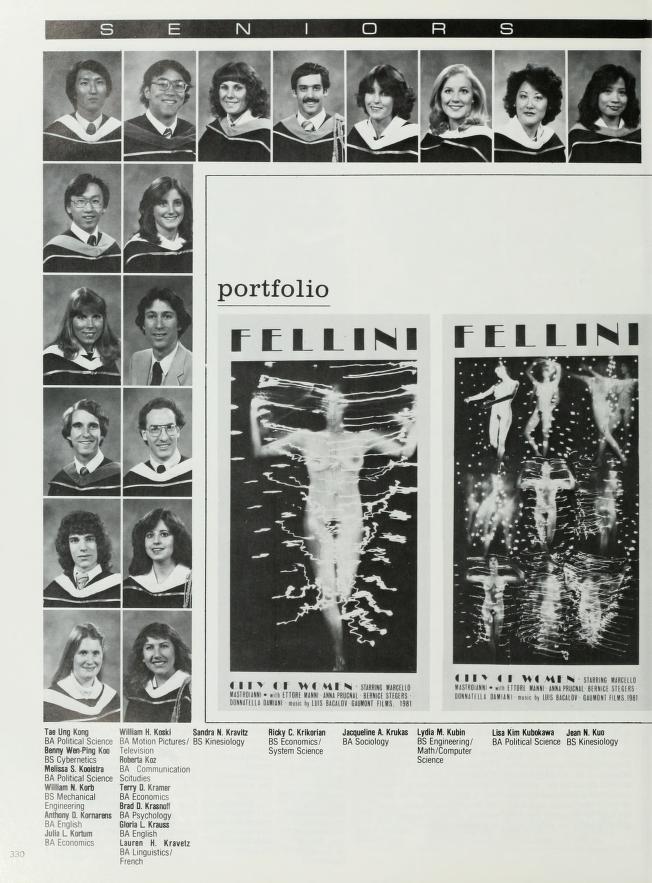
The moment stuck. Leadership, Kramer learned, is not about charts or strategies. “That was such a great learning experience – to see your success through other people, not just by what you do,” he says.
Before returning to UCLA as a professor, Kramer built a career at the center of the telecommunications revolution. He spent 18 years at AirTouch and later Vodafone, holding senior roles in strategy, mergers and acquisitions, and general management. That work took him and his family across the United States and twice abroad.
During these years, as he moved between Los Angeles, London and beyond, Kramer learned the power of context: that leadership must always adapt to the environment it operates in.

In 2012, Kramer was appointed U.S. Ambassador, representing the Obama Administration, leading negotiations centering the World Wide Web and the importance of a free and open Internet. He drew on everything he had learned at Vodafone and throughout his career to help the administration defend a core democratic value.
“What these submissions said was code words for censorship… Obviously the U.S. does not believe in that. That to me began what was a fascinating role, saying: ‘What is the importance of a free and open internet?’”
Representing the United States on the global stage, Kramer worked to rally coalitions of nations around the principle that open networks foster not only innovation and commerce, but also democracy and human rights. The fight for a free internet was another form of leadership, protecting access and opportunity on a global scale.
After decades abroad and in boardrooms, Kramer and his wife turned their focus to philanthropy and education. Together they endowed scholarships and funded programs that focused on providing opportunities for students in need. For him, it was natural to return to the institution that shaped him as a young man.
That connection is so strong that Kramer commutes weekly from his home in the Bay Area to teach on UCLA’s campus. Awake by 5 A.M. and on a plane by 8 A.M., there have been many mornings where the professor begins to question the commute for just one class at the business school.
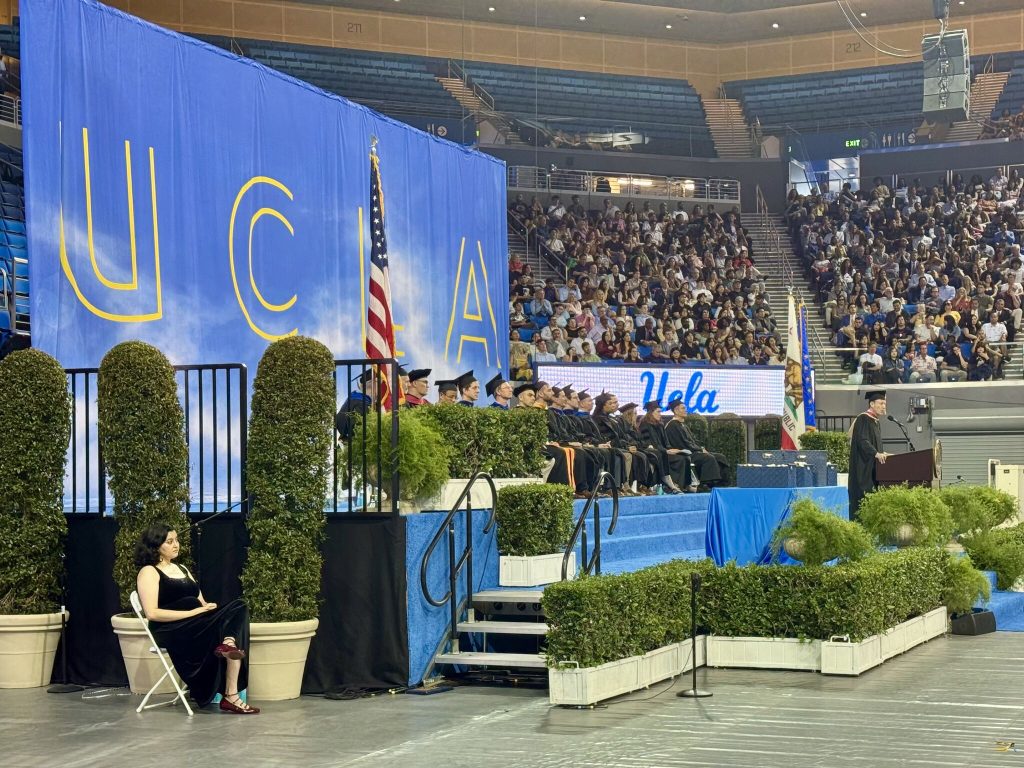
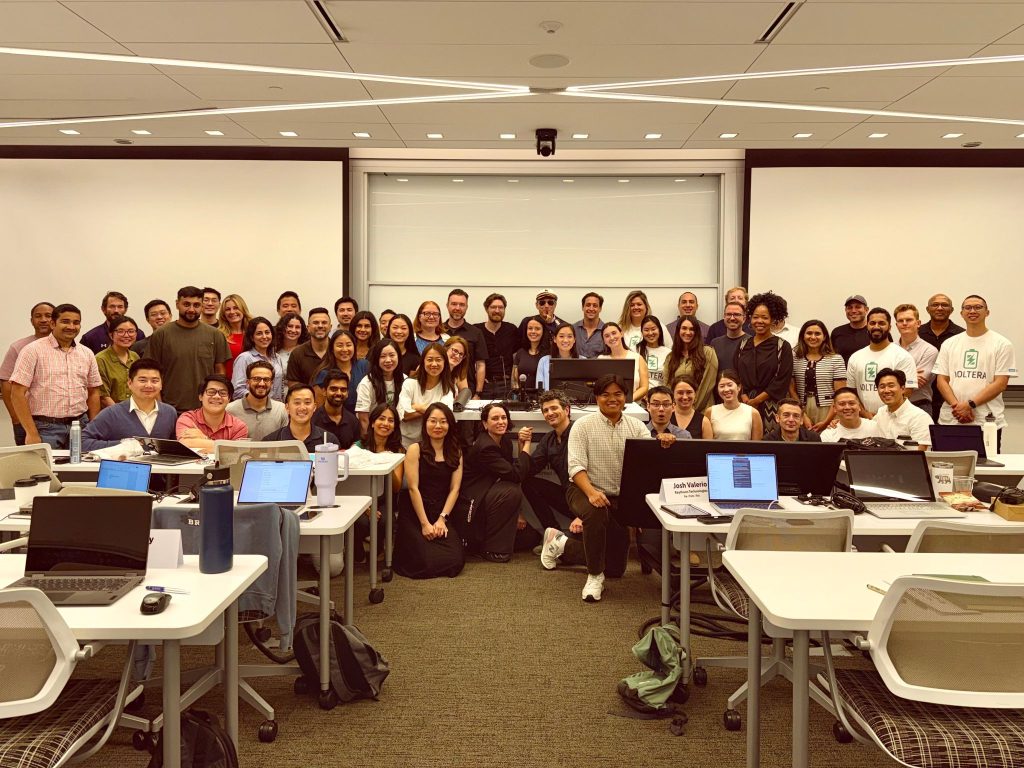
“But then I land,” he explains. “I walk onto campus, and all of a sudden I see Hedrick Hall up on the hill and I get this jolt of energy. I remember what that place meant to me and what an incredible period of growth it was… And I think this is a great institution to be involved with.”
For Kramer, each chapter of his journey has been about support: supporting his colleagues, supporting global access to information, and now supporting the next generation of Bruins.
“Teaching at Anderson has been the highest satisfaction role I’ve had… You’re dealing with great talent and you’re seeing the talent rise and grow. There’s nothing better than that.”
To hear Terry Kramer's story in his own words check out his video below:
dive into other alum stories
Story of Purpose: Alum Dean Florez Has Always Asked the Hard Questions—Even When No One Else Would
As a transfer student from the Central Valley, Dean Florez (Bruin story since ’87) found his political voice at UCLA—one built on truth-telling, discomfort, and a lifelong commitment to speaking up for the overlooked.
Senator Dean Florez’s story begins in the Central Valley of California, in a small agricultural town where, as he puts it, “farmers lived on one side of the tracks, and farmworkers on the other.” His parents came from farming backgrounds, and like many in his town, they believed success came from assimilation. “In my hometown, not speaking Spanish was a plus,” Florez said. “It’s how you kind of matriculate. I never knew a farmworker who wanted their kid to be a farmworker.”
That lens—of both survival and upward mobility—shaped Florez’s early identity. But it wasn’t until he transferred to UCLA in the mid-1980s that his sense of self, and sense of purpose, truly crystallized.“I wasn’t in the dorms. I wasn’t in sports. I was commuting from Van Nuys,” he recalled. “So finding community wasn’t easy.” What he did find, however, was a political spark. He joined the Latino Pre-Law Society, wrote a record number of op-eds in the Daily Bruin, and eventually ran for—and won—the student body presidency.
He credits UCLA as his first political training ground. “It’s like a mini city of [over 40,000] students,” he said. “When you’re student body president, you campaign just like everyone else. And you deal with every kind of constituent; from the dorms to Greek life to sports. It teaches you how to listen and lead.”
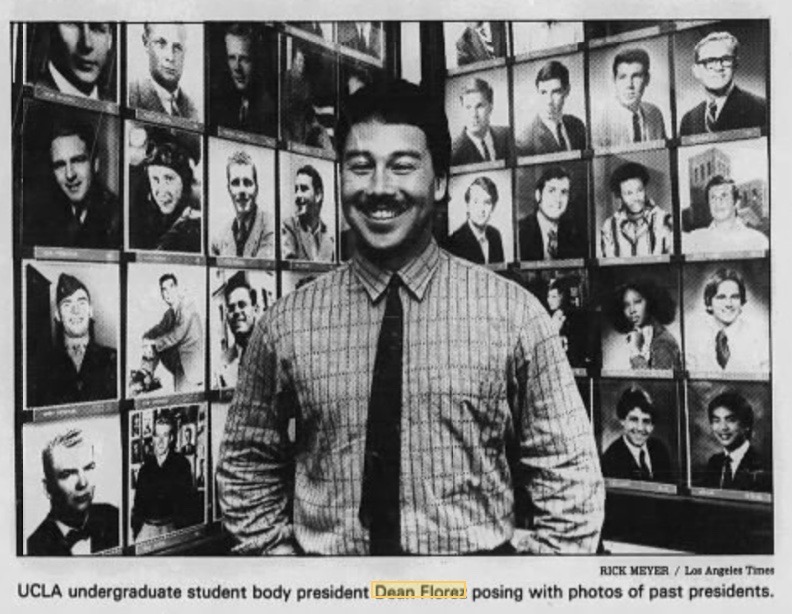
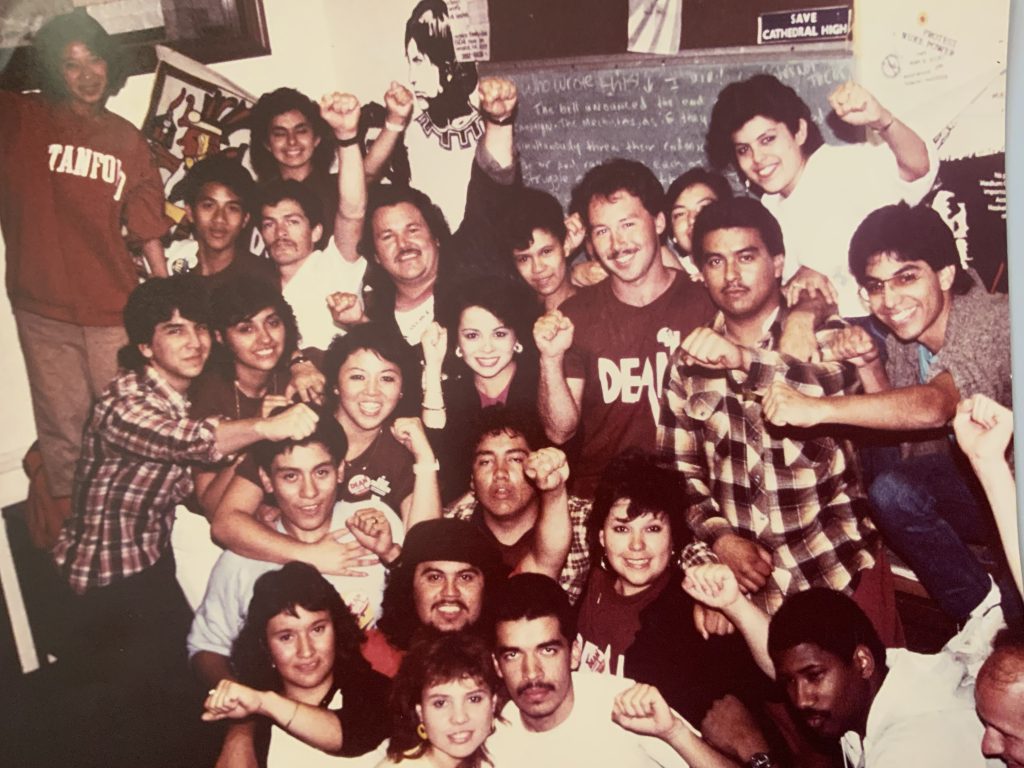
Florez’s leadership style emerged early: unapologetically inquisitive, often controversial, and rooted in moral clarity. “I always thought if you just spoke the truth, that would cause a debate,” he said. “And out of debate comes some retrenching of your own position because you’re not always right.” For him, initiating uncomfortable conversations wasn’t a political strategy. It was a personal imperative.
He brought that mentality to The Daily Bruin, where his opinion pieces often stirred strong reactions. One of his most memorable pieces was his critique of affirmative action, where he suggested income, not race, might be the more urgent factor in educational equity. “I remember Chancellor Young saying there were only three students he ever really wanted to see leave: Angela Davis, Bill Walton, and Dean Florez.”
But Florez’s activism was never performative. When he believed the university was neglecting its undergraduate population in favor of research and fundraising, he and a group of students staged a haunting protest: they carried 17 wooden coffins across campus to Murphy Hall, each labeled “undergraduate,” and laid them at the steps of the administration building. It was a symbolic act, meant to confront the institution with a stark question: Were undergraduates being buried by neglect?
He and fellow students also published a booklet titled The Ignored Undergraduate, drawing national attention to the diminishing quality of the undergraduate experience. “We had a big microphone,” Florez said. “And we used it.”That same sense of conviction followed him into the state legislature. One of his first bills sought to outlaw the retrofitting of passenger vans that crammed 20 plus farmworkers into vehicles with no seatbelts. “You would’ve thought I asked agriculture to turn upside down,” he said. “But we got it passed. And for ten years after, there were no farmworker fatalities in vans like that.”
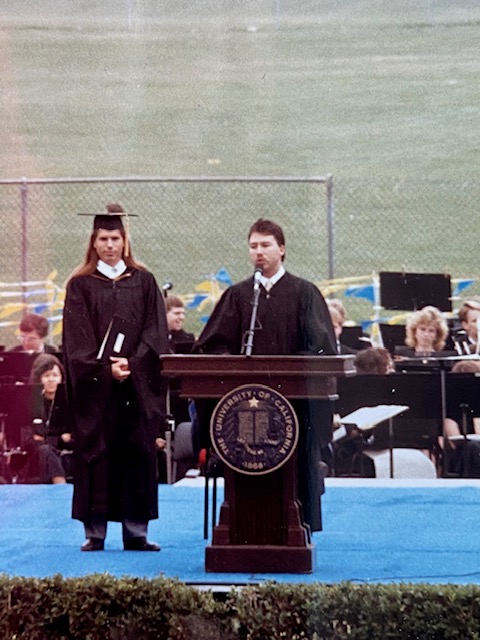
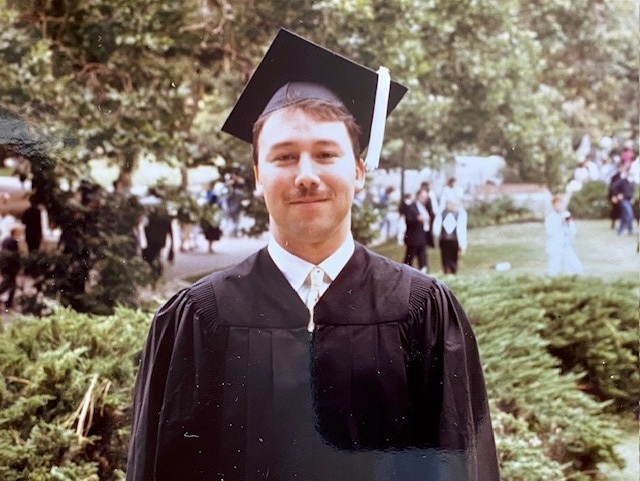
For Florez, politics has always been about discomfort. “I’ve never fit into one box,” he said. “I could never run statewide. Republicans didn’t trust me. Democrats didn’t fully claim me.” But that independence has also made him effective. “Nine times out of ten, I was the deciding vote.”
Now a public affairs strategist, Florez continues to push for progress—whether it’s advocating for AI sustainability or challenging outdated bureaucracy. His firm, Balance, helps new technologies and government agencies find common ground. “It’s not about passing laws. It’s about asking the right questions and asking them in the right forums.”
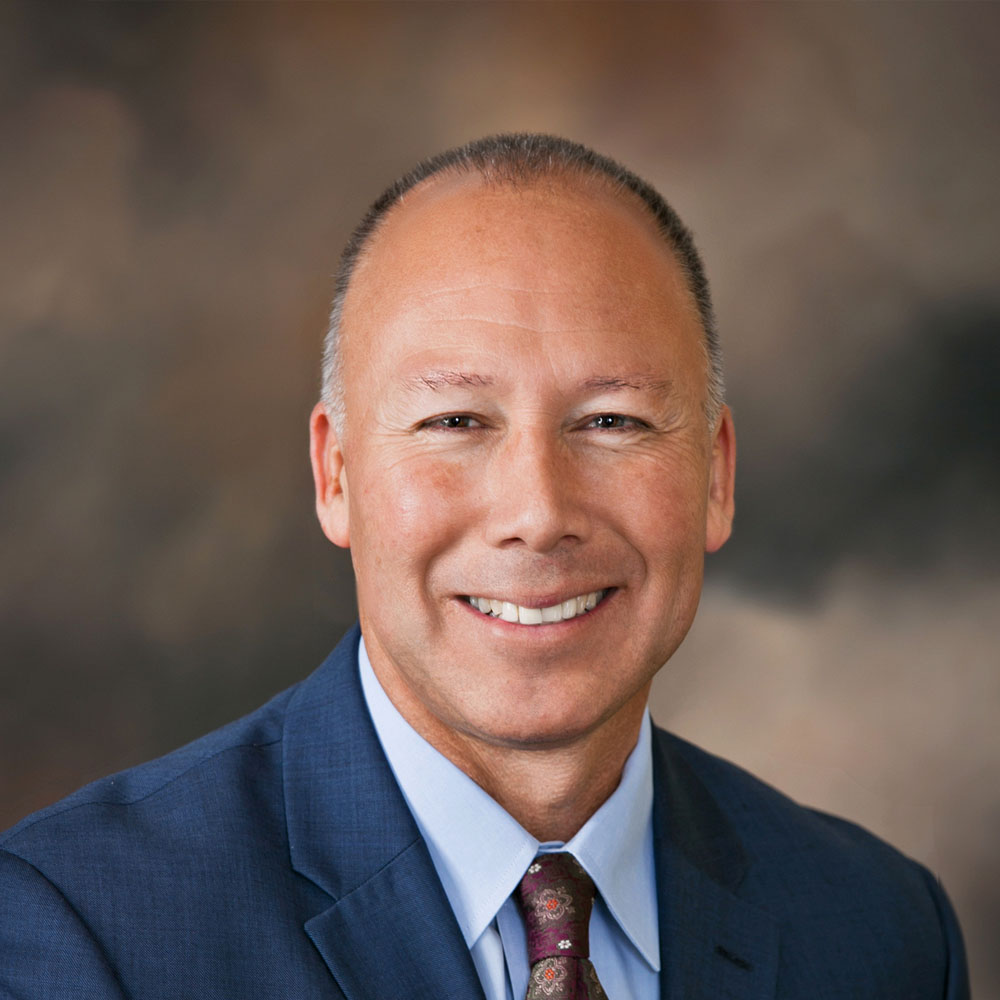
Florez says it all comes back to UCLA. “This place gave me moral authority and an intellectual viewpoint. It also taught me resilience. UCLA doesn’t coddle. It scrapes you up and makes you scrappy.”
His advice to graduates is simple, but profound: “Find your voice. Ask questions. And learn through your mistakes. The world isn’t black and white, it’s gray. And if you don’t ask the hard questions, you won’t find your way through it.”
To hear Dean Florez's story in his own words check out his recent episode at the Bruin Success Podcast:
 Listen to Dean Florez's Story
Kareem Abdul-Jabbar Reception
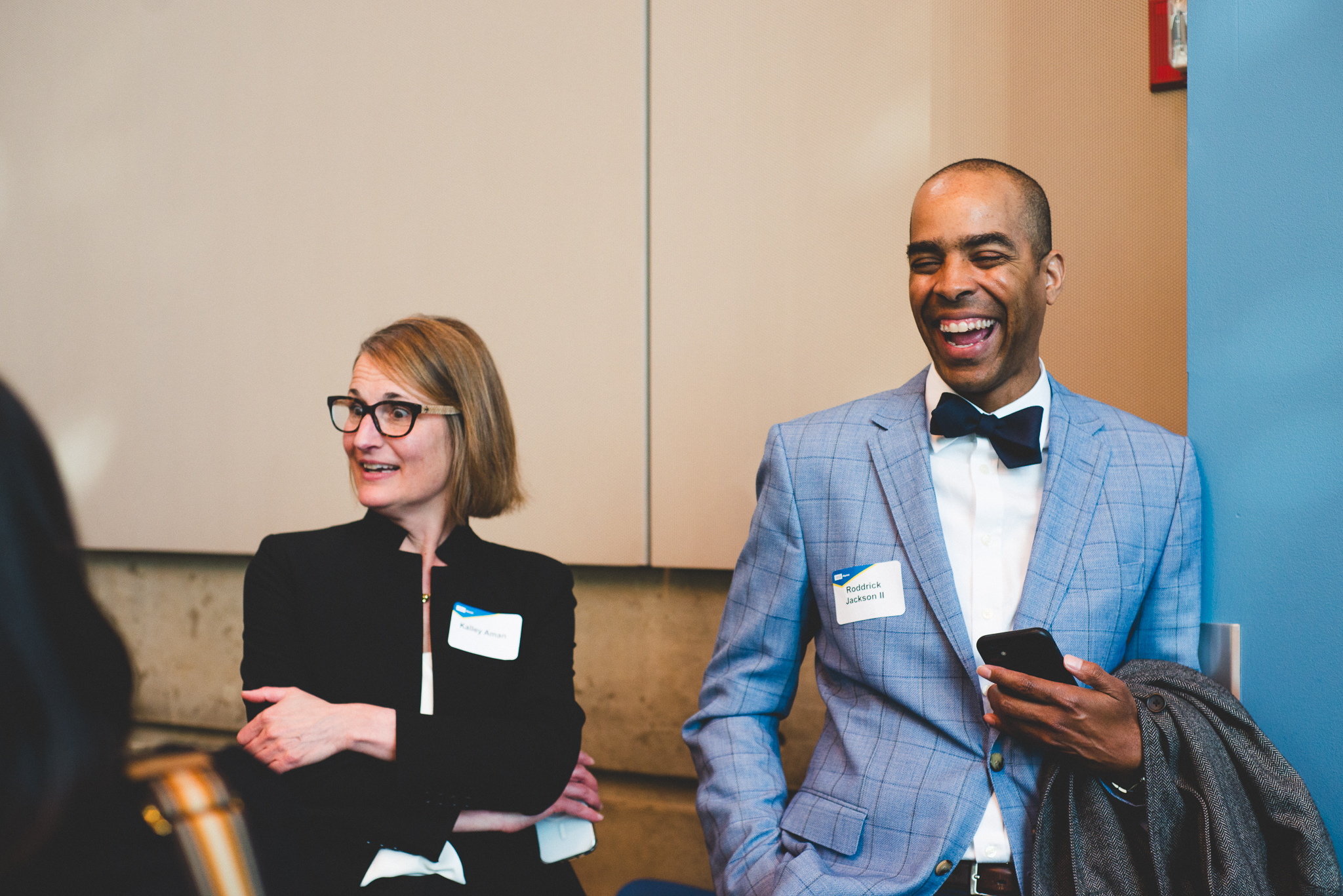
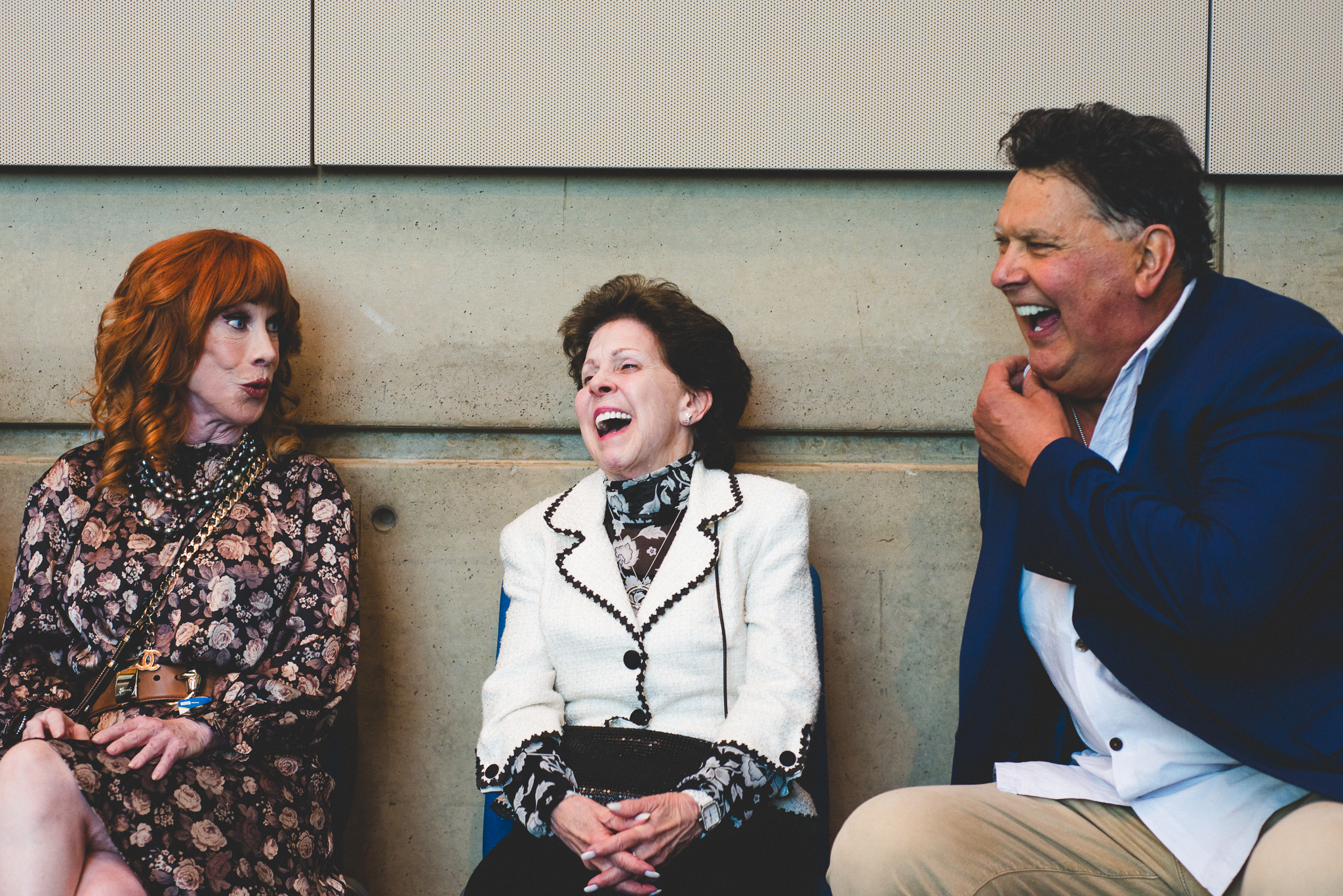
On May 12, 2025, UCLA Alum hosted a private reception before Kareem Abdul-Jabbar's fireside chat.







Bruins Then and Now
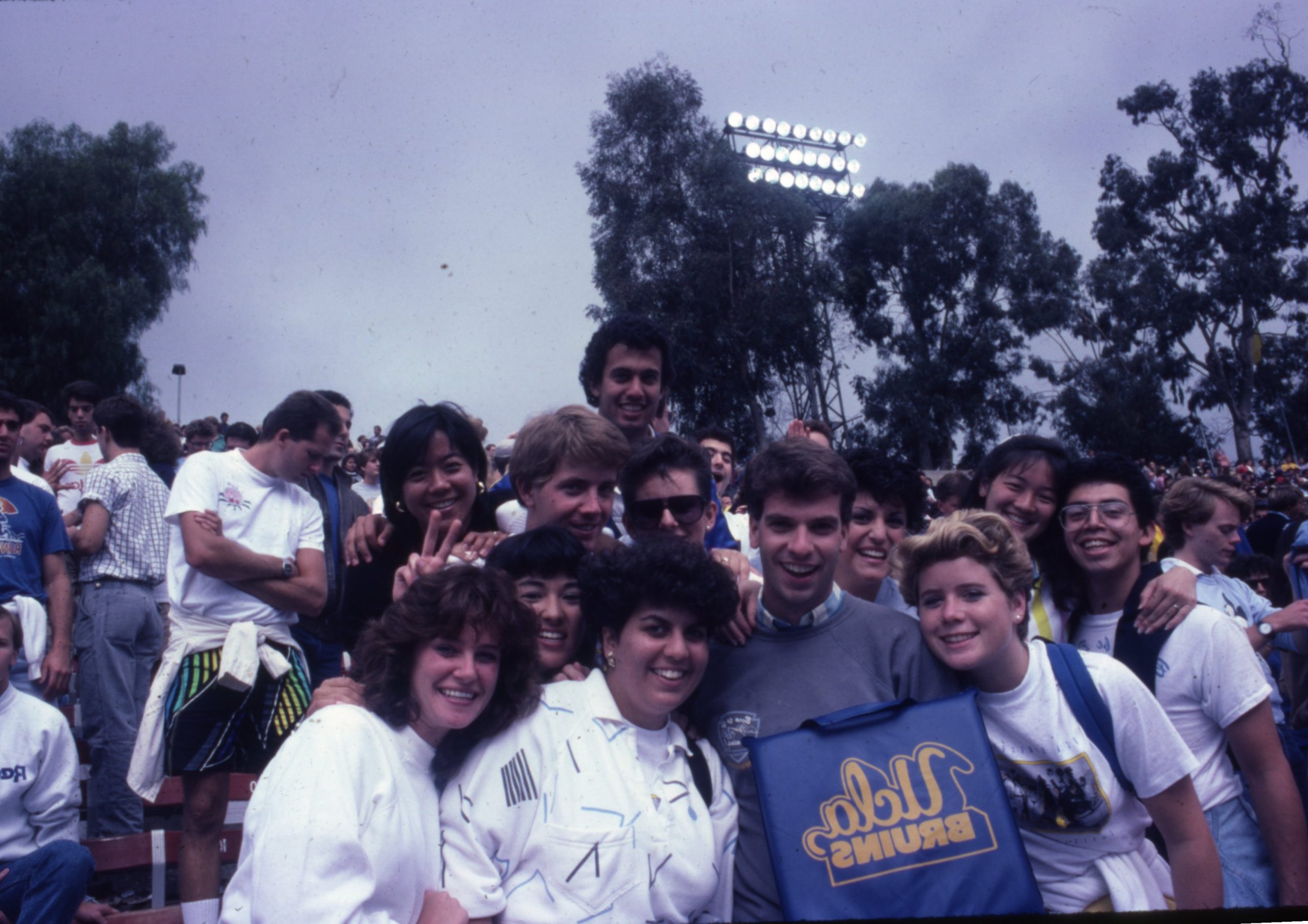
Do you have a great photo of yourself with your BFF, classmates, or teammates from your days on campus that would be worth … recreating? UCLA Magazine is working on a feature story where alumni will be invited back to campus to recreate a photo from their time at UCLA, to see the “then” and “now.” (You can see examples here.) Get your group back together for a fun photo shoot for the 2025 print edition of UCLA Magazine! Please submit your photos and your contact information to Michael Callahan, editorial director, at mcallahan@stratcomm.ucla.edu.


Recent Articles


Image Gallery









Our Proud Partners


