Category Archives: Article
L.A. Wildfires: Stories of Recovery
T
he January wildfires were the most destructive in California history, leaving behind immeasurable damage in the Pacific Palisades and Altadena neighborhoods. Last March, our Bruins Helping Bruins article shed light on UCLA’s actions during and in the immediate aftermath of the fires to keep everyone safe and mobilize resources for victims. Today, the neighborhoods impacted by the fires are still being inspected and assessed as displaced residents, many who lost everything, have begun the process to recover and rebuild.
BRUIN STORIES
Within the UCLA community, it is estimated that the fires affected more than 22,000 alumni who were living in the evacuation zones. Each home, each business lost to the fires tells the story of a family. On Jan. 7, Jane Szutu Permaul, Ed.D. ’70, left her house for a doctor's appointment. The UCLA alumna and retired assistant vice chancellor for UCLA Student Affairs has lived in her Palisades home for more than 50 years. By the time she left the doctor’s office, she could see smoke in the distance as her phone exploded with calls and messages.

She went home, grabbed a few essentials, and raced to pick up her daughter in Santa Monica — a 20-minute drive that took two and a half hours. A text alerted her of the evacuation order. She says, “I don't think our house was burned on the first day. I think it just became so overwhelming for the firefighters. The wind was just blowing in such a way it was just ridiculous to even think about saving it.”
She and her daughter stayed with her son who lives in Sherman Oaks. They thought about finding a rental on the Westside, but she says, “It was too difficult. Landlords were hiking up the rates. It calmed down now, but it was just ridiculous.”
Instead of focusing on her loss, Permaul prefers to focus on positive things she can be grateful for. She says, “I believe in positive thinking and problem solving rather than harping on something that you can't do anything about. You lost your house. So, what do you do next? That's how we managed.”
Her Palisades neighbors have been a source of strength. She says they started a group chat, “We call ourselves the loopers, because of the shape of our block. If you need something as minor as a scanner, or as big as a contractor, everybody shares their knowledge and their connections and whatever else is needed to make life easy for all of us.” Eighty percent of the neighborhood plans to rebuild, and she anticipates their bond will be stronger than ever.
Her passport had been destroyed, so she went to the FEMA disaster recovery center at UCLA Research Park (formerly Westside Pavilion). Within 30 minutes, she had completed the application, and the fees had been waived. Her new passport arrived in 10 days.
She says she’s been impressed with how government agencies have coordinated and cooperated to help those in need. The disaster response brought together the federal government, including FEMA and the U.S. Army Corps of Engineers, the governor of California and state senators, as well as county and city officials. These entities have worked together to introduce legislation to expedite the recovery and mitigate the bureaucracy.
Since retiring 24 years ago, Permaul is still active in several UCLA organizations, including UCLA Faculty Women's Club, the UCLA Emeriti Association and the UCLA Retirees Association. She has had an outpouring of support from Bruins. She says, “To this day, I am getting little notes or emails, and sometimes little gifts. I got a box from my former executive assistant that was filled with UCLA swag.”
As a die-hard Bruin basketball fan, she told a story of when she went to a game shortly after the fire. “A friend handed me a bag full of file folders, paper, stamps and envelopes. Soon enough, I had to get things organized, and I was so grateful for the gift. The thoughtfulness helps a great deal in making this easier.” She continues, “I've very seldom received contributions, gifts and donations. I always thought somebody else needs it more than I do. I have learned how important it is to not only give but to graciously receive.”
Allegra Mancuso ’86, M.Ed. ’89, M.A. ’97, Ph.D. ’01, is a quadruple Bruin with a doctorate in education. She and her husband bought their home in the Pacific Palisades in 1993 and raised their family there. With her children now grown and living out of state, Mancuso was home the morning of Jan. 7 with the family dog. She recalls, “From my backyard, I could see little fires across the hill. I thought, this is bad. We have to get out of here.” She took a few pieces of clothing, some personal items and paperwork, along with her Bernese Mountain dog and a large bin of dog food. She also took a photo of her parents and a Madonna and child statue from Italy that had been in her family for generations. She says, “I remember walking through the house thinking we’ll be back tonight or tomorrow.”
They evacuated to her mother-in-law's house, and it was there they learned their home had been destroyed. “First, it's fight or flight. Then you're in disbelief, you're in shock. But the brain is wired for hope. Your brain makes you survive because hope is right there.” Mancuso views her experience with the larger perspective of the many crises happening around the world each day. She says, “I don't have anger. That's the one feeling I don’t have, it's the sadness, the anxiety, the loss and pain.”
Her sister, a doctor in northern California, immediately took off work to come to Los Angeles. She says, “The community was amazing and our friends who don't live in the Palisades came to our rescue. There was a lot of support around, so it felt really kind. But we were the people who always donated, and receiving can be an uncomfortable feeling.”
For her, the loss of her close-knit neighborhood hit the hardest. As the family tried to rent an interim home, she was also faced with skyrocketing rental costs, which sometimes increased overnight. But she has been touched by the outpouring of community support. Boutiques, many locally owned, have offered free clothing and other items to fire victims.
“All the gestures of support make such a difference in lifting your spirits and reminding you that you’re part of a larger community.”
After the fire, they had to determine what their insurance would cover. She says, “My advice is to take photos of everything in your house, and to know where everything is in case of an evacuation. It was incredibly helpful to have photos to send to the insurance company.”
That week, they met friends for dinner. When they asked for their bill, the waiter shared that it had been taken care of by another diner. He told them, “The customer at the neighboring table overheard your conversation and she paid for you. She just wanted to do something to help.”
A few weeks later, she was in the same neighborhood with her sister-in-law shopping for clothes. The store clerk approached Mancuso to let her know that a fellow shopper, a young woman also shopping that day, had overheard their conversation and left a $100 gift certificate for her. She says, “All the gestures of support make such a difference in lifting your spirits and reminding you that you’re part of a larger community.”
To help others, like Permaul and Mancuso, replace their lost Bruinwear, UCLA Alumni is coordinating a Bruin Gear Pop-up on Thursday, June 22, from noon to 5 p.m. at the Pasadena Senior Center, 85 E. Holly Street in Pasadena. Alumni can bring their new and slightly used UCLA apparel for Bruins who lost it all in the fires.
WESCOM’S RELIEF EFFORTS
The Wescom motto is “people helping people,” and with its headquarters in Pasadena, and more than 40% of their members in the communities impacted by the wildfires, providing support was a top priority. As the official banking partner of UCLA Alumni, Athletics, Campus Life and Recreation, Wescom Financial’s charitable foundation stepped up to help.
Immediately following the wildfires, Wescom launched a member and community giving campaign that raised over $273,000 in grants and financial assistance. These funds went directly to supporting people in need, including $9,000 for the Los Angeles Fire Department Foundation; $157,000 for the American Red Cross; and $107,000 in direct relief to victims. They also distributed 75 emergency loans totaling $283,000 and 81 loan deferments. To help their employees who had been directly impacted by the fires, Wescom created an employee relief fund of $100,000.

Beyond the financial support, Wescom's direct involvement in relief efforts comes from their commitment to their community. With their headquarters across the street from the Pasadena Convention Center FEMA disaster recovery site, they were able to spring into action by opening up their parking lot to assist with the substantial number of volunteers and donations arriving. Additionally, their team members volunteered to help coordinate a donation drive at the Pasadena Job Center in collaboration with the Credit Union League. They opened their item processing center and donated apparel, bags, reusable water bottles, mobile chargers, power banks, dog food and lunch for volunteers, along with plush toys, blankets, coloring sheets and crayons for children.
Wescom has stated they intend to make a long-term investment in the recovery, with a sustained commitment to rebuilding and healing.
UCLA EXPERTS
As the rebuilding begins, UCLA experts across campus, from environmental studies and urban planning to medicine, psychology and biology, have been providing analysis, guidance and hands-on assistance with all aspects of fire recovery and rebuilding, as well as pressing ecological and environmental concerns.
Los Angeles County Supervisor Lindsey Horvath Cert. ʼ14 recently announced a blue-ribbon commission that will leverage that UCLA expertise across campus to create policy recommendations for a safe and resilient rebuilding effort.
At the UCLA Samueli School of Engineering, faculty and students are supporting community recovery initiatives that emphasize the need for long-term wildfire resilience strategies and technological innovation. Sanjay Mohanty, associate professor of civil and environmental engineering at UCLA, is working with Community Action Project–Los Angeles to test soil and water samples from yards, gardens and pools free of charge. The program expedites the recovery process while empowering home and business owners. Mohanty is developing climate-resilient solutions for remediating contaminated land and water.
The fires burned for 24 days, and more than 16,000 structures were destroyed. A report from UCLA Anderson economists Zhiyun Li and William Yu suggests that the total losses may be between $95 and $164 billion. They argue for long-term investments in wildfire mitigation to protect from higher insurance premiums, health risks, and unaffordable housing and rental units.
Along with the damage, there remain questions about the fires’ impact on the environment. In Altadena, four months after the wildfires, wildlife is beginning to return to the Eaton Fire burn area. UCLA researchers are monitoring plant and wildlife recovery in the Chaney Trail Corridor. Stephanie Landregan, director of the landscape architecture and horticulture and gardening programs for UCLA Extension, is part of a small team led by Altadena residents making a record of the trees that weren’t destroyed by fire. They will use their findings to advocate for protecting the trees instead of removing them.

FINANCIAL SUPPORT
UCLA established the Bruin Wildfire Relief Funds to assist students, faculty, staff and researchers who have been impacted by this tragedy. Rebuilding and recovery will take years and will require a large-scale mobilization. But if there’s one thing we can count on, it’s that Bruins are here to help.
Below is a list of UCLA opportunities.
- Economic Crisis Fund - students in need
- UCLA Employee Relief Fund – UCLA staff in need
- UCLA Health Employee Relief Fund - assist those who work in patient care and David Geffen School of Medicine faculty and employees.
- GoFundMe – UCLA alumni in need
- Volunteer Interest Form – Offer your time, resources or expertise
- UCLA Volunteer Center – Database of volunteer opportunities
If you are impacted by the fires and are in need of support, please reach out to community@alumni.ucla.edu.
Recent Articles
- UCLA AAP Alumni Spotlight - Adrianos Facchetti ’01, J.D.
- The Story Behind Jackie Robinson’s 1946 Reintegration of Organized Baseball
- UCLA Prytanean Celebrates Its Centennial
- Building Community: UCLA Disability Alumni Network Focuses on Belonging and Visibility
- Bruins@Work Program Fosters Community
- International Women of Courage
Q&A With Kareem Abdul-Jabbar ʼ69
O
n May 12 at 6:30 p.m. in UCLA’s Ackerman Grand Ballroom and on Zoom, Kareem Abdul-Jabbar ’69 — Bruin legend, NBA icon, bestselling author and lifelong advocate for equality — will launch his powerful new memoir, “We All Want to Change the World: My Journey Through Social Justice Movements from the 1960s to Today” in a special fireside chat.
A UCLA standout who led the Bruins to three consecutive NCAA championships (1967–69), Abdul-Jabbar went on to become the NBA’s all-time leading scorer and a six-time champion. Off the court, he has spent decades championing justice, education and equality.
Co-authored with Raymond Obstfeld, the memoir recounts a pivotal 1964 meeting with Dr. Martin Luther King Jr. that sparked Abdul-Jabbar’s lifelong commitment to activism. From Civil Rights and women’s liberation to environmentalism and anti-war movements, the book traces both his advocacy and personal growth — highlighting the evolution of his beliefs, his deepening empathy and his enduring conviction that “no one is free unless everyone is free.” Despite the obstacles to change, his message is rooted in hope and the transformative potential of each generation.
You’ve transitioned from athlete to activist to cultural ambassador over the course of your life. How have these different roles shaped your perspective on social change — and how did your time at UCLA help lay the foundation for your activism?

Kareem Abdul-Jabbar: I was at UCLA during the height of many of the protest movements that shaped our country over the coming decades. As a student, I participated in some peaceful protests. When I was asked to join the Olympic basketball team in 1968 I refused because I couldn’t be a spokesperson for a country that was openly and actively repressing the rights of Black people. I also wouldn’t support the head of the Olympic committee, who was a known racist and anti-Semite. While at UCLA, I also participated in the Cleveland Summit in which a group of famous Black athletes offered their support to Muhammad Ali, who was being persecuted for his antiwar stance.
My activism since then was to be a symbol of a Black athlete who cared as much about his country and the people in it as he did about championships and selling sneakers. Sometimes that involved active participation in a protest, sometimes it involved writing books to promote Black achievements. Sometimes it involved traveling the world to represent America’s true values.
What inspired you to write “We All Want to Change the World” at this particular moment in history?
Kareem Abdul-Jabbar: The election of President Trump in 2016 was a shocking revelation that the country was on a path of abandoning its core principles. They were openly embracing a racist, a misogynist and a liar. That was a symptom of a bad infection spreading through America that with his re-election in 2024 has now worsened into a disease bringing us to our knees. It’s terrible that it’s gotten this far, but part of the cure is to wake up to the reality that we’ve let an irrational, incompetent, torch-carrying mob take over and we need to do something about it.
The book is a history of Americans “doing something about it” that I hope will inspire people today to reclaim the values expressed in our Constitution. America’s legacy is of a nation that protests against injustice and this book celebrates that legacy.
In the book, you describe public protest as a vital tool for change. How has your view of activism evolved since you first became involved in social movements?
Kareem Abdul-Jabbar: I started my activism as a teenager in the sixties focusing my efforts on civil rights because that’s what affected me directly. But as the Civil Rights Movement grew, so did the Free Speech Movement, the antiwar movement, the women’s rights movement and the gay rights movement. I began to understand that they were all the same movement, like different rooms in the same burning house. In order to save one room, you had to save all the rooms. I came to realize that unless everyone is free, no one was free. And that has been my goal ever since.

You cover a wide range of movements. What common threads did you find across these different causes?
Kareem Abdul-Jabbar: The members of each marginalized group were made to feel like they were outsiders who didn’t love their country because they found fault with it. They were told by those in power that all they had to do was wait and eventually they would get their rights. But history tells us that rights are only conveyed when the marginalized rise up and protest the injustice. The only rights gained are those demanded.
Those in power always create a public relations campaign characterizing anyone criticizing those in power as traitors, communists, Marxists, socialists and other buzz words that have no real meaning anymore. A wise leader would listen to the people and try to address their concerns. But our leaders too often are businesspeople more interested in enriching themselves at the expense of the people. Henry David Thoreau said, “The rich man…is always sold to the institution which makes him rich.” So, they will protect their income as long as possible, no matter the cost to others. That is the common thread of the oppressors. The common thread of the protestors across all movements is to reject the oppressor’s immorality disguised as patriotism and focus on bettering the country rather than their bank accounts.
What advice would you give to younger generations who may feel overwhelmed or disillusioned about their ability to create change?
Kareem Abdul-Jabbar: It always felt overwhelming — and it always will. People who think their rights are safe are often unmotivated to help others be free, even though it is in their best interest. The job of the activist is to show them why it is in their best interest.
The most important thing to remember is that the fight is never won. There is no championship ring at the end — just another fight. The victories are incremental and once won, have to be maintained. Too many people don’t know enough history to learn from it and so must repeat the same mistakes over and over. We’re there to keep pushing that boulder up the hill, no matter how many times it rolls back down. Because if it rolls all the way down, it crushes everyone’s hopes.

You have a deep history with UCLA; what’s the significance of you launching this book in Westwood?
Kareem Abdul-Jabbar: UCLA was where the adult version of me was born. Coach Wooden taught us basketball, sure, but mostly he was interested in teaching us how to be good, moral men. He taught us discipline and drive, but also compassion and courage. My classes honed my mind, making me more educated in history, a better critical thinker, and taught me how to be a better writer. My interaction with other students developed my sense of community and commitment to larger causes that affected everyone, not just me personally.
Finally, at your upcoming UCLA event, you’ll be discussing the evolution of protest. Without giving too much away, can you share a preview of a key insight you plan to highlight?
Kareem Abdul-Jabbar: I want to remind everyone that protest is in America’s DNA. The country was founded on protests like the Boston Tea Party. Every right that we take for granted right now was the result of Americans directly protesting, including the abolition of slavery, women’s right to vote, LGBTQ rights, anti-child labor laws, the 40-hour week, and so much more. Almost always, protesters are ridiculed by the general public until more and more people see the wisdom of their protest and choose to join in. That is the real American Way.
For information and to register for the book launch and fireside chat, please visit the website or e-mail events@alumni.ucla.edu.
Recent Articles
- UCLA AAP Alumni Spotlight - Adrianos Facchetti ’01, J.D.
- The Story Behind Jackie Robinson’s 1946 Reintegration of Organized Baseball
- UCLA Prytanean Celebrates Its Centennial
- Building Community: UCLA Disability Alumni Network Focuses on Belonging and Visibility
- Bruins@Work Program Fosters Community
- International Women of Courage
Then and Now: On Janss Steps - 1929 and 2025
T
wo years after changing its name from “Southern Branch of the University of California,” the school now known as UCLA moved from Vermont Avenue to a sparsely developed area of gently rolling terrain in the foothills of the Santa Monica Mountains between the coast and Beverly Hills. In this photo (inset), we see dignitaries at opening day of the new Westwood campus in September 1929.
Optimism was high with the Roaring Twenties seemingly showing no signs of slowing and a beautiful new campus taking shape in a city undergoing a population boom fueled by film, oil, manufacturing and tourism.
The men in the historical photo are dressed in a fashion that is now reserved for the most special of occasions – with suits and hats the order of the day. And while this certainly was a special occasion, the general appearance of a crowd at any public event in those days would have not been significantly different. The only two men not wearing a tie are also hatless; their attire must have been the 1929 equivalent of shorts and flip flops. The 2025 visitors in the photo would have looked quite out of place on opening day, with not a collared shirt in site.
The opening day visitors are walking down Janss Steps, constructed in 1928-29, designed by architect George W. Kelham and named after the real estate development company that donated the land on which UCLA sits. In the background is the iconic architectural symbol of the University, Royce Hall. In front of the visitors, as they head west down the steps was…not much. To see what their view would have been, check out this UCLA Alumni Then and Now retrospective.
Photo Challenge
For a chance to be featured in a future article and posted on social media, share with us a Then & Now photo of yourself on the same spot on campus during two different time periods. Or just send an old photo of yourself on campus and we’ll superimpose it over an image with the same backdrop, similar to the photo above. Send photos to connectfeedback@alumni.ucla.edu.
Historical photo courtesy of Water and Power Associates.
Visit the "Then and Now" archive.
Recent Articles
- UCLA AAP Alumni Spotlight - Adrianos Facchetti ’01, J.D.
- The Story Behind Jackie Robinson’s 1946 Reintegration of Organized Baseball
- UCLA Prytanean Celebrates Its Centennial
- Building Community: UCLA Disability Alumni Network Focuses on Belonging and Visibility
- Bruins@Work Program Fosters Community
- International Women of Courage
Bruin-Owned Businesses: Tech
O
ur next feature in the Bruin-owned Business series highlights tech entrepreneurs and their companies. Explore the world of AI, online legal and food ordering services, education and business solutions for your personal and professional needs.
Grad Pad

Founder: Rondale Davis, MBA ’23
Grad Pad
Social Networking Platform
Website: gradpad.online
Email: rondaledavis@gradpad.io
Social: @grad.pad
About:
Enhance your institution’s alumni or professional network with ongoing digital and in-person events that keep your community connected all year round. We break down barriers by engaging alumni through tailored interactions that reflect your network’s unique interests, values and experiences — unlocking fresh opportunities and fostering genuine connections.
Review:
“Grad Pad has been instrumental in helping us build bridges and break down silos within our program. These connections are key to our success as a top-tier MBA program, and the platform has provided a great way for students, alumni and faculty to stay engaged with one another. It really brings people together and strengthens the community, which is invaluable for a program like ours.” - Dylan S.
DriverFly

Founder: Julia Pasternack ’09
DriverFly
Software for Recruiting/Hiring Drivers
Website: driverfly.co
Email: info@driverfly.co
Social: @driver_hiring
Phone: 714-340-5502
About:
At DriverFly, we build software to enhance the bond you have with your drivers. We believe that the key to successful CDL recruiting lies in understanding and fostering personal, meaningful relationships between drivers and employers. Through automation technology, our software is built to maximize those relationships through increased engagement and reach.
Review:
“I highly recommend this company to anyone hiring drivers. Their customer support team is very helpful in answering my questions and resolving any issues. I recently started using DriverFly's ATS and am pleasantly surprised. System is easy to navigate for tracking hires.” - Anonymous
Decipher Something

Co-Founder: Chalisa Prarasri ’14
Decipher Something
Deconstructing Concepts With AI
Website: deciphersomething.com
Email: hi@deciphersomething.com
Social: @decipher.something
About:
Democratizing science, one term at a time. Written by GenAI, verified by experts. Prof Bot is writing a database with millions of terms, acronyms and techniques.
Review:
“Reduced the amount of tangential research I had to do to decipher techniques and terminology." - Student
Idea Maker

Founder: Thomas Kwon ’92, M.S. ’95, Ph.D. ’98
Idea Maker
Technology Solutions for Small Businesses
Website: ideamaker.agency
Email: tom@ideamaker.agency
Social: @ideamakeragency
Phone: 949- 444-2526
About:
Thomas Kwon founded Idea Maker in 2016 to provide boutique development solutions to small businesses and start-ups in Orange County and the greater Californian areas. Following a career as a software engineer, Kwon has long-standing experience in web and application development, making him an expert developer. He chose the company name Idea Maker because, as you may have guessed, we aim to make your ideas a reality.
Review:
“Idea Maker's portfolio is what drew us in. Their design style was in alignment with what we were after. We had initial consultations with three companies that we had narrowed it down to. Once we had our initial meeting with Tom at Idea Maker we knew we had the right choice to make. Their communication style works well for us.” - Oscar M.
DivorceHelp123

Founder: Debra Mignola’90
DivorceHelp123
Technology for Family Law
Website: divorcehelp123.com
Email: support@divorcehelp123.com
Social: @divorcehelp123
About:
DivorceHelp123 is a family law software designed to streamline the legal process for family lawyers and their clients, helping with form filling, deadline tracking and overall organization.
Review:
“As the managing partner of King Law Offices, PC, I can confidently say that we absolutely love using DivorceHelp123. This innovative program has revolutionized the way we handle family law cases and has made a huge impact on the way we provide legal services to our clients.
DivorceHelp123 is an incredibly powerful tool that helps our team of family lawyers fill out forms, track important deadlines and stay organized throughout the entire legal process. The program is user-friendly and intuitive, which means that our attorneys can focus on providing top-quality legal representation to our clients without worrying about the logistics.” - Brian K.
Mint Mobile

Founder: David Glickman, M.A. ’94
Mint Mobile
Mobile Virtual Network Operator
Website: mintmobile.com
Social: @Mintmobile
Phone: 800-683-7392
About:
Mint Mobile is a wireless service provider that operates as a Mobile Virtual Network Operator (MVNO) on T-Mobile’s network in the United States. It offers affordable prepaid phone plans by selling service in multi-month packages rather than traditional monthly billing.
Review:
"Their customer service is exceptional. Not only are they friendly, but they are actually able to help you. I wish more companies had customer service like this." - Natasha D.
LegalZoom

Co-Founder: Brian Lee ’93, J.D. ’96
LegalZoom
Legal Technology
Website: legalzoom.com
Email: support@legalzoom.com
Social: @LegalZoom
Phone: 888-379-0854
About:
LegalZoom is an online legal technology and services company founded in 2001, specializing in providing accessible legal solutions to individuals and small businesses. LegalZoom offers a variety of services, including legal document preparation, business formation and access to independent attorneys.
Review:
"I didn't have time to go through an attorney and I figured it would be easier going through LegalZoom... They did all the paperwork for the LLC and everything went great." - James
Blizzard Entertainment

Co-Founders:
Michael Morhaime ’90, Allen Adham ’90, Frank Pearce ’90
Blizzard Entertainment
Video Game Development and Publishing
Website: blizzard.com/en-us
Social: @blizzard
About:
Blizzard Entertainment is a premier developer and publisher of entertainment software, and the company is renowned for creating some of the industry's most critically acclaimed games, including World of Warcraft®, Overwatch®, Hearthstone®, StarCraft®, and Diablo®.
Review:
“From the moment I stepped foot into Diablo 4, I was greeted by a breathtaking world meticulously crafted by the visionary minds at Blizzard Entertainment. The attention to detail is second to none, with hauntingly beautiful environments that simultaneously evoke a sense of dread and wonder. Every corner of this world pulsates with life, and the atmospheric graphics draw you in, making it impossible to escape its grasp.” - D.B.
ChowNow

Co-Founder: Eric Jaffe ’00
ChowNow
Online Food Ordering Platform
Website: chownow.com
Email: support@chownow.com
Social: @chownow
Phone: 888-707-2469
About:
For over a decade, ChowNow has been building tech for food people, so restaurant owners can save money, staff members can save time and diners can order better. Because when restaurants thrive, they can keep serving food that gives your community its unique flavor. We want to keep it that way.
Review:
“We are an experienced user of the ChowNow platform, using it here at our location for 8 years. ChowNow provides us with a simple and effective tool, providing our guests with online ordering. Using this we are able to offer a simple way for our customers to interact with our menu and drive repeat business. The information gathered helps us keep customers returning..” - Kent G.
Hatch Labs

Founder: Eva Agapaki, M.S. ’15
Hatch Labs
AI Product Development and Market Strategists
Website: hatchlabs.ai
Email: eva@hatchlabs.ai
Social: @hatchlabs.ai
Phone: 626-460-8050
About:
Our program was conceived from a fervent passion for cultivating innovative products that are either rooted in rigorous research or address complex engineering challenges. Our mission is to empower deep tech entrepreneurs and innovative larger businesses, enabling them to fully realize their potential and successfully introduce their groundbreaking ideas to the market. Our founder, Dr. Eva Agapaki, brings a unique blend of expertise to the table. With a strong background in AI product development, technical research and product-market fit (PMF) strategy, she is ideally positioned to elevate your early-stage idea to new heights.
Review:
"This is a very professional space with solid leadership for entrepreneurs.” - The Photographer
GoGuardian

Founder: Todd Mackey, MBA ’91
GoGuardian
Digital Learning and Student Safety Solutions
Website: goguardian.com
Email: hello@goguardian.com
Social: @goguardian
Phone: 888-310-0410
About:
GoGuardian is an education technology company that provides digital learning and student safety solutions for K-12 schools. The platform offers a suite of tools designed to help educators manage classrooms, monitor online activity, filter content and ensure student well-being in digital learning environments.
Review:
“I love the fact that I can quietly get students back on track without disturbing the entire class. That I can close windows when they are off their assigned task.” - Margie W.
Robinhood

Co-Founder: Vlad Tenev, M.A. ’10
Robinhood
Financial Trading App
Website: robinhood.com/us/en
Email: support@robinhood.com
Social: @robinhoodapp
About:
Robinhood is a U.S.-based financial services company that offers a mobile app facilitating commission-free trades of stocks, exchange-traded funds (ETFs) and cryptocurrencies. Founded in 2013 by Vladimir Tenev and Baiju Bhatt, Robinhood's mission is to democratize finance for all by providing access to financial markets without commissions or minimum account balances.
Review:
“I love trading crypto and stocks on Hood. I’ve had lots of winning, lots of luck on the site. I love the technology. The graphs and quotes are very detailed and helps me make decisions. Some other brokers don't have good charts, slow tech. Great service. I was called several times after I emailed. Doing very well, very happy. I definitely recommend you to try it. It's fun and relaxing. Some other brokers make trading seem like unnecessary neck choking.” - Ocean
Tutorfly

Founder: Parsa Rezvani ’18
Tutorfly
Online Tutoring
Website: tutorfly.com
Email: info@tutorfly.org
Social: @tutorfly
Phone: 424-653-6159
About:
Tutorfly was founded with the vision of creating an accessible tutoring marketplace that could deliver high-quality tutoring services while simultaneously fostering connections between students and individual tutors who could serve as role models. Today, Tutorfly.com extends its reach to thousands of families across the United States, offering affordable and accessible online tutoring services.
Review:
“My experience with Tutorfly has been amazing from the beginning. I think that the partnership between Butler and Tutorfly is invaluable. We have made a huge difference in these kids' lives (and) we're working toward that achievement gap. I know it has made a big difference in helping our teachers by allowing us to have smaller groups." - Mrs. Rouse
ThousandEyes

Co-founder: Mohit Lad, M.S. ’04, Ph.D. ’07
ThousandEyes
Network Intelligence
Website: thousandeyes.com
Email: facebook@thousandeyes.com
Social: @thousandeyes
About:
ThousandEyes provides a holistic view of all connected elements of digital experience across the networks, apps, and infrastructure that organizations own — as well as those they do not own — so they can ultimately get a deep understanding of digital experiences and can take or automate actions to assure them.
Review:
“The data and insight you see when monitoring your network and application availability using Thousand Eyes is truly unbelievable. As its agents are embedded into the network just like a client, the view is from the client's perspective.” - Kevin A.
Liquid Inc.

Founder: Saujin Yi, MBA ’07
Liquid Inc.
Online Digital Identity Verification
Website: liquidinc.asia/global
About:
Liquid offers a seamless digital onboarding process by conducting online digital identity verification, thus preventing user drop-off. Our solution can be tailored to meet compliance with various regulations, including AML (Anti-Money Laundering) and other specific regulatory requirements relevant to your business.
Review:
“Liquid Inc. helped us achieve a secure and safe gaming environment. Our security measures, including user identification during emergencies and prevention of impersonation, contributed to maintaining a secure environment.” - S.U.P.
***
To submit a Bruin-owned business for future consideration, please send a note to connectfeedback@alumni.ucla.edu.
All Bruin-Owned Business Articles
- Bruin-Owned Restaurants Part 4
- Bruin-Led Businesses: Nonprofits
- Books by Bruins: Summer Reading
- Books by Bruins - LGBTQ Stories
- Books by Bruins - Health and Wellness
- Bruin-Owned Businesses: Tech
- Books by Bruins - Stories About Women
- Books by Bruins - L.A. Stories
- Bruin-Owned Businesses: Gift Ideas 4
- Books by Bruins - Vol. II
- Bruin-Owned Beverage Businesses 2
- Bruin-Owned Businesses: Fitness and Wellness 3
- Books by Bruins
- Bruin-Owned Businesses: Gift Ideas 3
- Bruin-Owned Restaurants Part 3
- Bruin-Owned Businesses: Fitness and Wellness 2
- Bruin-Owned Photography Part Two
- Bruin-Owned Businesses: Gift Ideas 2
- Bruin-Owned Photography
- Bruin-Owned Art Galleries and Collectives
- Bruin-Owned Restaurants Part 2
- Bruin-Owned Gift Ideas
- Bruin-Owned Fitness and Wellness Businesses
- Bruin-Owned Event-Planning Businesses
- Bruin-Owned Apparel Businesses
- Bruin-Owned Beverage Businesses
- Bruin-Owned Restaurants
Recent Articles

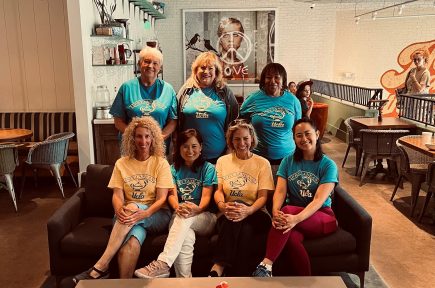
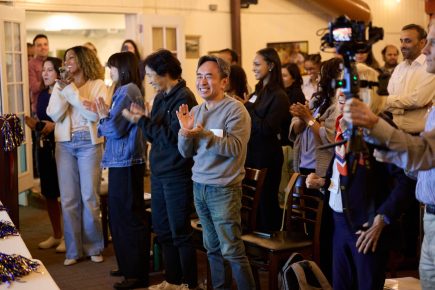
Adam Bell ’91, Cert. ’03, and Cushon Bell ’93 share the devastating impact of the Eaton Canyon wildfire on their Bruin family
UPDATE Dec. 17, 2025: Since sharing their story, Adam Bell ’91, Cert. ’03 and Cushon Bell ’93 have continued to make steady progress in their rebuilding journey. They recently secured long-term housing that will provide stability for the next two and a half years as they work through the recovery process. The Bells also shared that they are close to finalizing both an architect and a contractor for their home rebuild and hope to complete those arrangements by the end of December. Their commitment to returning to Altadena remains strong as they take the next steps toward rebuilding the home and community they love.
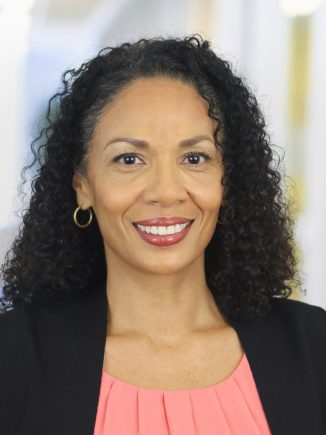
For Adam Bell ’91, Cert.’03 and Cushon Bell ’93, Altadena was more than just a place to live — it was home for over two decades. In this Diversity Digest spotlight, Adam and Cushon Bell recount how their Bruin family lost their home in Altadena to the Eaton Canyon wildfire and express the challenges that they face as they aim to one day return to their beloved neighborhood.
A Family Rooted in UCLA
Longtime Altadena residents Adam and Cushon Bell have deep ties to UCLA. The couple met on campus during their undergraduate years, and their connection to the university has remained strong — raising all three of their sons as a Bruin household, their youngest a current first-year at UCLA.
“They grew up going to football games at the Rose Bowl,” Adam Bell recalled. “We’ve been a Bruin family for a long time.”
Adam, a history major who later transitioned into software development, and Cushon, a sociology graduate who worked as an elementary school teacher and later in local government, chose Altadena as their home in 2001. It was an affordable, family-friendly enclave with a rich cultural history and strong community ties. They never expected a wildfire to change their lives overnight.


The Night Everything Changed
On the night of the fire, strong winds rattled their windows, but after years of experiencing windstorms and nearby fires in the foothills, they weren’t overly concerned. Power outages made it difficult to follow the news, and no official evacuation order had been issued for their street.

“We thought we’d ride it out like we always had,” Adam said. “We went to dinner when the power went out, thinking we’d be back home soon.”
But while they were out, texts from concerned neighbors started coming in, warning them of a rapidly spreading fire. By the time they returned to their street, the sky was glowing red in the distance. Even then, they believed they had time.
At around 3 a.m., still without an official evacuation order and unable to see through the thickening smoke, they made the decision to leave. Adam and Cushon packed a bag and grabbed their most critical documents and left their family home. By 6 a.m., their neighbor who had returned to grab some belongings reported back that their homes were engulfed in flames.
“We left maybe an hour before the fire reached our home,” Adam said. “We had no idea how close it was.”
Returning to Devastation
A few days later, Adam and Cushon were able to return to their address. What they saw was shocking.
“You have to see it in person to fully grasp the devastation,” Adam said. “Blocks and blocks of homes just gone.”
Even some of the oldest homes in the area — structures built in the late 1800s that had withstood over a century of storms, earthquakes and fires — were reduced to rubble. Their home, built in 1926, was no exception.
Adding to the heartbreak was the realization that firefighting efforts were severely hampered by the lack of water supply. “Some of our neighbors told us they had fireballs hitting their homes,” Adam said. “But when firefighters arrived, there was no water left in the hydrants.”


Rebuilding and Moving Forward Together
Since the fire, Adam and Cushon have been navigating the complexities of recovery. They established a GoFundMe, their insurance carrier has been helpful, but the process of finding architects, contractors and dealing with their mortgage company has been exhausting. They are currently staying with a family friend but are searching for a more permanent place to reside while they rebuild.
“We lost everything,” Cushon said. “But we’re determined to come back.”
One of the biggest concerns is the future of Altadena itself, a diverse and historically Black neighborhood. With developers eager to buy up land from displaced homeowners, there is a fear that the close-knit community they loved could change forever.
“A lot of people are saying, ‘Altadena is not for sale,’” Adam said. “But not everyone can afford to rebuild. Some people have no choice but to leave.”


Finding Strength in Community
Despite the overwhelming loss, Adam and Cushon have found strength in the outpouring of support from friends, family, and their extended Bruin network. Their sons’ universities, Morehouse College, Tufts and UCLA, reached out to support. Adam’s fraternity, Kappa Alpha Psi, also provided direct assistance. Even their longtime gardener, who had cared for their street’s homes for decades, was devastated by their loss and has checked in regularly.
“There’s been so much support, it’s been overwhelming,” Cushon said. “But it’s also a reminder that people care.”
Their message to others impacted by disasters like this: Accept help.
“People want to help, even if they don’t always know how,” Adam said. “Let them. It helps them as much as it helps you.”
For now, the focus is on rebuilding — not just their home, but their sense of normalcy. As they look toward the future, they hold onto hope that Altadena will retain the community spirit that made it home for so many years.
“We’ll be back,” Adam said. “We have to be.”
Recent Articles
- UCLA AAP Alumni Spotlight - Adrianos Facchetti ’01, J.D.
- The Story Behind Jackie Robinson’s 1946 Reintegration of Organized Baseball
- UCLA Prytanean Celebrates Its Centennial
- Building Community: UCLA Disability Alumni Network Focuses on Belonging and Visibility
- Bruins@Work Program Fosters Community
- International Women of Courage
UCLA AAP Alumni Spotlight - Dr. Efrain Talamantes '02, M.D. '08, M.S. '14

Class of 2002 – B.S., Psychobiology, UCLA
Class of 2007 – M.B.A., Emory University, Goizueta School of Business, Atlanta, GA
Class of 2008 – M.D., David Geffen School of Medicine at UCLA, Los Angeles, CA
Class of 2014 – M.S. in Health Policy and Management, UCLA Fielding School of Public Health, Los Angeles, CA
Q&A WITH DR. TALAMANTES
Can you tell us about your current professional role, the company you're with, and the industry you're part of?
I
serve as the Chief Operations Officer at AltaMed Health Services. AltaMed is the nation’s largest federally qualified health center (FQHC), with over 60 sites throughout Los Angeles and Orange County, where we serve over half a million patients annually. Our mission is to eliminate disparities in healthcare access and outcomes by providing quality health and human services through an integrated world-class delivery system for Latino, multi-ethnic, and underserved communities throughout Southern California. This organization's mission aligns with my purpose and core values as a Latino physician leader who grew up locally in Norwalk and is a first-generation college graduate from a mixed-status family.
What does AAP mean to you? What impact has it had on you personally or professionally?
I am proud to have participated in AAP while at UCLA. Like many of my peers, I am grateful for the services AAP offers and the relationships built during my participation. AAP served as a lifeline and offered services that positively impacted my experience as an undergraduate student. By participating in AAP, I was able to meet like-minded individuals who share similar purposes in serving historically disinvested communities.
How has AAP impacted your personal and professional development and success? Any specific ways you’ve seen AAP’s influence in your career or personal growth?
As an undergraduate, AAP gave me the foundation to excel at UCLA. Like many first-generation college students from low-income and diverse backgrounds, I struggled to adjust to the UC system and the rigor of UCLA. AAP’s peer mentorship, tutoring, counseling services, and resources helped me bridge the gap and maximize my potential. As the first physician in my family, I learned the importance of academic excellence through AAP and used what I learned through AAP to propel me throughout my academic journey.
How have you stayed connected to AAP? Do you participate in events, mentorship, or any other initiatives that keep you engaged with the AAP community?
Yes, I continue to engage with AAP leadership and alumni leaders to ensure we are able to support the next generation of leaders graduating from UCLA and participating in AAP. I firmly believe in the power of mentorship and support in various methods through networking with current students, offering professional development opportunities, and supporting the AAP scholarship fund as a donor. Furthermore, at AltaMed, we regularly offer internship and summer program opportunities for pre-health students and offer these opportunities to UCLA students and alumni.
For more information regarding these opportunities, students can contact:
altamedsummerprogram@altamed.org
Erick Leyva Bedolla – elbedolla@altamed.org
Recent Articles
- UCLA AAP Alumni Spotlight - Adrianos Facchetti ’01, J.D.
- The Story Behind Jackie Robinson’s 1946 Reintegration of Organized Baseball
- UCLA Prytanean Celebrates Its Centennial
- Building Community: UCLA Disability Alumni Network Focuses on Belonging and Visibility
- Bruins@Work Program Fosters Community
Books by Bruins - Stories About Women
E
ach month, this Books by Bruins series will feature a new collection of books by theme. In this issue, we’re highlighting books written about women, which include industry trailblazers, rom-com socialites and unsung heroines who have shaped the course of history. As this compilation of Bruin authors grows, we’re categorizing the books into an online library, but we’ll need your help to make it as comprehensive as possible. If you know of one, please submit a Bruin author. While all these books are written by UCLA alumni, inclusion in the list is not an endorsement.

Bold & Brave: Ten Heroes Who Won Women the Right to Vote (2020)
Kirsten Gillibrand, J.D. ’91
On the 100th anniversary of the 19th Amendment, United States Senator Kirsten Gillibrand shares the stories of 10 suffragists who fought for women's right to vote. “Bold & Brave” introduces children to strong women who have raised their voices on behalf of justice, and inspires them to raise their own voices to build our future. Senator Gillibrand of New York is a passionate advocate for women's rights. The New York Times bestselling author of “Off the Sidelines,” this is her first book for children. She is a graduate of UCLA School of Law.

Lessons Learned: Stories from Women Leaders in STEM (2023)
Deborah Shlian, MBA ’88
Deborah Shlian is a physician, healthcare consultant and the author of fiction and nonfiction books including a best-selling medical mystery series written with her husband. “Stories from Women Leaders in STEM” is part of a series that showcases women who overcame the odds while paving the way for others. Shlian and her husband, Joel Shlian, also a physician, became the first couple to complete the UCLA MBA program together.

We Are Inspiring: The Stories of 32 Inspirational Asian American Women (2019)
Angel Trazo, M.A. ’20
"We Are Inspiring" brings to life the stories of Asian American women from different communities. Trazo wrote the book with the goal of preventing the erasure of Asian Americans as an integral part of American history. Aimed at children ages 10 and over, the book covers 32 inspirational women including scientists, artists, actresses, comedians, judges and Olympians. Trazo is an author, illustrator and grad student based in the Bay Area. She holds a master's degree in Asian American Studies from UCLA. This is her debut children's book.

The Assertive Woman: A New Look (1975)
Nancy Austin ’71, MBA ’77
“The Assertive Woman” debunks stale stereotypes of women bosses, stay-at-home moms and superwomen. Packed with personal vignettes, exercises, step-by-step procedures and tips, it became the first book of its kind in 1975, and has been updated and reprinted several times since then. Nancy Austin is a writer and business consultant. She received her MBA from UCLA where she was part of the team at the Neuropsychiatric Institute studying California’s community mental health system. Her books have sold approximately one million copies and have been published in seven languages.

Trophies: A Novel (2008)
Heather Thomas ʼ80
Marion Zane is the top Trophy — she has it all: a faithful husband, loyal fellow-Trophy girlfriends, queen-bee status over the Hollywood "name-above-the-title" charities, and — best of all — no prenup! She knows inside information is king, smiles hide jealousy, jackals lure husbands away (or worse, steal personal assistants), housekeepers have the power to destroy and that everyone has devastating secrets — including her. Heather Thomas graduated from UCLA where she studied in the School of Theater, Film and Television. She starred as Jody Banks in TV's “The Fall Guy” from 1981 to 1986 and then left acting in 1998 to pursue writing.

Pounders of Grain: A History of Women, Work, and Politics in Mozambique (2016)
Kathleen Sheldon, M.A. ’77, Ph.D. ’88
This history of women in Mozambique includes their contributions to the social and economic lives of their communities from the mid-19th century through the end of the 20th century. In her book, Sheldon emphasizes the centrality of women's choices and decisions. Kathleen Sheldon is an independent historian who is a research affiliate with the UCLA Center for the Study of Women. She received her Ph.D. in history from UCLA in 1988 and her M.A. in African Area studies in 1977. She has written several books on women in Africa.

Before Amelia: Women Pilots in the Early Days of Aviation (2003)
Eileen (Fitzpatrick) Lebow ’47, M.A. ’49
“Before Amelia” is the remarkable story of the world's first female aviators who braved the skies during the early days of flight. Lebow looks at an international spectrum of pilots and their influence on each other. In an era when women's professional options were severely limited and the mere sight of ladies wearing pants caused a sensation, these women succeeded as pilots, flight instructors, airplane designers, stunt performers and promoters. Lebow taught in Maryland schools for 20 years before becoming an author of books on early aviation and education.

The Women Who Made Early Disneyland: Artists, Entertainers, and Guest Relations (2024)
Kelsey Knox, M.L.I.S. ’14 and Cindy Mediavilla, M.L.S. ’77, Ph.D. ’00
This one-of-a-kind book examines the lives and achievements of the women who made early Disneyland. When Cindy Mediavilla attended a Disneyana convention held in 2015, she was surprised to learn about Ruth Shellhorn, a prominent post-war landscape architect who created the outdoor environment that became the original Disneyland park. Knox and Mediavilla – both lifelong Disney fans – found that as they researched Shellhorn and her work, there were countless women who were instrumental in building and operating what generations have known as, “the happiest place on earth.” Knox serves as the university archivist for UC Santa Cruz, while Mediavilla’s accolades include induction into the California Library Hall of Fame in 2022.

Entry Lessons: The Stories of Women Fighting for Their Place, Their Children and Their Futures After Incarceration (2022)
Jorja Leap '78, M.S.W. ’80, Ph.D. ’88
Recent reports show that women make up the fastest-growing population within the United States’ criminal justice system. Now, through immersive storytelling and expert analysis of women’s lives after prison, anthropologist Jorja Leap explores their journeys into, through and beyond the jail cell. Jorja Leap is on the faculty of the UCLA Luskin School of Public Affairs, where she also serves as the executive director of the UCLA Social Justice Research Partnership. Dr. Leap has been the recipient of the UCLA Distinguished Teaching Award. She is the author of the highly acclaimed books “Jumped In” and “Project Fatherhood.”

Uta Barth: To Draw With Light (2012)
Uta Barth, M.F.A. ’85
Blind Spot Series publishes small-format, limited-run artist’s books that present a series of images from single bodies of work by important contemporary artist-photographers. Uta Barth’s stunning “To Draw With Light" features 46 color photographs alongside new works created specifically for the book. The Los Angeles–based contemporary artist has spent her decades-long career exploring the complexities and limits of human and mechanical vision.

She Damn Near Ran the Studio: The Extraordinary Lives of Ida R. Koverman (2020)
Jacqueline R. Braitman ’79, M.A. ’81, Ph.D. ’88
Best known as the woman who ran MGM, Ida R. Koverman served as talent scout, mentor, executive secretary and confidant to American movie mogul Louis B. Mayer for 25 years. “She Damn Near Ran the Studio” is the first full account of Koverman's life and the true story of how she became a creative political powerhouse during Hollywood's Golden Era. Jacqueline R. Braitman is a historian of American history who specializes in California women and politics. She is coauthor of “Justice Stanley Mosk: A Life at the Center of California Politics and Justice.”

Five Women of Byzantium (2020)
Robert Englekirk, M.S. ’65, Ph.D. ’70
The history of the pre-11th century Byzantine Empire presents the courageous, determined effort of the Byzantines to succeed. Women played a significant part in the evolution of mankind for they often saved mankind from disaster. Robert Englekirk has had a profound impact on civil infrastructure in California. His designs include the Getty Center, the Hollywood and Highland center and the tallest precast concrete building in California. He is an adjunct professor in civil engineering and has taught structural engineering at USC and UC San Diego. In 2015, he and his wife Natalie established the Englekirk Presidential Endowed Chair in Structural Engineering at UCLA.

There's Cake in My Future (2012)
Kim Gruenenfelder ʼ89
After listening to her closest friends' latest travails in love, parenting and careers, superstitious bride-to-be Nicole believes she has the perfect recipe for everyone's happiness: a bridal shower "cake pull" in which each ribboned silver charm planted in her cake will bring its recipient the magical assistance she needs to change her destiny. Kim Gruenenfelder graduated from UCLA with a bachelor’s degree in women's history. In addition to her novels “A Total Waste of Makeup” and “Misery Loves Cabernet,” she has written feature films, episodic teleplays and two stage plays.

The Ziegfelds' Girl: Confessions of an Abnormally Happy Childhood (1964)
Patricia Burke Ziegfeld Stephenson
Patricia Burke Ziegfeld Stephenson’s father, Florenz Ziegfeld, was the king of Broadway, producing an annual Follies featuring the cream of Broadway talent. Her mother, Billie Burke, is most remembered for her portrayal of Glinda the Good Witch of the North in the 1939 movie classic "The Wizard of Oz." "The Ziegfelds' Girl: Confessions of an Abnormally Happy Childhood," is the colorful backstage story of her adventures with her parents.

Brava: A Latina Lawyer’s Path to Empowerment (2023)
Adriana Palomares ʼ04
“Brava” is the inspirational story of a young Latina's coming-of-age journey as she searches for success and true happiness after she migrates to the United States from México. The book was the recipient of the 2024 International Latino Book Awards in two categories including the Isabel Allende Most Inspirational Fiction Book Award. Since publishing “Brava, A Latina Lawyer’s Path to Empowerment,” Adriana Palomares has presented at the Brilliance UCLA Alumnae Conference and other events including Latina Fest and the Hispanas Organized for Political Equality (HOPE) conference.

Heart Matters: A Memoir of a Female Heart Surgeon (2010)
Kathy E. Magliato, MBA ʼ06
Dr. Kathy Magliato is one of the few female heart surgeons practicing in the world today. She is also a member of an even more exclusive group — those surgeons specially trained to perform heart transplants. In this powerful and moving memoir, which inspired the NBC series “Heart Beat,” Dr. Magliato takes us into her highly demanding, physically intense, male-dominated world and shows us how she masterfully works to save patients' lives every day. She is currently on staff at Providence Saint John’s Medical Center in Santa Monica, California, where she developed a Multidisciplinary Women’s Health Center to address the cardiac needs of female patients. In 2006, she earned an Executive MBA at UCLA Anderson School of Business and received their Inspirational Alumni Award as part of the 75th anniversary of the school.

Gertrude Stein and the Essence of What Happens (2005)
Dana Cairns Watson ’89, M.A. ’93, Ph.D. ’96
In “Gertrude Stein and the Essence of What Happens,” Dana Cairns Watson traces Stein's fascination with the cognitive and political ramifications of conversation. Watson shows how Stein’s use of silent reading and social speaking reveals the way reading and conversation build communities of meaning, to form personal relationships and the larger political structures we inhabit. Dana Cairns Watson has taught American literature and English composition at Middlebury College, Santa Monica College and UCLA.

Edith Heath: Philosophies (2021)
Jennifer M. Volland, M.A. '06, Cert. '03
“Edith Heath: Philosophies” is the definitive resource on Edith Kiertzner Heath and the history of Heath Ceramics, emphasizing the philosophical foundations and influences of the creative force. This publication offers an in-depth commentary on the presented themes of the environment, feminism, architecture and politics, while solidifying the relevance of Edith Heath's story in contemporary life and society. Jennifer M. Volland is an independent writer, curator, researcher and archivist. Her past work explores two architectural typologies: the cabin and the hotel as both author and curator.

Runaway Girl: Escaping Life on the Streets (2013)
Carissa Phelps, MBA ’07, J.D. ’07
Phelps was a runaway by age 12, escaping a troubled and dangerous home life. She turned tragedy into triumph as she rose from runaway to holder of an MBA. and a law degree from UCLA. "When I was at UCLA Anderson, I planned to go into private equity," Phelps said. "I wanted to start a fund through local investing that would focus on costly social questions. But I stepped away, went back to Fresno, wrote the book and formed Runaway Girl in early 2012." Runaway Girl, a California for-profit entity with a "special" or social purpose, creates employment opportunities for former runaways and survivors of human trafficking.

Noushin, a Memoir: The Making of a Woman Architect (2022)
Noushin Ehsan, M.Arch. ’72
Noushin Ehsan, a licensed architect with over 35 years of international experience, founded Accessible Architecture, PC, where she developed the concept of “The Spirit of Space” which incorporates the spiritual as well as the practical approach to architecture. Ehsan promotes designs that create a positive energy in your space. She believes that through harmony, proportion, light, cohesiveness of thought in design and use of material, one can design holistic spaces that uplift the spirit and energize the physical being. This approach to holistic design has no relevance to the size and budget of your projects and can be adapted in any style. Ehsan received her master’s degree in architecture & urban design from UCLA.

War, Women, and Power: From Violence to Mobilization in Rwanda and Bosnia-Herzegovina (2018)
Marie Berry, M.A. ’10, Ph.D. ’15
Rwanda and Bosnia both experienced mass violence in the early 1990s. Through close examination, Marie E. Berry unpacks the puzzling relationship between war and women's political mobilization. Dr. Berry is assistant professor of international comparative politics at the Josef Korbel School of International Studies, University of Denver. She was awarded the Presidential Early Career Award for Scientists and Engineers, the highest honor bestowed by the U.S. government on outstanding scientists and engineers early in their careers.

A Daughter's Journey: A Memoir (2024)
Susan M. (aka Susie Myung-Sook) Chung ’77, M.S.W. ’79
Susan M. Chung, who has been described as "the 'Godzilla' of divorce attorneys in Silicon Valley," published her second autobiographical book, "A Daughter's Journey: A Memoir." The book "tells her accounts of courtroom dramas with golden threads of perspective and wisdom earned through decades of fighting, not only for justice, but her own personal struggles." Her first book, 2011's "A Mother's Journey — A Tale of Early Korean Settlers in Silver Lake," was a tribute to her mother, describing her family's arrival in Los Angeles and their significant role in the founding of Koreatown. Chung earned her bachelor's degree in sociology and her master's degree in social welfare from UCLA.

Humanizing the Sacred: Sisters in Islam and the Struggle for Gender Justice in Malaysia (2015)
Azza Basarudin, Ph.D. ’09
Based on ethnographic research of Sisters in Islam (SIS), a nongovernmental organization of professional women promoting justice and equality, Basarudin examines SIS members' involvement in the production and transmission of Islamic knowledge to reformulate legal codes and reconceptualize gender discourses. By weaving together women's lived realities, feminist interpretations of Islamic texts and Malaysian cultural politics, this book illuminates how a localized struggle of claiming rights takes shape within a transnational landscape. Azzarina Basarudin is assistant professor in the Department of Women’s, Gender and Sexuality Studies at CSULB. With a Ph.D. from UCLA in gender and sexuality studies, her research interests are transnational feminisms, gender and Islam, and intimacy and human rights politics.

Martha: The Life and Work of Martha Graham (1992)
Agnes De Mille ’26
Agnes De Mille was a close friend of choreographer Martha Graham for more than 60 years. Her book traces Graham's inspirations and pivotal moments. Graham developed a dance technique that has been called the "cornerstone" of American modern dance, based on the opposition between contraction and release, a concept based on the breathing cycle. Graham was famous for works including “Appalachian Spring,” “Ekstasis” and “Lamentations.” American choreographer, Agnes de Mille graduated from UCLA Cum Laude at age 19, having developed a love for great literature. As a choreographer, she was known for her storytelling, which is expressed in her works like “Rodeo,” “Oklahoma” and “Carousel.”
***
Send your Books by Bruins recommendations. You can also search for authors or share news on the UCLA Alumni Class Notes page.
Books by Bruins Library
Previous articles in the Books by Bruins series


Recent Articles
L.A. Wildfires: Bruins Helping Bruins
T
he January wildfires across Los Angeles County were the most destructive in California history, leaving behind immeasurable damage, displacement and a citywide sense of loss. The Pacific Palisades and Altadena neighborhoods have been devastated and the entire city is shaken, either by personal loss or by the scale of destruction and its impact on friends, family and coworkers. The fires have upended the lives of many in the Bruin community, and Bruins have responded with an outpouring of support.
After nearly a month of intense firefighting efforts, all the fires are 100% contained, but the damage is staggering. The Palisades Fire burned 23,707 acres, destroying 6,833 structures. The Eaton Fire burned 14,021 acres, and destroyed 9,418 structures. In all, 29 lives were lost and estimates show that 150,000 people were displaced. Thousands of families have lost their homes or cannot return to them until their neighborhoods are safe again. Artists lost their studios, small business owners lost their shops, housekeepers, gardeners and teachers lost their places of employment. As wildfires broke out across the city on Jan. 7, UCLA Chancellor Julio Frenk had just started his first full week in his new role. He quickly shifted his focus to leading UCLA’s response. While the UCLA campus was never in immediate danger, the University closely monitored the situation. Students, faculty and staff who lived nearby had to evacuate, and many learned their homes had been lost in the fire. The Bruin community immediately began organizing ways to help. Chancellor Frenk encouraged Bruins to “look out for one another and mobilize our reservoirs of kindness.”
IMMEDIATE NEEDS
As the winds shifted and the fire began to move towards campus, the Academic Senate made a decision to move classes online for a week out of an abundance of caution. To keep in touch with the Bruin community, Frenk began sharing personal video messages updating the community on UCLA’s efforts to keep health care facilities open and running, limit water use on campus and provide access to temporary housing, meals and support.
Chancellor Frenk announced a series of virtual Town Halls for staff, students, alumni and parents to answer questions from the community and provide updates on resources. UCLA also established a campus updates and resources page with up-to-date information.
Across campus, student groups, campus departments and other units jumped into action to support the community’s most pressing needs. The UCLA College Corps, a group of students who perform climate-related community service partnered with the UCLA Volunteer Center to mobilize the purchase of comfort and care items from an Amazon wish list, which were combined with donations from businesses. They distributed more than 500 care packages to UCLA community members affected by the fires.
UCLA ALUMNI
Bruins are finding ways to support each other and give back. Within the UCLA community, it is estimated that the fires affected more than 22,000 alumni. Alumni Affairs is working with various alumni networks to assess the needs of impacted Bruins, sharing resources and making plans to help in their long-term recovery. A large list was compiled of resources for affected Bruins, ranging from pet/animal care to temporary housing assistance to programs for small businesses.
Alumni who are searching for ways to help can directly assist displaced Bruins via GoFundMe, or volunteer their services through this interest form. Julie Sina, associate vice chancellor of Alumni Affairs, has said, “Your alumni community, 670,000 Bruins, are here to support you and lift you, through what we know will not only be today, but as time moves forward, through the recovery. Please don’t hesitate to reach out.”
DISASTER RECOVERY CENTER
In his message to the UCLA community on Jan. 14, Chancellor Frenk shared that the University would open space at its UCLA Research Park property, formerly the Westside Pavilion mall, for the Federal Emergency Management Agency to use as a Disaster Recovery Center. FEMA partnered with the City of Los Angeles and other federal, state and local government agencies and nonprofits to provide much needed services. Since then, the Center has served nearly 17,000 people with applying for disaster relief loans and replacing lost or destroyed birth certificates, passports and driver’s licenses. The UCLA Foundation and Alumni teams have organized a table staffed by UCLA and our alumni volunteers every day since the opening of the center. Nearly 2,500 Bruins have signed up to lend a helping hand. Volunteers are connecting alumni with resources, answering questions and sharing information about University job openings. UCLA graduates and graduates of any UC can request a replacement diploma free of charge. Kristine Werlinich, executive director of The UCLA Foundation says, “Volunteers have taken away that it’s good to be able to show up for people as a friendly face and an ear to listen, just being there for them when they're going through a tough time.”
The UCLA Alumni Association is collecting new or gently used Bruin apparel to share with Bruins who have lost theirs in the fires. Whether it’s a hoodie, a T-shirt or anything with Bruin flair, donations can be dropped off at the James West Alumni Center on campus. A pop up will be hosted in the spring by the Alumni Association to distribute the gear.
COMMUNITY
Bruins are using their skills in any way they can to help others. Alan Barasorda ʼ93 is the director of finance and human resources for the Pasadena Senior Center. He is also a longtime member and current president of the Rose Bowl Bruins. Basorda’s UCLA story begins in 1990 when he attended his New Bruin Orientation. He remembers someone asking the gathered students if they felt special, having received an acceptance to their dream school. They followed the question with a suggestion, “I want you to remember this feeling so that after you graduate you can show your gratitude by giving back to the community.” Basorda took that message to heart, and it has inspired him throughout his life.

The Pasadena Senior Center is a nonprofit working to improve the lives of low income and food insecure older adults. During the fire, the Center needed to close briefly, so they brought their supplies to share with the nearby Red Cross Center. In the meantime, the Center collected donations and when they reopened on Jan. 10, they were restocked and eager to provide much needed meals and services. The Altadena Senior Center burned in the fire, so the Pasadena Center extended a welcome to their seniors as well.
Barasorda has brought UCLA to the Senior Center, hosting Rose Bowl Bruin events and volunteer opportunities. He encourages others to volunteer at the Center, or find other ways to get involved. He says, “It’s about giving back, because that’s what we Bruins do.”
Among the heroes of the community were the firefighters and first responders. Nearly two dozen Los Angeles Fire Department battalion chiefs are UCLA Extension alums. Battalion chiefs coordinate resources and people, a job that requires excellent project management skills. The firefighters earned certified associate project manager certificates through the project management professional exam preparation course within UCLA Extension in 2019.
CAMPUS ORGANIZATIONS
Many Bruins need help coping with the aftermath of the fires, and UCLA has responded by mobilizing campus organizations and centers. The UCLA Homeless Healthcare Collaborative provided medical care to people who were displaced by the fires and dentistry students and others have mobilized to supply fire-impacted residents with essential relief items. The UCLA Community Programs Office worked with partners including Semel Healthy Campus Initiative Center, UCLA Residential Life and the local nonprofit Food Forward to hold regular food distribution events for students, faculty, staff and alumni. Student volunteers stepped up to help feed hundreds of Bruins and their families at events across UCLA.

UCLA also provided counseling for students. The Counseling and Psychological Services (CAPS) staff were made available to support mental health needs and have a 24-hour a day hotline. The UCLA RISE Center also provided support for mental and emotional wellbeing, and held specialized drop-in support and programming for those impacted by fires.
UCLA EXPERTS
As the focus shifts from immediate support for fire survivors to rebuilding and recovery, UCLA experts are helping guide policymakers and communities to address immediate and long-term challenges, including water supply, air quality, recovery planning, and the governance and politics of disaster response.
Gregory Pierce, one of the experts from the UCLA Luskin Center for Innovation, consulted with community members and politicians on increasing safety and trust in drinking water systems impacted by wildfires. He said, “We need to coordinate ASAP on testing, treatment and public communication and involve nonprofit organizations that are trusted in their communities. Otherwise, residents will be confused, concerned or worse regarding the safety of their water.”
Rachel Connolly, an air quality and environmental equity researcher at UCLA, recommended N95 masks and air purifiers to protect from contaminated air. The Campus Air Quality Dashboard allows anyone to access the information from five air quality sensors across campus. UCLA provided N95 masks at the Ashe Center and from residence halls during and after the fires.
FINANCIAL SUPPORT
As UCLA continues to expand the scope of its support for fire relief and recovery efforts, it has also established the Bruin Wildfire Relief Funds to assist students, faculty, staff and researchers who have been impacted by this tragedy. Rebuilding and recovery won’t be achieved in the coming weeks or months; it will take years and will require a large-scale mobilization. But if there’s one thing we can count on, it’s that Bruins are here to help.
Below is a list of UCLA opportunities.
- Economic Crisis Fund - students in need
- UCLA Employee Relief Fund – UCLA staff in need
- UCLA Health Employee Relief Fund - assist those who work in patient care and David Geffen School of Medicine faculty and employees.
- GoFundMe – UCLA alumni in need
- Volunteer Interest Form – Offer your time, resources or expertise
- UCLA Volunteer Center – Database of volunteer opportunities
If you are impacted by the fires and are in need of support, please reach out to community@alumni.ucla.edu.
Recent Articles
- UCLA AAP Alumni Spotlight - Adrianos Facchetti ’01, J.D.
- The Story Behind Jackie Robinson’s 1946 Reintegration of Organized Baseball
- UCLA Prytanean Celebrates Its Centennial
- Building Community: UCLA Disability Alumni Network Focuses on Belonging and Visibility
- Bruins@Work Program Fosters Community
- International Women of Courage
Q & A With Chancellor Frenk
O
n Feb. 12, Dr. Julio Frenk, UCLA’s seventh chancellor, spoke at the UCLA Alumni Town Hall, UCLA Connects: Developing a Collective Vision for UCLA’s Future. Interviewed by Julie Sina, associate vice chancellor of UCLA Alumni Affairs, the Chancellor answered some questions submitted by alumni participants. Due to the high volume of questions submitted, Dr. Frenk will provide his responses through this new series in the coming months.
1. What is your vision for UCLA and how do you see it evolving for the next decade?
A: “I’m hoping to craft a collective vision after going on this listening exercise. It would be pretentious on my part to come in after a month on the job to say 'Here’s what we’re going to do.' I want to listen, synthesize what I'm hearing and then share all I’ve learned in my inaugural address — where I hope to represent the community and not just my viewpoints.
Having said that, I think we have a number of important tasks. I think we need to defend some of our values. There have been a lot of challenges to the fundamental value of universities. We've regrettably fallen into some of the polarization that is characterizing our society. And we need to be able to make the case and earn the trust of the public — to show that we add value to society. We do that through the education we provide, through the research we undertake and through the public service we carry out, especially in healthcare. UCLA Health is the most visible way in which we serve the public. I think it is imperative that we are viewed as trustworthy by the rest of society.
2. What are your plans to support and invest resources into UCLA’s revenue-generating sports so they can succeed at the highest level and benefit the entire University?
A: First of all, I enjoy athletics, and I think athletics is a key component of universities. It's an avenue of access for some of our student-athletes who might otherwise find barriers to accessing higher education. It is really significant for those student-athletes to receive a well-rounded education. It is also a part of the student experience for the non-athletes as it enriches and it creates community. One way UCLA connects is through sports.
We're in the middle of a sea of change in college athletics. I'm a firm believer in the spirit of amateurism that has driven intercollegiate athletics. But you know there are valid issues that are being debated about ways to reward some of our students, especially in the few areas of football and men's and women's basketball, which generate revenue. Let's not forget that in the United States, universities are the place where Olympic athletes train, and therefore, we also need to approach athletics with a sense that part of the revenue we generate is invested back and helps us to have a comprehensive offering of all kinds of athletic disciplines, and be compliant with Title IX, to which I am absolutely committed. In that context, there's been a lot of reorganization, and of course, the movement of UCLA among other universities to the Big Ten is very important. I think it was a good move. I know it was controversial, but in the end I think it places UCLA in a stronger position to navigate this moment of transition.
We should keep our focus again on our values. This is why I'm also very excited that UCLA will host the Olympic Village in 2028. It is an incredible opportunity. Of course, the centerpiece is the games, but there's also a set of values which are totally consistent with the values of a university. It's a universal movement. It's very inclusive. It celebrates diversity. It's based on the principles of fair competition. So it is a moment to place the University in a global spotlight.
3. How is UCLA incorporating AI and other emerging technology into its undergraduate offerings to prepare our students for the future?
A: Education innovation has been one of my passions since I started this part of my career in higher education in the United States. Education was one of the few fields of endeavor that did not experience a technological revolution during the 20th century, compared to medical care, for example, or transportation. Today that revolution is happening as we speak, and that's been driven by advances in the learning sciences. We now have simulation technologies. For example, in the health professions, it has revolutionized the training of professionals, because when you have a simulator, like we do with airplane pilots, we train them so that they can learn from their mistakes without hurting anyone. That's what we're doing now with doctors and nurses and other health professionals.
AI has turbocharged this technological revolution. My position is we need to embrace it, not fear it, but do it in a smart way. We need to have a discussion about the social and ethical implications and make sure we mobilize that technology with a clear ethical framework and put up some guardrails, just like with any other technology.
I think we do two things, one is apply it to our own work. The potential in healthcare is huge, making teaching more efficient, making research more efficient and better focused.
While we apply it to ourselves, we also need to do our own research that advances the frontiers of AI. Then we need to educate the future workforce, not just of experts in AI, but the future workforce in any field. We cannot imagine today training an engineer or a physician or a lawyer or an accountant without the tools of AI, because increasingly, AI will be a tool that will enrich our lives if we apply it again, like every technology.
I'm very glad we have just appointed a new chief Artificial Intelligence Officer within our IT structure. We are determined to make AI a big part of the next stage as a driver of educational innovation. I think it's an opportunity to expand our reach, to touch the lives of many people who didn't have the chance to come to college and meet them where they are in the labor force. That includes alumni. We don't want you to feel that once you're done with your degree, that's it. We want you to see UCLA as your educational home for life.
4. In your time as UCLA chancellor, what are the biggest surprises you’ve encountered and what opportunities excite you the most about UCLA’s future?
A: It wasn't a surprise, because I knew this was a great university, but I was surprised by the extent to which this is a great university. I have really felt like I've been in a treasure hunt. Every dean is really at the top of their game. Every school has an incredible wealth of offerings. I've met with students. I've met with our faculty. I've met with the staff. All are incredibly devoted and loyal to the institution. Although I knew that this was already a wonderful university, a great brand in higher education in the U.S. and across the globe, I was blown away by the extent of that excellence and that commitment to the institution.
I've come to realize that for a young university, it's amazing how much UCLA has accomplished, but it also means that there is also incredible potential.
Recent Articles
- UCLA AAP Alumni Spotlight - Adrianos Facchetti ’01, J.D.
- The Story Behind Jackie Robinson’s 1946 Reintegration of Organized Baseball
- UCLA Prytanean Celebrates Its Centennial
- Building Community: UCLA Disability Alumni Network Focuses on Belonging and Visibility
- Bruins@Work Program Fosters Community
- International Women of Courage
Travel Journal - Bali, Singapore, Thailand, Cambodia
October 21 - November 5, 2024
Photos by Hon Hoang ʼ14

T
his photo gallery series highlights the captivating moments experienced by UCLA Alumni travelers during their tours. Explore upcoming trips by visiting UCLA Alumni Travel. Come experience the world with us!

UCLA Alumni Travel Group Photo in Cambodia
Rice Fields - Bali, Indonesia

Music Lesson at Arma Museum - Bali, Indonesia

Sea Lion - Singapore

The Grand Palace - Bangkok, Thailand

Ayutthaya Kingdom the Old Capital City, Thailand

Cambodian Circus - Siem Reap, Cambodia

Night Excursion by Tuk Tuk - Siem Reap, Cambodia

Photo Gallery


Recent Articles
- UCLA AAP Alumni Spotlight - Adrianos Facchetti ’01, J.D.
- The Story Behind Jackie Robinson’s 1946 Reintegration of Organized Baseball
- UCLA Prytanean Celebrates Its Centennial
- Building Community: UCLA Disability Alumni Network Focuses on Belonging and Visibility
- Bruins@Work Program Fosters Community
- International Women of Courage
Our Proud Partners


