Category Archives: Connect
Books by Bruins: Research
R
esearch is at the heart of the work of UCLA, advancing knowledge and generating transformative breakthroughs. This month’s books highlight alumni who continue to use research in their chosen field - from science to the humanities, and from the art of dance to the study of the human brain.

Research-Based Strategies to Ignite Student Learning: Insights From Neuroscience and the Classroom (2020)
Judy Willis, M.D. ’75
As a neuroscientist, Judy Willis focused her studies on understanding children and adults with brain function disorders. After practicing neurology for 15 years, Willis went on to a teaching career, using her brain research to inform her teaching practice. She has written six books for educators and parents about applying mind, brain and education research to improve teaching and learning strategies.

Dance Research Methodologies (2023)
Rosemary Candelario, M.A. ’07, Ph.D. ’11
Rosemary Candelario studied dance culture and performance at UCLA. As a scholar-artist, she relies on her expertise in dance and performance to understand the body in staged performance, social movements and popular culture. Her book brings together researchers from around the world to present methodological approaches that can be used to study a variety of dance forms and practices.

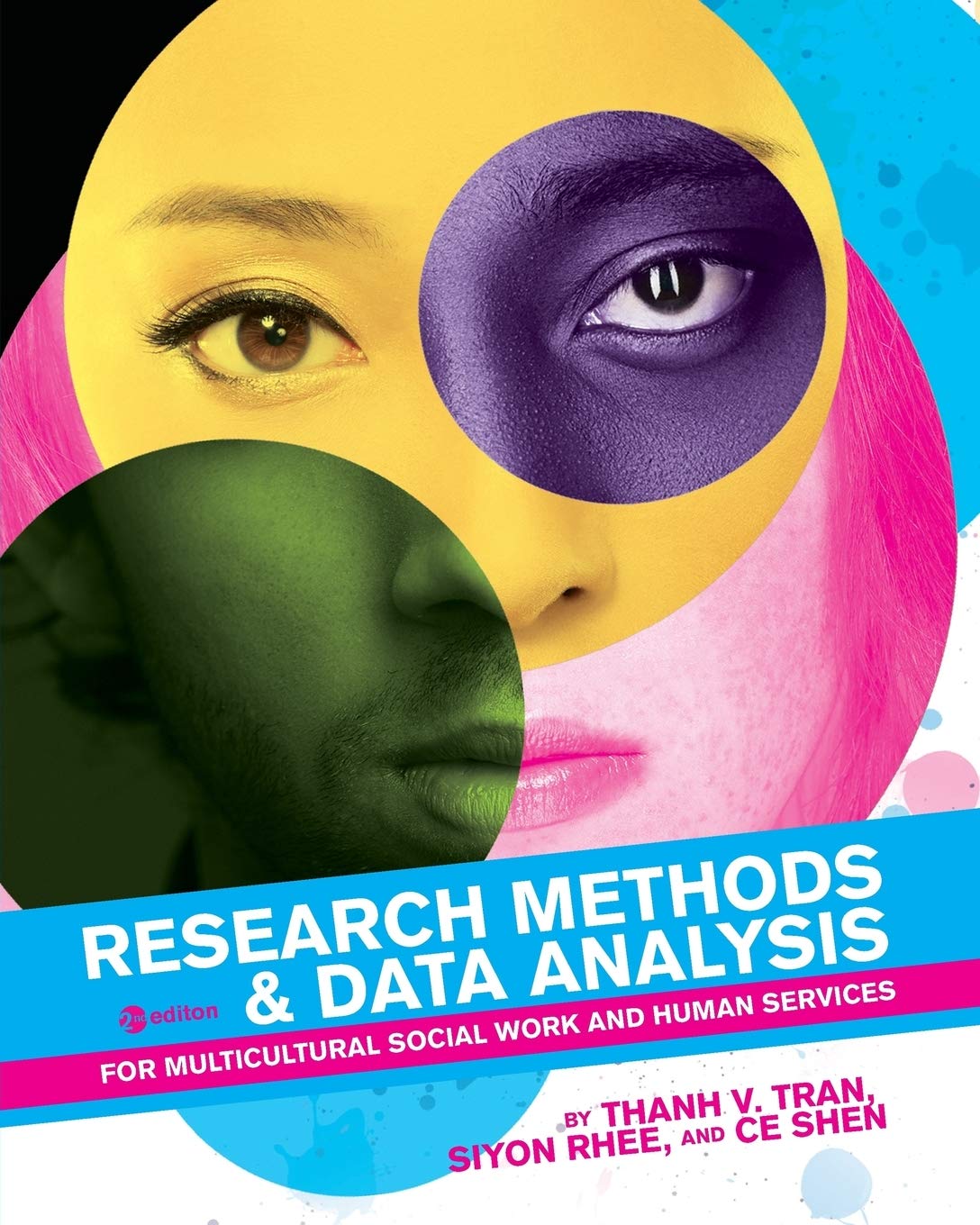
Research Methods & Data Analysis for Multicultural Social Work and Human Services (2014)
Siyon Rhee, M.S.W. ’81, Ph.D. ’88
Siyon Rhee studied at the UCLA School of Social Welfare. Rhee’s research focus includes mental health and mental health service utilization patterns in immigrant Asian families. The book gives readers the skills needed to become critical research consumers. She is an advocate for introducing social work students and practitioners to research-informed methodology and includes hands-on examples of how to conduct data analysis.

Generating Middle Range Theory: From Evidence to Practice (2013)
Sister Callista Roy, M.S. ’66, M.A. ’75, Ph.D. ’77
Sister Callista Roy is best known for creating the adaptation model of nursing, which emphasizes how individuals adapt to changes in their environment and how nurses can help them overcome health challenges. Through her research, Roy explored applications of the model in different healthcare settings. Her work bridged the gap between theory and practice, ensuring that her work could be applied to a variety of real-world scenarios.

Choice, Rules and Collective Action: The Ostroms on the Study of Institutions and Governance (2014)
Elinor Ostrom ’54, M.A. ’62, Ph.D. ’65
Vincent Ostrom ’42, M.A ’45, Ph.D. ’50
Elinor Ostrom was a co-recipient of the Nobel Prize in Economic Sciences for her work showing that groups can learn to share without needing government control, an idea she began exploring as a UCLA student. Vincent Ostrom was one of the originators of Public Choice theory, the idea that economic tools can deal with traditional political science problems. This book brings together their groundbreaking research and analysis.

School Integration Matters: Research-Based Strategies to Advance Equity (2016)
Megan Hopkins, Ph.D. ’11
Megan Hopkins studied education at UCLA, with a specialization in Urban Schooling. Hopkins’ research focuses on policy and leadership for multilingual K-12 students. Her book is the product of numerous applied research projects on the preparation of teachers and the implementation of state policies in bilingual education.

Sustainable Desalination and Water Reuse (2021)
Eric M.V. Hoek, M.S. ’96, Cert. ’14
Eric M.V. Hoek is a professor in UCLA’s Department of Civil & Environmental Engineering. His academic work explores innovations that can help build a more sustainable future. His book explores his research into reverse osmosis, an effective desalination and advanced water treatment technology.

Modern Epidemiology (2008)
Sander Greenland, M.S. ’76, Ph.D. ’78
Sander Greenland is a double Bruin who studied epidemiology at UCLA. Epidemiology plays a main role in public health, and Sander’s book highlights associations between exposures and outcomes. The book is a comprehensive look at epidemiologic research methods.
***
As our list of Bruin authors grows, we’re categorizing the books into an online library, but we’ll need your help to make it as comprehensive as possible. If you know of one, please submit to our list of Bruin authors.
While all these books are written by UCLA alumni, inclusion on the list is not an endorsement.
Books by Bruins Library
Previous articles in the Books by Bruins series
Recent Articles
UCLA’s Latest Research and Breakthroughs Shaping the Future
World’s First Human Bladder Transplant Restores Hope and Quality of Life

Ronald Reagan UCLA Medical Center
Summary:
In a groundbreaking medical achievement, surgeons at UCLA’s Ronald Reagan Medical Center, led by Dr. Nima Nassiri, successfully performed the first-ever human bladder transplant. The eight-hour procedure replaced a nonfunctioning bladder with a healthy donor organ, restoring urinary function and greatly improving the patient’s quality of life. This pioneering surgery opens the door to a new type of organ transplant, offering hope to patients with severe bladder damage from cancer, congenital conditions or trauma cases that previously had limited treatment options. UCLA’s success marks a global milestone in surgical innovation, setting a new standard for complex procedures.
Breakthrough Alzheimer’s Research Offers Promise for Memory Recovery

UCLA Mary S. Easton Center for Alzheimer's Research and Care
Summary:
UCLA researchers under the direction of Drs. Istvan Mody and Varghese John have discovered a promising compound, DDL-920, that restored memory and cognitive function in mice with Alzheimer’s-like symptoms by boosting the brain’s natural electrical rhythms. Unlike existing Alzheimer’s drugs that only remove harmful plaques, this molecule jumpstarts key neurons to revive gamma oscillations — high-frequency brain signals critical for memory. In lab tests, treated mice remembered maze escape routes as well as healthy mice, with no side effects observed. If proven safe in humans, DDL-920 could not only transform Alzheimer’s treatment but also offer hope for conditions like depression, schizophrenia and autism spectrum disorder by targeting the brain’s memory circuits from within.
Study Shows Audiences Reward Inclusive Films

UCLA Institute for Research on Labor and Employment (IRLE)
Summary:
A UCLA study shows that audiences of color and women are shaping Hollywood’s future, proving that diversity isn’t just right, it’s profitable. Films with 31% to 40% actors of color, such as “Killers of the Flower Moon” and “Wonka,” earned the highest box-office returns. Meanwhile, hits like “Barbie” and “The Little Mermaid” thrived, thanks to female viewers, who made up the majority of ticket buyers. The Hollywood Diversity Report found that movies directed by filmmakers of color almost always featured diverse casts, and franchises like “Creed” and “John Wick” saw record earnings when embracing inclusion. Yet despite these gains, women and other underrepresented groups still lag in key industry roles. UCLA researchers emphasize that investing in diversity, both on screen and behind the camera, is now a business imperative, enabling studios to connect with audiences, boost profits and ensure long-term sustainability.
Engineers Develop Zero-Carbon Method to Green Cement Production

UCLA Samueli School of Engineering Institute for Carbon Management
Summary:
UCLA engineers have unveiled “ZeroCAL,” a breakthrough process that could slash nearly all carbon emissions from cement production, a major global source of CO₂. Unlike traditional methods that release nearly a kilogram of CO₂ per kilogram of cement, ZeroCAL uses calcium hydroxide instead of limestone, producing lime without generating greenhouse gases. The approach also creates clean hydrogen and oxygen that could fuel existing kilns, and it integrates seamlessly into current cement plants without requiring costly new infrastructure. Early demonstrations, including a partnership with India’s Ultratech Cement, show the method is scalable and could revolutionize not only cement but potentially steel production, offering a fast, practical path to decarbonize heavy industry.
Next-Gen Bladder Care: Smart Wearable Sensor for Independence

UCLA Health Jonsson Comprehensive Cancer Center
Summary:
UCLA investigators are highlighting groundbreaking advances in prostate and bladder cancer, AI-assisted diagnostics and patient-centered care at AUA 2025. Key innovations include 3D modeling that helps surgeons plan robotic prostate cancer surgeries for better nerve-sparing outcomes, cost-effectiveness analysis showing pembrolizumab may be a smarter choice than nivolumab for high-risk bladder cancer, AI-driven prostate cancer mapping, a wearable system for monitoring bladder health after spinal cord injury, and digital tools that improve shared decision-making in kidney stone treatment. These studies, led by researchers from UCLA’s David Geffen School of Medicine and Jonsson Comprehensive Cancer Center, are helping shape more effective, personalized and cost-conscious approaches to urologic care.
Wearable Glove Turns Sign Language into Real-Time Speech

UCLA Samueli School of Engineering
Summary:
UCLA bioengineers have created an innovative, lightweight glove that can translate American Sign Language into spoken English in real time through a smartphone app. Equipped with stretchable sensors along each finger, the glove detects hand movements and, combined with facial sensors, captures the expressions essential to ASL. The signals are sent wirelessly to a small wrist-mounted circuit that converts gestures into speech at about one word per second. Unlike bulky previous devices, this affordable and flexible glove is durable, easy to wear and can recognize hundreds of signs, offering a practical way for deaf and hard-of-hearing individuals to communicate directly with non-signers — and for anyone to learn sign language more easily.
Wearable AI Patch Lets People Speak Without Vocal Cords

UCLA Semel Institute for Neuroscience and Human Behavior
Summary:
UCLA bioengineers have created a tiny, flexible neck patch that translates the movement of throat muscles into audible speech, offering a non-invasive way for people with voice disorders to communicate. About a square inch in size, the device uses machine-learning technology to recognize specific laryngeal muscle movements and convert them into spoken words with nearly 95% accuracy. Designed to move naturally with the wearer, it adheres to the skin above the vocal cords and could assist patients recovering from laryngeal surgery or living with vocal cord dysfunction. This breakthrough builds on the team’s previous work with wearable devices that translate American Sign Language into speech, opening new possibilities for accessible, real-time communication for people with speech challenges.
Climate Change Is Making California’s Fire Seasons Longer and More Destructive

UCLA Institute of the Environment and Sustainability (IoES)
Summary:
A UCLA study shows that human-driven climate change is pushing California’s wildfire season earlier by an average of one to two days per year, with some areas experiencing fire season starting up to seven weeks sooner than in the early 1990s. Rising temperatures and drier vegetation are creating longer windows for destructive fires, particularly in northern forests and high-elevation mountains. As fire seasons expand, the risks to communities, homes and natural resources grow. The research highlights the urgent need for continued climate science to inform policy and preparedness strategies as California faces increasingly intense and prolonged wildfire seasons.
Ultrasound “Jump-Starts” Brain Activity in Coma Patients

Summary:
UCLA neuroscientists have used low-intensity focused ultrasound to awaken brain activity in two patients who had been in a minimally conscious state for over a year. The small, saucer-sized device targets the thalamus, the brain’s central hub, to stimulate neurons. Within days of treatment, one patient regained the ability to respond to commands, recognize objects, write and communicate, while the other could identify familiar items and understand speech for the first time in years. Though the changes are small, they represent meaningful reconnections for patients and families. The non-invasive technique shows promise as a future portable therapy to help “wake up” patients from chronic brain injuries.
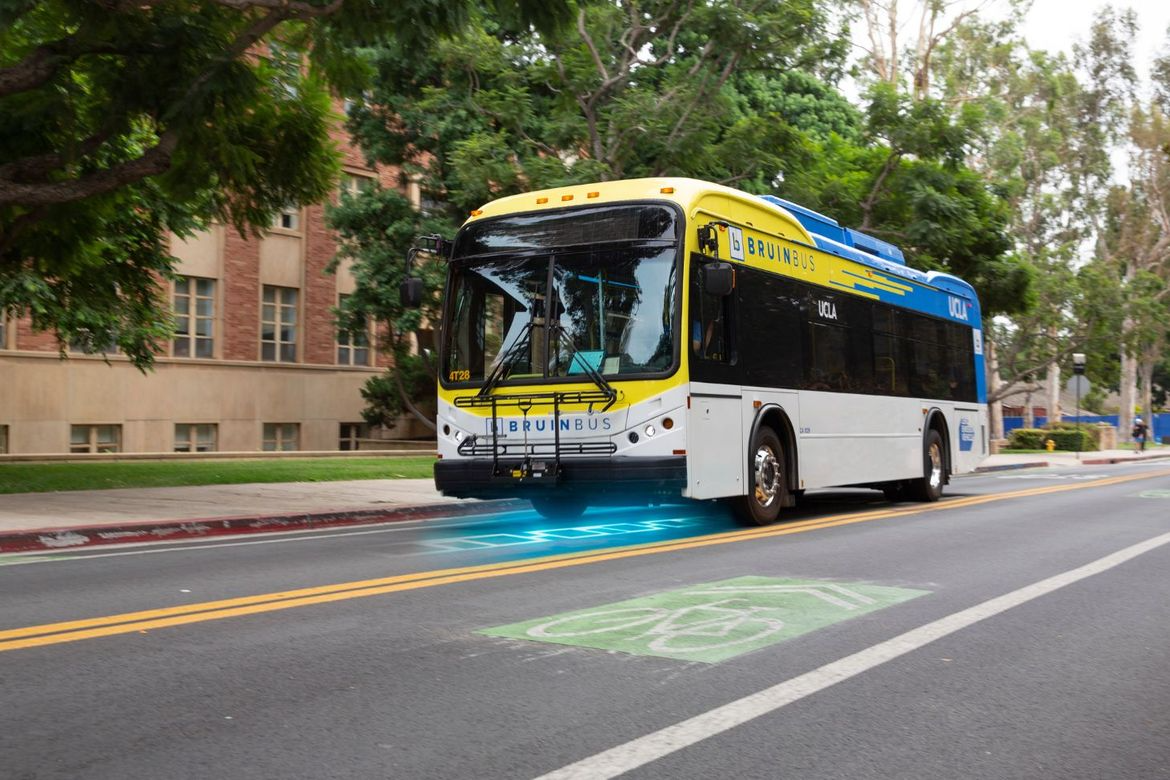
UCLA Transit To Launch California’s First Wireless Charging Road

UCLA Events and Transportation
Summary:
UCLA research is helping bring a revolutionary vision to life in Westwood: Electric Avenue, a stretch of roadway embedded with wireless charging technology that can power electric vehicles as they drive. Using inductive charging coils beneath the pavement, energy is transferred directly to receivers on EVs, keeping batteries topped up without stopping to plug in. UCLA engineers and transportation experts contributed their expertise to design the system, optimize energy transfer, and plan for real-world deployment. Scheduled to debut ahead of the 2028 Olympics, Electric Avenue will showcase how “charging as you go” can reduce range anxiety, improve fleet efficiency and ease the strain on charging stations, paving the way for scalable, citywide charging infrastructure that could keep cars, buses and delivery vehicles in motion while cutting emissions and congestion.
New Research Unlocks Molecule That Restores Hair Growth

UCLA Broad Stem Cell Research Center
Summary:
UCLA researchers have discovered a small molecule, PP405, that can “wake up” dormant hair follicles, encouraging full, natural regrowth. In early human trials, a simple nightly topical application produced promising results, far surpassing the thin fuzz typical of current treatments. Developed by UCLA scientists William Lowry, Heather Christofk and Michael Jung, this breakthrough targets follicle stem cells directly, potentially offering a safe and effective way to reverse pattern hair loss, a condition affecting over half of men and a quarter of women by age 50. The team has co-founded Pelage Pharmaceuticals to advance the treatment, backed by $16.4 million in funding, with larger trials underway and FDA approval on the horizon. Full, healthy hair may no longer be just a dream.
Breakthrough Cancer Vaccine Offers New Hope

UCLA Jonsson Comprehensive Cancer Center
Summary:
A novel cancer vaccine, ELI-002 2P, is showing promising results in patients with some of the toughest-to-treat cancers, including pancreatic and colorectal cancer. Developed in part by researchers at UCLA Health Jonsson Comprehensive Cancer Center, the vaccine trains the immune system to recognize and attack tumors driven by KRAS mutations, which are common in these cancers. In early trials, most patients generated strong immune responses, some cleared cancer biomarkers entirely and those with higher immune responses stayed cancer-free far longer than expected, sometimes nearly two years. Unlike fully personalized treatments, ELI-002 2P is an “off-the-shelf” vaccine, making it easier to deliver to patients. These encouraging results are fueling a larger Phase 2 trial and the development of next-generation vaccines targeting even more KRAS mutations, offering hope for a new way to fight aggressive cancers.
A Rare Visitor from Beyond Our Solar System

UCLA Department of Earth, Planetary, and Space Sciences
Summary:
Astronomers, including UCLA’s David Jewitt, have captured the clearest view yet of 3I/ATLAS, an interstellar comet speeding through our solar system at 130,000 miles per hour, the fastest object from another star ever observed here. Using Hubble’s Wide Field Camera 3, Jewitt and his team revealed a teardrop-shaped dust plume streaming from the comet’s icy core, while other space- and ground-based telescopes help study its composition and track its journey. Although its exact origin remains a mystery, researchers estimate 3I/ATLAS has been traveling through interstellar space for billions of years. This marks only the third known interstellar object to enter our solar system, following ‘Oumuamua in 2017 and 2I/Borisov in 2019. With new observatories like the Vera C. Rubin Observatory scanning the skies, astronomers expect to spot many more interstellar visitors in the coming years, offering unprecedented insights into the universe beyond our solar system.
Smart 3D-Printed Pen Offers Early Detection for Parkinson’s

UCLA Samueli School of Engineering
Summary:
UCLA bioengineers have developed a self-powered, 3D-printed “smart pen” that could help spot Parkinson’s disease early by analyzing handwriting. The pen’s flexible tip and magnetic-ink system capture subtle hand movements and convert them into electrical signals, which AI then analyzes for motor changes linked to Parkinson’s. By detecting these early signs before major neurological damage occurs, the pen could provide a simple, accessible tool for faster diagnosis and intervention, potentially expanding care beyond specialized clinics.
Chemists Break a 100-Year-Old Rule, Opening the Door to New Drug Discoveries

UCLA Department of Chemistry & Biochemistry
Summary:
UCLA researchers have overturned a century-old chemistry rule, proving that molecules once thought impossible to make can exist and be harnessed for drug discovery. Bredt’s rule claimed that certain carbon atoms in complex molecules couldn’t form double bonds due to geometric limits. But a team led by Neil Garg demonstrated a way to create and stabilize these “anti-Bredt olefins,” enabling new chemical reactions and 3D molecular structures that could accelerate pharmaceutical innovation. Published in the journal Science, this breakthrough could rewrite the textbooks and inspire a wave of new possibilities in medicine.
***
To learn more about UCLA research and how you can support it, visit https://www.ucla.edu/research. #StandUpforUC
Recent Articles
Bruin Family Connect
Dear Bruin Parents and Families,
My name is Steve Lurie, and I am the inaugural Associate Vice Chancellor, leading UCLA’s new office of Campus and Community Safety. The Bruin Family Connect Newsletter has offered me the opportunity to introduce myself and my teams, share our philosophy on a holistic approach to safety on campus, and discuss our goals for the future.
I am, in my heart, a Bruin for life. I graduated from UCLA with a BA in cultural anthropology in 1994, and went on to a 28-year career with the Los Angeles Police Department. During those years, I attended Loyola Law School and was admitted to the California Bar in 2002. My police career took me to all corners of Los Angeles, from South Los Angeles to Bel Air, from the San Fernando Valley to San Pedro. I was fortunate to have a broad, varied, and enriching leadership journey, culminating at the rank of Commander, where I led police service delivery on the west side of Los Angeles. I was in this role when the conflict in the Middle East led to nationwide protests and demonstrations, including on our UCLA campus, and was called upon to lead the law enforcement response to address the tremendous campus safety issues these presented
As I drove away from campus after coordinating the removal of the Royce quad encampment, I told myself that if there was ever a possibility – any chance – that I could help enhance public safety at my beloved UCLA, I would jump at the opportunity. And then I returned to Los Angeles and continued my LAPD journey.
As UCLA recovered from the fallout from the encampment and related activities, it became clear that an improved, streamlined public safety apparatus was urgently needed. The Office of Campus and Community Safety was created in late 2024. I was humbled and honored when, in February 2025, Chancellor Julio Frenk offered me the leadership of this entrepreneurial, first-in-the-nation effort. I report directly to Chancellor Frenk, and the teams that keep UCLA safe report directly to me. This streamlined decision making has already yielded benefits to our community.
Chancellor Frenk has described campus safety as his meta-priority. Bruins cannot excel in the classroom, the operating room, the laboratory, on the field of sport if they are not safe. It is my charge to coordinate the many teams that work to provide this blanket of safety. At UCLA, this means so much more than the absence of crime. In fact, we have a campus that is historically – and remains - extremely safe in the traditional sense. The Office of Campus and Community Safety seeks to move well beyond the basics. We aim to have all in our Bruin community feel safe, and have the intellectual and emotional freedom to do their critical work.
To keep our community safe, we rely on two exemplary organizations. The Office of Emergency Management (OEM) works to prevent and prepare for major events and crises on campus. Our campus has faced floods, wildfires, and earthquakes. We regularly welcome tens of thousands of fans to Pauley Pavilion, and will soon host the world’s athletes for the 2028 Olympic and Paralympic games. Emergency managers in our office provide training and planning expertise to every community member so UCLA can be ready. When the inevitable does occur, OEM activates and manages our Emergency Operations Center, where UCLA coordinates response activities in order to return to status quo as soon as possible.
The UCLA Police Department is a state-certified full-service police agency providing 24/7 patrol and emergency response to Bruins throughout Southern California. When a community member dials 9-1-1 from campus or from a UCLA property near campus, our own team of professional communications operators answers their call and dispatches our UCLA officers to help. This system ensures that the officers can quickly respond to our community’s call for help and are specially trained and have a deep understanding of the unique UCLA culture. The UCLA Police Department also manages several other safety programs, often dispatching Public Safety Aides or student Community Service Officers to handle non-emergency calls for service.
The synergy between these entities consistently leads to UCLA being better prepared to respond to a variety of emergencies, having more rapid response times, and higher community satisfaction with public safety than in the broader LA community.
In closing, I would like to share some important campus safety resources with each of you:
Bruin Alerts:
To receive emergency updates identical to those your student or family member does while on campus, please join our Bruin Alert system by texting “Bruinalert” to 888-777. These alerts, while rare, offer emergency notifications and instructions to community members.
Bruin Safe Online:
The Bruin Safe Online website, at bso.ucla.edu, offers as 24/7 safety information portal. When a major event potentially effects UCLA, the world is watching. This can often lead to rumors, incorrect social media posts, and other inaccurate news. Please use Bruin Safe Online as a place to access facts about safety on campus.
Bruin Safe App:
The Bruin Safe App, available for iOS and Android, is an information resource intended for all Bruins to learn more about services available to them. It also has a location sharing feature and the ability to summon emergency responders in real time. All Bruins should have this app available on their mobile devices.
UCPD Instragram:
Our community consumes so much of its important information from social media, and we aim to be present in that space as well. Please follow UCPD on social media to stay in touch with campus safety events, emergencies, and other critical information.
I am thankful and full of optimism as I return home to UCLA. I, and the OCCS family, will continue to work 24/7 as we innovate and improve. We are dedicated to a safe UCLA, where Bruins live, work and play in an environment that supports excellence and provides a campus, and a broader community, where they are safe, they feel safe, and they can continue to thrive.
Best regards and Go Bruins!
Recent Articles
story of impact: how one alum is helping Bruins find peace - Sharon Chen ’06
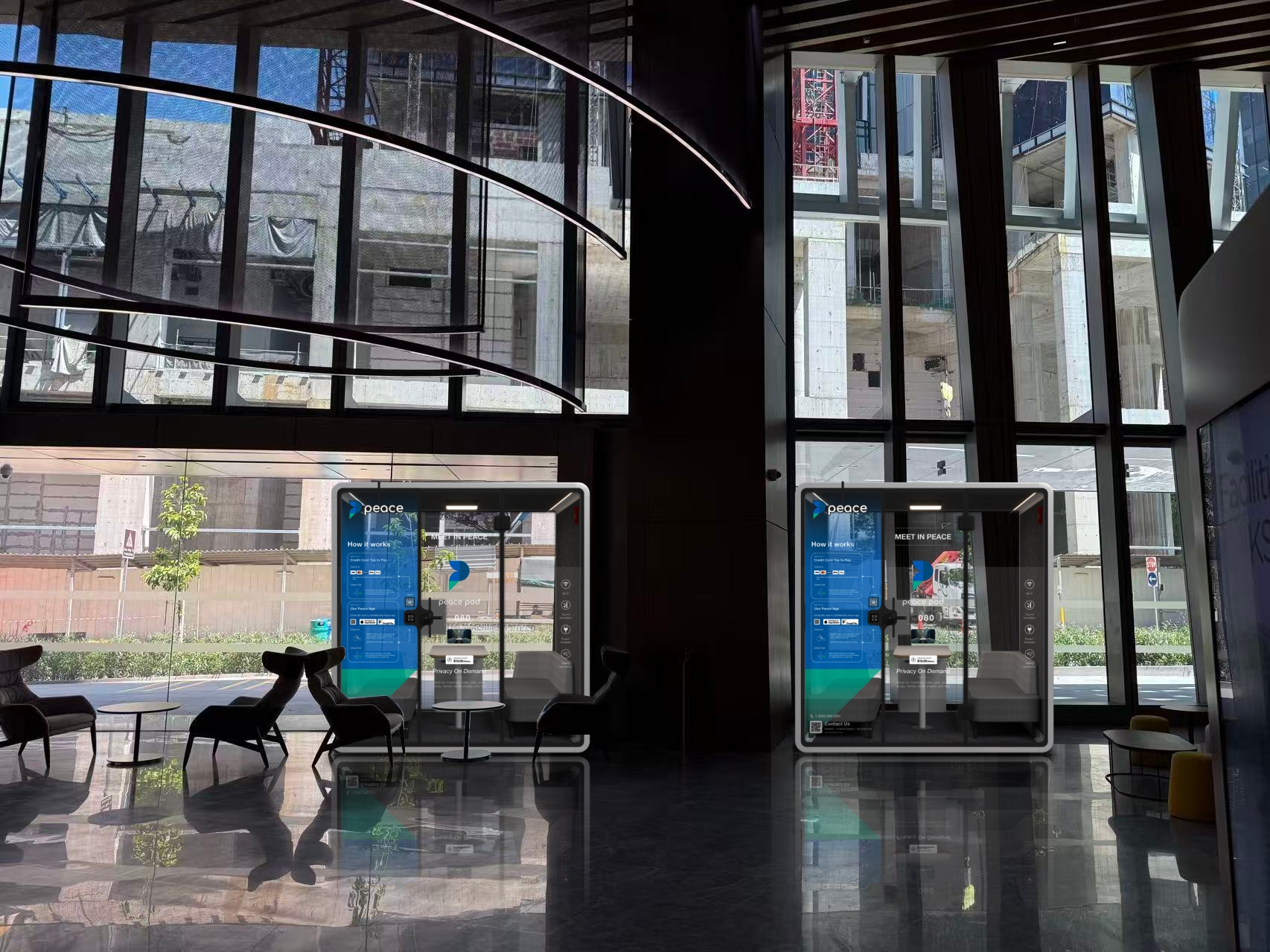
In the middle of UCLA’s bustling campus, where solitude is scarce and silence even more so, Sharon Chen ’06 is offering students a rare commodity: the freedom to pause. Her solution is simple: a private, sound-dampended pod where students can step away from noise and simply be alone.

Chen, a Business Economics alumna, didn’t come to this work from a boardroom brainstorm. As a teenager, she watched a younger sister struggle with depression—pain that was easy to hide and hard to name. “She hid it so well,” Chen says. That missed chance to help became the backbone of her work.
After UCLA, Chen dove into investment banking, chasing what she calls the “expected track.” She eventually took a leap into entrepreneurship, launching a reality television show designed to help startup founders pitch their ideas. The project never made it past development. It failed…and it failed publicly. “It hit me hard,” she said. “I couldn’t even talk about it for years.”
Still, this experience shifted something within her. After what she candidly refers to as a “massive flop,” Chen left Los Angeles and relocated to Shanghai, China where she rebuilt a career in private equity focused on cross-border real estate.
Along the way, her definition of success shifted. “I’m a really good number two,” she says with the type of humility that comes from years of experience. In her view, success is about facilitating others' realization of their vision. That mindset eventually guided her toward reimagining how campuses make space for mental well-being.
“Emotional pain isn’t always visible,” Chen notes. “If you break your arm, people can see it. With mental health, it’s easy to hide.” For students, the constant hum of activity and performance leaves little room to breathe, let alone ask for privacy. Peace Pods create a refuge to think, reflect, meditate – or simply be – without the world encroaching.

How Peace Pods Work
- App booking + smart access: Students reserve a pod in the mobile app; a smart lock grants entry at the reservation time.
- Sound-dampened privacy: Designed to reduce external noise for quiet reflection or confidential conversations.
- Real-time availability: The app shows open times and helps minimize wait.

UCLA has launched six Peace Pods on the main campus, with early placements including the UCLA Career Center. Additional campus locations are being coordinated with student-facing services. Chen’s vision extends beyond Westwood: Peace is exploring pods in coworking spaces, corporate offices, and public venues. The team is also evaluating AI-assisted features to make reservations faster and more accessible, with a long-term goal of on-demand privacy that doesn’t require membership or friction.
For Chen, Peace Pods are more than hardware. They’re a way to notice the struggles we don’t always see—and to offer practical dignity in response. “Once a Bruin, always a Bruin.” With Peace Pods, Chen is making sure every Bruin has space to simply be.
explore more inspiring bruin storiesLearn more or support the initiative at peacepod.com. Inquiries about campus partners and sponsorships can be directed through the site’s contact page, or directly to Sharon Chen at sharon@peacepod.com.

Recent Articles
Musical Bruins: Vol. 1
F
rom rock legends to indie trailblazers, UCLA has been home to musical icons like Jim Morrison of The Doors, composer John Williams ’53 and pop sensation Sara Bareilles ’03. Whether scoring blockbuster films, performing in chart-topping bands or producing genre-bending tracks, Bruins prove that the spirit of creativity thrives long after graduation.
In this first installment of Musical Bruins, we’re shining a spotlight on alumni who’ve turned their passion into powerful sound. The work from these talented Bruins spans pop, hip-hop, rock and more.
Ready to keep rocking? Stream this playlist on Spotify for a curated soundtrack of both rising and legendary Bruin artists.
Musical Bruins - Vol. 1: Listen HereFeatured Artists:

Rey Fresco
True to their Ventura roots, Rey Fresco combines rock, reggae, world, soul and Latin music — the perfect soundtrack for a sunny day in Southern California. The key to their unique sound? A 36-string Veracruz harp played by founding member and UCLA Ethnomusicology graduate Xocoyotzin “Xoco” Moraza ’06. The band continues to perform along the California coast and opened for Ziggy Marley this summer.

D Smoke
Previously a Spanish and music theory teacher in the Los Angeles public school system, Daniel “D Smoke” Farris ’07 became a breakout artist after winning Netflix’s 2019 season of “Rhythm & Flow.” A three-time Grammy nominee, his music pays homage to his upbringing in Inglewood, California, exploring themes of family, faith, and Black and Latinx cultural identity. His Wake Up Supa tour kicks off Oct. 28.

Alison Brown
Trading investment banking for live touring, Grammy-award winning banjo player Alison Brown, MBA ’86, blends traditional bluegrass with jazz sensibilities. With a career spanning more than three decades, she’s earned international acclaim for her progressive approach to the instrument. She frequently collaborates with fellow Bruin and comedian Steve Martin, and their latest track, “5 Days Out, 2 Days Back,” debuted on “Jimmy Kimmel Live” last month.

BEL
Isabel “BEL” Whelan ’18 grew up in a bilingual, music-filled home, often harmonizing to Joni Mitchell and Joan Baez with her Argentine mother. A third-generation Bruin, she refined her songwriting at UCLA, where she won Best Solo Act at Spring Sing in 2017. Since then, she’s been carving out a space in the indie-pop world, infusing dreamy vocals with introspective lyrics. Her debut album “Holy Grail” arrives Oct. 17.
Interested in being featured on a future Musical Bruins playlist? Email connectfeedback@alumni.ucla.edu with your name, grad year and link to your Spotify profile.
Big Ten Alumni Relations Institute at UCLA
T
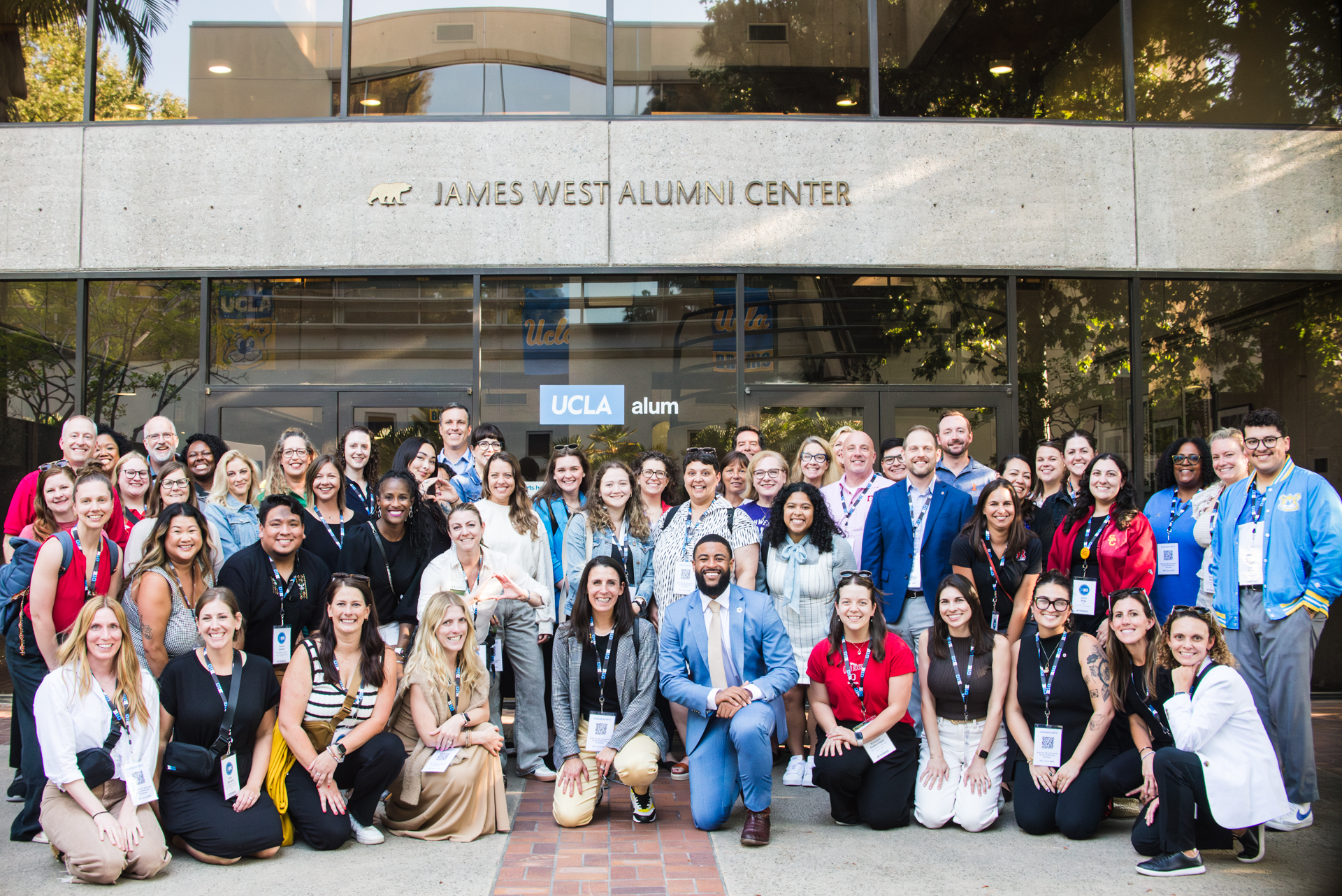
he 2025 Big Ten Alumni Relations Institute (BTARI) was hosted by UCLA from July 21–23, and was a significant moment for the Bruins as UCLA capped its first year in the Big Ten Conference. Held at the James West Alumni Center in Westwood, the three-day gathering brought together alumni relations professionals from across Big Ten institutions for a dynamic blend of idea-sharing, leadership development and community building.
The two-day conference fostered a collaborative and forward-thinking atmosphere focused on strengthening alumni engagement. Sessions explored key themes such as inclusive community building, data-driven strategies, digital outreach and volunteer mobilization. Attendees participated in hands-on workshops, peer-led discussions and networking opportunities that encouraged knowledge sharing and practical takeaways.

Highlights included focused conversations around football fan engagement, the evolving nature of alumni identity, and integrating equity and inclusion as a sustained practice. Informal social gatherings and campus tours rounded out the program, offering space for reflection, relationship building and a renewed commitment to advancing alumni relations in meaningful and innovative ways.
Throughout the conference, speaker insights, peer-led panels and interactive workshops consistently emphasized four key themes: the strategic power of storytelling, the importance of data and measurement, the necessity of equity as a guiding framework, and the value of informal connection in building long-term collaboration.
The energy of UCLA’s inaugural BTARI was both aspirational and pragmatic. It provided attendees with fresh tools, practical case studies and strengthened peer relationships that will help shape the future of alumni engagement across the Big Ten.
UCLA’s hosting of this first-ever BTARI was not just a milestone in the school’s Big Ten debut, but also a meaningful affirmation of the vital role alumni professionals play in sustaining institutional values and amplifying impact. As the conference closed, it left participants energized and equipped to carry forward this momentum at their home campuses.
See the Full GalleryRecent Articles
- UCLA AAP Alumni Spotlight - Adrianos Facchetti ’01, J.D.
- The Story Behind Jackie Robinson’s 1946 Reintegration of Organized Baseball
- UCLA Prytanean Celebrates Its Centennial
- Building Community: UCLA Disability Alumni Network Focuses on Belonging and Visibility
- Bruins@Work Program Fosters Community
- International Women of Courage
Get the Answers From College Fairs Volunteers
O
f the many ways that UCLA alums give back to their alma mater, one of the most rewarding, but, perhaps, least known, is volunteering at college fairs. These events, organized by UCLA Admission, are held at community colleges and highs schools throughout California from August to November each year; 65 such fairs were held in 2024. UCLA Alumni Affairs identifies volunteers from the alumni community to staff them and, despite having to go through an annual three-hour orientation, volunteers keep coming back year after year.
The orientation goes over the kinds of questions that might be asked, and a manual is provided to the volunteers that lists information about the different schools within UCLA, dates and deadlines to be aware of, cost and financial aid information, etc. Volunteers are coached on what to say to prospective students, and what not to say (e.g., they are not to criticize or put down other universities).
“Our alums are not trying to sell UCLA to the students,” said Janette Palacios ’98, M.A. ’01, director of Alumni Communities, who helps identify the volunteer cohort for Alumni Affairs. “They already know about UCLA, and for many, it’s their dream school. We just want to make sure they have the necessary information to help them make their decision and to get through the application process.”
Many fairs are held in places where there are a lot of underrepresented students, some of whom don’t have access to guidance counselors. This places more value on college fair volunteers, with whom prospective students can readily identify, to convey helpful information about their universities.

One alum who has had a long history of this type of outreach is Alfredo Perez Jr. ’92. A political science major, Perez worked in Campbell Hall as an Academic Advancement Program counselor for about five years and served as a vice president of the Beachside Bruins network.
“I’ve always felt like I had a debt to UCLA because 30-some-odd years ago they took a chance on this kid,” Perez said. “And there are very specific people who were responsible that I will always remember. At a New Bruin Send-off event with Beachside Bruins last September, for incoming first-years, a woman came up to me who looked familiar. Turns out that she had worked for UCLA Admission and was the one who called to tell me there were some things I had done wrong in my application that I needed to fix. She even encouraged me to retake the SAT or take the ACT. I told her, ‘I went to UCLA because of you.’
“If I can just do a little bit of what they did for me, that is very rewarding.”
While in his office at Campbell Hall, things came full circle for Perez.
“I remember talking to a family from the Central Valley at an informational event, and they were concerned when they heard about the coed dorms. Would their daughter have a male roommate? I assured them that this wouldn’t be the case and tried to ease their minds about a couple of other concerns. One day when I was in my office, a student knocked on my door and she said, ‘I just want to thank you because I'm here due to that conversation you had with my parents; that made it a lot easier for them to accept my coming to UCLA.’”
Last year, Perez volunteered for his first college fair. He takes a broader view than merely talking about UCLA.
He said, “Some of the students aren’t sure if they should go to college at all, and I talk to them about what continuing their education could mean to them. Many who want to go to UCLA are skeptical about getting in, and I tell them, ‘Give yourself a shot. If you don't get in, then we'll talk about what the alternative is. Maybe try a Cal State or a community college and transfer to UCLA later. Your diploma will still be from the University of California, Los Angeles.’”
Ekeoma Nwadibia ’09, a chemistry major who went on to earn her doctorate at Columbia University, was looking for a way to get more involved with UCLA, so she volunteered at multiple college fairs in Northern California the last two years.
“I had a really great experience during my time at UCLA and I wanted an opportunity to share that with others,” Nwadibia said. “I really enjoy meeting families, meeting students, getting to hear what motivates them, what excites them. To be able to share not only the information that they could find on websites, but my own personal experiences I think is very helpful.
“Sometimes we get first-year (high school) students, and I always find those particularly interesting because they'll be there with their parents and they're already thinking about how they can structure their high school years and the courses they’ll take to maximize their chances of being admitted to UCLA. So that's really some advanced planning.”
Nwadibia, who is a middle school science teacher, said that, while she got lots of questions about areas like engineering and computer science, she also got inquiries about non-academic activities as well.
“I got a lot of questions about sports, and not just football and basketball but lacrosse and hockey,” she said. “I didn't know the details about all of the many intramural activities and club sports that UCLA has to offer, so, as we learned in the trainings, I said, ‘We offer this many activities, so you can either find one that suits you or start your own.’
“The students also ask a lot about housing and I get to share with them that it is guaranteed for four years for incoming first years and for two years for transfer students. The cost of attending is another topic that comes up a lot, so I’m able to give them a pamphlet outlining different scholarships that UCLA offers – and I encourage them to fill out their FAFSA (Free Application for Federal Student Aid) form.”
Xitlalli Cardenas ’18, a sociology major who is starting law school at the University of Oregon this fall, has always tried to help underrepresented communities and has found volunteering at a fair a great way to do that. She has volunteered at fairs in the San Fernando Valley and Antelope Valley the last two years – and they weren’t only held at schools.

“In the Antelope Valley, they did a really big event that they hosted at their fairgrounds,” Cardenas said. “So that was awesome. The UCLA line is always the longest line by far; everyone always wants to talk to the UCLA people, and I'm happy to help and then just stay there and answer everyone's questions.”
Community service and outreach is not new to Cardenas. During her time at UCLA, she did a lot of volunteer work and received the Chancellor's Service Award for her efforts.
She said, “UCLA really was my dream school – is my dream school. I really enjoyed my time there. So, for me, volunteering was really about wanting to share that with other people and wanting other people to have that awesome experience to go to UCLA to become a Bruin and immerse themselves inside of the community.”
She finds it especially rewarding to volunteer at fairs that are attended by members of communities where a personal approach, encouragement and advice is most needed.
“Communities of color are something I’m very passionate about serving,” Cardenas said. “So that was really the forward drive to do that and to go to a lot of these places that don't really see that much outreach. I know how much potential the students there carry, I know how hard they work and I know everything that they can contribute to UCLA as a community.
“One thing that I really highlight when I'm there is that UCLA really likes well-rounded people, and they should tell a story in their personal statement – including extracurriculars and what they're really interested in – to let Admission know who they are. I think that that's a really strong component to their application.”
And, as with so much in the UCLA Alumni volunteer community, the benefits of the interaction flow in both directions.
“Afterwards, you are so happy, so energized because you are having these very organic and authentic interactions with the community and with the students there,” Cardenas said. “And you're sharing your stories of your favorite things to do or things that they don't really know that a lot of students do. It's a great feeling and a great sense of connection that you walk away with.”

Lisa Sison ’89, an economics major who went on to earn an MBA and works in corporate finance for the Walt Disney Company, was inspired to reconnect with UCLA and give back to her alma matter when her sons began their college careers.
She said, “When I heard about college fairs, I raised my hand and said, ‘Yeah, that's something that I would do,’ because I wanted to connect with young students – not just high school seniors or juniors looking at colleges, but freshmen or even younger kids who are exploring their options. I wanted to share my passion for UCLA with those students.”
Last year, Sison volunteered at four college fairs in Orange County. The kinds of questions she got from students often focused on the difficulty of being admitted to UCLA, even for accomplished students.
“One of the most common questions that I received was, ‘How do I submit an application that really stands above others so that my application is memorable?’ My response was, ‘Take a variety of courses and challenge yourself, demonstrate that you are able to take on challenges by choice. GPA is not everything; the PIQs (Personal Insight Questions) are where you can really express yourself. I think there's eight to choose from – you get to select which ones to answer. That's your opportunity to demonstrate how you can write, how you think. It's an opportunity to shine, your opportunity to express how you contribute to the community, what you’re involved in and maybe discuss some of the obstacles you’ve faced and how you’ve overcome some challenges in your life. Let the application readers know what you can bring to UCLA, what difference you make. Stay involved during your high school career but be authentic; find something that you are passionate about and really put your heart into it. Maybe you have more opportunities than kids in the less affluent areas; how do you take advantage of those opportunities and use them to further your goals and elevate the community?’”
Sison is planning on participating again this year.
“It was so rewarding,” she said, “to see that joy and the gratitude – they're so appreciative of the volunteers taking their time to share their knowledge and their experience.”
Those interested in volunteering at future college fairs can email FutureBruins@alumni.ucla.edu. For information, visit the https://alumni.ucla.edu/get-involved/college-fairs.
Recent Articles
- UCLA AAP Alumni Spotlight - Adrianos Facchetti ’01, J.D.
- The Story Behind Jackie Robinson’s 1946 Reintegration of Organized Baseball
- UCLA Prytanean Celebrates Its Centennial
- Building Community: UCLA Disability Alumni Network Focuses on Belonging and Visibility
- Bruins@Work Program Fosters Community
- International Women of Courage
Books by Bruins: Summer Reading
W
hether you’re sitting by the pool, lounging on the beach or beating the heat indoors, curling up with a good book just might be the perfect summer escape. From memoirs by UCLA athletes to intriguing mysteries and page-turning novels, pick up one of these Bruin books for your reading pleasure.
FICTION

Liquid, A Love Story (2025)
Mariam Rahmani, Ph.D. ’19
Mariam Rahmani delivers a modern tale of romance, loss and belonging. This satirical novel tells the story of a young Muslim adjunct professor who decides to give up her career and marry rich, committing herself to 100 dates in the course of a single summer. Mariam Rahmani is a writer and translator. She holds a Ph.D. in comparative literature from UCLA and teaches at Bennington College.

Will There Be Wine?: A Novel (2023)
Whitney Cubbison ’98
Whitney Cubbison graduated from UCLA with a degree in French. She worked at Microsoft for 16 years, spending 13 years in the Paris office. During that time, she held various international roles that encompassed public relations, employee communications, executive speechwriting and social media. She left her job after earning her French citizenship to focus on writing her first novel. The story was inspired by her experiences as an ex-pat divorcée navigating life in a foreign country.
MEMOIRS

How to Eat a Small Country: A Family's Pursuit of Happiness, One Meal at a Time (2011)
Amy Finley ’96
After graduating from UCLA, Amy Finley quickly realized that her true passion lay in cooking. When she won the third season of The Next Food Network Star, she thought her dreams had come true. But when the demands of her new career put a strain on her marriage, she decided to make a drastic change. “How to Eat a Small Country: A Family's Pursuit of Happiness, One Meal at a Time” is her tale of moving to rural France to preserve her family.

What Just Happened? Bitter Hollywood Tales from the Front Line (2020)
Art Linson ’64, J.D. ’67
During his third year at UCLA Law, Art Linson was invited to a movie screening at the home of producer Harold Mirisch. That night, he decided he wanted to pursue a career in Hollywood. His film credits include “The Untouchables,” “Heat,” “Fast Times at Ridgemont High” and “Fight Club.” Linson has written two books that give a backstage look at the characters and calamities of making a motion picture.

Back from the Dead (2017)
Bill Walton ’74
Bill Walton played center for John Wooden’s UCLA basketball team for three years, including two undefeated seasons with NCAA championships and an NCAA record 88-game winning streak. After UCLA, he went on to a standout career in the NBA and broadcasting. The beloved athlete’s memoir shares the lessons he learned from Coach Wooden and his love for the music of the Grateful Dead, and how they each helped him through his darkest hours.

My Unusual Life (2023)
Laurie Lewis Havel ’72
High school volleyball standout Laurie Lewis Havel’s chance encounter with athletes returning from the 1964 Olympic games changed her life, leading her to compete at the 1968 Summer Olympic Games in Mexico City. She joined the UCLA volleyball team in 1969, and led them to their first women's championship in 1972. While at UCLA, she worked at a local magazine and after graduation began a career with Architectural Digest magazine. Her book chronicles the many twists and turns of her unpredictable life story.
HUMOR

In Such Good Company: Eleven Years of Laughter, Mayhem, and Fun in the Sandbox (2016)
Carol Burnett (1951-1954)
Comedy legend Carol Burnett shares hilarious behind-the-scenes stories from her iconic weekly variety series, “The Carol Burnett Show.” She credits her time in UCLA’s Theater Arts Department for changing her plans and setting her on the path to a career in show business. A 1985 recipient of the UCLA Medal, she now shares the talent and creativity that captured hearts and made us laugh.

Why Fantasy Football Matters: (And Our Lives Do Not) (2006)
Max Handelman, MBA ’03
Max Handelman launched Fox Sports' fantasy games division. He is now an independent film producer. In “Why Fantasy Football Matters (And Our Lives Do Not),” he and co-writer Erik Barmack celebrate the eccentric personalities, absurd rituals and hilarious superstitions of one of the most fanatical fantasy leagues on earth.
MYSTERY

Murder Behind the Gates: The Private Investigator Annie Hudson Mystery Series (2024)
Valerie Brandy ʼ11
Private investigator Annie Hudson solves cases with the help of her partner, FBI Agent Ethan Beckett. As the pair unravel mysteries across the country, each case brings them one step closer to a tragedy from the past that ties them together. Valerie Brandy is a Los Angeles-based screenwriter, filmmaker and best-selling author. Brandy graduated from UCLA in three years as a prestigious Alumni Scholarship Recipient. At 20, she sold her first spec script, making her one of the youngest members ever inducted into the Writers Guild of America (WGA).

The Florentine Deception (2015)
Carey Nachenberg ʼ95, M.S. ʼ95
In this action-packed techno-thriller, a routine computer cleanup sets off a quest for a deadly treasure. Carey Nachenberg is a leading security specialist, and he brings that knowledge to enhance the story’s realistic details. Nachenberg pledged 100 percent of the book's profits to charity and has already donated to the Success Academy, KIPP.org, UniCamp, Npower.org and UCLA engineering scholarships for low-income computer science students.
***
As our list of Bruin authors grows, we’re categorizing the books into an online library, but we’ll need your help to make it as comprehensive as possible. If you know of one, please submit to our list of Bruin authors.
While all these books are written by UCLA alumni, inclusion on the list is not an endorsement.
Books by Bruins Library
Previous articles in the Books by Bruins series
Recent Articles
Grad Cap Contest Winner - 2025
Congratulations Anoushka Bhat '25
"During my freshman year at UCLA, I founded Henna with a Heart, a club dedicated to sharing the art of henna with my fellow Bruins. What began as a small group of students quickly grew into a vibrant community cherished by many across campus. Through this organization, I developed as a leader, built lasting connections and truly found my home at UCLA. This graduation cap is a tribute to that journey. Decorated with dimensional fabric paint and rhinestones that echo the intricate patterns of henna art, my grad cap symbolizes the creativity, culture, and community that defined my UCLA experience."
Thank you to Wescom, the official banking partner of the UCLA Alumni Association, for sponsoring this contest. The winning grad cap was selected by UCLA Alumni Association staff via voting for submissions which remained anonymous. The winner will receive a $500 UCLA Store gift card.

Honorable Mentions
Rose Saubel ʼ25

“I am an enrolled member of the Torres Martinez Desert Cahuilla Indians tribe, and we traditionally bead our graduation caps and wear feathers to represent our heritage and to honor our ancestors. I designed and hand-beaded my own cap which includes several thousand size 11 beads that were stitched down every two beads apart. The edge design of the cap was inspired by my late father's favorite beadwork that he would usually wear on his hats. The blue triangles represent the mountains within my ancestral lands located within the Coachella Valley. I strategically designed three blue mountains on each side to represent my little family including my daughter, my husband and myself. The top part of my cap includes a rose to honor my late Grandma Rose, who I was named after. She was a matriarch of my family but sadly passed away before I could meet her. I dedicate my cap to my late father, family, ancestors, tribe and all of Indian Country as I would not be here without their support and resilience.”
Dulce Lopez Hernandez ʼ25

“This cap represents more than a degree — it symbolizes resilience, dedication and the unbreakable bond between a mother and her daughter. As a first-generation student, becoming pregnant during undergrad was never part of the plan, but life’s timing had its purpose. Against the odds and despite the doubts, I pushed forward. This is for my daughter, who gave me the strength to keep going.”
Jacquelyn Chau ʼ25

“My graduation cap is dedicated to the people who have stood by me every step of the way: my family. Throughout my two years at UCLA, they have been my constant support system and have been there for me through everything. The quote ‘Did it for them’ is a tribute to my parents and grandparents, who are immigrants from Vietnam.
After the Vietnam War, they made the dangerous choice to escape by boat, leaving behind everything they knew in hopes of a better life. They came to the U.S. with nothing but resilience and dreams for a brighter future. It’s because of their sacrifices, strength and love that I’ve had the opportunity to be here at UCLA and succeed in school.
This cap is for them. It’s for their journey, their hopes and the future they made possible for me. I carry their story with me always, and I graduate not just for myself, but for my whole family.”
Sloane Shevin ʼ25

“I specifically chose this movie focused “La La Land” design for a number of reasons. One is because the film is easily one of my favorite films of all time. Since first watching the movie, “La La Land” has been a film I consistently go back to, reminding me that even though plans and paths may change, you can never give up on your dreams. My two dreams in life were to get into UCLA and be in the film industry. Now, both of these goals have been accomplished, it felt very fitting to have that represented on my graduation cap. I also added a few additional "UCLA" touches to the design including Joe Bruin replacing Ryan Gosling from the original poster (with a "25" on his jersey to represent my graduation year), Royce silhouetted in the background, the iconic UCLA lamppost, and of course combining the film name with UCLA.
Momoka Yoshida ʼ25

“I love Snoopy and mushrooms. And I displayed Snoopy and mushrooms’ figure toys on a dashboard in front of passenger’s seat. They always watched over me all the way to go to UCLA. Also, every time I gave friends rides, my little cute figures entertained my friends. That is why I decided to put Snoopy and mushrooms picture on my graduation cap with rhinestones. They are my parts of memories of UCLA life.”
Recent Articles
- UCLA AAP Alumni Spotlight - Adrianos Facchetti ’01, J.D.
- The Story Behind Jackie Robinson’s 1946 Reintegration of Organized Baseball
- UCLA Prytanean Celebrates Its Centennial
- Building Community: UCLA Disability Alumni Network Focuses on Belonging and Visibility
- Bruins@Work Program Fosters Community
- International Women of Courage
A Big Ten Bruinprint: UCLA’s Bold New Era
A Bold Leap and a Historic Year
When UCLA officially joined the Big Ten Conference on Aug. 2, 2024, it didn’t just shuffle opponents and game times — it stepped boldly into a new era of Bruin athletics.
For nearly 100 years, the Bruins called the Pac-12 home. Leaving behind decades of tradition wasn’t easy, but the promise of sharing the Bruin story nationwide, opening new doors for student-athletes and keeping our programs strong made the leap a bold but thoughtful step forward. Plus, with programs across the country watching expenses outpace revenue in the tumultuous landscape of college athletics, a lucrative annual payout between $60 and $75 million made the move too good to pass up.
The stakes were clear: could UCLA carry its legacy of academic and athletic excellence into a conference that stretched coast to coast? In year one, the answer was a resounding “yes,” and then some.
As Martin Jarmond, the Alice and Nahum Lainer Family Director of Athletics, put it, “We were coming to win championships, and that’s what we did.”
UCLA closed out its debut Big Ten season by finishing fifth in the Learfield Directors’ Cup, an award that recognizes the top overall collegiate athletic programs in the United States, based on their performance in NCAA and NAIA championships. This was the program’s best showing since 2017-18 and a proud reminder that Bruins can thrive anywhere.
“Our success in the Big Ten this last year is a resounding statement,” Jarmond described it, “It says that we’re here and we’re here to win championships and compete at the highest level. I'm extremely bullish and excited about our trajectory and future, especially this upcoming year. I think when you look at our programs - from top to bottom - you'd be hard-pressed to find another school in the country that has as many teams that are that are coming off excellent seasons and looking forward to building upon that.”
Championships, Records and Remarkable Moments
On the field and court, Bruins teams didn’t just compete…they excelled.
UCLA won its 124th NCAA title, the second-most of any university in the nation and most in the Big Ten, when Men’s Water Polo toppled USC, 11-8, in December.
Gymnasts Jordan Chiles and Brooklyn Moors brought home NCAA individual championships on the uneven bars and floor exercise, while the team came in second at the National Championships.
Men’s Volleyball finished second in the nation after advancing to the national final for the third consecutive year.

Nearly 60 Bruins earned All-America honors, with four winning individual national titles.
UCLA was the only school this season to have both softball and baseball teams advance to the College World Series. Men’s Tennis continued its winning tradition by capturing the Big Ten Tournament title and advancing to the NCAA Quarterfinals for the 40th time since the NCAA adopted a bracket format in 1977. UCLA teams won a total of 10 conference titles, most among Big Ten schools.
“We won 10 conference championships — the most in the Big Ten,” Jarmond said. “Everybody was ready to go on day one, and the results showed.”
Bruins fans broke barriers, too. Women’s Basketball set a new single-game attendance record at Pauley Pavilion, with 13,659 fans cheering on the blue and gold on two different occasions, and Women’s Gymnastics also set a program attendance record with 12,918 fans in attendance at the March 9 meet.
For Women's Basketball, the Bruins' inaugural Big Ten campaign was a historic one. They posted a 34–3 overall record (16–2 Big Ten), captured the Big Ten tournament crown, won national honors - including Lauren Betts winning Defensive Player of the Year honors and Cori Close earning Coach of the Year acclaim - and secured the program’s first Final Four appearance in the NCAA era.
Men’s Basketball finished their inaugural Big Ten season at 23‑11 overall (13‑7 Big Ten), tied for fourth in conference play, and advanced to the NCAA Tournament’s Second Round.
Football’s Big Ten debut put the Bruins on some of college football’s grandest stages and saw first-year head coach DeShaun Foster guide his team to four wins in the last six games. Historic matchups brought thousands of traveling fans, sparked new rivalries and gave our student-athletes the chance to play in some of the sport’s most legendary venues.
Miles Traveled, Lessons Learned
Behind the headlines is a quieter story of resilience and adaptation.
The jump to the Big Ten meant transitioning from the Pac-12’s travel to mostly western schools. Many teams found themselves crossing the country several times a month — some logging more than 20,000 miles in a single year, nearly triple what they’d traveled before.
But instead of letting all that travel slow them down, UCLA’s coaches, staff and student-athletes turned miles into momentum.


Teams stacked back-to-back away games to cut down on extra flights. Travel days doubled as study time. Hotel ballrooms turned into film rooms and pop-up study halls. The added miles tested not just their endurance, but their adaptability, time management and grit.
“Adaptability and flexibility are key attributes that you have to have when you make a change,” Jarmond said. “We learned a lot through the travel first year. We had a strong GPA. So academically, our student-athletes were very strong — they adapted well.”
Investing in Mental Health and Academic Support
The University knew that cross-country travel could add stress and make balancing academics even tougher. That’s why before the first Big Ten whistle blew, UCLA invested in mental health services for student-athletes.
Licensed therapists joined the athletics staff and new programs helped students build better sleep habits, handle jet lag and stay balanced while living out of a suitcase and keeping up GPAs.
Advisors and faculty worked hand-in-hand with coaches to make sure coursework flexed with travel schedules. Online lectures, recorded classes and one-on-one tutoring kept Bruins plugged in, whether in a study hall, at home or an airport terminal halfway across the country.
What emerged was a stronger culture of openness and support, a community that’s helping college athletes everywhere destigmatize mental health.
Bruins spoke up, supported each other and showed that mental well-being is just as vital to success as physical training. “Some of our teams learned they might have to leave a day early — and they made the adjustments during the season,” Jarmond said. “With anything new, you learn in year one, and that helps you better prepare and tackle it in year two. Our coaches and Student-Athletes work extremely hard.”
The shift wasn’t just logistical; it was cultural. UCLA leaned into its student-first values and doubled down on support.
The Power of Community
If the extra miles tested our student-athletes, they also brought the Bruin family closer together. Games in Piscataway, College Park, Omaha and beyond became mini-reunions for thousands of Bruins living in Big Ten country.


To help Bruins rally behind this new chapter, the UCLA Alumni Association carried the spirit of Westwood on the road all season long. On Aug. 2, UCLA Alumni kicked things off with the B1G Event – a launch party celebrating this new chapter in UCLA Athletics history.
Bruin Bash pregame parties and Big Bruin Weekends turned game days into celebrations - from the James West Alumni Center and the Rose Bowl to College Park, Maryland, Piscataway, New Jersey, Omaha, Nebraska and cities across Big Ten territory. Wherever Bruins gathered, there was always a place to reconnect, share stories and get the 8-Clap going before kickoff.


Being part of the Big Ten has also brought opportunities for alumni to network and learn from our partner schools. This summer, UCLA Alumni hosted the Big Ten Alumni Relations Institute (BTARI) at the James West Alumni Center. This three-day conference welcomed alumni relations professionals from across the Big Ten to explore emerging trends, share innovative strategies and build meaningful connections.
“We have so many alumni and fans all over,” said Jarmond, “and as we continue, we need to make sure we’re connecting with them on the East Coast and the Midwest. In year two, I’d like to challenge our alumni… we have an exciting opportunity to support our young men and young women when they travel — and we need to show up and show out.”
From record crowds at home to loyal fans on the road, Bruins showed what makes UCLA special, no matter where the team plays.
Looking Ahead
As UCLA enters its second year as members of the Big Ten, the national presence is already paying off.
The Big Ten spotlight has amplified UCLA’s Olympic sports, opened new doors for students from the Midwest and welcomed thousands of new fans to the Bruin family.
On the recruiting side, the football and men’s basketball programs attracted arguably the top transfers in the transfer portal in Nico Iamaleava and Donovan Dent, respectively, while men’s soccer reeled in the No. 1 class in the country. Returning stars abound, such as Lauren Betts and Kiki Rice in women’s basketball, Jordan Chiles in gymnastics, Roch Cholowsky in baseball, and Ryder Dodd in men’s water polo.
Financially, the move to the Big Ten kept all 25 varsity programs strong and boosted resources for travel, nutrition and wellness.

There was concern the extra miles would stretch the budget and the athletes too thin. But year one showed that smart planning, strong support and the Bruin spirit can turn challenges into an edge.
The miles aren’t going away, but maybe that’s not so bad.
The systems built this year — from mental health resources to flexible classes — laid the groundwork for even bigger success in year two and beyond.
“We want to be consistent,” Jarmond said. “In year two, you’ll see us build off the foundation we’ve laid. And E.L.I.T.E. is the standard: Energy, Leadership, Integrity, Toughness, and Excellence. It’s a mindset Bruins carry into every venue, in every sport, coast to coast. We don’t need to change a whole lot. We need to adapt and welcome new environments. We’ve always done that, and that will continue.”
Final Whistle
A year ago, the Big Ten move felt like a leap into the unknown. Today, as the final whistle has blown following the 2024-25 campaign, it’s now a blueprint for how Bruins can grow without giving up what makes us special: championship ambition, student-first values and a family that shows up — whether the team is playing at home or 2,800 miles away.
Bruins didn’t just adapt; they excelled. They brought home trophies, broke attendance records, raised the bar for mental health and proved success is about more than wins and losses. It’s measured in study sessions on late-night flights, in professors who work with deadlines across time zones and in teammates who lift each other up through long road trips.
Most of all, it’s measured in the unshakable spirit of Bruins everywhere…a reminder that wherever we play, we play together, for each other and for UCLA.
“To all of our fans, supporters and alumni,” Jarmond concluded, “We have a program you can be proud of, and we’ll continue to compete at the highest level in our new conference. Competing in the Big Ten allows us the opportunity to engage Bruins everywhere and bring the Bruin community together in a unique way. In our second year, I encourage all Bruins to come out, watch a game, get a watch party going and just engage with other Bruins. Let's come together and get behind these student-athletes, because they're some of the best in the country. We're going to keep working hard, adapting and being flexible, and achieving success at an elite level.”