Category Archives: Footer
Bruins for Life: A Gathering of Bruin Football Alumni From All Eras
A
certain camaraderie is forged through competition.
Through victories, defeats, home games, road games and practices, memories among coaches and teammates are formed on and off the playing field each season, and last long after the stadium lights shut off. Given UCLA’s storied history of success in athletics, it comes as no surprise that Bruins from each of its 25 varsity programs have built and maintained friendships over the years.
Last September, generations of coaches and players from UCLA’s football program had a chance to reunite and reinforce their camaraderie at an inaugural reunion hosted by the Bruin Varsity Club aptly titled Bruins for Life: A Gathering of Bruin Football Alumni From All Eras.

“Kenny Easley and his desire to reunite UCLA football players, not just his teammates, but all players, was the impetus for this event,” said Bruins for Life Committee event organizer, two-time Emmy Award-winning television producer, and former Bruin standout linebacker Raymond Bell ʼ78. “This reunion was about Bruins, friendship, sweat and grit from players of all eras. We’re brothers, and when Kenny expressed the desire for us to put this event on, we went for it.”
Kenny Easley was regarded as one of the nation's best defenders, playing free safety for the Bruins from 1977 to 1980. His No. 5 jersey is one of nine Bruin retired numbers. Following a prolific career in the NFL, Easley was the sixth Bruin to be inducted into the Pro Football Hall of Fame in 2017. In 1991, he was inducted into the UCLA Athletics Hall of Fame and the National Football Foundation Hall of Fame (College Hall of Fame).
After nearly three months of planning thanks largely to a committee led by Easley, Bell, John Sciarra ʼ76, Frank Stephens ʼ84 and others, with the assistance of Bruin Varsity Club Director, Sam Glick, UCLA football players of all generations made their way back to Westwood and Pasadena for a time of reunion and reflection.
The two-day event began the morning of Friday, Sept. 15, with UCLA football alumni guests attending that day’s football practice at the Wasserman Football Center. Here, football alumni had the opportunity to introduce themselves to the team and connect with the current generation of Bruin athletes.

That evening, 200 attendees enjoyed a cocktail reception and dinner banquet inside the Centennial Ballroom at the UCLA Luskin Conference Center. It featured a UCLA Football highlight reel and guest speakers such as former Bruin Head Coach Dick Vermeil and Nicole Donahue ianni, daughter of the late Terry Donohue ʼ67, M.S. ʼ77, UCLA’s winningest football coach.
“A reunion like this means that the time invested in these young people was worth it. They’ve developed into great, mature people today,” said Coach Vermeil. “We had the turnout that we did because our players care about each other and care about the program.”
From 1974 to 1975, Vermeil compiled an overall record of 15-5-3 and led the Bruins to their first Pac-8 Championship in a decade. His time in Westwood was highlighted by UCLA’s 1976 Rose Bowl Game appearance where the Bruins upset No. 1-ranked Ohio State 23-10, a universally held crowd-favorite memory for many in attendance at the reunion.
Echoing Vermeil’s sentiment, former UCLA running back Jonathan Franklin ʼ12 commented, “It’s great to be back together. We’re a brotherhood, and if we can get a chance to be together and support the program, especially with all it's done for us, we need to take it.”
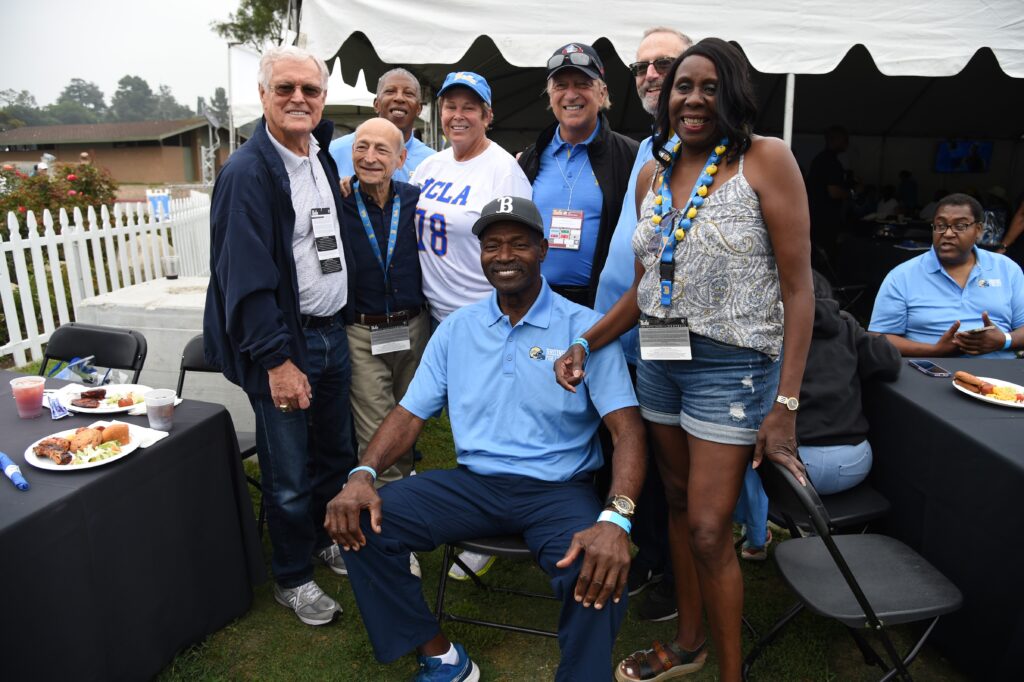
Franklin played for the Bruins for four years, setting a school record for career rushing yards (4,403) along the way. Since his time in Westwood, Franklin had a brief professional playing career with the Green Bay Packers and now works for the Los Angeles Rams in community and external relations.
The next day, UCLA football alumni were invited to watch the UCLA vs. North Carolina Central football game at the Rose Bowl. Attendees toured the newly-opened California High School Hall of Fame and the 1922 Locker Room at the stadium, attended the Wooden Athletic Fund’s Then Now Forever Pregame Tailgate and sat with other participants to watch the Bruins cruise to a 59-7 victory over the Eagles. Notably, UCLA football alumni were recognized on the field at the end of the first quarter and were even personally greeted by Coach Chip Kelly and members of the coaching staff.
“Having the opportunity sit on the committee and see this weekend come together is really rewarding,” said Frank Stephens. “This was a big opportunity to come back and share what everyone has been doing. It’s like reuniting with long-lost brothers. We were on the field battling with each other and to come back has been special.”
In only three seasons with the Bruins, Stephens' tenacious play has still ranked him 10th overall in career tackles (313), 12th in career sacks (19) and 20th in career tackles for a loss (31). Since his time in Westwood, he’s enjoyed playing football professionally, working for UCLA Athletics in both administrative and coaching positions for over 16 years, coaching at the high school and collegiate levels, and other opportunities within restaurant management.

The event’s youngest-attending alumnus, Paco Perez ’19, saw the weekend as a great opportunity to connect with Bruin greats from all generations and see what his future holds after football.
“I was inspired to attend to get inside the heads of UCLA legends and see what life could look like ahead of me. I’ve already been able to take a lot of my lessons learned at UCLA and use them in my career.” Since graduating, Perez has enjoyed careers in both HVAC and aerospace.
Looking ahead, organizers look to continue this reunion, build support for the football program through its alumni and strengthen their gridiron-based camaraderie for years to come.
“To have a Bruins for Life event encompassing all eras is pretty magnificent,” said Bruin quarterback great John Sciarra ʼ76. “I think the next event that we do, we’ll have over 400 participants, and we’ll probably be back within two years. To be able to catch up with teammates and meet players from all generations is a remarkable opportunity.”
John Sciarra was an All-America quarterback and an award-winning scholar while at UCLA from 1972 to 1975. After graduation, he played two years for the British Columbia team in the CFL, then six years in the NFL (1978-1983) for the Philadelphia Eagles, leading the league in punt returns in 1979. Sciarra was inducted into the UCLA Athletics Hall of Fame in 1994. Following his football career, he enjoyed a career in business and retirement services.
Raymond Bell is optimistic for future reunions. “We’re thankful that UCLA came on board to help get this event off the ground. Everyone came forward to get this thing going and move it forward, and we look forward to seeing it grow in the coming years.”
While it is yet to be determined when the next reunion will take place, the alumni of UCLA’s football program will continue to hold on to the memories and friendships made both on and on the field. After all, they are Bruins for life.
***
All UCLA football alumni are welcome to attend practice at the Wasserman Football Center and receive two (2) complimentary tickets to every UCLA Football game at the Rose Bowl. Tickets can be claimed at Will Call outside Gate B at the Rose Bowl. Visit the Bruin Varsity Club for more information.
Recent Articles
- UCLA AAP Alumni Spotlight - Adrianos Facchetti ’01, J.D.
- The Story Behind Jackie Robinson’s 1946 Reintegration of Organized Baseball
- UCLA Prytanean Celebrates Its Centennial
- Building Community: UCLA Disability Alumni Network Focuses on Belonging and Visibility
- Bruins@Work Program Fosters Community
- International Women of Courage
Pilipino Bruins
P
ilipino Bruins have played an essential role in cultivating a vibrant and diverse UCLA community since the University's earliest days. Students, staff and faculty have championed, educated and celebrated the Pilipino experience to create a more inclusive and welcoming environment.
(Note: Pilipino and Filipino are used interchangeably in this article and mean the same thing. Philippine locals use Pilipino because there is no phonetic equivalent to the letter "F" in the Philippine Islands’ indigenous languages.)
Trailblazers
In 1898, America claimed the Philippines as a colony following the Spanish American War. Pilipinos became American nationals who could migrate freely, but were excluded from citizenship. Students who excelled academically were encouraged to become pensionados and study at U.S. universities with the understanding they would return to the Philippines to teach or work in government. In UCLA’s 1927 yearbook, you can find their photos as members of the Filipino Students Association.
Pilipino Americans face unique challenges. The community has developed its own ways of supporting younger generations and ensuring their success. At UCLA, this support takes the form of mentorship, advocacy and sharing the importance of family, food and music.

One early UCLA student, Helen Agcaoili Summers Brown ʼ37, M.A. ’38, was born in Manila and moved with her family to Pasadena. Brown had a 30-year career as a Los Angeles Unified School District teacher and counselor, where she advocated for cultural diversity awareness. With no resources available, she began documenting and preserving Pilipino American stories, building a library of books, pamphlets, newsletters and newspaper clippings. Affectionately called “Auntie Helen," when she retired, she brought her library to the community. The Pilipino American Reading Room and Library (PARRAL) opened in 1985 as the first library in the United States to focus on the Pilipino American experience.
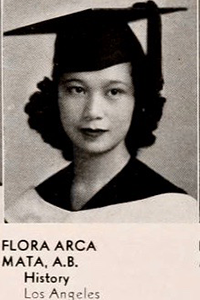
In the early 1900s, many Pilipinos left their homeland in search of better economic opportunities and settled in California’s Central Valley and the Pacific Northwest where they worked in agriculture and faced widespread racism. Flora Arca Mata ʼ40 was an early Bruin who broke barriers as Stockton’s first Asian American full-time teacher. She attended UCLA with the financial help of an older sister who worked as a farmworker. Unable to find a teaching job in California, she and her husband moved to the Philippines. Mata recalled in an interview, “Why is it that America would educate the minority and not give them an opportunity to use this education?” Returning to Stockton after WWII, she was hired as a substitute and then a full-time teacher. Her experience and tenacity paved the way for future generations.
During the turbulent Sixties, a student movement emerged at UCLA as activists envisioned an education that would reflect their cultures and experiences. Off campus, the 1965 Delano Grape Strike revolutionized the farm labor movement in America. At great personal risk, the strike started with 800 Pilipino farmworkers affiliated with the Agricultural Workers Organizing Committee. They were joined by Cesar Chavez and the National Farmworkers Association who called for a grape boycott and what began as a labor dispute became a five-year struggle for civil rights. It wasn’t until 2013 that Governor Jerry Brown signed Assembly Bill 123, requiring the State curriculum to include the contributions of Pilipino Americans to the labor movement.
A generation later, John Delloro ’94, M.A. ’96, taught popular UCLA courses on Asian American and Pacific Islander labor organizing and leadership. A well-known student leader and activist at UCLA, he worked to save Tagalog language classes and was part of the campaign for Pilipino American studies that led to the establishment of the current Pilipino studies minor. He made a profound impact as a co-founder of the Pilipino Workers Center in Los Angeles and became one of the youngest presidents of the Asian Pacific American Labor Alliance, AFL-CIO.
Often you may find family connections among UCLA Pilipino students. Melissa Jamero ʼ11, M.A. ʼ15, is the granddaughter of Herb Jamero and grandniece of Peter Jamero. She is Senior Fund Manager at UCLA Rolfe/Campbell Humanities Group. Peter Jamero, M.S.W. ’57, and Herb Jamero, M.S.W. ʼ58, were trailblazers in higher education, earning master's of social work degrees from the Luskin School of Public Affairs. Peter was raised on a Filipino farmworker camp operated by his parents. He wrote “Growing Up Brown: Memoirs of a Filipino American” and “Vanishing Filipino Americans: The Bridge Generation.”
Meg Thornton received the 2012 UCLA Pilipino Alumni Association Royal Morales Community Achievement Award. She is the student and community engagement coordinator for the Asian American Studies Center. She says, “Folks like Uncle Pete were instrumental in building a social services network of Asian Americans to do advocacy work at the local state and the national level. They educated the policymakers and organized for more funding.”
Student Advocacy
Student activists transformed higher education, demanding courses that would reflect the experiences of underrecognized communities. Inspired by the student strike at San Francisco State in 1968 that won the first College of Ethnic Studies in the U.S., UCLA students advocated for the establishment of the Asian American Studies Center in 1969, along with the Bunche Center, Chicano Studies Research Center and American Indian Studies Center. The Asian American Studies Center is one of the longest-running research centers of its kind in the country.
In commemoration of its 50th anniversary, the Center is recording oral histories with some of its 50 community founders. The Collective Memories Project will serve as a major resource and historical document. Jesse Quinsaat, J.D. ʼ76, was a student activist who compiled the groundbreaking “Letters in Exile; An Introductory Reader on the History of Pilipinos in America,” the result of a need among UCLA Pilipino students to investigate their little-known history.

This era also saw the founding of UCLA’s Mother Organizations in response to the underrepresentation of students from historically marginalized communities. Samahang Pilipino was founded in 1972 to focus on the needs of Pilipino students. Florante Peter Ibanez, M.L.I.S., M.A. ʼ06, helped establish the group while working at the UCLA Asian American Studies Center. Ibanez is a member of the “Bridge generation” that followed the early immigrants, called Manongs. Samahang Pilipino’s song “One Family” celebrates the bonds between generations.
Samahang Pilipino began advocating for more Pilipino representation at UCLA. Casimiro U. Tolentino ʼ72, J.D. ʼ75, was a law school student and one of Samahang’s founding members. In his efforts to learn more about Pilipino history, he created and taught a class called “The Pilipino American Experience in California.”
Samahang Pilipino Cultural Night (SPCN) has shared the cultural experiences of Pilipino and Pilipino Americans since 1978. Using dance and dramatic role play, the event has also been an opportunity to address the importance of Pilipino representation on campus. In a landmark accomplishment that paved the way for others, SPCN was the first student-run cultural night to perform at UCLA's Royce Hall.
Students formed the Pilipino Recruitment and Enrichment Project (PREP) in 1979 to address barriers to higher education. UCLA students use their own experiences and insight to better equip young people for college success.
Breaking Barriers in Athletics
Raymond Townsend ʼ78 overcame stereotypes to become the first Pilipino American in the NBA. Part of legendary Coach John Wooden's 1975 UCLA national championship basketball team, he was a first-round pick by the Golden State Warriors in the 1978 NBA draft, where he helped establish the NBA’s Pilipino Heritage Night, which continues to be celebrated today.

Decades later, Kyla Ross ʼ21 served as an undergraduate assistant coach for UCLA gymnastics. Ross made history as the first female gymnast ever to win an Olympic, World and NCAA Championship and the only gymnast in UCLA history to win all four individual NCAA event titles. A member of the 2012 "Fierce Five" Olympic team, she has received 22 perfect 10s.
Today’s Pilipino students are using their success to make a difference and continuing the tradition of lifting up the next generation. Devon Mallory ʼ21 broke barriers for underrepresented dancers as the first male member of the UCLA Dance Team. A first-generation Pilipino Black American, Mallory is now teaching others as the coordinator and lead instructor for the Las Vegas Raiderettes.
Educating the Youth
An engaging and illuminating account of Pilipino American history was shared in the popular "Pilipino American Experience" course by community scholar and activist Royal Morales from 1983 to 1996. Affectionately known as "Uncle Roy," he turned his classes into events as he brought history to life through stories, music and popular weekend field trips.
Morales addressed problems among Pilipino youth and co-founded Search to Involve Pilipino Americans (SIPA). UCLA Pilipino alumni pay tribute to his legacy with the annual Royal Morales Community Achievement Award, presented to those who contribute to improving the UCLA Pilipino community.

Around this time in 1985, Helen Brown was opening her library and establishing the Pamana Foundation, a nonprofit designed to support the library and its activities. Among the incorporators were Brown, Tania Azores, M.A., Ph.D. ’87, the first at UCLA to teach the Tagalog language in 1992, and Brad Bagasao ʼ73 and Dr. Herminia Meñez Coben, who taught Pilipino Folklore and Society.
Tagalog classes were scheduled to be discontinued in the late 1990s until students stepped in to advocate for their importance. UCLA now offers both lower and upper division classes and a minor in Asian languages. The efforts of students, staff and faculty have been vital to many milestones, including the 2009 addition of the Pilipino studies concentration.
Outreach, Retention and Support
In 1988, in a setback for the UCLA Pilipino community, the University determined that Pilipinos had achieved “parity,” with the rate of incoming freshmen matching the public high school graduation rate. This decision to exclude Pilipinos from affirmative action had a lasting impact and resulted in a 31 percent drop in enrollment.
Dismayed by the University’s decision, UCLA’s Pilipino community responded by creating their own outreach and retention programs. Samahang Pilipino Education and Retention (SPEAR) emphasized the need for “bayanihan,” students supporting other students. In 2000, as enrollment among Pilipino students continued to decrease, Samahang Pilipino Advancing Community Empowerment (SPACE) was established to promote access to higher education through peer tutoring, internships, conferences and field trips. In 2009, the Pilipino Council of Mabuhay Collective at UCLA brought the many organizations together.
To strengthen the bonds formed in college, UCLA’s Pilipino alumni, led by Corky Pasquil ’91, formed the UCLA Pilipino Alumni Association (PAA). Pilipino alumni have built a community of Bruins to encourage academic and professional development and support students through mentorship, scholarship and networking.
To invest in Pilipino students, the UCLA Pilipino Alumni Association awards the Lovell Sevilla Scholarship to a current Bruin who is working to improve the lives of others. PAA established more than a $200,000 scholarship endowment fund for deserving UCLA students. The scholarship honors Lovell Sevilla ʼ89, a counselor at the UCLA Honors program for over two decades and UCLA PAA Scholarship Director from 1995 to 2000, where she grew the program from one $500 scholarship a year to 10 or more scholarships totaling over $10,000 annually.
PAA also hosts career panels, networking mixers, mentoring opportunities and social events to make an investment in professional development and personal growth. Through engaging with students, staff, faculty and alumni, they are building connections to create lasting change.

A.R. Mateo '07 is a UCLA Pilipino Alumni Association Board member, currently serving as their scholarship director. As a student, he participated in Spring Sing, UCLA Madrigals, UCLA Chorale and the Graduate Mentor Program. Last year, A.R. helped organize the first ever UCLA Basketball Pilipino Heritage Night. He says, “There's a sense of family and generations within the community. When you have representation it means a lot.” A portion of every ticket sold went to the UCLA Pilipino Alumni Association for scholarship support.
His brother, Derek Mateo ʼ96, M.A. ʼ99, is a double Bruin and was among the first to graduate with an Asian American studies major. He co-founded the LCC Theatre Company with Randall Park ʼ97 and David Lee in 1995; more than 20 years later, it is the largest Asian American college theater group in the country. Derek, an active member of PAA, says, “We are one of the largest non-white communities in California, and we are an at-risk community. We are trying to support our students so that they can succeed.”
Pilipinos in Politics
Although there are more than four million Filipino Americans in the United States and 1.6 million in California, they have been underrepresented in politics, both local and national. Mark Pulido ʼ95 was the first Pilipino American to be elected student body president. With a bachelor's degree in history and Asian American studies, the former president of Samahang Pilipino went on to be elected the first Pilipino American mayor of Cerritos, California, in 2014.

In 2004, Ben Cayetano '68 became governor of Hawaii, the first Pilipino American to hold that title in any U.S. state. As lieutenant governor and then governor, Cayetano improved Hawaii’s educational system, including establishing a first-of-its-kind after-school program for elementary school latchkey children, based on his own childhood experience.
Jenny Punsalan Delwood ʼ06 once served as UCLA’s student body president and led a successful effort to incorporate holistic review into UCLA admissions policies. She currently serves as the deputy chief of staff for Los Angeles Mayor Karen Bass, where she oversees constituent services, strategy, budget and more.
The Stories Continue
The Department of Asian American Studies at UCLA was founded in 2004 and has become a national leader in promoting the study of the diverse experiences of Asian and Pacific Islander Americans. The department is the largest of its kind in the country with more than 100 majors and minors, and offers over 70 Asian American studies courses.
The Asian American Studies Center is creating an open-access, comprehensive record of the Asian American and Pacific Islander experience. The AAPI Multimedia Textbook recently received a $10 million grant from the California Legislature. UCLA historian, Jean-Paul R. Contreras deGuzman, M.A. ʼ07, Ph.D. ʼ14, is among those working on the project. A past recipient of the UCLA Distinguished Teaching Award, he founded the Tuna Canyon Detention Station Coalition to preserve the history of World War II incarceration of Japanese immigrants.
Building on a century of Pilipino experience and advocacy at UCLA, the Asian American Studies department launched the Pilipino studies minor in 2020. Lucy Mae San Pablo Burns, associate professor of Asian American studies, has been advocating for its creation and is holding informational sessions on the new program. Burns told UCLA, “We have yet to imagine the community that the minor will bring together. I’m excited to see how students are going to transform the minor and what they are going to do in it.”
***
While this is the first Connect article on the contributions of Pilipino Bruins, it will not be the last. Share your thoughts or recommendations of other Pilipino Bruins or organizations making a difference to connectfeedback@alumni.ucla.edu.
For more information on the Pilipino Alumni Association or to support their scholarship efforts, visit https://alumni.ucla.edu/pilipino-alumni-association.
Special thanks to A.R. Mateo, Derek Mateo, Justine Ramos ‘20 and Meg Thornton for their time in sharing their knowledge with us for this article.
Recent Articles
- UCLA AAP Alumni Spotlight - Adrianos Facchetti ’01, J.D.
- The Story Behind Jackie Robinson’s 1946 Reintegration of Organized Baseball
- UCLA Prytanean Celebrates Its Centennial
- Building Community: UCLA Disability Alumni Network Focuses on Belonging and Visibility
- Bruins@Work Program Fosters Community
- International Women of Courage
Diversity Digest Spotlight - Bruins in Sustainability: The Intersectional Environmentalism of Nisha Bansal '20
Cory Rosas ’16, Director for UCLA Alumni Diversity Programs & Initiatives (DPI) connected with recent graduate and featured speaker for DPI’s upcoming program Mixin’ It Up: Empowering Communities for a Sustainable Tomorrow, a program that will bring alumni and students together to engage in conversation around intersectionality and sustainability inspired by the 2023-24 UCLA Common Experience selection “Intersectional Environmentalist,” to learn more about her experience at UCLA and how intersectionality has impacted her work in, and passion for, sustainability.
N
isha Bansal is a recent graduate who majored in environmental science and public affairs at UCLA where she worked for UCLA Housing’s sustainability team as a sustainability associate on The Hill and was involved with the Undergraduate Students Association Council (USAC) facilities commission focused on underutilized campus spaces. Following graduation, Bansal began working as an environmental science consultant with a private company and has recently transitioned to working with Partnership for Growth LA (PFGLA), an intersectional community development corporation that seeks to address issues such as food access, job and economic security, primary education support, and workforce development in a manner that builds community ownership.

Bansal credits her South Asian background as inspiration for her investment and interest in environmental issues from a young age, “My parents shaped a lot of my early environmental and conservationist thinking. They immigrated to the United States from India with very little, which instilled in me the importance of making the best use of our resources. Culturally, we don’t always think of it as being environmentally conscious, it’s more so about embodying a way of living that happens to be more connected to nature. As a kid, my mom was always growing fruits and vegetables in our backyard, and family road trips to national parks were a summer staple.”
Seeing connections between her own South Asian culture, particularly as it relates to food and the community built around food, and her coursework at UCLA drove her to seek out professional opportunities in sustainable food systems. As the program manager for Freedom Farms, a program tasked with creating a network of local urban farms to offer more food access and healthy food focused education to Los Angeles community members, particularly South and West LA community members experiencing food insecurity, Bansal has been able to fulfill her passion for sustainable food systems while supporting local communities.
"The goal of Freedom Farms is to establish 37 urban farms or community gardens in the city of LA in the next 3 years. I am interested in how we can make our food systems more local and community-centric, so that we can engage the folks in our city who have historically lacked access to fresh produce and to equitable, sustainable spaces like this.”
A recent demographic profile conducted by the City of Los Angeles Department of City Planning tells us that South LA is a multicultural community with 64 percent of residents identifying as Hispanic or Latino and 25 percent identifying as Black or African American. South LA is also a known food desert, places where there is a lack of access to fresh foods and a lack of supermarkets available to serve the surrounding population, making the work of Freedom Farms critical in providing access to fresh produce.
“My goal is to establish a program that is self-sustaining and can be replicated across other cities. I’m looking forward to the impact that this program will have, not just in terms of improving food access, but also in shifting perspectives around food sovereignty and what it means to be connected to what’s on your plate.”
Bansal will be a featured speaker for UCLA Alumni Diversity Programs & Initiatives’ upcoming program Mixin’ It Up: Empowering Communities for a Sustainable Tomorrow, a program that will bring alumni and students together to engage in conversation around intersectionality and sustainability inspired by the 2023-24 UCLA Common Experience selection “Intersectional Environmentalist.”
You can learn more about Mixin’ It Up and other Diversity Programs & Initiatives signature programs by visiting our website.
Recent Articles
- UCLA AAP Alumni Spotlight - Adrianos Facchetti ’01, J.D.
- The Story Behind Jackie Robinson’s 1946 Reintegration of Organized Baseball
- UCLA Prytanean Celebrates Its Centennial
- Building Community: UCLA Disability Alumni Network Focuses on Belonging and Visibility
- Bruins@Work Program Fosters Community
UCLA Epicenter Connects Students With Businesses for a Win-Win
T
his past summer, the UCLA Alumni Association became the new home for the UCLA Epicenter, further bolstering the Association's services to the UCLA community.
Founded in 2017, the Epicenter’s mission is “to augment students’ academic curriculum with project-based experiential learning in collaboration with industry partners.”

As Executive Director Raffi Simonian ’85 sees it, “The whole purpose of the Epicenter is to connect education to a career. They may earn a degree, but many do not know what to do with it. That’s where we come in.”
One way the Epicenter accomplishes this is through an intensive 10-week project-based experiential learning program, Innovation Challenge. This program is conducted in partnership with a variety of industries, ranging from tech to nonprofit organizations. To date, the Epicenter has partnered with and helped organizations such as Amazon Web Services, Slalom, Harman International and LA28 (the nonprofit committee planning the 2028 Summer Olympic and Paralympic Games).
By partnering with these organizations, UCLA students are then provided opportunities to help industry leaders take on everyday challenges facing businesses today.
For example, to combat the concern of organizers about the declining viewership of the Olympic Games, a group of students designed the MedalUp app. Aimed at younger global audiences, it provides gamified experiences and competitions within close communities, allowing users to collect points and earn coupons and rewards from corporate sponsors. This idea won gold at the Spring 2023 Innovation Challenge and the product is now with Amazon Web Services, which will take it from concept to a fully developed product.

“That’s a big incentive for organizations to partner with us,” said Simonian. “We help solve their problem. Whether it's a social impact problem or other business problems, our students can provide feedback from their perspectives, increase engagement from other students, and even help develop actual products or services. We provide invaluable experience and exposure to connections and careers, and can even help students have a job lined up following graduation.”
With the UCLA Alumni Association serving as the new home for the Epicenter, the opportunities to connect students with alumni have only expanded, adding to the Association’s extensive services through its Alumni Career Engagement office. The Epicenter now has a vast offering of pre-existing infrastructure resources to take advantage of, and as a result, is able to further service both current UCLA students and alumni for years to come.
“We want to connect alumni back to their alma mater, and part of that means making sure students can be hired by businesses run by Bruins,” said Simonian. “Our 10-week program is almost like a 10-week interview for some of our participants. We know our alumni may have business problems, and our current students may be able to solve them. These students are not only their future customers, but more importantly, they’re our future leaders.
“Through the Epicenter, alumni can help give back to the students. They [alumni] can either become coaches, speakers or mentors. Instead of reaching out to consulting firms to learn how to connect with younger generations, alumni and their businesses have bright UCLA students as a resource. They're helping the students gain experience. They're giving back to their school. And they're getting a solution to their business problem. It’s a win-win for everybody.”
For more information, including how to get involved, please visit the UCLA Epicenter website.
Recent Articles
- UCLA AAP Alumni Spotlight - Adrianos Facchetti ’01, J.D.
- The Story Behind Jackie Robinson’s 1946 Reintegration of Organized Baseball
- UCLA Prytanean Celebrates Its Centennial
- Building Community: UCLA Disability Alumni Network Focuses on Belonging and Visibility
- Bruins@Work Program Fosters Community
- International Women of Courage
Becoming a Hispanic-Serving Institution With the Help of Latino Alumni
Photo Credit: Judy Baca ©2012, Gente del Maiz
W
ith an unwavering commitment to its role as a public institution, UCLA's message is clear: building a campus that embraces and celebrates its Latinx communities isn't just a goal, but an imperative.
Chancellor Block recently announced the University's intention to become a Hispanic-Serving Institution (HSI) by 2025, in an effort to strengthen access and expand opportunities for UCLA’s Latino community. He shared, “As a public institution, UCLA has a heightened obligation to ensure that we are doing all we can to make sure this is a campus that truly welcomes members of our Latinx communities, honors their intellectual and cultural contributions and supports their success.”
HSI designation would be an important step in a movement that started in the Civil Rights era to increase Latino enrollment and expand educational opportunities. Because of this activism, the Chicano Studies Research Center was established in 1969 to foster research and study of Chicano/Latino culture, history and contributions.
In 1993, students, faculty and community members engaged in protests, including a two-week hunger strike, to advocate for the establishment of Chicana and Chicano Studies at UCLA. In the ʼ90s, the Regents of the University of California passed SP-1 and SP-2, which was followed by California Proposition 209, to prohibit preferential treatment on the basis of race, sex, color, ethnicity or national origin in higher education. And recently, the Supreme Court ended higher education race-conscious admissions.

Today, Latinos make up 40% of California’s population, the state’s largest ethnic group. This dynamic and diverse community is a major force in California and the nation. Hispanic and Latino students have historically been underrepresented in higher education, and their success is intricately linked to California’s future prosperity. However, many Latino students have faced systemic barriers to a high-quality education, and their high school graduation rate is below the national average.
HSI designation requires new strategies and broad community-based efforts to support and empower California’s future Latinx leaders. The UCLA Latino Alumni Association (ULAA) are a passionate group of Bruin volunteers who are committed to supporting UCLA's Latino alumni, students and friends, and are an active partner in ensuring UCLA reaches this ambitious goal. One of UCLA’s fastest growing alumni groups; they were named as UCLA Alumni’s Network of the Year in 2019 for their exceptional contributions to the UCLA community.

Cesar Pacheco ʼ18, ULAA president and a commercial real estate professional, recognizes the group's unique position to bring people together. He says, “We’re a conduit for change. HSI is a University-wide movement, stretching across campus. We’re connecting with decision makers to increase our engagement and fundraising efforts.”
To be federally designated an HSI, 25% of students at the university must identify as Latinx. UCLA is currently at 22.2% Latino enrollment, as of fall 2022. With HSI designation, UCLA would receive federal grants to enhance educational programs for Latinx students, to the benefit of the entire campus community. HSI status has also been shown to enhance campus relationships among students, improve academic performance and raise graduation rates. But, as Chancellor Block reminds the community, enrolling greater numbers of Latinx students is not enough. He says, “UCLA also must enable these students to succeed by investing in academic and support infrastructure dedicated to their learning and growth.”

HSI designation requires not only meeting the enrollment numbers, but other requirements as well. Andres Snaider ‘88, ULAA university relations chair, says, “HSI is a rallying call. It’s a huge challenge, but it’s a huge opportunity as well. It emphasizes the priority of directing attention towards Latino students in all their dimensions ꟷ and how the University can best meet their needs.”
Snaider was a first-generation student and commuter who worked his way through UCLA. After graduating from law school, he became a business leader and entrepreneur. Recently, he successfully sold a company he had founded. The achievement presented an opportunity to give back to his community. He says, “I was able to make a difference in things I care about. My time at UCLA was a transformative experience for me.”
Snaider says, “It’s really hard to think of another organization [like ULAA] that has that kind of reach and that kind of commonality. It’s a huge network and there’s amazing potential to reach and make a difference for many people. What we do is help those students feel really connected to UCLA and all it has to offer.”
To invest in Latinx students, ULAA hosts career panels, networking and mentoring opportunities. ULAA’s Orgulloso mentorship program matches alumni with ULAA scholarship recipients and other Latinx students for one year, to help with professional development and personal growth. ULAA alumni share stories and provide insight from their personal experiences. Through engagement, they celebrate students and invest in the future generations. ULAA’s motto, "Hecho at UCLA," (made at UCLA) encapsulates the power of the college experience to create lasting change.

One example of a Bruin family making a difference in the lives of others are the Jaquez family — UCLA basketball players Jaime Jaquez Jr. and Gabriela Jaquez are the first brother and sister to make it to the NCAA Sweet Sixteen for the same school in the same season. This fall, Jaime will make his NBA debut, playing for the Miami Heat. The siblings, their parents and grandparents have been strong proponents of public education, academic achievement and personal excellence. The Jaquez Family Scholarship Fund will provide financial support for incoming freshman and transfer students at UCLA, and was launched at a recent event hosted by the UCLA Alumni Association, ULAA and UCLA Athletics.
Since it was founded in 1989, ULAA has awarded $1.5 million in scholarships to more than 800 students. ULAA president, Cesar Pacheco was able to attend UCLA with the help of financial support. He says the goal of providing scholarships to others unites alumni with a common cause. “I received a Blue and Gold Scholarship that made it possible for me to graduate from UCLA. Had it not been for those donors, I wouldn’t have been able to. Now I’m able to make a difference for other students financially and through volunteering my time and leadership.”
In 2022-23, ULAA raised a record-breaking $241,000, bringing them closer to their fundraising goal of a $1 million scholarship endowment. This included $36,130 from a successful Spark crowdfunding campaign. The board recently approved an ambitious four-year plan to distribute approximately $125,000 to 41 students, increasing their reach and impact.

Jennifer Mora ʼ96 is vice president of ULAA. As a professional fundraiser, the work of raising scholarship support for UCLA’s Latinx students is close to her heart. Mora entered UCLA as a first-generation, non-traditional transfer student, who saw college as a transaction in her pursuit of a career. However, UCLA was more than a stepping stone on her career path. She says, “My experience taught me I was worthy and capable of a quality education. UCLA instilled in me a love for learning, so I describe myself as a lifetime learner. The opportunity to give back seemed the natural thing to do. There is nothing more exciting than to be able to help the organization with fundraising for scholarships for current UCLA students.”
UCLA’s HSI status will benefit the entire campus community. Denise Pacheco, M.A. ’04, Ph.D. ’11, is senior director of Diversity Programs and Initiatives for UCLA Alumni Affairs. She says, “The pursuit of becoming an HSI does not diminish UCLA’s equally important commitment to increasing representation for all students. When we become an HSI, it provides an infrastructure that will support the success of all students, and especially communities who are not appropriately represented on the campus. It's essential to emphasize that equity is about identifying what different communities need and how that contributes to the success of the whole.”
Looking toward the future, ULAA board members are enthusiastic about UCLA receiving HSI designation. Cesar Pacheco says, “The fact that the Chancellor is taking steps to become an HSI is indicative of the progress that’s already happening at UCLA. It is a bold move and requires real action. Through their action and our support it will happen for the betterment of the UCLA community and for Los Angeles.”
ULAA is continuing to build a strong presence on campus and beyond. Mora looks at the big picture through the frame of her personal experience. “It's exciting for me, because UCLA changed my life. It changed the trajectory of my family legacy and I believe everyone should have that opportunity. I think about all my family members who didn't have an opportunity to go to college, and the thought of being able to provide more access is long overdue. And I'm here to see it happen.”
As the culmination of their efforts, the HSI task force formed by Chancellor Block published Cultivating the Seeds of Change: Becoming a Hispanic-Serving Institution, which provides more information about the history and process, as well as seven recommendations for achieving federal HSI designation.
More information can also be found by watching EmPower Hour: UCLA Efforts to Become a Hispanic-Serving Institution, hosted by Diversity Programs and Initiatives under UCLA Alumni Affairs.
***
Alumni who are interested in joining a committee, attending an event, making a donation, becoming a mentor ꟷ or any of the many ways UCLA Latino Alumni Association members are making a difference for UCLA students ꟷ can find more information here.
Recent Articles
- UCLA AAP Alumni Spotlight - Adrianos Facchetti ’01, J.D.
- The Story Behind Jackie Robinson’s 1946 Reintegration of Organized Baseball
- UCLA Prytanean Celebrates Its Centennial
- Building Community: UCLA Disability Alumni Network Focuses on Belonging and Visibility
- Bruins@Work Program Fosters Community
- International Women of Courage
Bruin-Owned Restaurants Part 3
A
s the summer sizzles, so should your food. We've compiled for you the third edition of select Bruin culinary businesses to tempt your taste buds and lure you to dine out in support of these UCLA alumni. Warning: the following images will make you hungry.
Contigo Latin Kitchen

Owner/Founder: Deborah Tenino ʼ92
Phone: 520-299-1540
Location: 3770 E. Sunrise Dr., Tucson, AZ 85718
Yelp Rating: 4 stars
Website: eatatcontigo.com
Social: @contigolatinkitchen
About:
Contigo Latin Kitchen offers the best heirloom recipes in South America and Spain. Our menu combines vibrant flavors with the freshest ingredients available and our complex, multi-layered flavors leave diners surprised, delighted and always wanting more.
Review:
“We had a great time at Contigo Latin Kitchen. We sampled many of the tapas and my friend and I had the fish tacos which are so good, with the fish crisped to perfection. They are pet friendly and were so lovely to our little 5 lb Pomeranian Finley! We had an outdoor pet-friendly table on the patio that has a great view of the mountains on one side and a hotel, plus some people golfing, on the other. Service was lovely and friendly and prompt.” - V. V.
Blue Plate Oysterette

Owner/Founder: Jennifer Rush ʼ88
Phone: 310-576-3474
Location: 1355 Ocean Ave., Santa Monica, CA 90401
Yelp Rating: 4 stars
Website: blueplateoysterette.com
Social: @blueplateoysterette
About:
Having spent many years on the East Coast enjoying lobster rolls and clam shacks, Jenny Rush longed for this food in her hometown Santa Monica. BPO is committed to sourcing the best seafood from fishermen, purveyors and oyster farms around the world. Buying directly from fishermen and picking up daily at LAX ensures the best ocean-to-table experience.
Review:
“This was so good! The yellow tail sashimi with the green sauce was a perfect Asian-Baja mix, the touro sashimi basically melted in your mouth (and it didn't taste like metal!) and the holy trinity temaki was like a trio of flavors that basically took their time dancing on your tongue, acts one after the other, back to back, ‘til your head explodes from how genius an idea it is to have all these in one beautiful photogenic open face roll.” - Bry L.
Dulan's On Crenshaw

Owner/Founder: Greg Dulan (UCLA Extension)
Phone: 323-296-3034
Location: 4859 Crenshaw Blvd., Los Angeles, CA 90043
Yelp Rating: 4 stars
Website: facebook.com/DulansOnCrenshaw
Social: @dulansoncrenshaw
About:
An iconic restaurant that first debuted in the '90s, Dulan's on Crenshaw Soul Food Kitchen is the home you can turn to for hearty meals, friendly staff and a strong sense of community. With our large portions, you can eat here for lunch and still have leftovers for dinner – that is if you can resist not eating every last bite. If you're planning an event and get a craving for our food, contact us for catering. We're always happy to know you enjoy the dishes we create and we can't wait to see you the next time you stop by for a taste of soul.
Review:
“The food is fresh and reminds me of the way my mom would cook when I was young. The staff was so professional and kind. And I really liked how the owner greeted my family and me to ask us if everything was okay. Great hospitality which is missing in so many places. So I will give this place a 10+ for the food and service." - Stephanie D.
n/naka

Owner/Founder: Carole Iida-Nakayama ʼ00
Phone: 310-836-6252
Location: 3455 Overland Ave., Los Angeles, CA 90034
Yelp Rating: 4.5 stars
Website: n-naka.com
Social: @nnakarestaurant
About:
The whole of a meal is as important as the sum of its parts. At n/naka, we are devoted to providing a unique and satisfying dining experience through our interpretation of kaiseki. This traditional Japanese culinary art form reflects the ever-changing rhythms of the earth by taking the freshest seasonal ingredients and presenting them in their most natural states. Using the very best ingredients we have access to is true kaiseki; we proudly serve vegetables from our organic garden built and maintained by our friends at Farmscape Gardens. We take great care in preparing a beautiful plate and believe that the more involvement we put into a meal – no shortcuts – the more connected we feel to the food and your experience of it. Through a meaningful balance of both traditional and modern techniques, Chef Niki Nakayama is committed to creating a meal that will engage your attention; it’s about enjoying the moment, the current offerings of the season, and ultimately, the food in front of you.
Review:
“I finally secured a spot to try n/naka! They've held two Michelin stars since 2019, and it was rated as one of the essential restaurants in L.A. It's totally worth the hype! The hospitality was professional and exceptional. Their attention to detail was amazing. Our main server Emily explained each dish thoroughly and shared a lot of her knowledge about sake, the local food scene and food in general with us. It made us feel so comfortable and at ease, which was a critical part of the kaiseki experience!” - Ya Y.
Echo

Owner/Founder: Matthias Gloppe Ext. Cert. ʼ07
Phone: +33-1-40-26-53-21
Location: 95 rue d'Aboukir, 75002 Paris, France
Yelp Rating: 5 stars
Website: echo-paris.com
Social: @echo.paris
About:
Silver Lake? Almost, but not quite. Echo is a “deli Californien” on Rue d’Aboukir, with food by Mailea Weger, an alumna of Gjusta and Gjelina in Los Angeles, and one of the latest signposts of the California dreaming that has seized Paris. They serve California-inspired burgers and wraps, plus desserts and breakfast, in a bright, casual space.
Review:
“Muah! Echo is my favorite café in Paris. I love the little hidden neighborhood it is tucked away into. It definitely has a Silver Lake vibe which reminded me greatly of home. The food is very delicate and the flavors are immaculate. The coffee was delicious and the staff was very informative and kind.” - Natalie L.
Hayato

Owner/Founder: Brandon Hayato Go ʼ00
Phone: 213-395-0607
Location: 1320 E 7th St., Suite 126, Los Angeles, CA 90021
Yelp Rating: 4.5 stars
Website: hayatorestaurant.com
Social: @hayatorestaurant
About:
Hayato is a place where we have the responsibility of showcasing the work of master craftspeople in many fields. Potters, fishmongers, carpenters, kimono makers, tea masters, sake brewers and countless other artisans are all part of the team to help us create a dining experience. Just as we have a duty to our guests, we also have a duty to those who devote their lives to the crafts that are the building blocks of a Japanese restaurant.
Review:
“I love love love love loooooovveee! My ultimate best *FAVE* in L.A.!!! I can't believe I never wrote a review other than the bento box. So unfortunately, he doesn't make those anymore but the dinner is amazeballs! Not only is the food incredible but the experience is awesome as well. Unlike a lot of other tasting menus, you will for sure leave stuffed. Every dish is beyond fresh and delicate. Definitely lives up to their Michelin 2 Star and I hope they'll get 3 soon.” - Helz M.
Toscana Brentwood

Co-Owner/Founder: Michael Gordon ʼ61
Phone: 310-820-2448
Location: 11633 San Vicente Blvd., Suite 100A, Los Angeles, CA 90049
Yelp Rating: 4 stars
Website: toscanabrentwood.com
Social: @toscanabrentwood
About:
Toscana is a neighborhood trattoria that celebrates the rustic, authentic, farm-to-table flavors of Northern Italy. For more than 30 years, we have stood tall on a corner in Brentwood and set the backdrop for special meals shared by generations of families, friends and neighbors, as well as elites from the worlds of entertainment, sports, fashion and our valued guests from around the globe. This is a place where every guest, whether famous or not, is treated like they’re a part of our family.
Review:
“Came here for dinner last Thursday night with my sister. We got reservations less than 24 hours before, luckily for 7:30 pm. They were definitely busy but we were seated on time. We shared a special salad that was arugula, peaches, goat cheese and endive. It was very good. My sister got a fish which I believe was a branzino, which she liked. I got the black truffle pizza, which was amazing!!! I hadn't been here in probably 10 years. I barely go to Brentwood for dinner, but I definitely would come back and I highly recommend coming for a date night or a night out!” - Joya E.
Verde

Owner/Founder: Maris Manzano Ext. Cert. ʼ03
Phone: 808-320-7088
Location: 4454 Nuhou St., Suite 501, Lihue, HI 96766
Yelp Rating: 4 stars
Website: verdehawaii.com
Social: @verdehawaii
About:
Verde Restaurant continually strives to celebrate the essence of local food and a vibrant community valuing the support of local farmers and businesses. We opened our original location in Kapaa back in 2008 and eventually moved to Lihue in 2017. We aim to practice being green by using locally grown, sustainable ingredients, supporting local businesses and using eco-friendly takeout products. We are also proud to use local Kauai beef and antibiotic-free, hormone-free chicken and pork. Most recently, we have been using tortillas as our platform to showcase what we can grow locally and sustainably here in Hawaii, such as ulu breadfruit tortillas and sweet purple potato haupia tortillas.
Review:
“So Kauai apparently has excellent Mexican restaurants, and Verde has got to be in the top 5. Located in one of the more modern commercial developments on Kauai, it feels like a place you'd find in a mainland shopping center, but the food is anything but run-of-the-mill. The mahi-mahi furikake tacos were the best fish tacos I've had, from the furikake tortillas to the cilantro-furikake mahi-mahi with their signature aioli and unagi sauce. I wanted to try the ube horchata, but they said they ran out because it had been so hot that day. Will have to go back to try!” - Therese H.
Love and Salt

Co-Founder: Sylvie Gabriele ʼ92
Phone: 310-545-5252
Location: 317 Manhattan Beach Blvd., Manhattan Beach, CA 90266
Yelp Rating: 4 stars
Website: loveandsaltla.com
Social: @loveandsaltla
About:
Love & Salt is a story that begins with Café Pierre, a restaurant birthed by Guy Gabriele in 1977 to bring a taste of France to Los Angeles’ South Bay. While Café Pierre was a beloved part of the community for nearly 37 years, in 2014, Guy and his daughter Sylvie Gabriele, now the owner of Love & Salt, closed the restaurant to bring new life to the iconic space. Love & Salt is a philosophy: that food needs only two ingredients to be great. It’s a sensibility that informs the feeling in the restaurant and the dishes on the menu — Italian-inspired with Southern California soul. An approachable wine list and classic cocktail program similarly reflect the vibrant SoCal setting of the restaurant, located just steps from the Manhattan Beach pier.
Review:
“We came to Love and Salt got the first time tonight and I can't say enough about how great it is. First off, serving staff was oh-so-nice and patient with my 1-year-old daughter who threw up and then dumped a plate of pasta on the floor. Not only were they friendly but so attentive and helpful to us parents. The food was all very good. My wife loved her halibut, the mussels I had were amazing and the pasta bolognese was very good. There was a problem with my mom's pasta not being warm enough but the staff made it right. Great restaurant.” - Brian P.
Angelini Osteria

Owner/Co-Founder: Elizabeth Angelini ʼ79
Phone: 323-297-0070
Location: 7313 Beverly Blvd., Los Angeles, CA 90036
Yelp Rating: 4 stars
Website: angelinibeverly.com
Social: @angeliniosteria
About:
Gino Angelini became the youngest chef in the region’s top hotels and restaurants where his fame continued to rise. During his tenure overseas, Gino co-founded Italy’s most popular gourmet magazine, served as president of the Association of Chefs Romagnoli and was appointed the Italian Vice Commissioner of the Euro-Toques International, an organization committed to safeguarding and promoting quality and authentic food within the European network. In October 2001, he opened Angelini Osteria, in the heart of Los Angeles. Since its opening, Angelini Osteria has become known as simply everyone’s favorite Italian restaurant in Los Angeles, winning over the city with unassuming and authentic dishes in a warm, intimate setting. Gino has grown his expanding culinary portfolio into the Angelini Restaurant Group alongside his wife and business partner Elizabeth Angelini.
Review:
“It was my first time visiting, and I thanked my friend who recommended this place for me! everything was delicious - I was enjoying them so much, forgot to take pictures – and the dessert, Affogato, was the best I've ever had. They make their own olive oil and it's the best. I got a bottle to take home. The servers were fast and kind, explained the menu very nicely; and the owner, who is actually serving the table with the rest of the crew, was very, very kind. Thank you!” - Evie J.
***
To submit a Bruin-owned business for future consideration, please send a note to connectfeedback@alumni.ucla.edu.
All Bruin-Owned Business Articles
- Bruin-Owned Restaurants Part 3
- Bruin-Owned Businesses: Fitness and Wellness 2
- Bruin-Owned Photography Part Two
- Bruin-Owned Businesses: Gift Ideas 2
- Bruin-Owned Photography
- Bruin-Owned Art Galleries and Collectives
- Bruin-Owned Restaurants Part 2
- Bruin-Owned Gift Ideas
- Bruin-Owned Fitness and Wellness Businesses
- Bruin-Owned Event-Planning Businesses
- Bruin-Owned Apparel Businesses
- Bruin-Owned Beverage Businesses
- Bruin-Owned Restaurants
Bruin-Owned Articles
- Bruin-Owned Restaurants Part 4

- Bruin-Led Businesses: Nonprofits

- Books by Bruins: Summer Reading

- Books by Bruins - LGBTQ Stories

- Books by Bruins - Health and Wellness

- Bruin-Owned Businesses: Tech

- Books by Bruins - Stories About Women

- Books by Bruins - L.A. Stories

- Bruin-Owned Businesses: Gift Ideas 4

- Books by Bruins - Vol. II

- Bruin-Owned Beverage Businesses 2

- Bruin-Owned Businesses: Fitness and Wellness 3

- Books by Bruins

- Bruin-Owned Businesses: Gift Ideas 3
- Bruin-Owned Restaurants Part 3

- Bruin-Owned Businesses: Fitness and Wellness 2

- Bruin-Owned Photography Part Two

- Bruin-Owned Businesses: Gift Ideas 2
- Bruin-Owned Photography

- Bruin-Owned Art Galleries and Collectives

- Bruin-Owned Restaurants Part 2

Recent Articles

UCLA Library Punk Archive
P
unk crashed into the Los Angeles music scene in the late 1970s. At legendary nightclubs like the Masque, Whisky a Go Go and Club 88, iconic bands with names like Black Flag, X and the Go-Gos performed for fans in torn T-shirts, spikes, safety pins and towering mohawks.
Los Angeles punk, with its chaotic sound, rebellious attitude and anti-capitalist message, fueled an aesthetic that embraced individuality and rejected societal norms — and, in turn, was often rejected by mainstream society. Soon, it inspired the creation of eclectic groups with influences from surf rock, Mexican folk music, garage bands and more.
The UCLA Library Punk Collective is a “DIY group of punks who are interested in collecting and preserving the music and culture of the Los Angeles County punk scenes.” Members of UCLA Library Special Collections (LSC) collaborate with their library colleagues, archivists, professors, students and community members to build a living document of punk music in Los Angeles, with special attention to preserving musicians and bands who fall outside the traditional narrative.
Kelly Besser ʼ94, M.S. ʼ11, library special collections archivist and punk collective member, says, “It’s life-affirming to bring the punk spirit into the library because it’s always been a place for outsiders. One thing about special collections is that it’s been seen and felt deeply as an elitist space where not everyone feels welcome. This is opening the doors to the punks, the people that have felt left out. We’re saying, ‘Your lives are important. So is your music, culture and community.’”
As a UCLA student, Besser found a place in punk. She says, “I was coming out as a feminist, diving into punk, coming out as queer, so it felt like a safe space to me. And I think that’s part of punk’s legacy in Los Angeles, that it’s been open to different genders and sexualities and there’s space for everybody.”
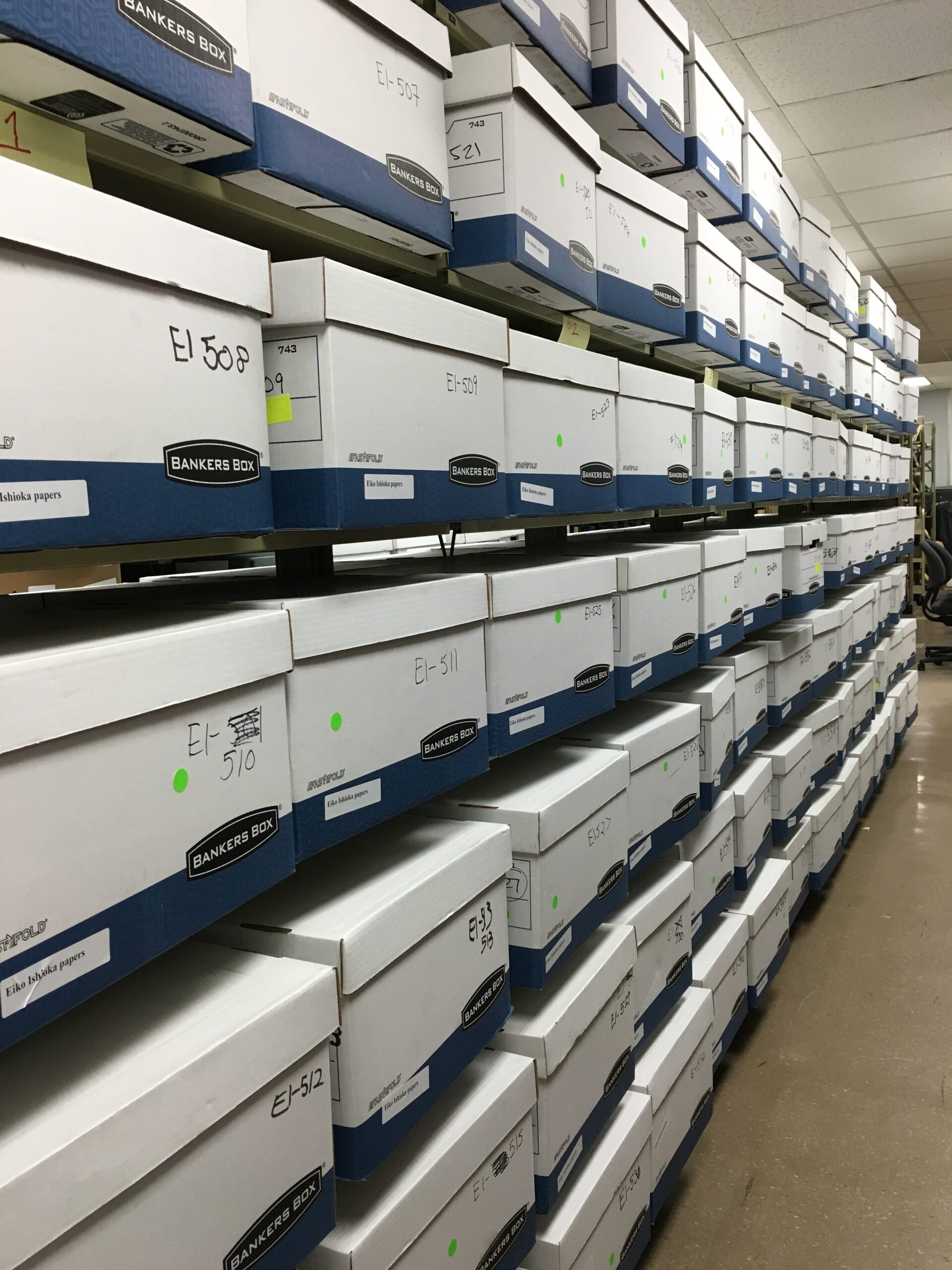
In the pre-digital 1970s and 80s, punk culture thrived through the tangible materials that captured its essence. The UCLA Library Punk Archive collects these artifacts — flyers, zines, photographs, sound recordings and buttons adorned with band logos. They even have the Al’s Bar Rolodex and old desk calendars with band names scribbled in the margins.
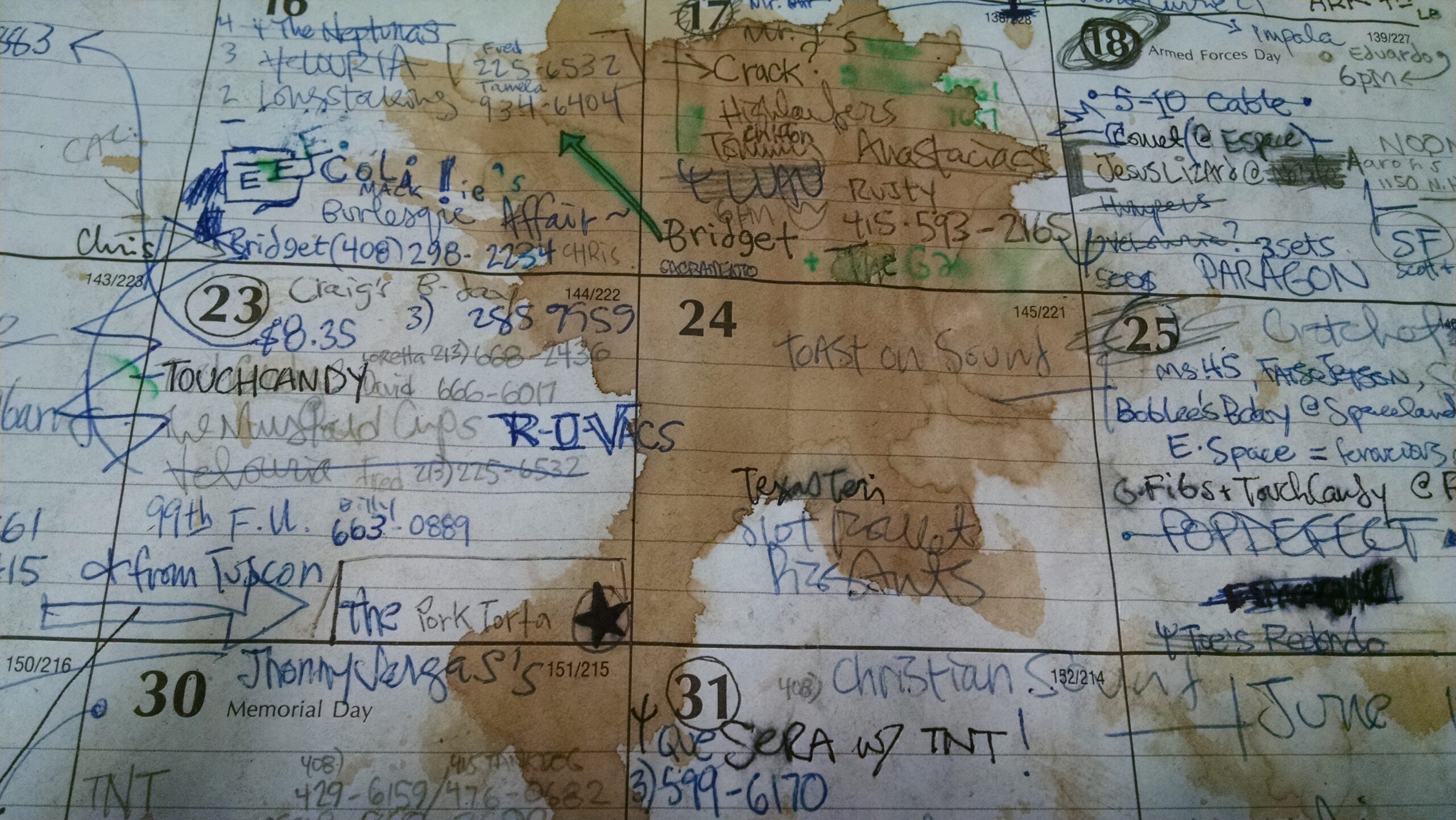
One added benefit of the collective is that many of the members are personally involved in the L.A. music scene, attending shows and meeting people. To find materials for the archive, the collective is taking time to build relationships with local musicians, promoters, artists, writers and fans.
Punk collective member, Josh Fiala ʼ05, calls himself “a long-time punk head,” who’s been “involved in the scene since grade school.” A bibliographic control coordinator for UCLA Library Special Collections, library work can be solitary but, he says, “Being in a group with like-minded people is a breath of fresh air.”
The Library’s punk archive was inspired by the Cornell University Library Hip Hop Collection. Megan Hahn Fraser, former co-head of collection management, knew that UCLA would be an ideal place to preserve this integral part of Los Angeles’ history and experience.
The archive centers around marginalized communities and places in an unconventional art form within the confines of a historically traditional framework. Part of a larger UCLA Library initiative called Collecting Los Angeles, they are preserving materials from underdocumented communities whose histories are important to Los Angeles. Besser says, “It’s important to see yourself in the archive, to have that reflection through the historical record.”
But, in punk, diverse perspectives are embraced. When Besser attended the Los Angeles Archives Bazaar, presented by L.A. as Subject and the USC Libraries, one guest objected, saying, “Punk doesn’t belong in the library, it’s for the streets. I’d rather burn my stuff than give it to you.” In an irreverent nod to punk's rebellious spirit, the collective had matchbooks printed with a riff on the title of the band The Exploited’s debut album, “Punk’s not dead. It’s archived.”
UCLA has always embraced emerging talent, and the punk music scene was no exception. Punk legends the Minutemen, the Circle Jerks, the Weirdos, Black Flag, Big Drill Car and the Ramones all rocked out on the UCLA stage. All-female band L7 took over Bruin Plaza for a noon show.
But UCLA students haven’t just been in the mosh pit. Alice Bag, whose band, the Bag, was one of the first L.A. punk bands, graduated from UCLA. John Talley-Jones ʼ79, Kjehl Johansen ʼ80, Steve Willard, Delia Frankel ʼ82 and Kevin Barrett formed the band the Urinals to perform a punk rock parody for their dorm talent show. Savage Republic’s percussive sound was created by Bruce Licher ʼ80 and Mark Erskine ʼ84. Bad Religion’s lead singer and songwriter Greg Graffin ʼ87, M.S. ʼ90, is a double Bruin with a master’s in geology. Vitus Matare ʼ79 and his bandmates fused garage, surf, folk and psychedelic rock in their power-punk band The Last.
Raymond Pettibon ʼ77 was studying economics when his brother, Greg Ginn ʼ05, started the band Black Flag. Pettibon began creating flyers, zines and album covers for his brother’s band. His hand-drawn flyers captured the energy and excitement of upcoming performances. Bob Biggs started Slash Records where he signed bands including the Germs, X and Fear. Theater arts student Penelope Spheeris ʼ69, M.A. ʼ73, produced the punk documentary “The Decline of Western Civilization.”
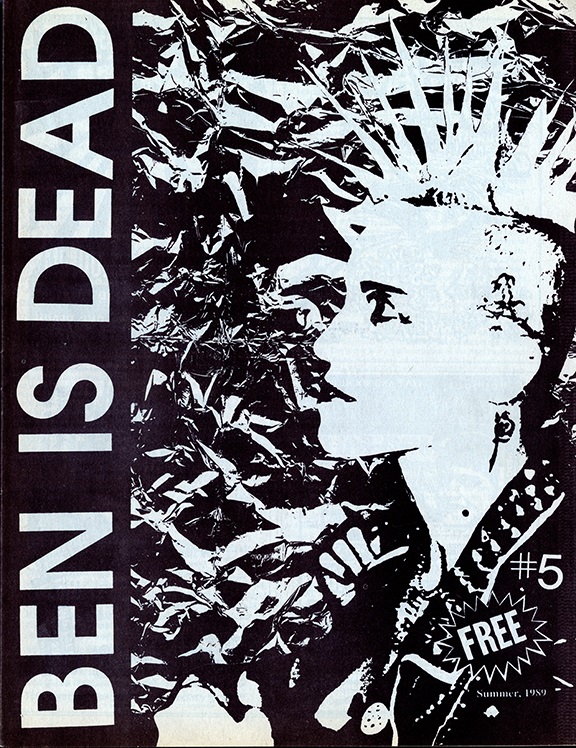
The first item added to the library’s punk archive was the Darby Romeo zine collection. Zines, short for "fanzines," are self-published magazines, often photocopied and cut-and-paste. Romeo and contributors interviewed punk and alternative musicians for the zine, Ben Is Dead.
In a major acquisition of community materials, the archive received the American Hotel and Al’s Bar project records. Al’s Bar was a creative complex in downtown L.A. — punk space, gallery, theater and hotel — that recirculated financial and creative support back to the community.
As a public research university, the UCLA Library materials are available for teaching and learning. The collective based their archival theory on the idea of self-description and community use. Fiala says, “We were built around the idea of collaborating with the community. First and foremost we’re here for the UCLA community, but we also want to include members outside of the community.” To fulfill this mission, they work with researchers, attend public events and foster dialogue with the community.
They collaborate frequently with the Los Angeles Public Library on interactive zine workshops. Fiala says, “We celebrate differences in the community, address political and social issues and expand out into other multicultural areas across Los Angeles.”
The LSC Punk Collective participates in conferences, sessions and events to highlight the academic importance of preserving punk culture and collaborates with professors and students in the Herb Alpert School of Music. They frequently work with Professor Jessica Schwartz, and participated in the 2018 conference, “Curating Resistance: Punk as Archival Method.” UCLA Library Special Collections and the LSC Punk Collective organized “Outcasts, Outreach, and Organizing in the Academy” in 2020 to highlight teaching opportunities from the punk community.
Punk’s unapologetic sound lives on, on the UCLA campus and across Los Angeles. The UCLA Punk Archive is a time machine, illuminating our history through the ephemeral artifacts that tell our stories for generations to come. Collecting and documenting punk rock, with its unique and eclectic mix of cultural influences and innovation, provides a window to a better understanding of the spirit and cultural richness of Los Angeles.
If you want to learn more about the Punk Archive or check out their collection, the materials are available to students, researchers and community members by appointment. If you’re a collector of punk materials and would like to learn more about donating it to the library visit their website.
PUNK BANDS PERFORMING AT UCLA
L7 at UCLA
The Ramones at UCLA
\
Big Drill Car at UCLA
The Weirdos
Circle Jerks
Recent Articles
- UCLA AAP Alumni Spotlight - Adrianos Facchetti ’01, J.D.
- The Story Behind Jackie Robinson’s 1946 Reintegration of Organized Baseball
- UCLA Prytanean Celebrates Its Centennial
- Building Community: UCLA Disability Alumni Network Focuses on Belonging and Visibility
- Bruins@Work Program Fosters Community
- International Women of Courage
The Venture Accelerator at UCLA Anderson
A
t some point in our lives, we’ve all been convinced that we’ve had the idea for a product or service that will be the “next big thing.” For some, this inspiration may quickly materialize and flourish into a successful business. For others, more resources may be necessary to help make that lightbulb moment a reality. That’s where the Venture Accelerator at UCLA Anderson comes into play.
Since 2018, the Venture Accelerator, housed within UCLA Anderson’s Harold and Pauline Price Center for Entrepreneurship and Innovation, has served early-stage startup businesses by offering three programs per year. The most intensive effort is the six-month Accelerate program in the winter which consists of mentor pairings, one-on-one mentoring sessions, weekly workshops, networking events and proof-of-concept awards.
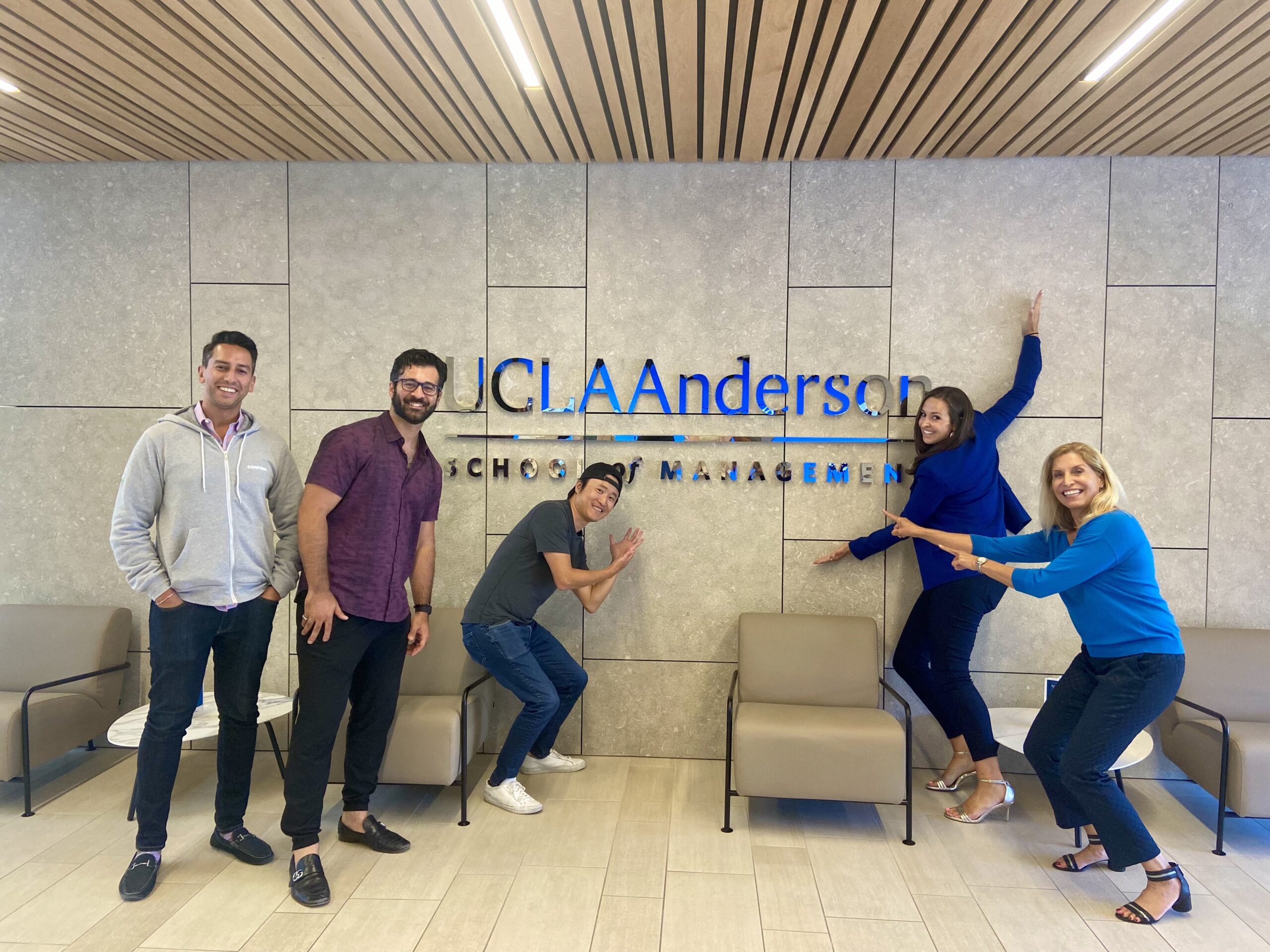
“The intent [of the program] was to provide a physical place where founders work together and help each other solve similar problems that occur at the early stage of building a company,” said Trish Halamandaris, MBA '92, Venture Accelerator Director. “Ultimately, we are a program that helps UCLA students and alumni commercialize their intellectual property (I.P.) and learn how to validate their concept, go to market and scale efficiently once launched.”
In an age of remote and hybrid work, one unique offering of the Venture Accelerator is a physical space open 24/7 for participants and entrepreneurs to meet, connect and work on their respective businesses. With real estate in Los Angeles at a premium, the dedicated space of 10,000 square feet for startups has proved to be a major draw to its program.
“It’s not uncommon when companies are using our facility and preparing to launch their products, that they would work through the night. I would see them using the facility when I leave work in the evening, and they’re still there when I come to the office in the morning,” said Halamandaris. “Besides the medical labs, this might be one of the only spaces that's truly open 24/7 on our campus. It just makes sense for startups.”
This dedicated co-working space includes conference rooms, a kitchen, and shared office equipment and supplies. And crucially, it allows UCLA alumni to return and invest in future generations of Bruins.
“We work with UCLA alumni to be speakers, subject area experts and mentors to our companies. We love any role that alumni play, including starting their startup or side hustle,” Halamandaris explained.
Additionally, participating founders utilizing the Venture Accelerator have hired students for internship opportunities – another important layer to the beneficial partnership between alumni and students.
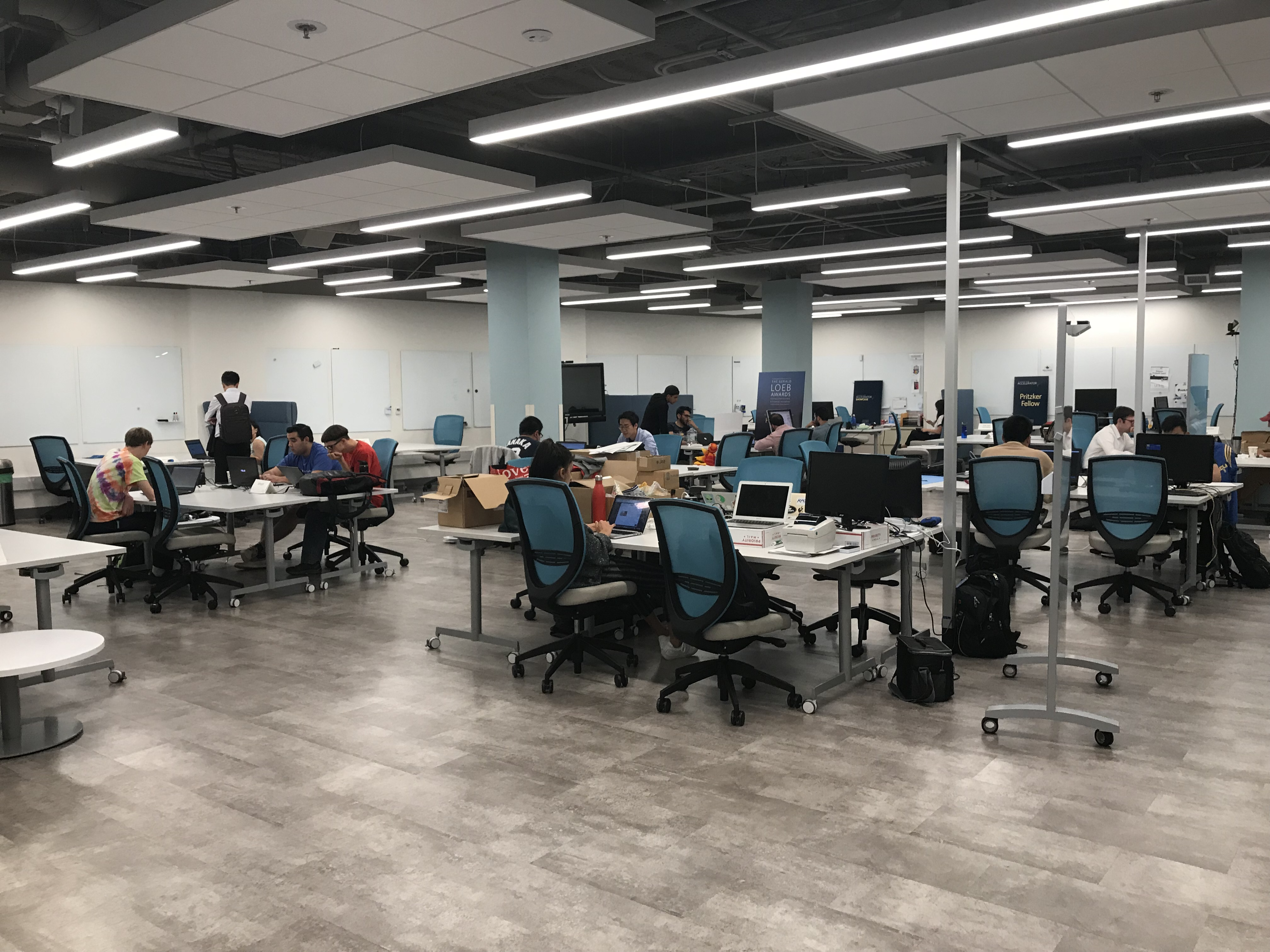
“It’s fun to watch alumni that have been out more than 10 years engaging with both early-stage founders and students,” said Halamandaris. “Sometimes alumni don't realize how much they've learned, and what they really know. When they have the chance to teach an early-stage founder their craft, it creates a win-win situation for the alumni and founder. Our founders are all early-stage, so they know they need the help and have a good five- to 10-year journey ahead of them.”
As for results, the success of the program speaks for itself.
According to Halamandaris, over the last five years, the Venture Accelerator has supported 237 companies with about $228 million raised in venture funding and $83 million in revenues. Additionally, there have been eight “exits,” which was when a founder of a business within the Venture Accelerator was able to sell their company. The eight exits include 81 Cents, Tutorfly, Quantvex, KPOP Foods, Textpert, VHomes, MusicProdigy and Lanikai Labs. Other featured alumni companies of the Venture Accelerator can be found on their website.
The Venture Accelerator also prides itself on serving underrepresented demographics within the private sector.
“It's important to provide opportunities for those who are capable but might not have access,” said Halamandaris. “In venture capital, about 2% or less of venture funds go to women, [the same is true for people of color]. Helping people from marginalized groups get a quick start and launch their ideas is incredibly rewarding. We are part of an ecosystem addressing the equality of funding deployment. We always wish we can do more.”
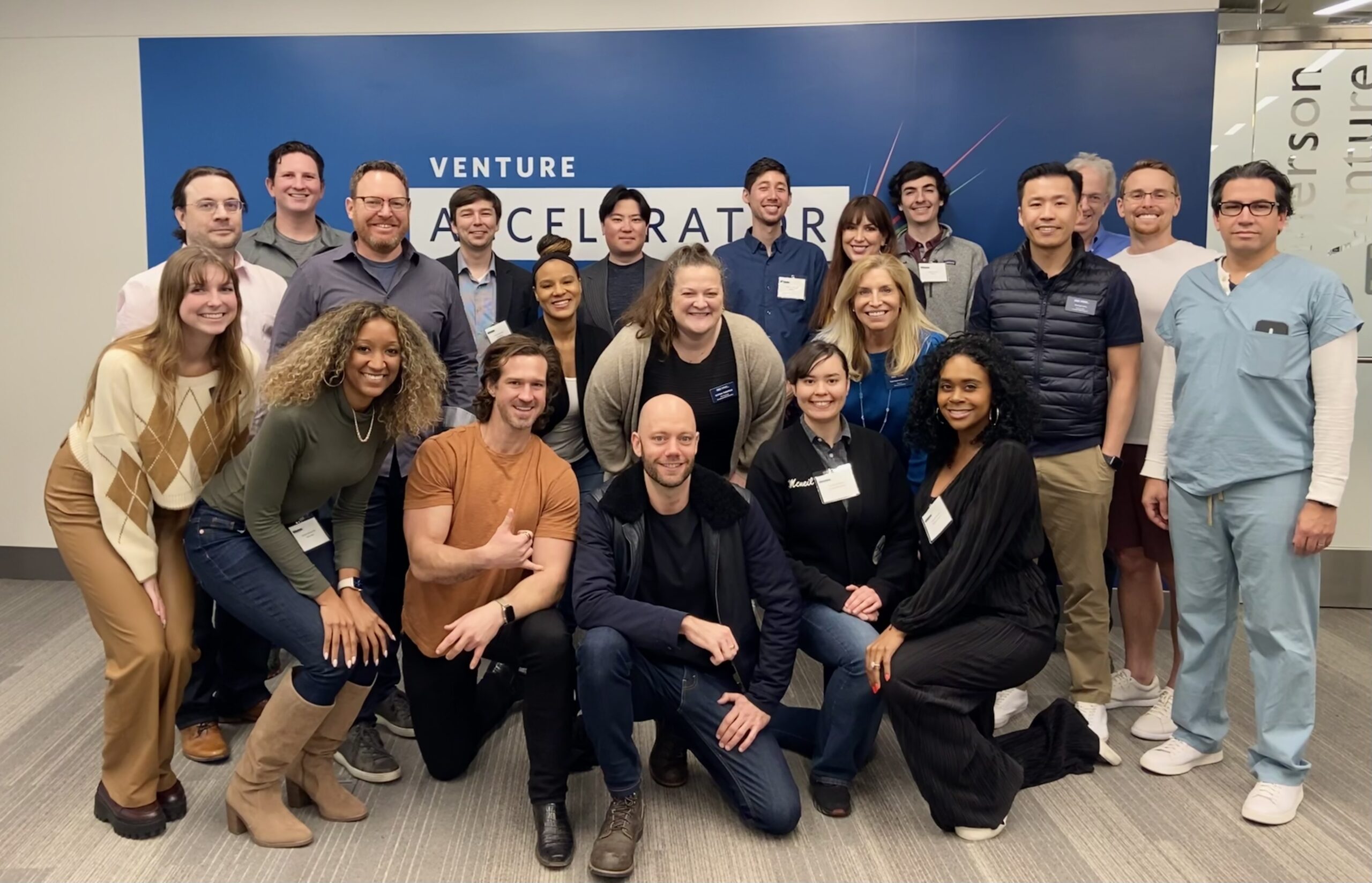
Of its 237 companies, 61% qualify as underrepresented founders. Notably, 127 current founders in the Venture Accelerator are female. Considering these statistics, the Venture Accelerator is clearly having a positive impact on all Bruins.
“Overall, the program is working and companies are doing well. We're running at an 85% success rate, meaning companies are still operational after exiting our program,” said Halamandaris. “As for the future, we would love to support more founders, more companies and more alumni from all parts of campus. We want to provide the business skills necessary to be a successful founder and executive…that's UCLA Anderson’s forte. Like many of the startups, we too are fundraising for our programs to support the growing demand of founders who would like to be part of the Accelerator.” Supporters can donate on the Accelerator website.
And while starting up a business is indeed intimidating and will require years of hard work, joining the Venture Accelerator at UCLA Anderson is easier than one may think. Despite the name, one does not need to be a student or graduate of UCLA Anderson School of Management to join.
“We welcome all Bruins,” reports Halamandaris. “It could be graduate students, it could be UCLA alumni, UCLA faculty and staff…it could be anyone! Even if it’s UCLA alumni who want to get involved and see what they can do, we’ll welcome them.”
And the best part? The cost to join the Venture Accelerator is minimal to none. For current UCLA students that are paying tuition and employed UCLA faculty and staff, there is no cost to join the program. For UCLA alumni and community founders, there is a fee to join and get access to the many offerings of the Venture Accelerator at UCLA Anderson.
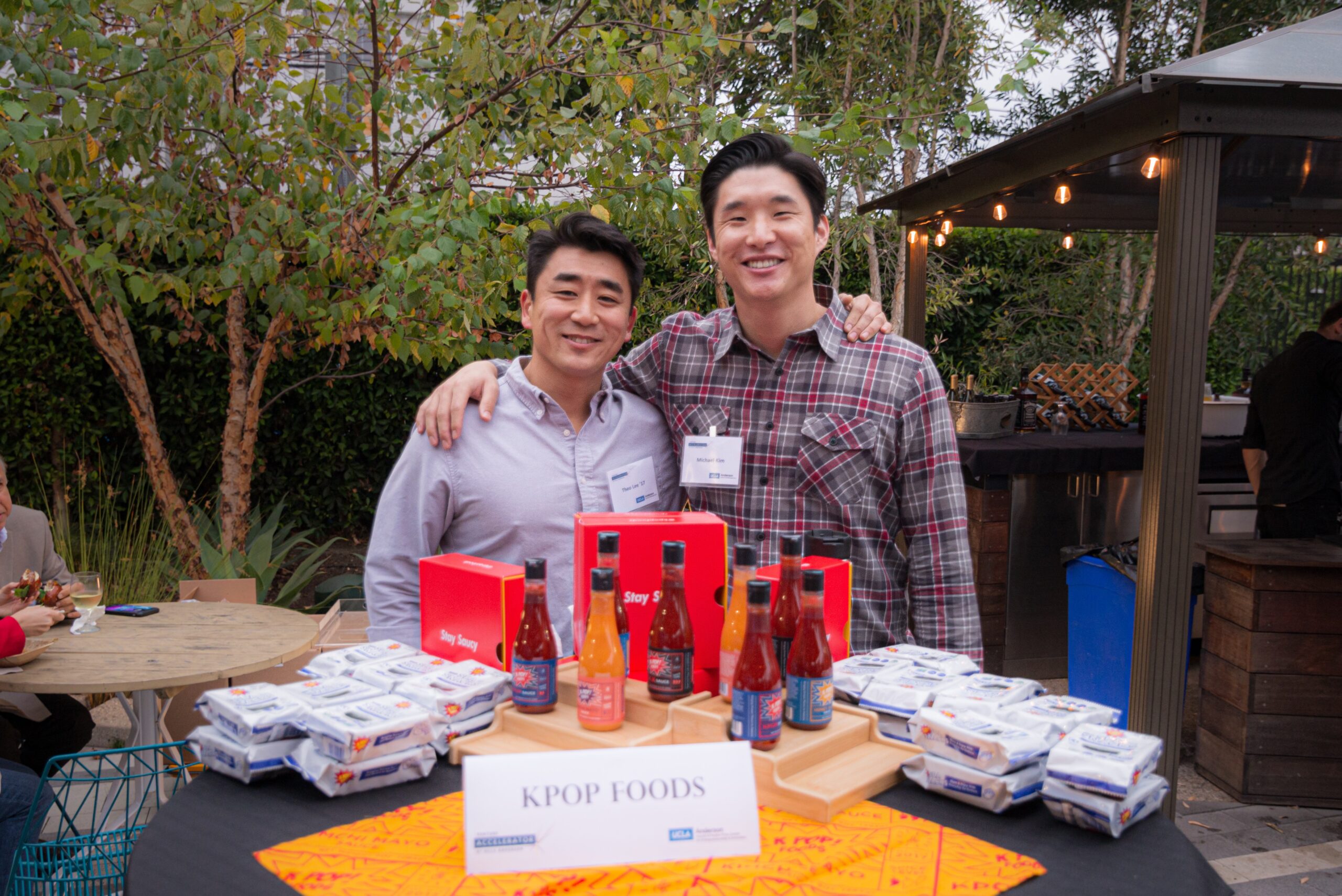
“Since we're a public university, part of our mission is to give back to the community,” said Halamandaris. “Because of our brand name, most people think we only support Anderson. We want to better integrate with the UCLA campus and community. Our goal is to help Bruins form their companies and commercialize their I.P. so that they can potentially exit.”
Looking ahead, the team at the Venture Accelerator is already in the process of approving applicants for future cohorts that will run throughout the course of the calendar year. However, for those that are interested in turning their million-dollar idea into a reality, check their website for the open application windows, typically in April and September.
“The extensive resources available to founders is part of Anderson's long history in teaching entrepreneurship and mission in giving back to the entire campus community,” said Halamandaris. “We are interested, supportive and help people with their businesses. We want to be a place where people can go to receive support and become transformative leaders. We want to give people the opportunity to explore and discover what their company can be. We want people to know that UCLA has a thriving entrepreneurship community that is making an impact in the startup world.”
***
For more information on the Venture Accelerator at UCLA Anderson, and to apply for future cohorts, please visit their website.
If you are a Bruin entrepreneur, be sure to nominate yourself or other founders for the Bruin Business 100, an annual recognition by the UCLA Alumni Association of successful alumni-owned businesses. Nominations will be accepted starting this fall.
Recent Articles
- UCLA AAP Alumni Spotlight - Adrianos Facchetti ’01, J.D.
- The Story Behind Jackie Robinson’s 1946 Reintegration of Organized Baseball
- UCLA Prytanean Celebrates Its Centennial
- Building Community: UCLA Disability Alumni Network Focuses on Belonging and Visibility
- Bruins@Work Program Fosters Community
- International Women of Courage
When I Was at UCLA - June 2023
W
e asked Bruins to share a UCLA experience and the responses were filled with humor, pride, awe, gratitude and nostalgia. The stories are being compiled so they can be shared and viewed by this alumni community. Here are a few of our favorites from May 2023.When I was at UCLA I clearly remember the filming of John Singleton's "Higher Learning" on campus. Since this was the early '90s, UCLA was still a major tourist destination for many people from around the globe. At least five times while strolling down Bruin Walk, I was stopped by random strangers either asking for my autograph or inquiring my opinion about filming on the UCLA campus. Nevermind the fact that I was carrying my book satchel or talking to some friends.
- Sean Anglon ʼ96
When I was at UCLA, Royce Hall was closed after the Northridge quake, I watched our men's basketball team arrive at LAX with the National Championship trophy and we beat ‘SC in football the entire time I was a student.
- Michelle Fisher May ʼ95
When I was at UCLA, there were two memorable earthquakes (Whittier and Northridge), one citywide riot followed by a weeklong curfew, heat wave and power outages before finals week, a measles outbreak before the UCLA-USC football game, a loss to Wisconsin in the Rose Bowl, and Mardi Gras was still a thing. Those were some of the best years of my life though.
- Alan Chan ʼ89, M.D. ʼ94

When I was at UCLA, there was no Internet, there was "arena registration" for classes that was a huge scrum; there were interest groups of every stripe competing for attention on Bruin Walk; there were no "brand name" dining options; movie showings at Melnitz could become heated back-and-forth conversations with the director present; the music library was a cool refuge; film premieres in Westwood were common; and the gingko trees in Dickson Plaza had a distinct signature scent at certain times of the year. And the cafe on the first floor of Kerckhoff made you feel [like] you were in a different place altogether.
- Andrew Lueder ʼ91
Winter quarter freshman year January 1986. Walking to south campus, it was eerily empty on campus mid-morning. I remember passing the snack machines near Boelter Hall when I heard the broadcast from a transistor radio of a janitorial staff [member] announcing the space shuttle explosion shortly after takeoff. Frozen in my tracks, breathless, silent, my heart broke to pieces. Arrived late to class, in tears and completely distracted.
- Maria Dungo ʼ90
When I was at UCLA, I learned to think critically and question everything. Professors like the late Dr. Malcom Kerr challenged me to rethink and see the Middle East in an entirely different way. His insights have proven to stand the test of time.
- David Tenenbaum ʼ75, J.D. ʼ82
When I was at UCLA, disco and 8 tracks were in. The football team never beat ‘SC, but the men's basketball team always won the Pac-8. We registered for classes at Murphy and got our list of classes in the mail…Good times!
- Ellen Bohm Weber ʼ78
When I was at UCLA they had a Playgirl centerfold as a chemistry TA.
- Libby Anne Russler ʼ76

When I was at UCLA, I recall being in Dykstra Hall, on the upper floors, which were female only, visiting a lady friend. While “socializing” we were shocked to reality by the fire alarm. My first response was “ oh Shiite!” My moment of panic at possibly being caught in violation of rules. But happily the next thing I heard was several male voices exclaiming “#&$%” multiple spicy profanities as they too were caught with their pants down. I survived! Got caught and reported, but I survived to tell numerous variations of that story. Not sure which one is closer to the truth. Ah, youth!
- Henderson Cooper ʼ73
After graduation I turned my half-time job into a full-time job. Working on campus was great! In addition to the atmosphere, so unlike a corporate atmosphere, I could enjoy my lunch at the botanical gardens, at north campus (I worked in the engineering building) or attend talks by acclaimed speakers. On one occasion I went to hear a talk by an author I knew a little about. He was a Black writer who had once been sent by Playboy Magazine to interview the head of the KKK -- and Playboy hadn't told the racist organization who was going to do the interview! This fellow spoke in a large auditorium during lunchtime, and the room was full. He talked about his background, noting that his grandparents had been slaves in the Antebellum South, and how difficult that was for them. He related stories passed down by them, and said he realized this information would be lost unless he documented it. He told a fascinating tale of how he researched his family tree, including flying to Africa to deepen his research. And this is how I heard the captivating story of the as-yet not published "Roots," described by Alex Haley himself, one fine day at UCLA.
- Stan Lieberson ʼ69

It was the summer of 1968 when I started graduate school at UCLA at what was then the School of Library Services located in the College Library, now Powell Library. Martin Luther King Jr. and Bobby Kennedy had just been assassinated. While working at my summer job at the Reserve Book Room, we watched the war zone that was the 1968 Chicago Democratic Convention. Kareem Abdul Jabbar, then known as Lew Alcindor, one of the stars of John Wooden’s legendary Bruin basketball team, often appeared at the small window to pick up reserve materials for his classes. He had to bend over double for me to see his face. I was a commuter student. As I walked from the parking lot along Bruin Walk to the library, very loud members of the Students for a Democratic Society (SDS) shouted their disapproval of the Vietnam War and exhibited significant hostility toward anyone they identified as military or a veteran. It was a daily gauntlet that was very upsetting as I had several friends and family in the military, including some fighting in Vietnam. In the spring of 1970, a few months before receiving my M.L.S., recruiters from the Army Library program visited the library school. They were not in the military. They were civilian civil service employees of Army Special Services, the Army’s morale and recreation agency. After almost a year of witnessing the hostile behavior of anti-war protestors toward soldiers, I saw a way to put my training as a librarian to work to support these soldiers. I went to work for Army Libraries as an administrative librarian managing recreational libraries for the soldiers in base camps in Vietnam. That year changed my life and my world view forever. It made me a better librarian and a better person. What I learned at UCLA about libraries, librarianship and life skills helped me succeed in job responsibilities that just graduated librarians normally don’t encounter for years. In very real ways, UCLA helped to shape the rest of my life as a librarian and a person. I won’t ever forget that.
- Ann Kelsey, M.L.S. ʼ69
When I was at UCLA, I heard future president John Kennedy speak, saw the new student union open, and took a bowling class in it. Rafer Johnson was my hero. Besides winning the gold medal in the 1960 Olympics, he rescued me at the Coliseum when UCLA beat USC. A USC band member was driving his car into UCLA students rallying in the tunnel. Rafer lifted me up and moved me away from the fender of the car that trapped me against the wall.
- Chelle Brown ʼ62
When I was at UCLA, many of us were commuters. Three of us commuted from Montebello, where we all lived and had attended different high schools. Timing was crucial for getting a parking place, and I frequently parked off campus after dropping off my two ride-sharers. In those early 1950s I could drive right up to the flag pool near Haines Hall and drop off two people who had 8 a.m. classes, then cruise around for a parking spot and get to my 9 a.m. class. One of my passengers dropped out after one semester, but the other stayed with me, shared the ride and we married before the start of our last semester in 1957. We shared 60 years of marriage until her death in 2017. So, I love UCLA because just getting there every day led to the best thing in my life.
- Robert Ewing ʼ57
When I was at UCLA from 1952 to 1956 not all parking lots were paved. One morning I parked at an unpaved parking lot in the northeast part of the campus that had a bit of a slope. It rained while I was attending classes. When I returned to my car late that afternoon it was about 30 yards from where I had parked it, having slid down the slippery surface of the lot. Fortunately, it didn't contact any other vehicles on the way down as the lot was mostly empty by then.
- Bob Schneider ʼ56
If you have a story to share, finish the sentence “When I was at UCLA…” and submit it to connectfeedback@alumni.ucla.edu.
When I Was at UCLA Articles


Recent Articles
- UCLA AAP Alumni Spotlight - Adrianos Facchetti ’01, J.D.
- The Story Behind Jackie Robinson’s 1946 Reintegration of Organized Baseball
- UCLA Prytanean Celebrates Its Centennial
- Building Community: UCLA Disability Alumni Network Focuses on Belonging and Visibility
- Bruins@Work Program Fosters Community
- International Women of Courage
Lessons I Learned at UCLA, by Barbra Lyons, Class of 2023
F
our years ago, I stepped foot onto the UCLA campus for the very first time as a student. I had little to no idea of what to expect of what was to come during my time here. As I wandered the hills of campus aimlessly looking for my freshman chemistry discussion, I remembered years ago driving through the streets of Westwood with my mom seeing college students with their backpacks and thinking how cool it was that all of these individuals were UCLA students. To be quite honest, I had no intention of attending UCLA and even after applying thought that the odds of me actually getting in were slim to none. But on that fateful day four years ago, when I opened my acceptance letter, everything changed. Now as a senior looking back, just a mere days away from graduation, I can see just how much this school has taught me not only about myself, but about the world in which we live. I am so grateful to have attended this school as it has brought me so many wonderful friends, memories and experiences that I will cherish forever.
Make Every Moment Count
As someone whose freshman through junior years of college were interrupted by the COVID-19 pandemic, making the most of the time that we had while not locked in our homes was of the utmost importance. This not only translates to school, but also with friends, family, peers and even professors. Taking advantage of the opportunity to just be with people physically taught me the importance of living in the moment and maximizing each window of opportunity to its fullest potential.
No One Knows What the Future Holds and That Is Okay
If you were to tell me this four years ago, I would have laughed and thought you were joking. We go to UCLA; everyone must have it figured out, right? Not exactly. However, after much further observation and understanding, I have learned that more often than not, people are just taking things day by day and tackling the hurdles as they come along. This slightly terrifying yet just as equally refreshing lesson has helped me through some of the highs and lows that college brings. At the end of the day, everyone is on the same train trying to figure things out and not knowing what comes next is absolutely okay. While the unknown can be scary, it also can be a blank canvas and we are given the creativity to make it what we want for ourselves.
The Importance of Discovering Yourself
While four years is not a large amount of time, it is amazing how much change you can experience and how much you can learn about yourself when you are pushed to limits that are beyond the scope of your imagination. No matter what instances or individuals you encounter while in college, it is of the utmost importance to be true to yourself and take pride in the things that make you, you.
UCLA has by far been the most impactful and rewarding experience of my life thus far and I would not be the person that I am today without each and every interaction and experience that I have had as a student. I will miss the large and exciting moments just as much as I will miss the small and quiet moments with this campus, the people and, most importantly, myself.
Barbra Lyons is graduating from UCLA with a B.S. in psychobiology. She will be pursuing a career as a physician's assistant and would one day love to work in pediatrics and move to the East Coast. Originally from Los Angeles, Lyons was involved with many student organizations, such as Camp Kesem, the Pediatric AIDS Coalition, the Hellenic Student Association, Care Extenders and many more. She has worked as the marketing assistant in the UCLA Alumni Association since 2021.
Lessons I Learned at UCLA Series:
- Lessons I Learned at UCLA, by Barbra Lyons, Class of 2023

- Lessons I Learned at UCLA By Antonia Klima, Class of 2021

- A Letter to My Freshman Self: Five Things I Learned at UCLA

Recent Articles
- UCLA AAP Alumni Spotlight - Adrianos Facchetti ’01, J.D.
- The Story Behind Jackie Robinson’s 1946 Reintegration of Organized Baseball
- UCLA Prytanean Celebrates Its Centennial
- Building Community: UCLA Disability Alumni Network Focuses on Belonging and Visibility
- Bruins@Work Program Fosters Community
- International Women of Courage
Our Proud Partners


