Author Archives: Nick Todd
Casey Wasserman '96
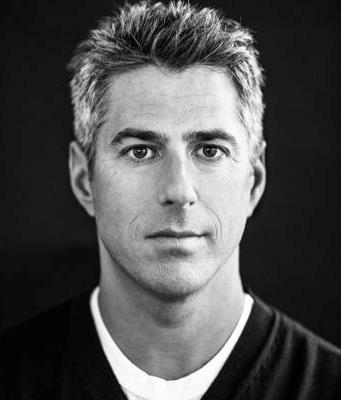
Casey Wasserman is a business executive and philanthropist. Wasserman is Chairperson of LA28, the organizing committee for the 2028 Los Angeles Olympic and Paralympic Games. He also serves as president and CEO of the Wasserman Foundation. Founded in 1952 by his grandparents, Lew and Edie Wasserman, the Wasserman Foundation currently funds in the areas of education, arts and culture, health, service and global initiatives. He previously served as chairman and CEO of Wasserman, a global sports, entertainment, music and brands agency that he established in 2002.
In addition to his executive roles, he serves on the boards of theMotion Picture and Television Fund (MPTF), the UCLA Stein Eye Institute and the Los Angeles County Museum of Art (LACMA). He is also co-chair of the UCLA Second Century Council.
A UCLA alumnus, Wasserman graduated in 1996 with a B.A. in political science.
The Story Behind Jackie Robinson’s 1946 Reintegration of Organized Baseball
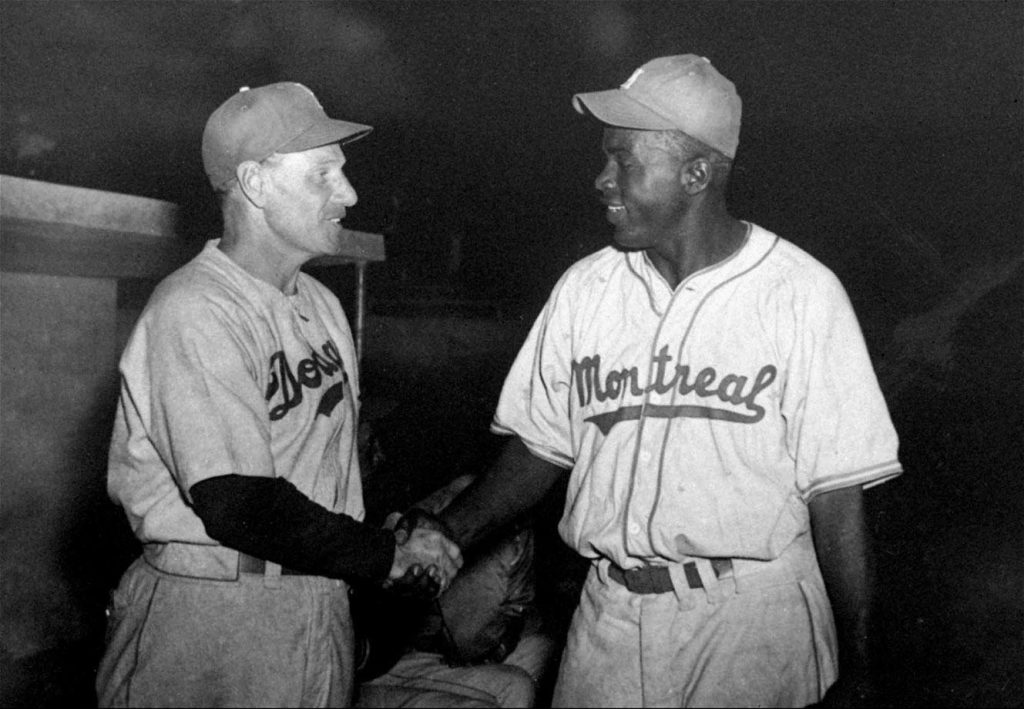
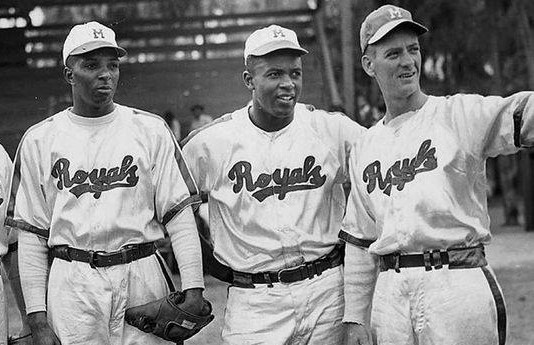
John Wright, Jackie Robinson and Clay Hopper, Montreal Royals, 1946 (AP Photos from Sporting News Archives)
Each year on April 15, Major League Baseball observes Jackie Robinson Day, honoring the man who, hired by Brooklyn Dodgers President Branch Rickey, reintegrated the national pastime in 1947, ending nearly 60 years of Black players being unofficially barred from “organized” (i.e., white) baseball.
That breakthrough was hardly the end of the story — its effect on American sports and society was still very much up in the air. Robinson had to prove he belonged and that he could handle the abuse he would receive, in order for Rickey’s experiment to succeed. He did so in spectacular fashion, winning the first Rookie of the Year award in 1947, the National League MVP award in 1949, leading the Dodgers to six pennants in his 10 years and paving the way for so many other great Black players who would grace the game over the ensuing decades.
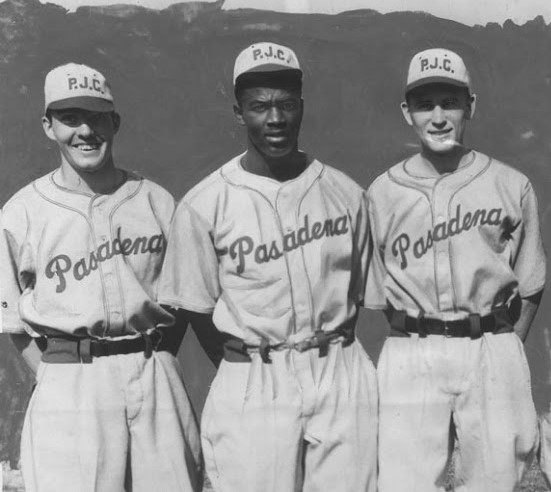
But April 15, 1947, was not the beginning of the story, either. That monumental moment in American life was preceded by a significant milestone a year earlier, 80 years ago, on April 18, 1946. Before Robinson could break the color barrier in the majors, he had to do the same thing in the minors, with Brooklyn’s top farm team, the Montreal Royals.
Robinson’s path to that moment, of course, had gone through UCLA, where he was a four-sport star recognized, in particular, for his ability in football, basketball and track. Although baseball was not his best sport at UCLA, he had shown his prowess on the diamond at Pasadena Junior College (PJC), now Pasadena City College.
As detailed in “The Black Bruins” by James W. Johnson, Robinson graduated from Pasadena’s John Muir Technical High School in 1937 but did not receive an offer from a four-year university. Even if he had, he would not have been able to play varsity as a freshman, due to the rules at the time. So, following in the path of his brother Mack, a decorated Olympian, Robinson enrolled in PJC, where he was considered the best shortstop in the league, one season hitting .417 in 23 games, while scoring 43 runs, stealing 23 bases and striking out only three times. After an exhibition game against the Chicago White Sox in which Robinson, playing for a Pasadena youth team, performed particularly well, the Chicago manager said, “If that kid was white, I’d sign him right now.”
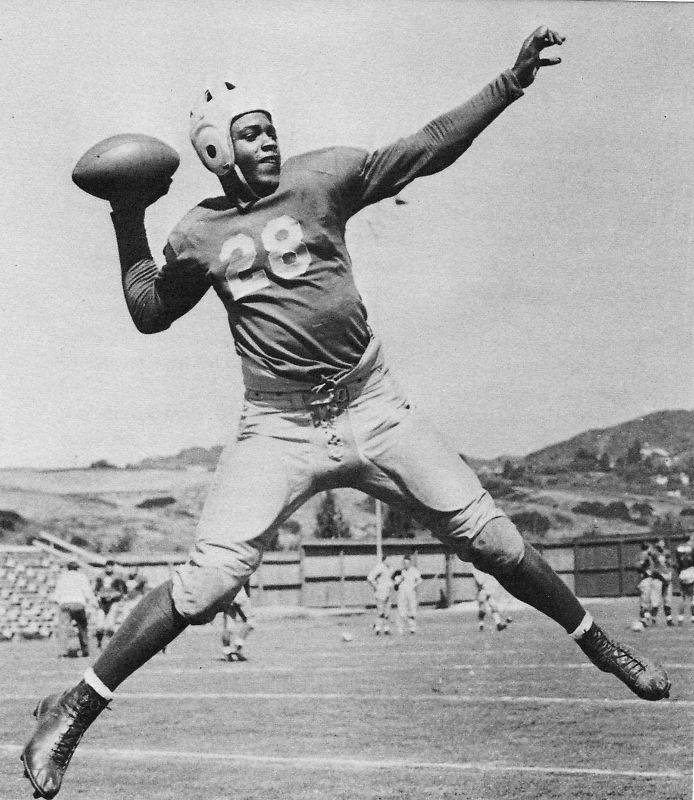
He was probably the best basketball player at PJC as well, but football might have been the sport for which he was best known. He was team MVP in 1938, but was subjected to racism from other teams as well as his own teammates, many of whom had come from Oklahoma and had never been out of the South. Some initially refused to play with him. In Phoenix, the Black players could not stay in the hotel with the white players; in Sacramento they were refused service at a restaurant. Teammate Ray Bartlett said that Robinson never looked for a fight but would defend himself whenever necessary.
After completing his two years at PJC, in 1939, Robinson did receive offers from four-year institutions — although some were not genuine and were merely designed to keep him from playing against them. Robinson chose UCLA, which had a student population less than 1% Black and no Black faculty. But it was close to home and had just hired a football coach who had starred at PJC as well. Those weren’t the only perks.
“When Robinson enrolled at UCLA in 1939,” writes Johnson, “he began taking advantage of the team’s training table. For a youngster who had little to eat, the bounty on the training table was a feast.”
In his autobiography, “I Never Had It Made,” Robinson wrote of his childhood, “Sometimes there were only two meals a day, and some days we wouldn’t have eaten at all if it hadn’t been for the leftovers my mother was able to bring home from her job. There were other times when we subsisted on bread and sweet water.”
Prior to embarking on his UCLA athletic career, during the summer of 1939, Robinson won the singles and doubles championships in the Western Federation of Tennis Clubs, which was restricted to Blacks. The doubles team did not lose a set the entire tournament. He started playing golf that summer, Johnson stating that he shot 90 at Pasadena’s Brookside course in the first round he played. He also excelled at badminton, soccer and handball.
Robinson had an immediate impact on UCLA athletics, starring on the football, basketball and track teams and establishing himself as one of the nation’s best in each discipline.
After the 1940 basketball season ended, he joined the baseball team. After getting four hits and stealing four bases in his first game, he got only two more hits the rest of the season and hit .097, with a fielding percentage of only .907. Despite this, those that saw him play still recognized him as a great player.
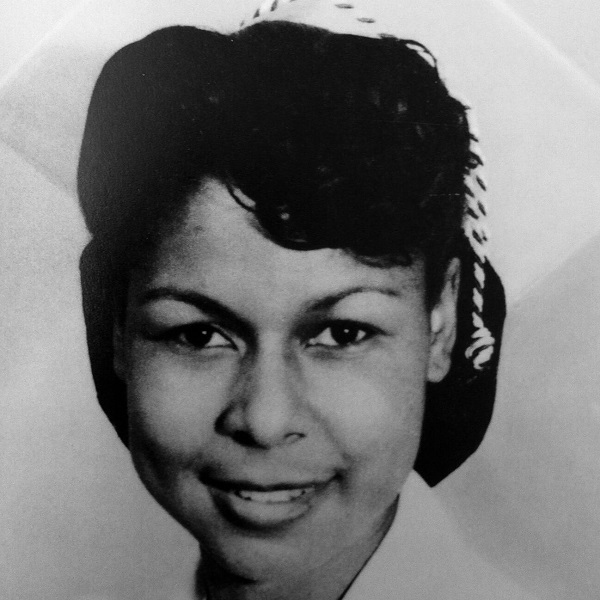
While playing with and against white players in college was certainly important for Robinson’s development, even more important for Robinson was his meeting UCLA freshman Rachel Isum ’42 on campus when he was a senior.
They were not UCLA students together for long; after the 1941 basketball season, Robinson decided to leave school, though he was very close to graduating, because he was convinced that “no amount of education would help a Black man get a job.”
He thus became the first Black player in organized baseball in the 20th century.
He wrote, “I had used up my athletic ability in the major sports at UCLA, but the university begged me to stay on and graduate; they even offered me extra financial support. Rachel, too, felt strongly about the importance of a degree. Despite all this, I could see no future in athletics and I wanted to do the next best thing — become an athletic director. The thought of working with youngsters in the field of sports excited me.”
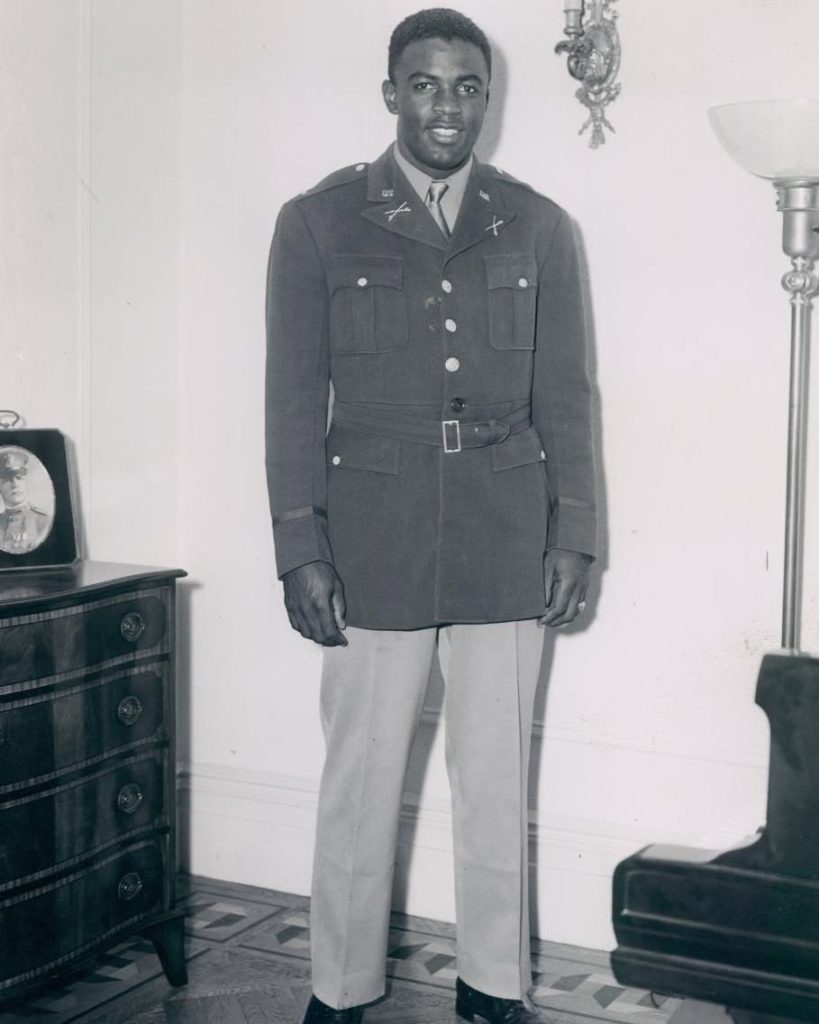
He got a job as an assistant AD at a National Youth Administration work camp in Central California, but the war in Europe soon led to the government closing down their NYA projects.
Returning to Los Angeles, he briefly joined the semi-pro Los Angeles Bulldogs football team but was hurt early in his first game. Next, he got a construction job in Hawaii and on Sundays, played football for his first professional team, the Honolulu Bears. When the season ended, he decided to head back to California, leaving the island on Dec. 5, 1941, two days before the Japanese bombed Pearl Harbor.
With the U.S. now officially at war, Robinson briefly worked at Lockheed Aircraft in Burbank, California, before being inducted into the Army in March 1942.
During his military service, he was subjected to the explicit segregation and discrimination that was so prevalent in those times. Even the athletic competition that was an important outlet was often denied him; at one point, he was prevented from playing on an Army post’s baseball team.
After refusing to move to the back of the bus on a military post, where segregation of this type was supposedly not allowed, he was court-martialed — and ultimately acquitted. Realizing that he wasn’t going to be allowed to make any meaningful contributions to the war effort as a soldier, he asked for and was given an honorable discharge in November 1944.
While waiting for his discharge, Robinson met a soldier who had played with the Kansas City Monarchs of the Negro American League and told Robinson that he might make some decent money playing for them. In the spring of 1945, he joined the club. That year, he led his team in batting average, as well as slugging and on-base percentage.
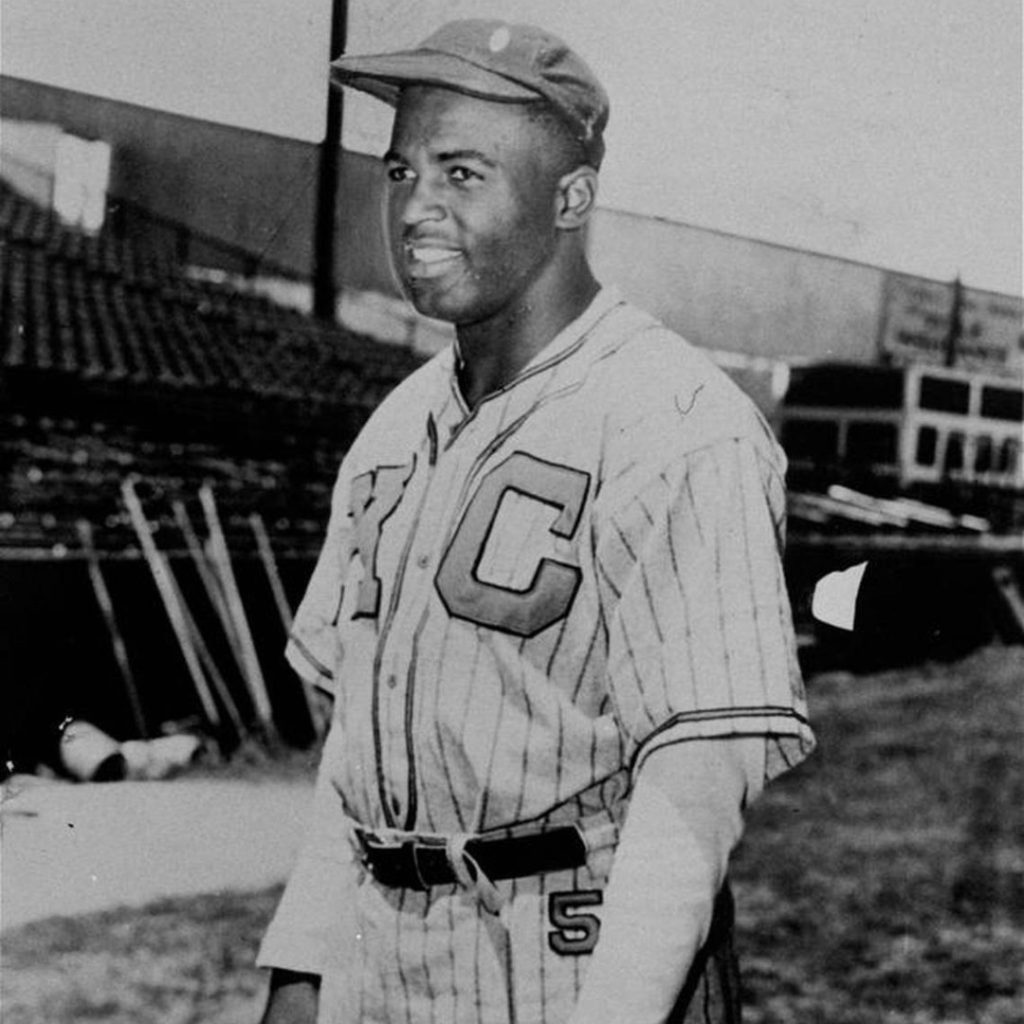
The timing of Robinson’s entry into Negro League baseball made him a prime candidate to break the six-decade long unofficial prohibition against Black players in organized baseball. The possibility of this had actually been brewing for several years. In early 1943, the Dodgers’ directors pledged their support to Rickey’s plan to integrate the Dodgers. With the end of World War II, the effort to integrate baseball gained momentum.
In New York state, the legislature passed the Ives-Quinn Law, creating the Commission Against Discrimination, with the power to fine and imprison violators. In New York City, Mayor Fiorello La Guardia, who had established the Committee for Unity, of which Rickey was a member, encouraged the three New York teams to hire Black players.
According to baseball historian John Thorn, as interviewed in Ken Burns’ “Jackie Robinson” documentary, “Rickey began to fear that his whole plan was going to unravel and that he would eventually be seen as [merely] responding to political pressures by signing an African American. Rickey wanted to do it his own way.”
If the color barrier were going to be broken, many thought Monte Irvin or Sam Jethroe would be the most likely candidates to do it, according to Thorn.
“Robinson was not in their league in terms of demonstrated ability at the Negro League level,” said Thorn. But Rickey was not shopping merely for baseball ability. He went shopping for character.”
Rickey told Clyde Sukeforth to scout Robinson, telling him he needed more than a great player.
“I need a man who will take abuse, insults,” Rickey told Sukforth. “A man who will carry the flag for the race.’”
Sukeforth came back with a glowing review. On Aug. 28, 1945, Rickey and Robinson met.
According to legendary Dodger broadcaster Red Barber, Rickey said, “The only way you can be the first man to do this is you will have to promise me that you will not answer back. You cannot win this with retaliation.”
Robinson wrote, “Could I turn the other cheek? I didn’t know how I would do it, but I knew that I must.”
“Robinson said, ‘Mr. Rickey, if you want to take this gamble, I promise you there’ll be no incident,’” Sukeforth remembered. “And that was just what Rickey wanted to hear.”
Rickey’s instruction to not fight back actually applied only to the first three years. Rachel Robinson elaborated, “He not only needed a talented person; he needed someone who, eventually, would fight back. He needed a soldier.”
Rickey had to go public with his plan, so, in October 1945, he announced that Robinson would try out for Brooklyn’s top minor league team, the Montreal Royals, the following spring.
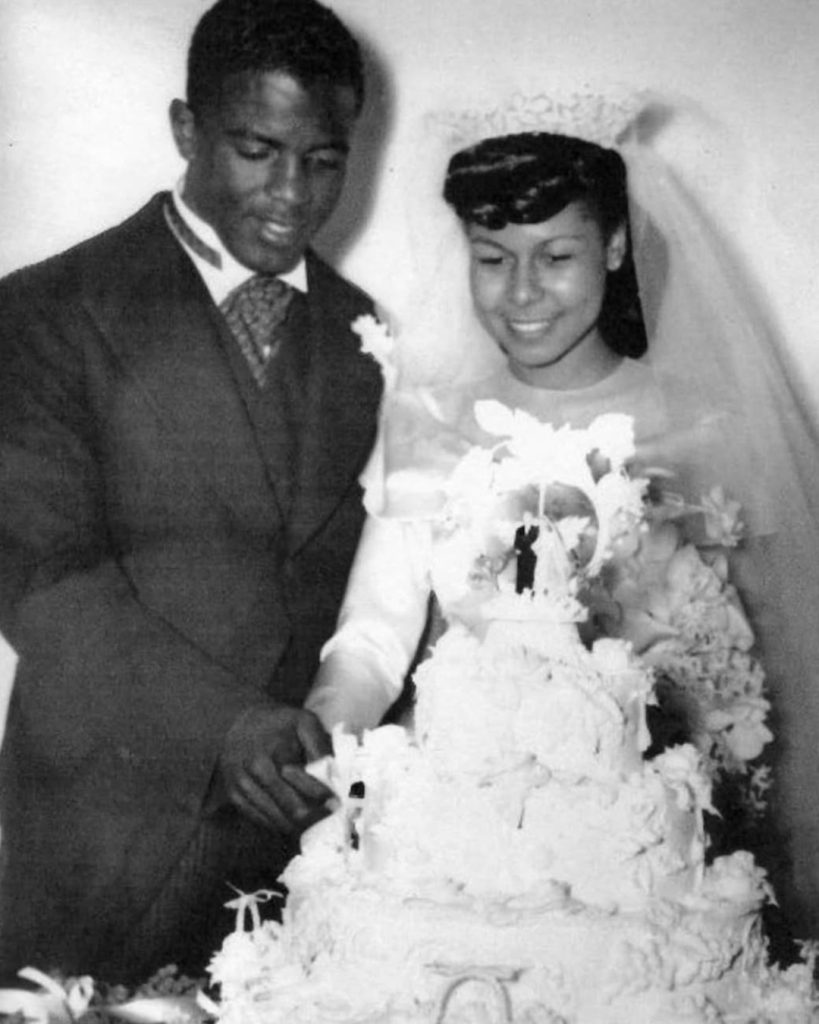
On Feb. 10, 1946, Jackie Robinson and Rachel Isum were married in Los Angeles. Then they left for spring training in Florida where he would try out for the Royals.
The couple, on their “honeymoon” in the Deep South, kept getting bumped off planes and had to take a bus to Daytona Beach from Jacksonville.
“We went to the back of the bus,” Rachel said. “And when it got dark, I started to cry, because I had felt my great husband, who had been a fighter and a dignified person, had been reduced by discrimination and by segregation, and he had sort of caved in to what society wanted in the South.”
When the press asked if Jackie could get along with his white teammates, he responded that he had played alongside white players at UCLA and been in the army with white soldiers during the war.
Also in camp was John Wright, a Black pitcher from New Orleans, who was signed by the Dodgers on Jan. 29, 1946.
A life is not important except in the impact it has on other lives.
However, during his brief and infrequent appearances both in spring training and then with the Montreal Royals, Wright’s control failed him. While Robinson excelled, Wright returned to the fading Negro Leagues in 1947, reluctant to talk about his place in history.
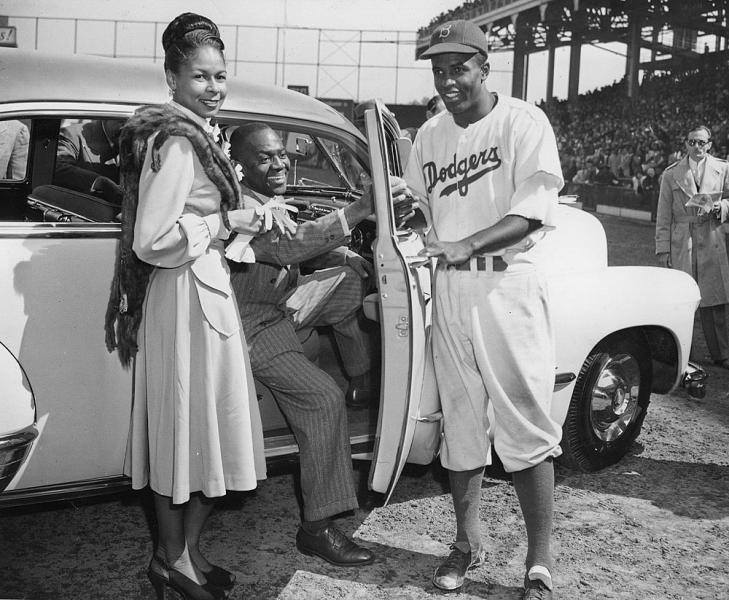
“Johnny was a good pitcher,” Robinson wrote, “but I feel he didn’t have the right kind of temperament to make it with the International League in those days. He couldn’t withstand the pressure of taking insult after insult without being able to retaliate. It affected his pitching that he had to keep his temper under control all the time. Later, I was very sad because he didn’t make the Montreal team.”
When the Royals went on the road during training camp, some teams refused to play them or made up excuses, such as claiming the lights didn’t work — even if they were playing a day game. In one game, the sheriff showed up and threatened to arrest the Montreal manager, Clay Hopper, for fielding a black player. Hopper complied, removing Robinson from the game.
Because of the indignities Robinson had suffered on the trip and skeptical that he would get a fair shot to make the team, he nearly quit before even trying out. He was convinced by Wendell Smith, a journalist and civil rights activist who had covered the Negro Leagues for the Pittsburgh Courier, to stick it out, because it might help pave the way for others.
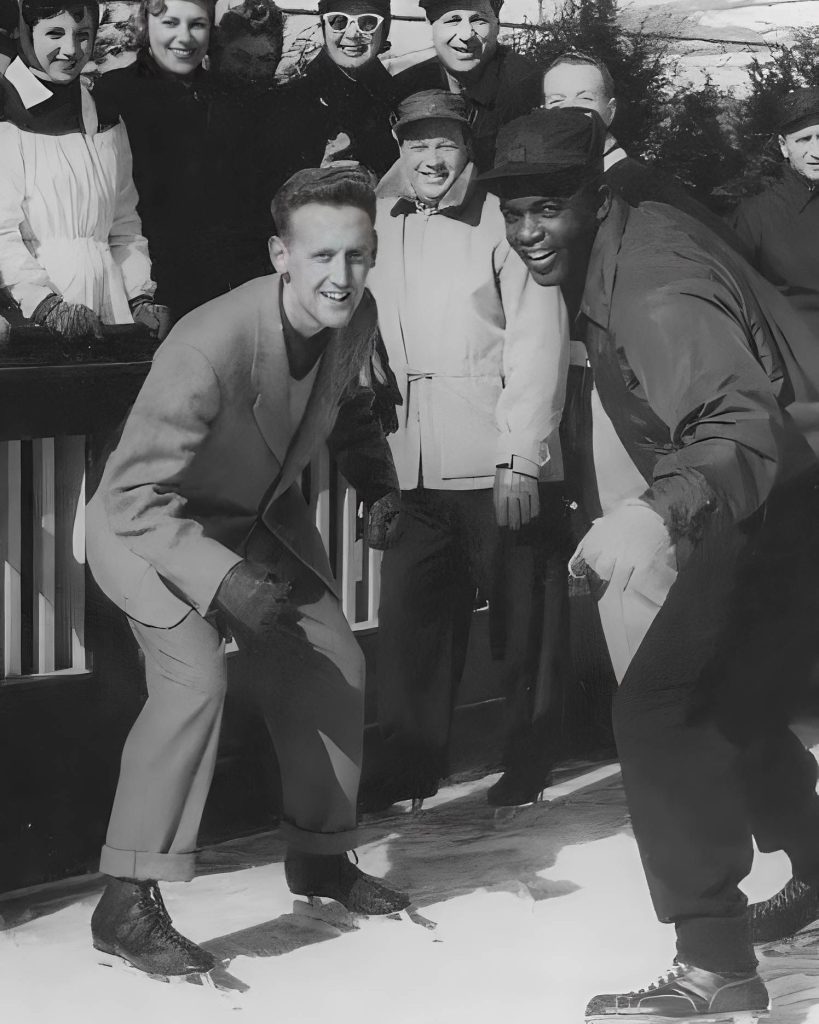
Though Robinson struggled at the plate at the start of spring training, Rickey continued to support him. Eventually, his hitting improved and he made the team as a second baseman. The team travelled north and played their first game at Roosevelt Stadium in Jersey City, New Jersey, on April 18, 1946. Robinson went 4-5, with two stolen bases and four runs scored as Montreal won.
He thus became the first Black player in organized baseball in the 20th century. In 1884, Moses Fleetwood Walker had become the first Black player in Major League Baseball. He was also the last Black player in organized baseball, playing until 1889.
In Montreal, Robinson was treated like a hero; both he and Rachel enjoyed their time north of the border.
Robinson played brilliantly, leading the league in hitting at .349 and leading the team to the “Little World Series” championship. A Montreal mob picked him up after winning the title and carried him on their shoulders.
During that season, Montreal General Manager Buzzie Bavasi told Rickey that if Robinson was smart enough to pick Rachel as his wife, that’s the guy he should want.
Rickey agreed. Robinson went to spring training with the Brooklyn Dodgers in 1947 and made the team, debuting at Ebbets Field in Brooklyn on April 15, 1947. Brooklyn became Black America’s team, and Robinson was idolized to such a degree that in a poll that year, he was voted the second most popular American, behind only Bing Crosby.
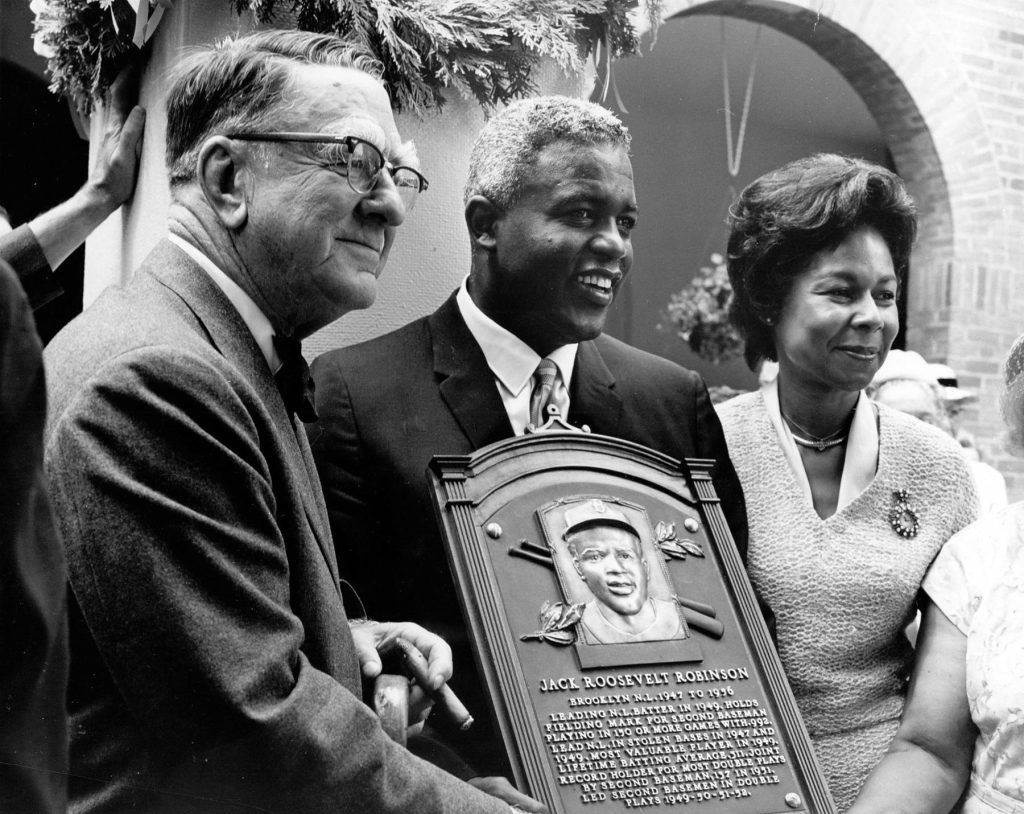
Jackie Robinson famously said, “A life is not important except in the impact it has on other lives.” His courage, ability, toughness and restraint transformed the national pastime, and made him one of the most important figures in the Civil Rights Movement . Future Bruin athletes such as Arthur Ashe ʼ66 and Kareem Abdul-Jabbar ʼ69 (born in New York City the day after Robinson’s Dodger debut), cite him as a reason they chose UCLA.
Through the struggle and sacrifice he shared with Rachel, Robinson overcame hate with talent and character, paving the way for generations of athletes of color to fulfill their American dream.
For more information on Jackie Robinson’s historical milestones, click here.
Recent Articles
- The Fire Within: Leo Rochman’s Story of Resilience

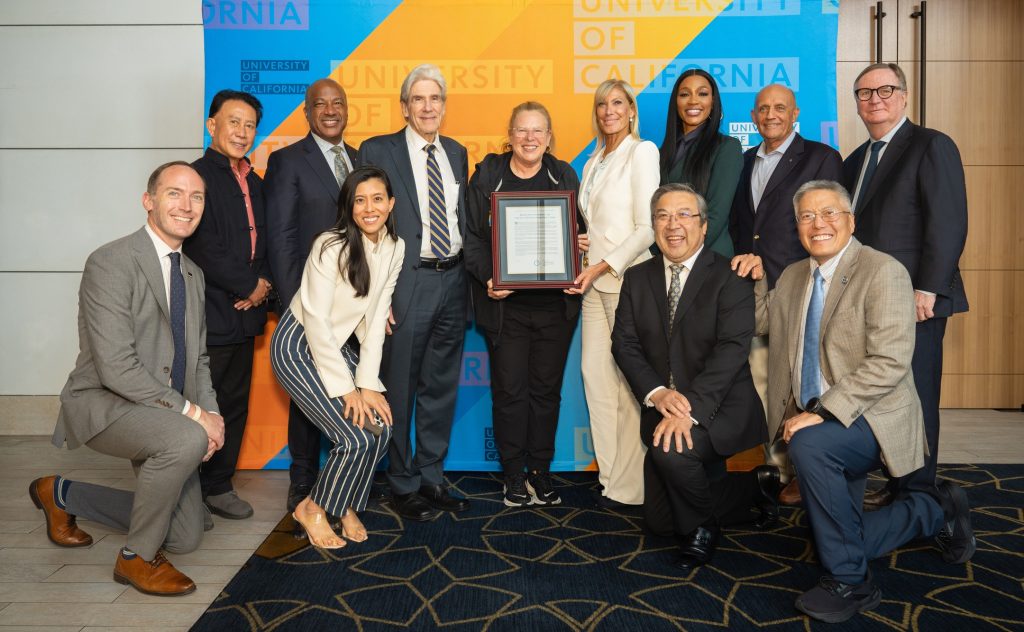
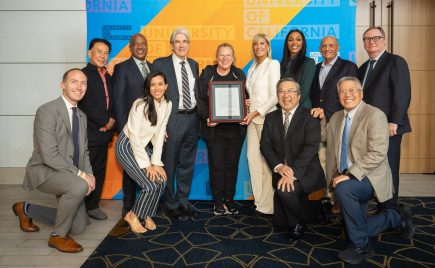
- UC Inspires Honors UCLA Alumni
- UCLA AAP Alumni Spotlight - Adrianos Facchetti ’01, J.D.
- The Story Behind Jackie Robinson’s 1946 Reintegration of Organized Baseball
- UCLA Prytanean Celebrates Its Centennial
- Building Community: UCLA Disability Alumni Network Focuses on Belonging and Visibility
UCLA Prytanean Celebrates Its Centennial
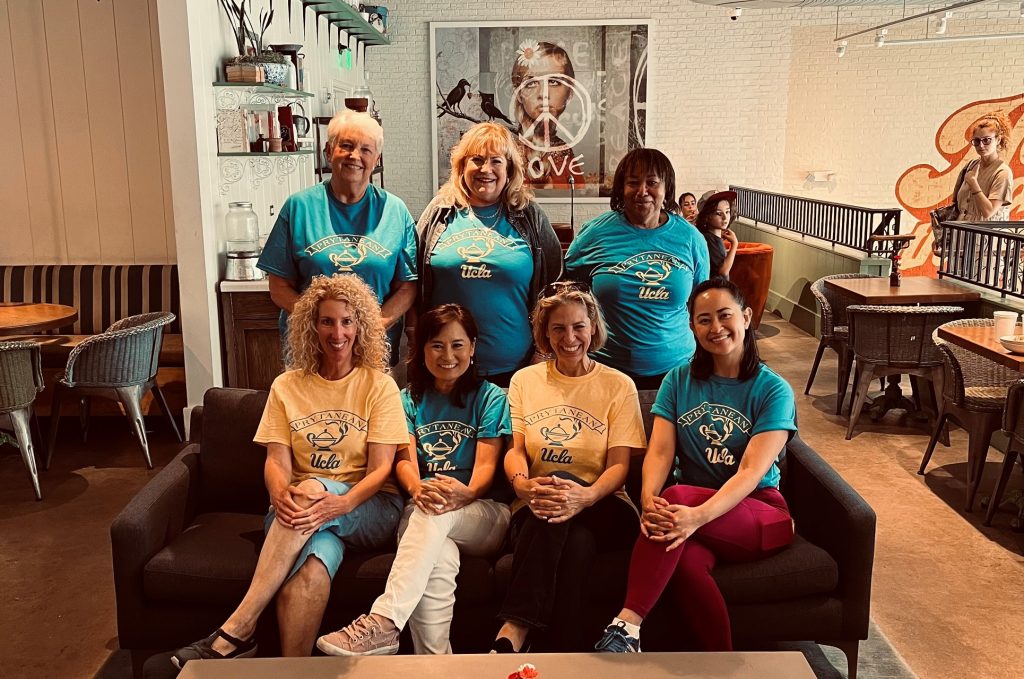
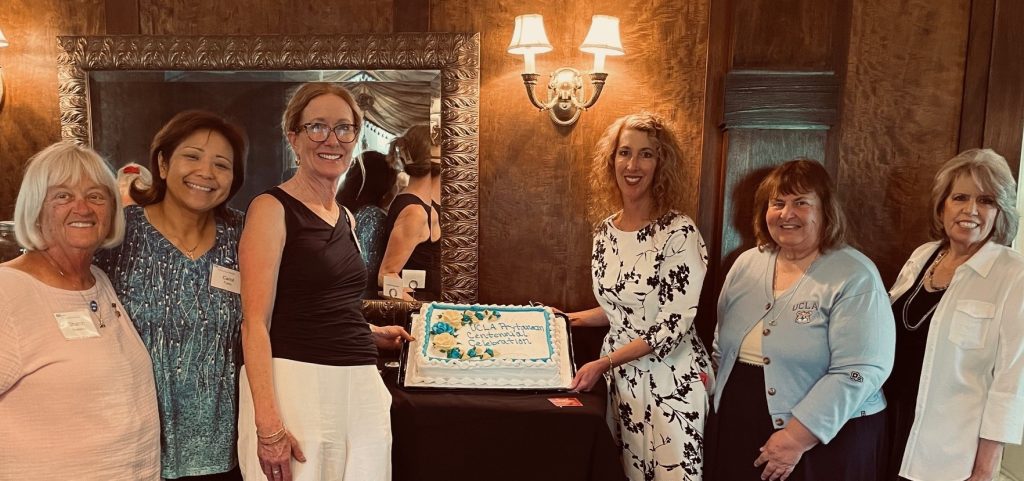
For 100 years, the Prytanean Alumnae Network has been giving back to the UCLA community. Prytanean is the oldest honorary alumnae organization in the University of California system, dedicated to making a difference, on campus and beyond.
Pamela Farber '85, vice president of membership and past president of Prytanean, recognizes the many benefits of being part of the network. She says, “Prytanean has survived all these years because it’s all about giving. And in giving of myself, I'm getting a lot back. I enjoy meeting people and feeling part of the Bruin community, but it’s really about being able to contribute to the University for the greater good of all alumni.”
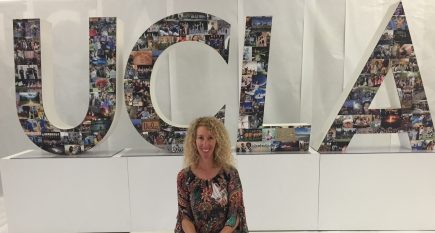
Farber grew up in Orange County and participated in activities as a student which, she says, “made this large campus feel small. I also joined a sorority my sophomore year, which helped me learn how to build relationships.” She says, “When I found out about Prytanean, I welcomed the chance to network with past and future generations.”
As part of the UCLA Alumni Affinity Networks, Prytanean sustains relationships between alumni, parents, students and friends of the University to “enhance knowledge, promote friendships, create volunteer opportunities and expand UCLA’s worldwide sphere of influence.”
Prytanean means "council of the chosen ones." It was first founded at UC Berkeley in 1901 to bring women leaders together across campus in support of women students. In those days, the majority of students were men, and by default, they enjoyed most of the available resources.
It’s really about being able to contribute to the University for the greater good of all alumni.
The UCLA chapter’s motto is “Honor through Service,” promoting friendship, scholarship, leadership and service. It was founded in 1914 on the Vermont Avenue campus as the Social Efficiency Club. The SEC joined with Prytanean in 1924, and was formally installed at UCLA in 1925. In 1939, the UCLA Prytanean Alumnae Network was formed.
One of its members, Louisa Cardenas ’74, attended UCLA through scholarship support, student loans and part-time work on campus. She says, “I felt that if I could ever contribute back, it would be to help students.” She likes that the network has a regular schedule of events each year. “The best part is networking with other members. I am a long-time retired UCLA employee so I really enjoy meeting new staff members and young graduates.”
Prytanean begins their year each fall by introducing the new scholarship recipients at the October Dinner and General Membership Meeting; there is an Annual Benefit in the spring to raise scholarship support; and a June Luncheon to welcome new members. Throughout the year, members attend networking and volunteer activities including Dinners for 12 Strangers and Spring Sing, which they support with the annual Prytanean Alumnae Award for Best A Cappella performance.
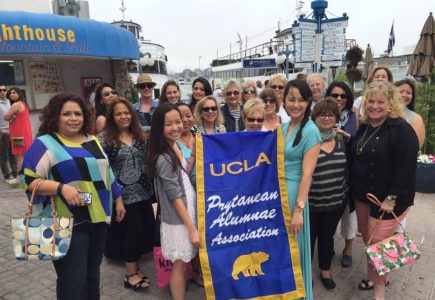
This year’s Annual Benefit celebrated Prytanean’s Centennial Celebration at the Tournament House in Pasadena, with tours of the historic mansion, a photo booth and a celebration of their milestone year. Sheila Kuehl ’62, former California state assemblymember, state senator and L.A. County supervisor, was the guest speaker.
Prytanean has provided more than $250,000 in scholarship support to UCLA first-year and transfer students. For Lucy Tseng ’12, the group is unique because it welcomes everyone. “There are no specific qualifications. You don’t have to live in a certain area or belong to a certain affinity group. You just have to want to stay involved with UCLA and support students through the scholarship fund.”
In her professional life, Tseng is director of the UCLA Chancellor’s Society. She says, “I wasn't even aware of the concept of scholarships when I was in college. I took out a ton of student loans because I thought that was my only option. Part of my passion is ensuring students understand that the world of scholarships is vast, and while merit is a significant factor, it is just one of many avenues for securing financial support.”
UCLA Scholarships create opportunities for students to reach their full potential and ensure that a high-quality education is more affordable. Roland Zita ’18 was a Shirley M. Lyon Memorial Alumni Scholar, given to an incoming student with a background in volunteer service. At UCLA, Zita majored in chemical engineering and is now a process engineering supervisor at TTM Technologies.
When he graduated, he was invited to become the first male member of Prytanean. He says, “Looking back on my undergraduate experience, it just felt natural to me. I’m happy to be part of Prytanean, and I support the mission. It’s also kind of cool that my sister, Laura Zita ’21, also attended UCLA and is now a member.”
When I found out about Prytanean, I welcomed the chance to network with past and future generations.
Farber was president in 2018 when the network ratified the inclusion of all genders. She says, “When Roland graduated, I thought, why are we letting these great people go? They want to give to the organization and contribute. We put it to a vote to change the bylaws to accept anyone who wants to join, and it passed with flying colors.”
Zita met his wife, Sophia, at UCLA. She is currently completing a residency in dermatology, but he hopes she will join Prytanean once she completes her residency. He says, “That sense of community alone is enough for me to recommend it. On top of that, you get the volunteer events, social events and everything else that comes with it.” Zita serves as a member-at-large on the Prytanean board, offering suggestions and input.
As part of their mission, Prytanean also supports UCLA campus organizations. They currently support the Bruin Resource Center which works with underserved student groups. Farber says, “These students overcame enormous odds to even be at UCLA. Some were homeless, in foster care, in detention or are veterans. It’s mind-boggling how they met entrance requirements while facing those challenges.”
The members create “Bear Hugs,” gift bags with needed items, including toiletries, personal items and gift cards for groceries and coffee along with personalized handwritten notes. As Cardenas says, “We want to give them the incentive to continue, because it’s a tough road. It’s a wonderful effort to support students who just need a little extra boost.”
Interested alumni, outstanding UCLA graduating seniors and advanced-degree students are encouraged to apply for membership. Farber says, “We are intergenerational, we have members in their 90s and new graduates. We also have ‘friend’ memberships for people who didn't graduate from UCLA but want to support us, like a spouse or a child of an alum.”
For Tseng, the importance of giving back comes from personal experience. “I was raised by an immigrant mom who didn’t drive on the freeway, so I was a bit sheltered. Being at UCLA gave me things I never imagined for myself — I played wheelchair basketball, was a resident assistant, did Dance Marathon and was a summer camp counselor. Reflecting on my own experience makes me want to ensure that current students have the best experience possible so they can look back as fondly as I do.”
Recent Articles
- The Fire Within: Leo Rochman’s Story of Resilience
- UC Inspires Honors UCLA Alumni
- UCLA AAP Alumni Spotlight - Adrianos Facchetti ’01, J.D.
- The Story Behind Jackie Robinson’s 1946 Reintegration of Organized Baseball
- UCLA Prytanean Celebrates Its Centennial
- Building Community: UCLA Disability Alumni Network Focuses on Belonging and Visibility
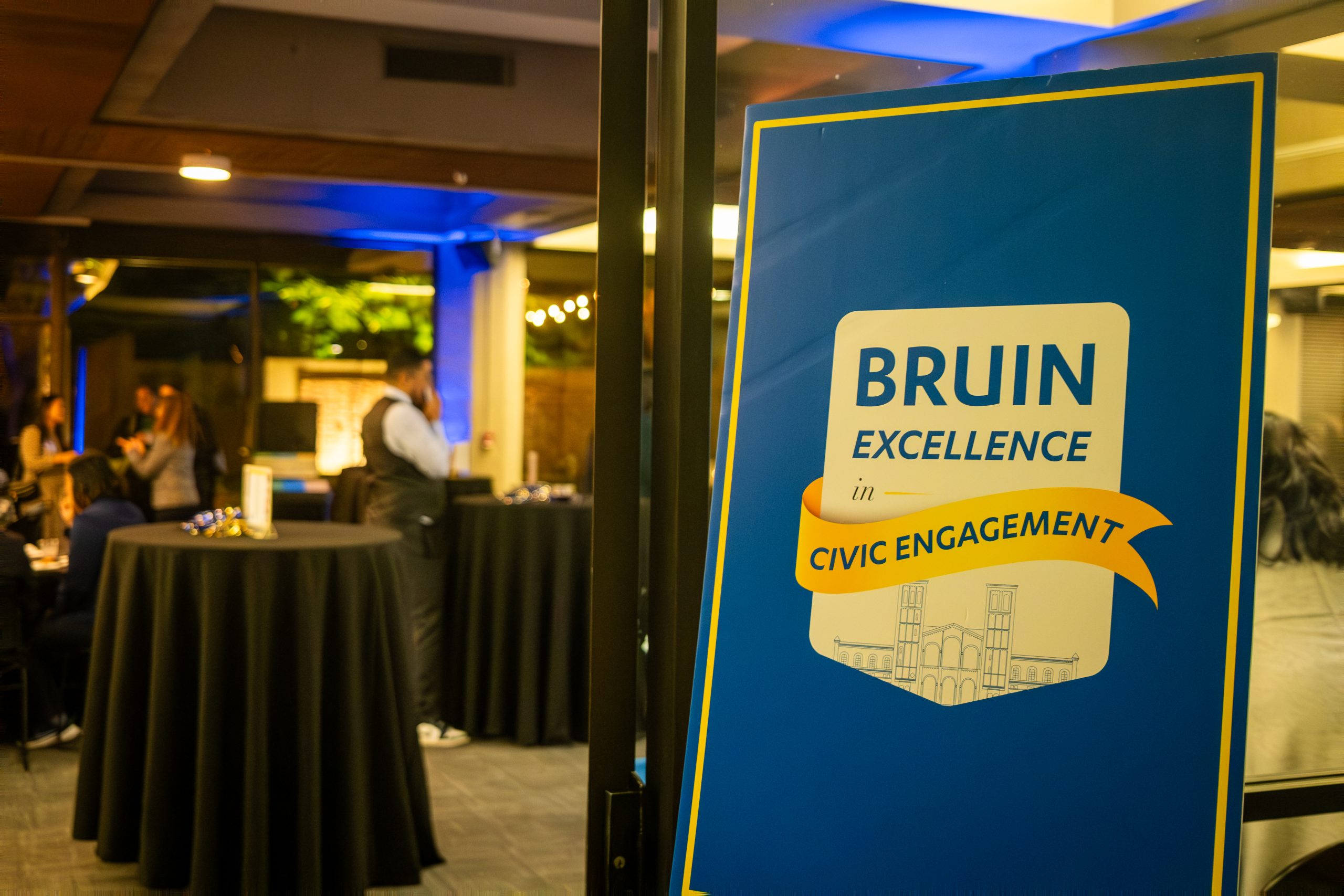
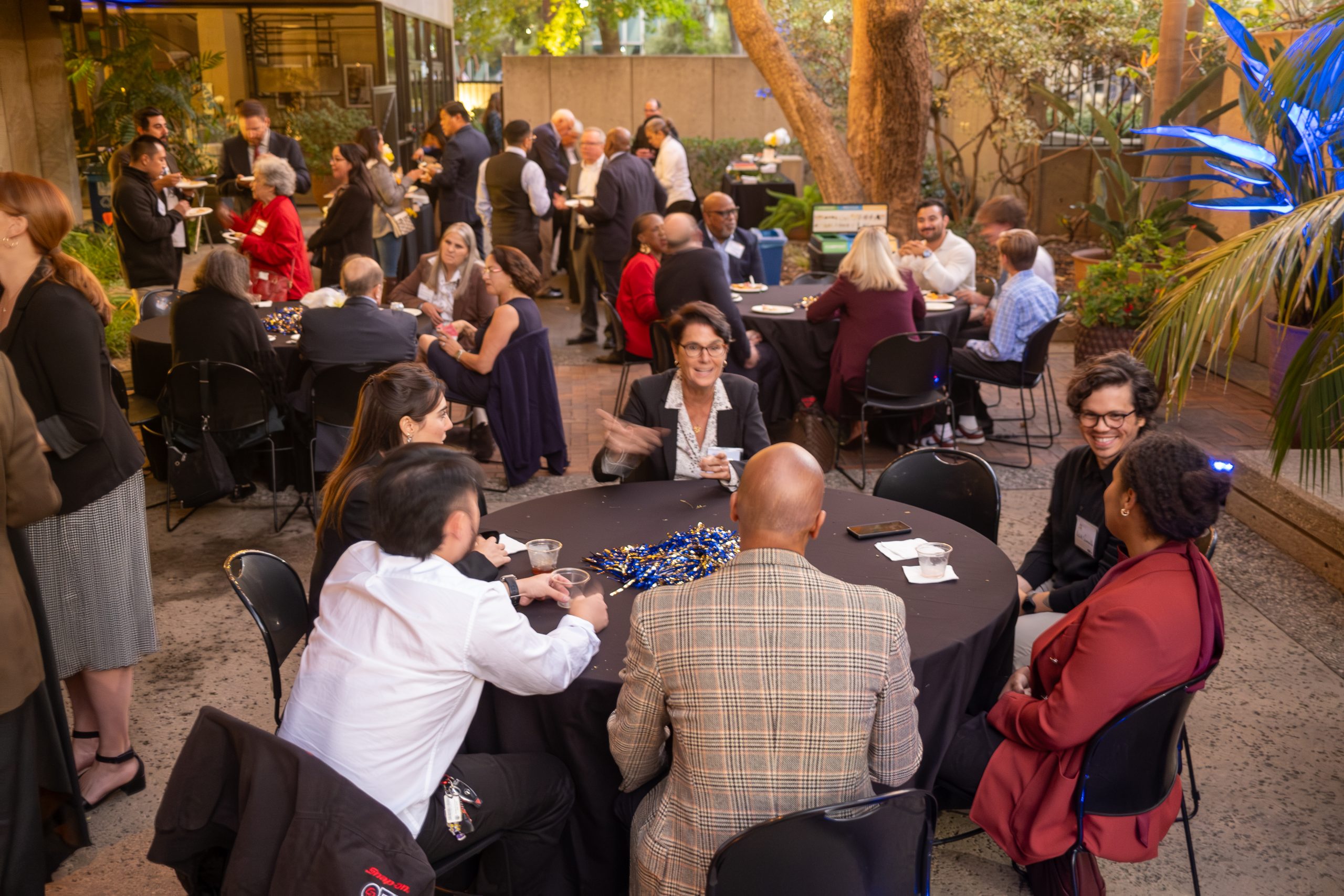
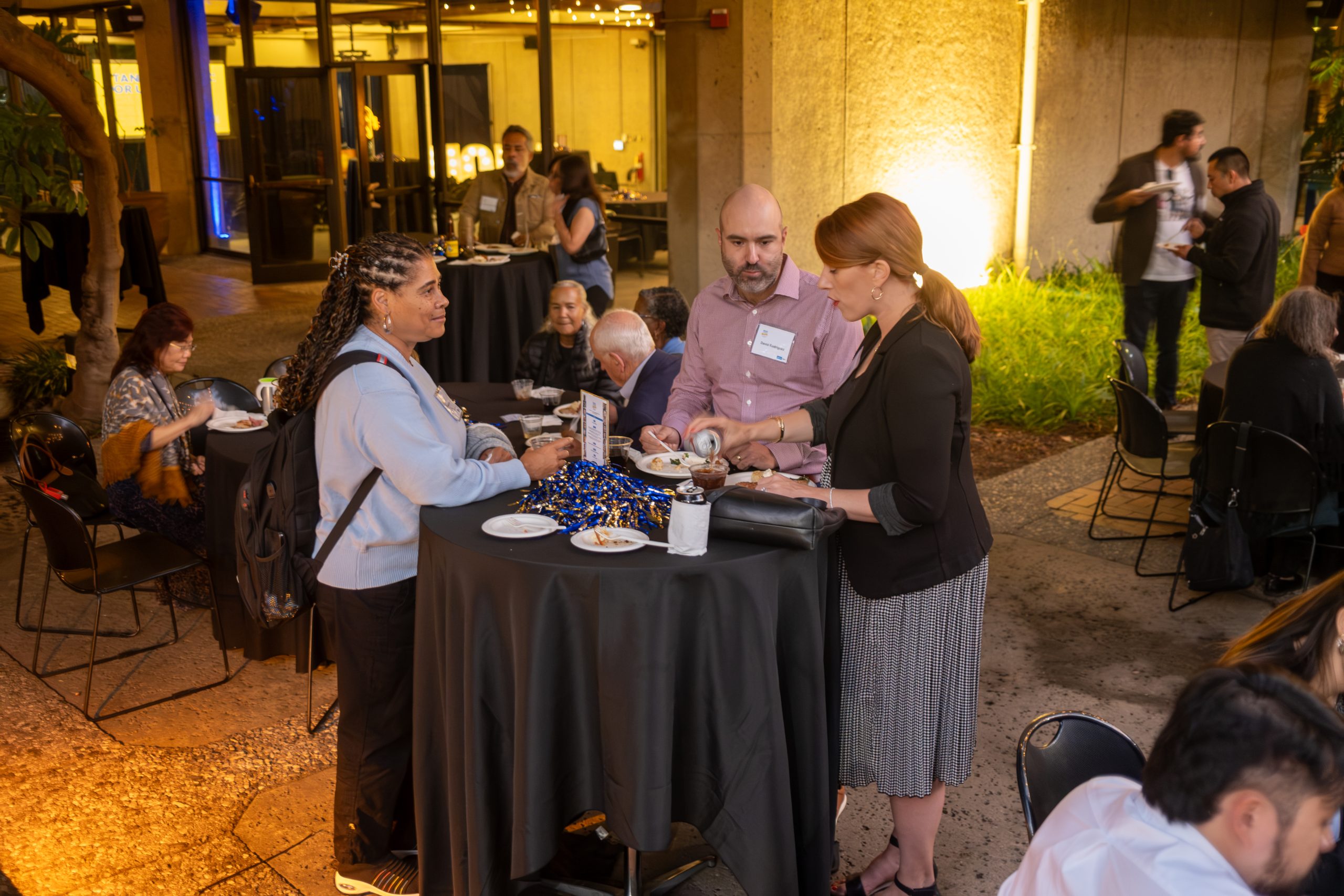
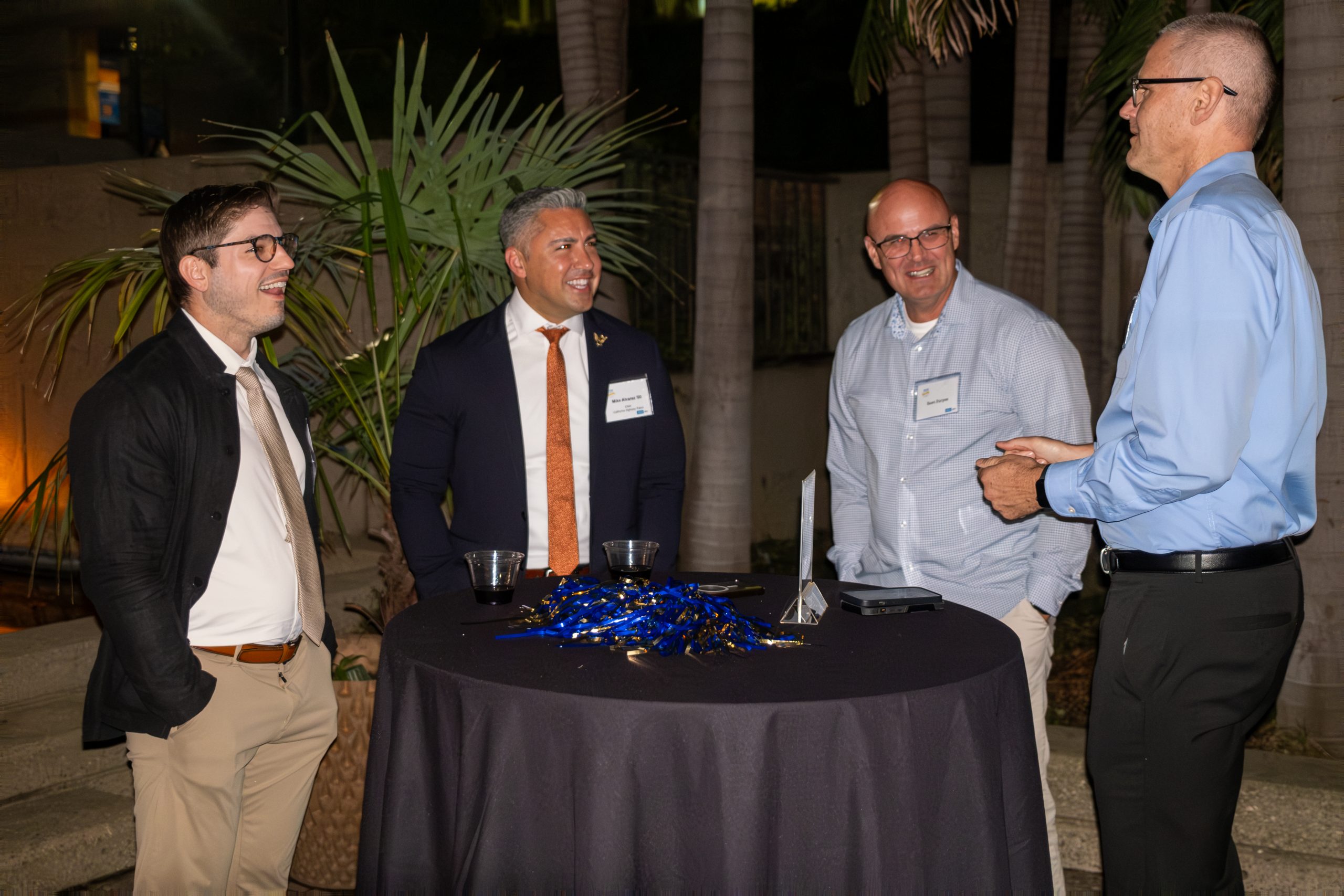
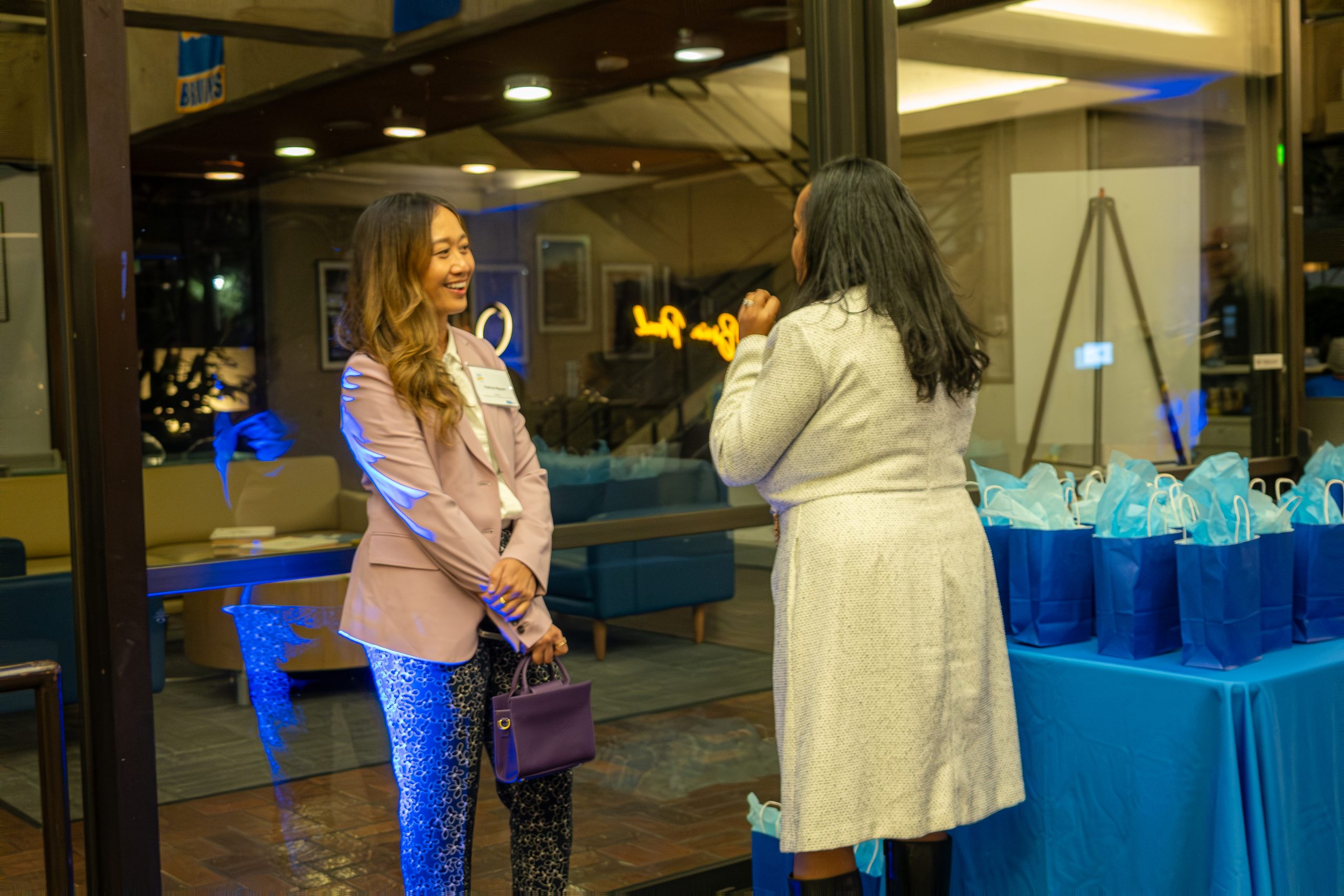
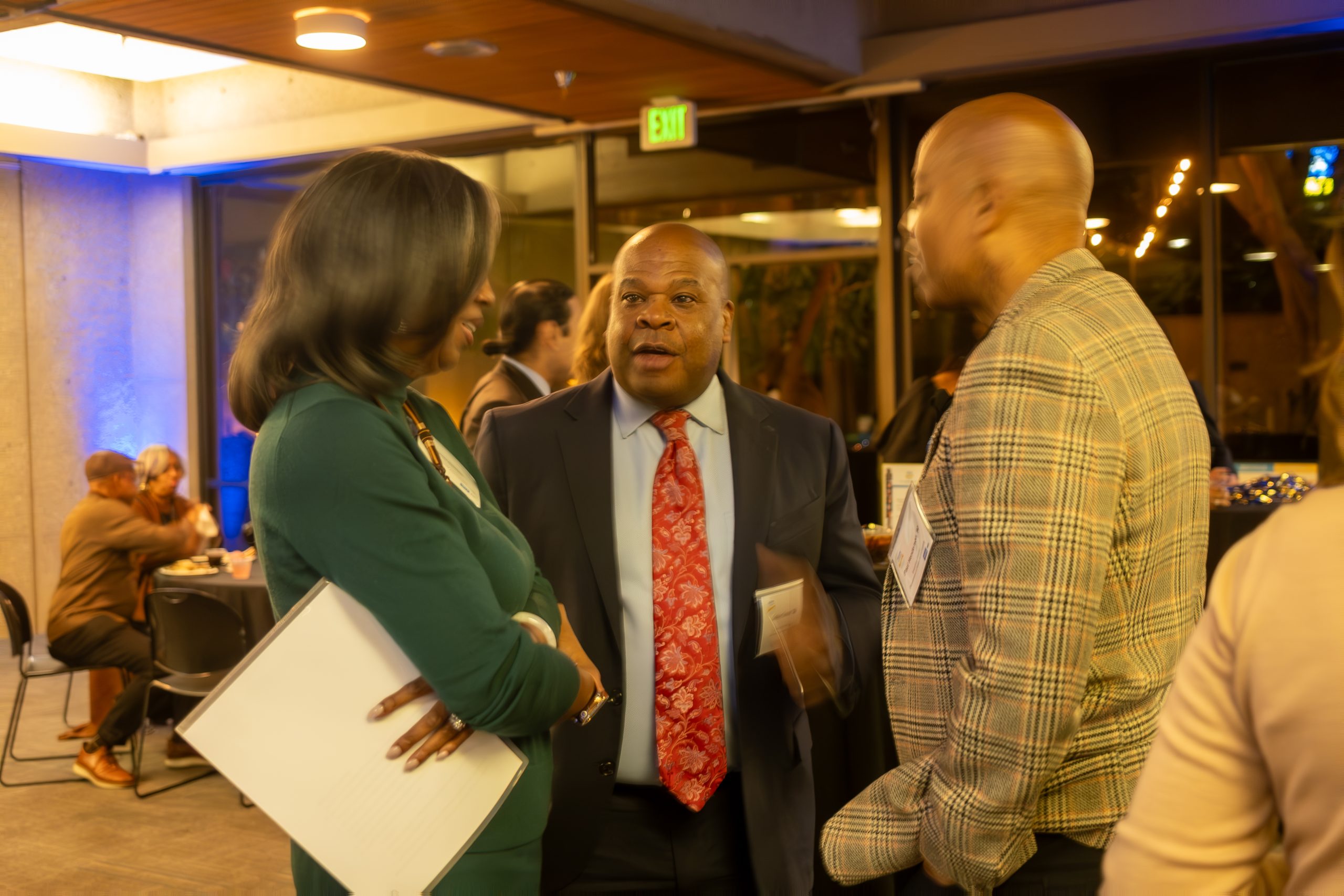
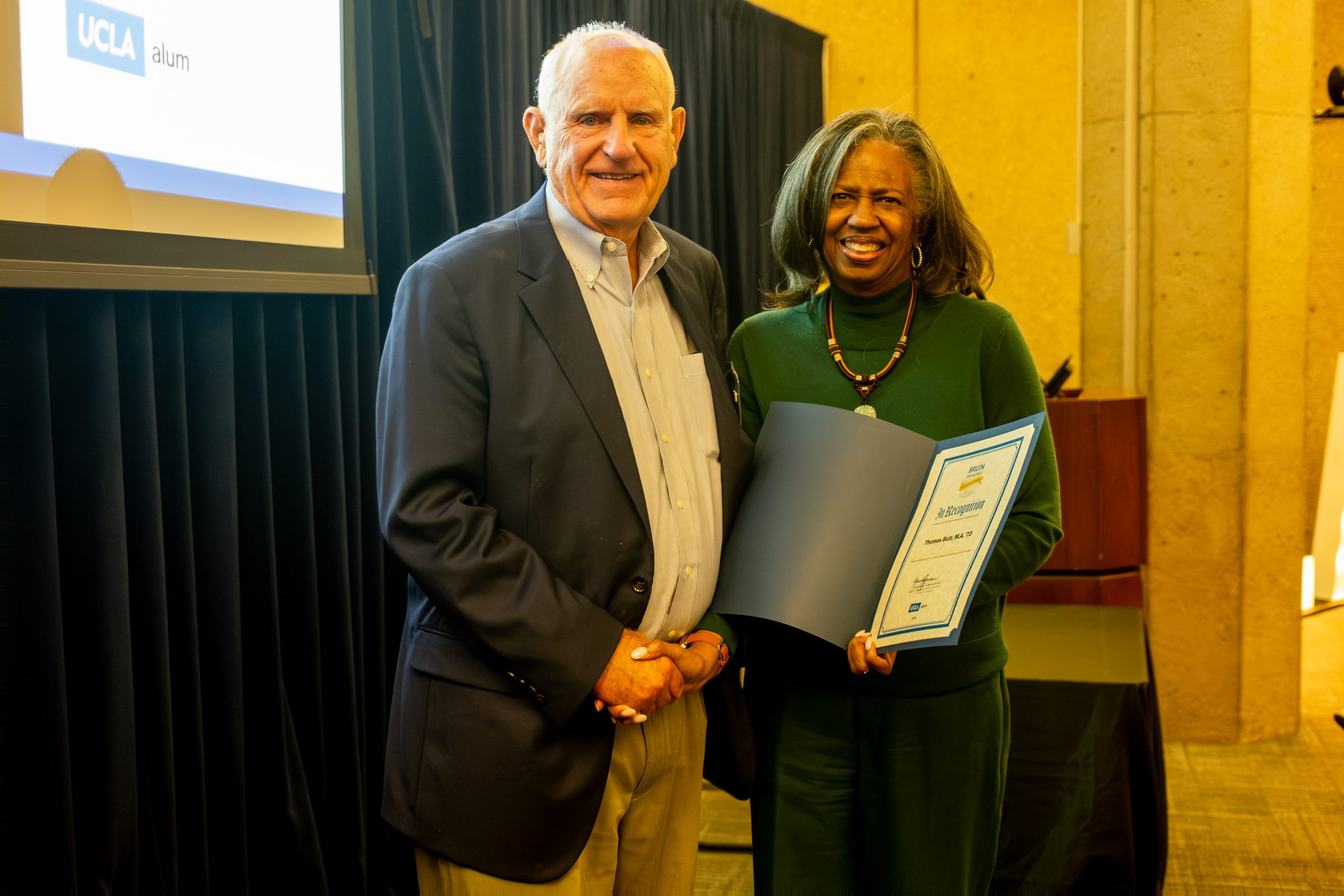
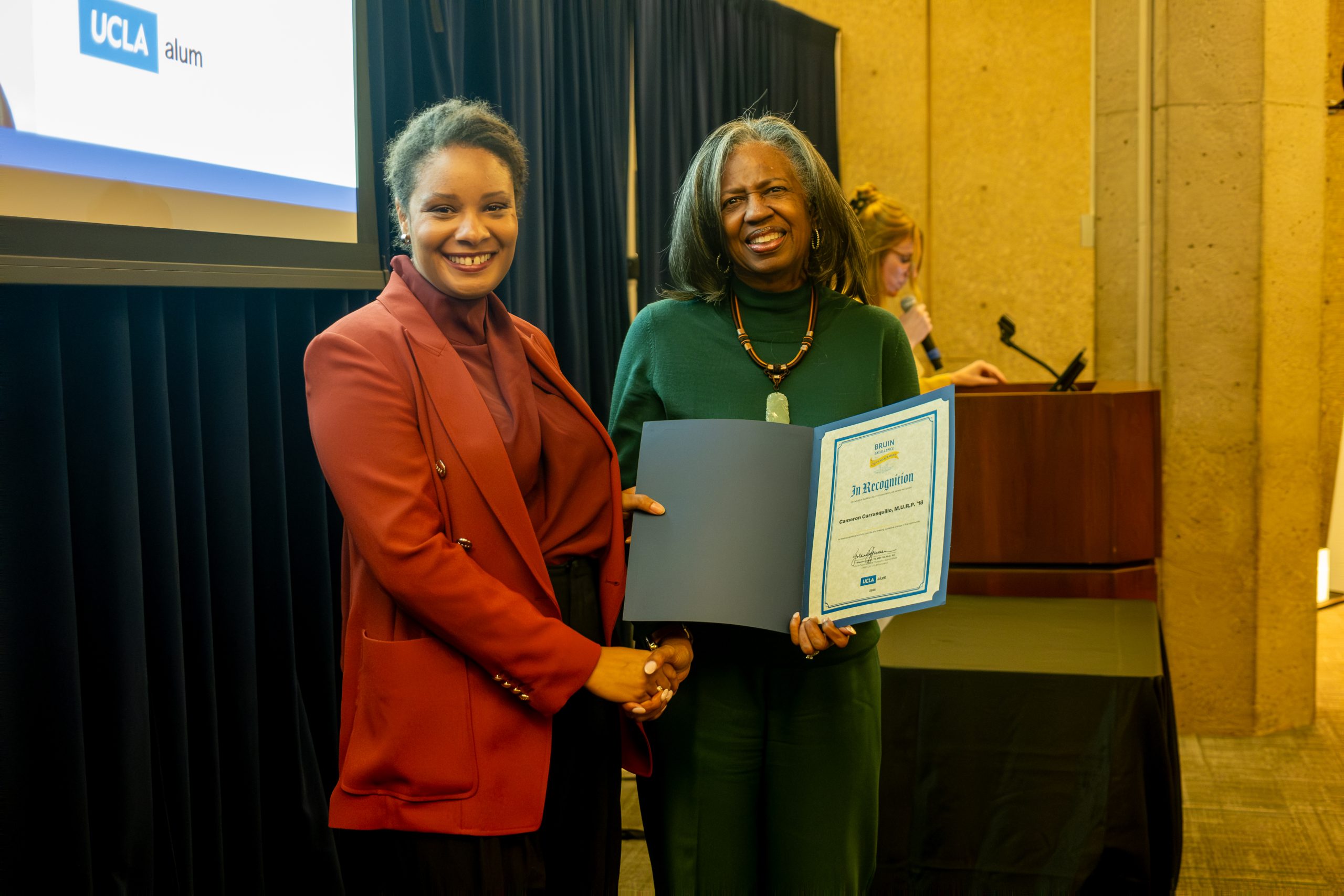
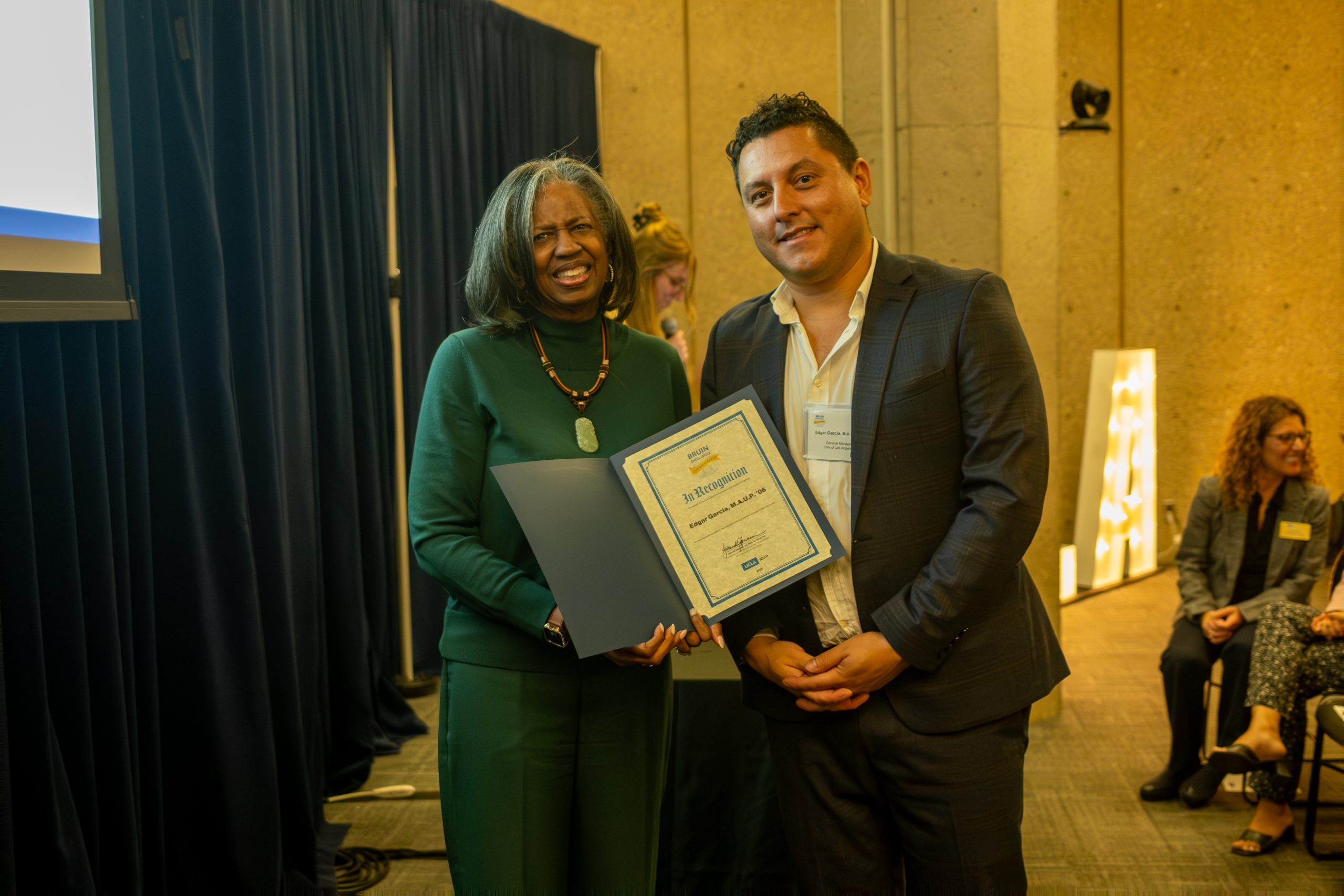
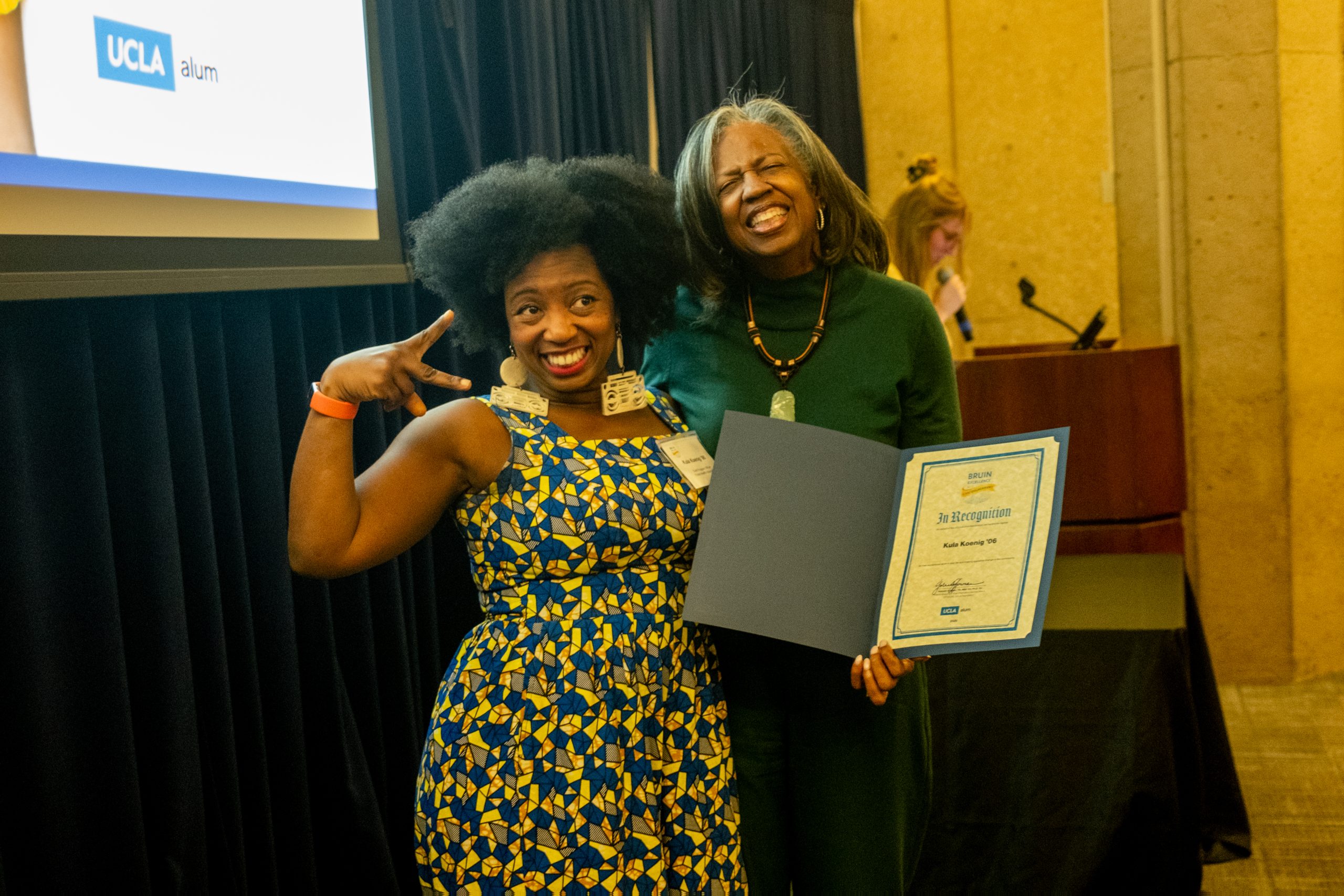
Bruin Excellence in Civic Engagement 2025 Reception Gallery
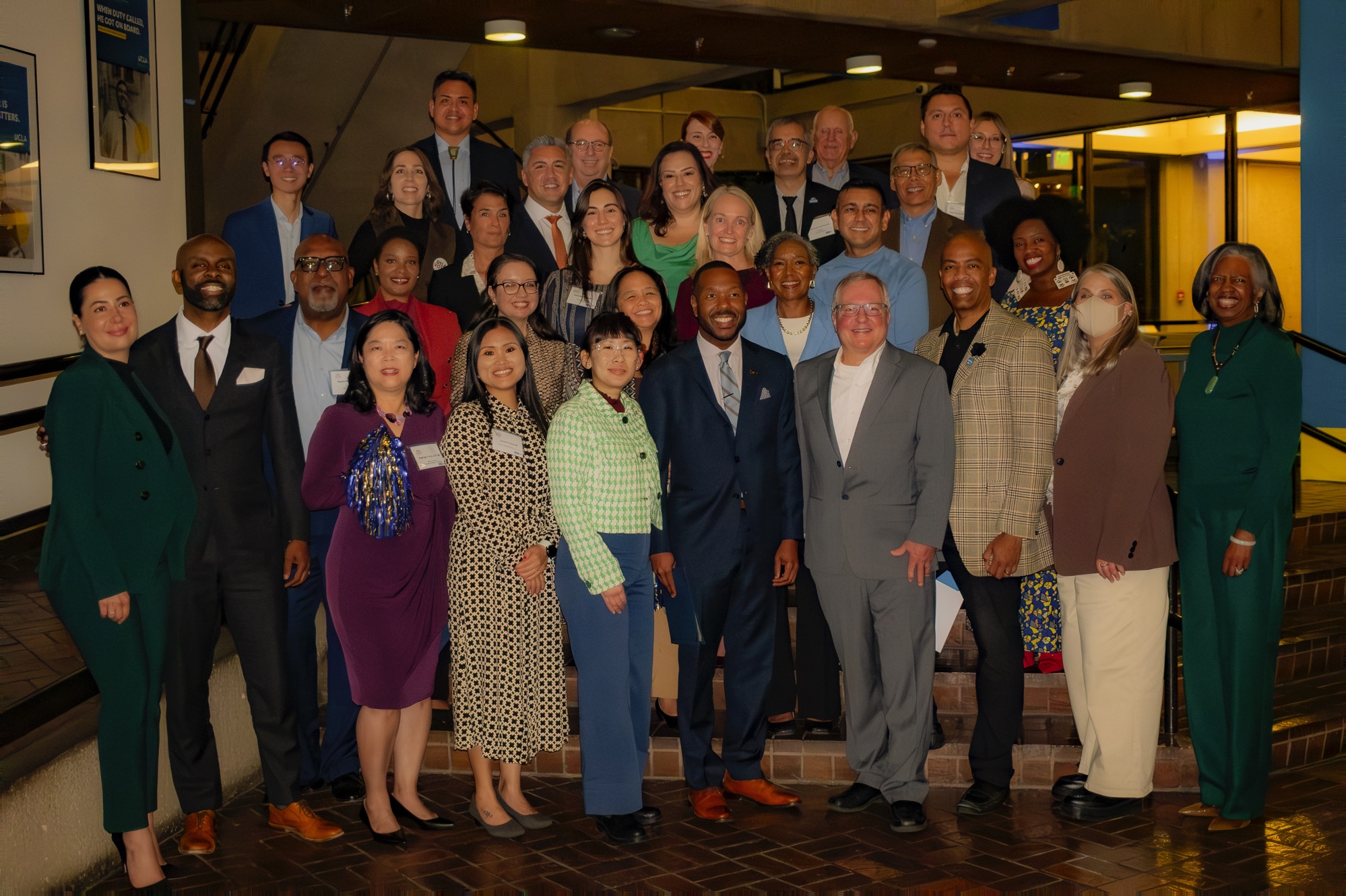
On Oct. 15, UCLA Alumni Affairs held a reception at the James West Alumni Center for the 2025 honorees of the Bruin Excellence in Civic Engagement, which recognizes exceptional UCLA alumni serving in civic leadership positions. These Bruins are making a difference in the civic life of our communities and developing a combination of knowledge, skills, values and motivation to improve the lives of others. Learn more about this recognition and each honoree.










Get the Answers From College Fairs Volunteers
O
f the many ways that UCLA alums give back to their alma mater, one of the most rewarding, but, perhaps, least known, is volunteering at college fairs. These events, organized by UCLA Admission, are held at community colleges and highs schools throughout California from August to November each year; 65 such fairs were held in 2024. UCLA Alumni Affairs identifies volunteers from the alumni community to staff them and, despite having to go through an annual three-hour orientation, volunteers keep coming back year after year.
The orientation goes over the kinds of questions that might be asked, and a manual is provided to the volunteers that lists information about the different schools within UCLA, dates and deadlines to be aware of, cost and financial aid information, etc. Volunteers are coached on what to say to prospective students, and what not to say (e.g., they are not to criticize or put down other universities).
“Our alums are not trying to sell UCLA to the students,” said Janette Palacios ’98, M.A. ’01, director of Alumni Communities, who helps identify the volunteer cohort for Alumni Affairs. “They already know about UCLA, and for many, it’s their dream school. We just want to make sure they have the necessary information to help them make their decision and to get through the application process.”
Many fairs are held in places where there are a lot of underrepresented students, some of whom don’t have access to guidance counselors. This places more value on college fair volunteers, with whom prospective students can readily identify, to convey helpful information about their universities.
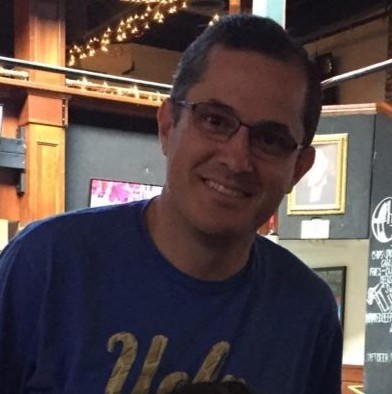
One alum who has had a long history of this type of outreach is Alfredo Perez Jr. ’92. A political science major, Perez worked in Campbell Hall as an Academic Advancement Program counselor for about five years and served as a vice president of the Beachside Bruins network.
“I’ve always felt like I had a debt to UCLA because 30-some-odd years ago they took a chance on this kid,” Perez said. “And there are very specific people who were responsible that I will always remember. At a New Bruin Send-off event with Beachside Bruins last September, for incoming first-years, a woman came up to me who looked familiar. Turns out that she had worked for UCLA Admission and was the one who called to tell me there were some things I had done wrong in my application that I needed to fix. She even encouraged me to retake the SAT or take the ACT. I told her, ‘I went to UCLA because of you.’
“If I can just do a little bit of what they did for me, that is very rewarding.”
While in his office at Campbell Hall, things came full circle for Perez.
“I remember talking to a family from the Central Valley at an informational event, and they were concerned when they heard about the coed dorms. Would their daughter have a male roommate? I assured them that this wouldn’t be the case and tried to ease their minds about a couple of other concerns. One day when I was in my office, a student knocked on my door and she said, ‘I just want to thank you because I'm here due to that conversation you had with my parents; that made it a lot easier for them to accept my coming to UCLA.’”
Last year, Perez volunteered for his first college fair. He takes a broader view than merely talking about UCLA.
He said, “Some of the students aren’t sure if they should go to college at all, and I talk to them about what continuing their education could mean to them. Many who want to go to UCLA are skeptical about getting in, and I tell them, ‘Give yourself a shot. If you don't get in, then we'll talk about what the alternative is. Maybe try a Cal State or a community college and transfer to UCLA later. Your diploma will still be from the University of California, Los Angeles.’”
Ekeoma Nwadibia ’09, a chemistry major who went on to earn her doctorate at Columbia University, was looking for a way to get more involved with UCLA, so she volunteered at multiple college fairs in Northern California the last two years.
“I had a really great experience during my time at UCLA and I wanted an opportunity to share that with others,” Nwadibia said. “I really enjoy meeting families, meeting students, getting to hear what motivates them, what excites them. To be able to share not only the information that they could find on websites, but my own personal experiences I think is very helpful.
“Sometimes we get first-year (high school) students, and I always find those particularly interesting because they'll be there with their parents and they're already thinking about how they can structure their high school years and the courses they’ll take to maximize their chances of being admitted to UCLA. So that's really some advanced planning.”
Nwadibia, who is a middle school science teacher, said that, while she got lots of questions about areas like engineering and computer science, she also got inquiries about non-academic activities as well.
“I got a lot of questions about sports, and not just football and basketball but lacrosse and hockey,” she said. “I didn't know the details about all of the many intramural activities and club sports that UCLA has to offer, so, as we learned in the trainings, I said, ‘We offer this many activities, so you can either find one that suits you or start your own.’
“The students also ask a lot about housing and I get to share with them that it is guaranteed for four years for incoming first years and for two years for transfer students. The cost of attending is another topic that comes up a lot, so I’m able to give them a pamphlet outlining different scholarships that UCLA offers – and I encourage them to fill out their FAFSA (Free Application for Federal Student Aid) form.”
Xitlalli Cardenas ’18, a sociology major who is starting law school at the University of Oregon this fall, has always tried to help underrepresented communities and has found volunteering at a fair a great way to do that. She has volunteered at fairs in the San Fernando Valley and Antelope Valley the last two years – and they weren’t only held at schools.
“In the Antelope Valley, they did a really big event that they hosted at their fairgrounds,” Cardenas said. “So that was awesome. The UCLA line is always the longest line by far; everyone always wants to talk to the UCLA people, and I'm happy to help and then just stay there and answer everyone's questions.”
Community service and outreach is not new to Cardenas. During her time at UCLA, she did a lot of volunteer work and received the Chancellor's Service Award for her efforts.
She said, “UCLA really was my dream school – is my dream school. I really enjoyed my time there. So, for me, volunteering was really about wanting to share that with other people and wanting other people to have that awesome experience to go to UCLA to become a Bruin and immerse themselves inside of the community.”
She finds it especially rewarding to volunteer at fairs that are attended by members of communities where a personal approach, encouragement and advice is most needed.
“Communities of color are something I’m very passionate about serving,” Cardenas said. “So that was really the forward drive to do that and to go to a lot of these places that don't really see that much outreach. I know how much potential the students there carry, I know how hard they work and I know everything that they can contribute to UCLA as a community.
“One thing that I really highlight when I'm there is that UCLA really likes well-rounded people, and they should tell a story in their personal statement – including extracurriculars and what they're really interested in – to let Admission know who they are. I think that that's a really strong component to their application.”
And, as with so much in the UCLA Alumni volunteer community, the benefits of the interaction flow in both directions.
“Afterwards, you are so happy, so energized because you are having these very organic and authentic interactions with the community and with the students there,” Cardenas said. “And you're sharing your stories of your favorite things to do or things that they don't really know that a lot of students do. It's a great feeling and a great sense of connection that you walk away with.”
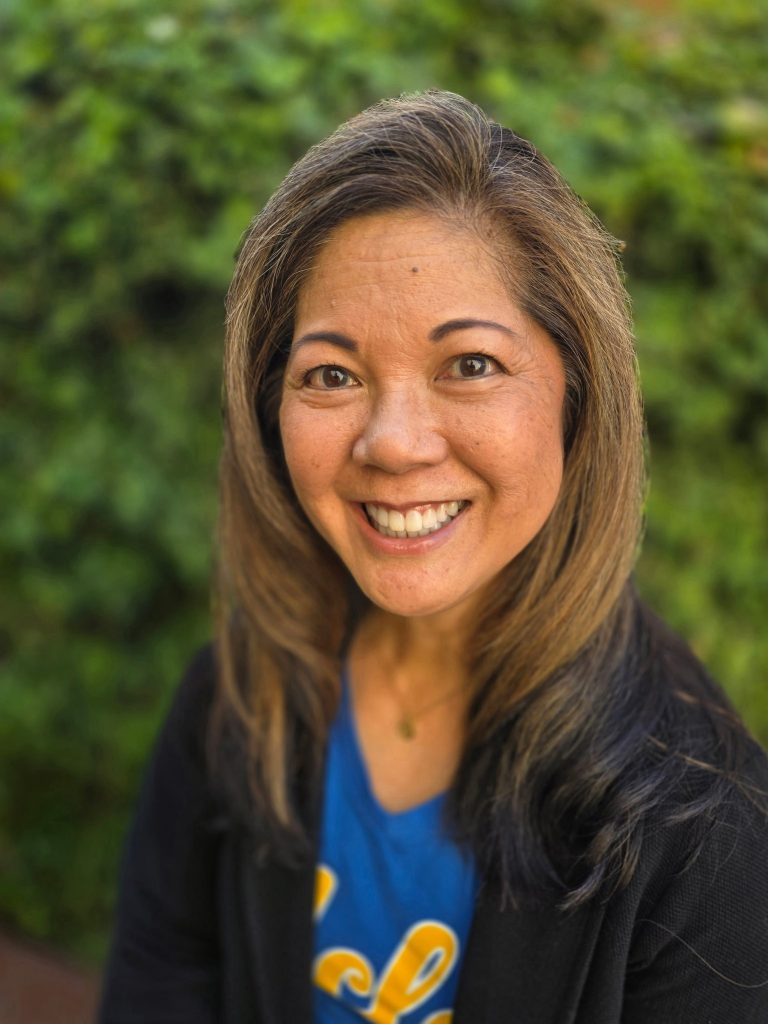
Lisa Sison ’89, an economics major who went on to earn an MBA and works in corporate finance for the Walt Disney Company, was inspired to reconnect with UCLA and give back to her alma matter when her sons began their college careers.
She said, “When I heard about college fairs, I raised my hand and said, ‘Yeah, that's something that I would do,’ because I wanted to connect with young students – not just high school seniors or juniors looking at colleges, but freshmen or even younger kids who are exploring their options. I wanted to share my passion for UCLA with those students.”
Last year, Sison volunteered at four college fairs in Orange County. The kinds of questions she got from students often focused on the difficulty of being admitted to UCLA, even for accomplished students.
“One of the most common questions that I received was, ‘How do I submit an application that really stands above others so that my application is memorable?’ My response was, ‘Take a variety of courses and challenge yourself, demonstrate that you are able to take on challenges by choice. GPA is not everything; the PIQs (Personal Insight Questions) are where you can really express yourself. I think there's eight to choose from – you get to select which ones to answer. That's your opportunity to demonstrate how you can write, how you think. It's an opportunity to shine, your opportunity to express how you contribute to the community, what you’re involved in and maybe discuss some of the obstacles you’ve faced and how you’ve overcome some challenges in your life. Let the application readers know what you can bring to UCLA, what difference you make. Stay involved during your high school career but be authentic; find something that you are passionate about and really put your heart into it. Maybe you have more opportunities than kids in the less affluent areas; how do you take advantage of those opportunities and use them to further your goals and elevate the community?’”
Sison is planning on participating again this year.
“It was so rewarding,” she said, “to see that joy and the gratitude – they're so appreciative of the volunteers taking their time to share their knowledge and their experience.”
Those interested in volunteering at future college fairs can email FutureBruins@alumni.ucla.edu. For information, visit the https://alumni.ucla.edu/get-involved/college-fairs.
Recent Articles
- The Fire Within: Leo Rochman’s Story of Resilience
- UC Inspires Honors UCLA Alumni
- UCLA AAP Alumni Spotlight - Adrianos Facchetti ’01, J.D.
- The Story Behind Jackie Robinson’s 1946 Reintegration of Organized Baseball
- UCLA Prytanean Celebrates Its Centennial
- Building Community: UCLA Disability Alumni Network Focuses on Belonging and Visibility
Books by Bruins - LGBTQ Stories
I
n celebration of Pride month, our Books by Bruins series features publications about LGBTQ topics ranging from personal memoirs to historical stories to humorous film critiques. As this compilation of Bruin authors grows, we’re categorizing the books into an online library, but we’ll need your help to make it as comprehensive as possible. If you know of one, please submit a Bruin author. While all these books are written by UCLA alumni, inclusion in the list is not an endorsement.
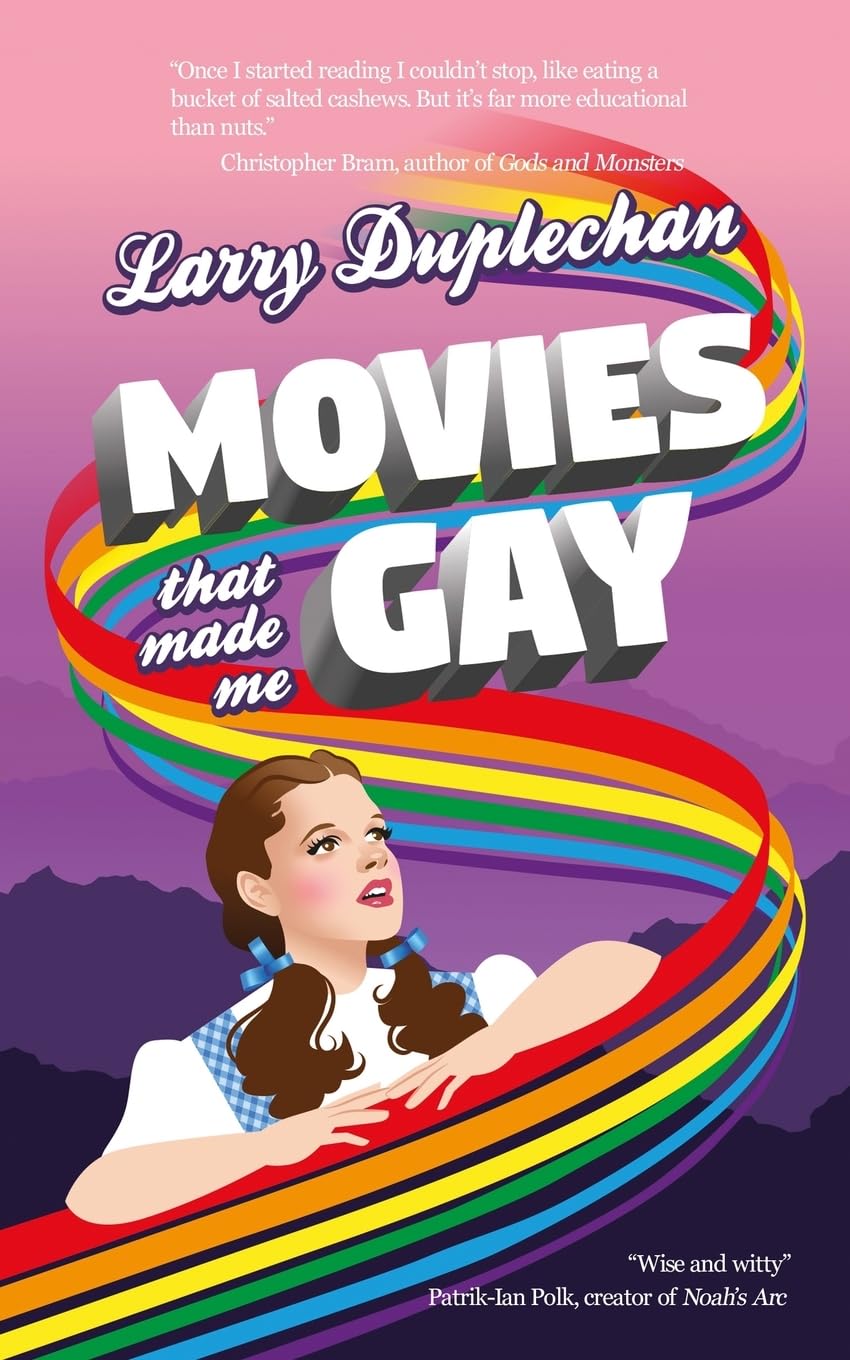
Movies That Made Me Gay (2023)
Larry Duplechan ʼ78
Larry Duplechan’s memoir transports viewers through Hollywood history with humorous film criticism while simultaneously covering his experience growing up as a Black gay man in the early 1960s. Duplechan is the author of five novels, including “Blackbird,” which is considered the first modern Black “coming-out” novel, and the Lambda Literary Award-winning “Got ‘til it’s Gone.”
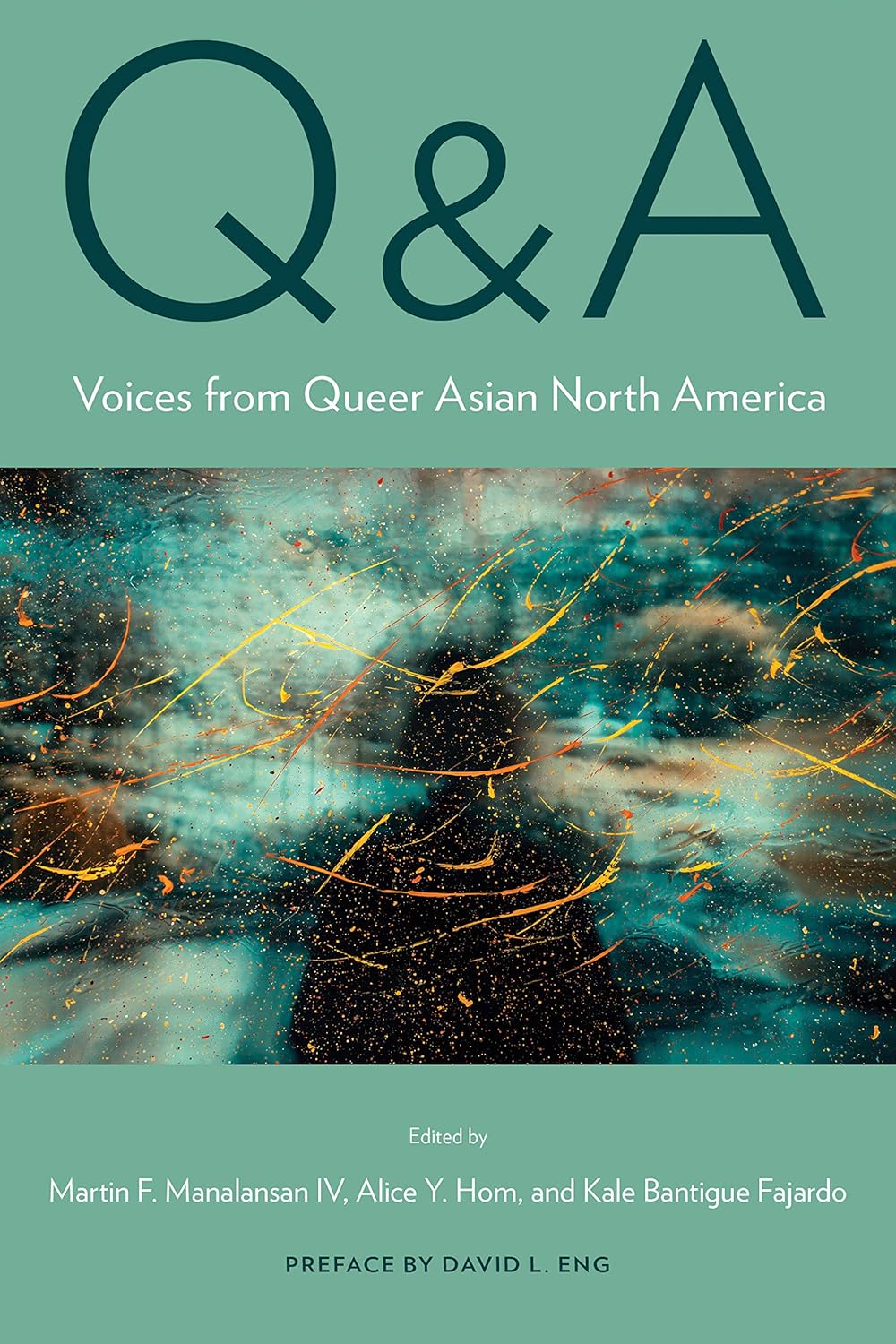
Q&A: Voices from Queer Asian North America (2021)
Alice Hom, M.A. ʼ92
“Q&A: Voices from Queer Asian North America” considers how Asian American racial and queer sexuality interconnect in mutually shaping and complicating ways. Alice Y. Hom is an Asian American LGBTQ community activist and author, and the director of Equity and Social Justice for The Northern California GrantMakers. She is also the host of the Historically Queer Podcast. Her 1998 book, “Q&A: Queer in Asian America; Unifying Differences,” won the Lambda Literary Award for Best Book in Lesbian and Gay Anthologies/Non-Fiction.
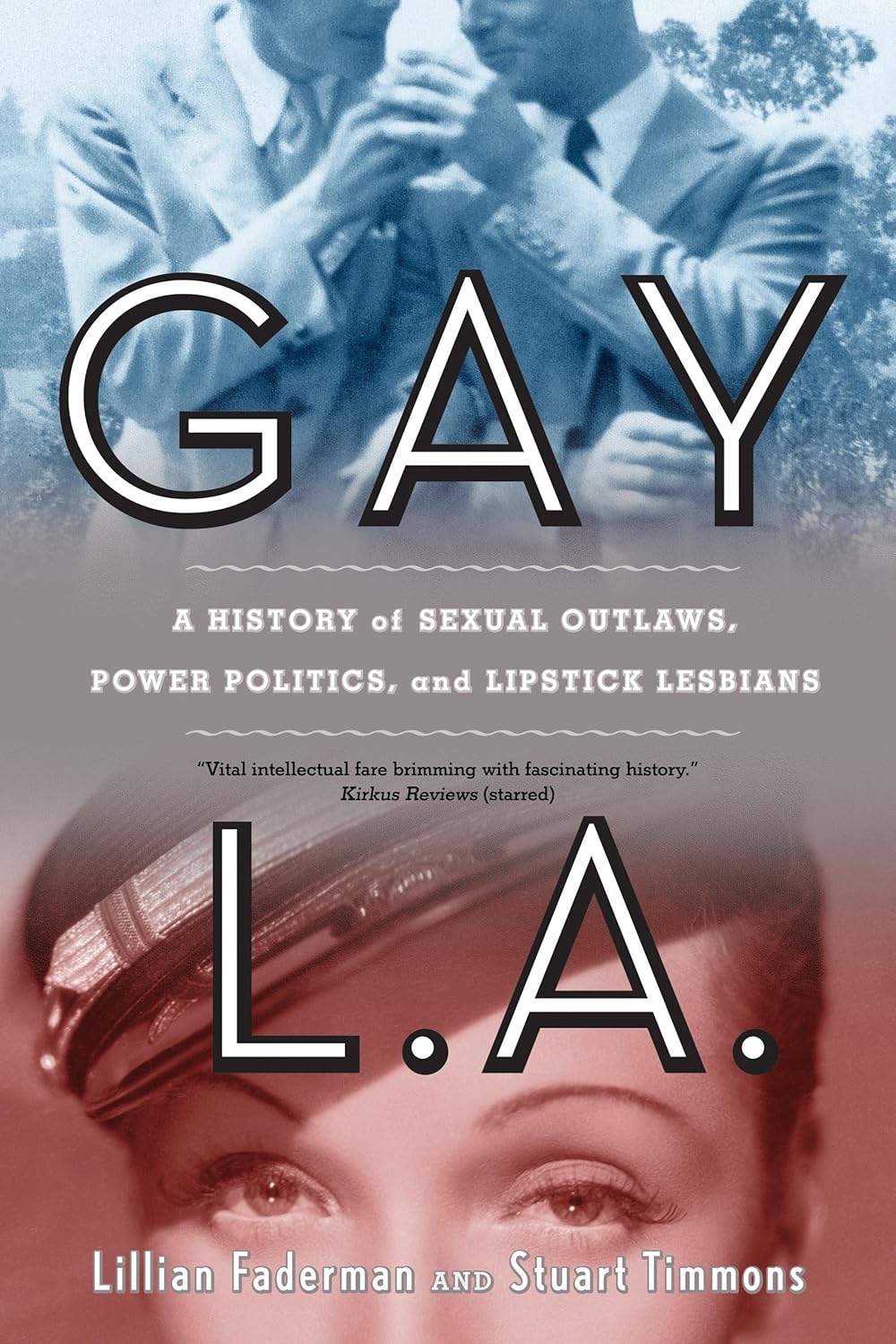
Gay L.A.: A History of Sexual Outlaws, Power Politics, and Lipstick Lesbians (2009)
Stuart Timmons ʼ81
Drawing on rare archives and photographs as well as more than three hundred interviews, Lillian Faderman and Stuart Timmons chart L.A.'s unique gay history, from the first missionary encounters with Native American cross-gendered “two spirits” to cross-dressing frontier women in search of their fortunes; from the bohemian freedom of early Hollywood to the explosion of gay life during World War II to the underground radicalism set off by the 1950s blacklist; and from the 1960s gay liberation movement to the creation of gay marketing in the 1990s. While a student at UCLA, gay historian, activist and author Stuart Timmons cofounded Outfest, which has grown into one of the nation’s largest and most influential LGBT film festivals.
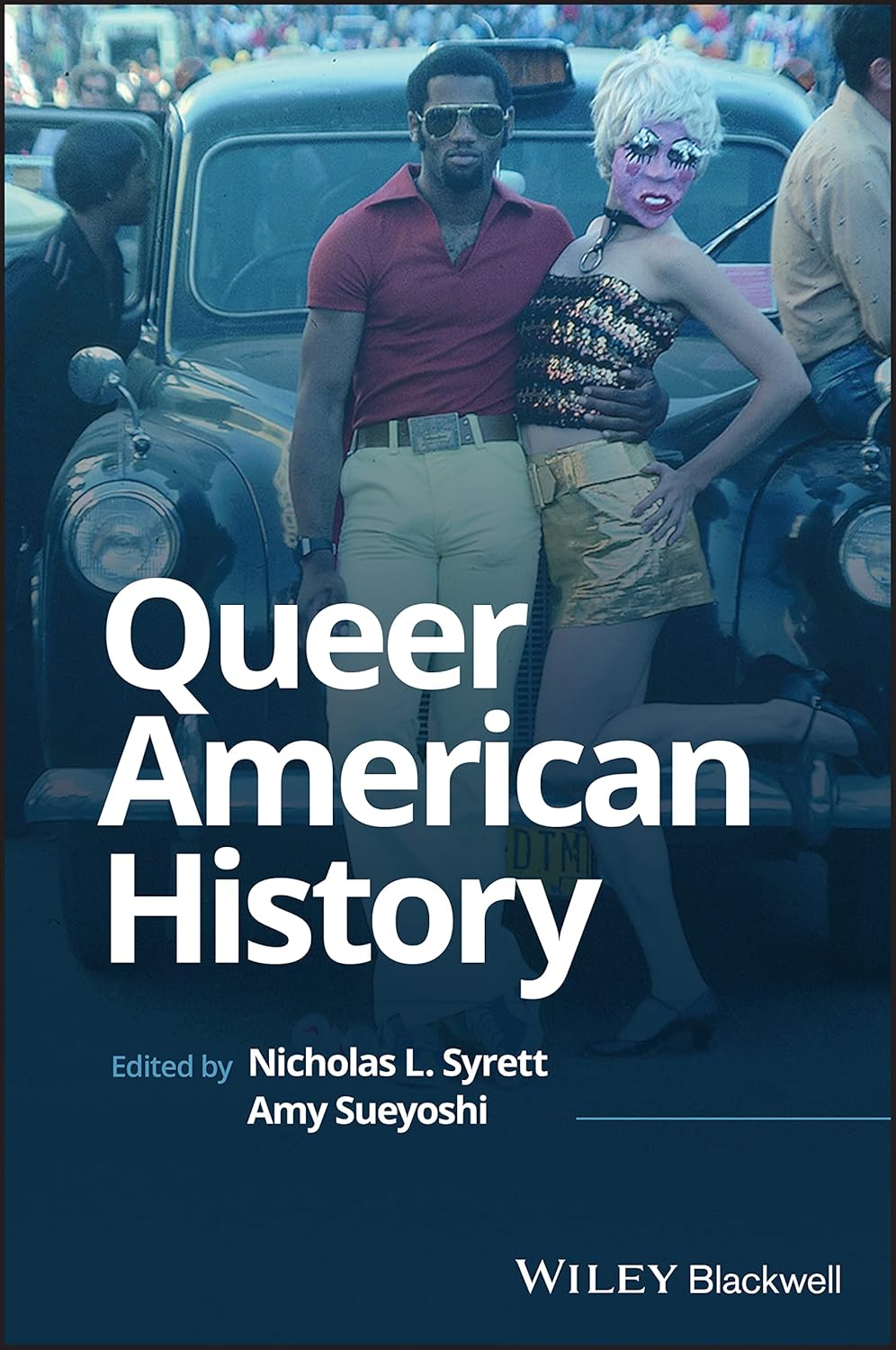
Queer American History: A Reader in Documents and Essays (2024)
Amy Sueyoshi, M.A. ʼ98, Ph.D. ʼ02
Sueyoshi bridges feminist, queer and ethnic studies to show how the white quest to forge new frontiers in gender and sexual freedom reinforced racial inequality through a pan-Asian American stereotype weighted with sexual and gender meaning. Amy Sueyoshi is the associate dean of the College of Ethnic Studies at San Francisco State University. She is the author of “Queer Compulsions: Race, Nation, and Sexuality in the Affairs of Yone Noguchi.”
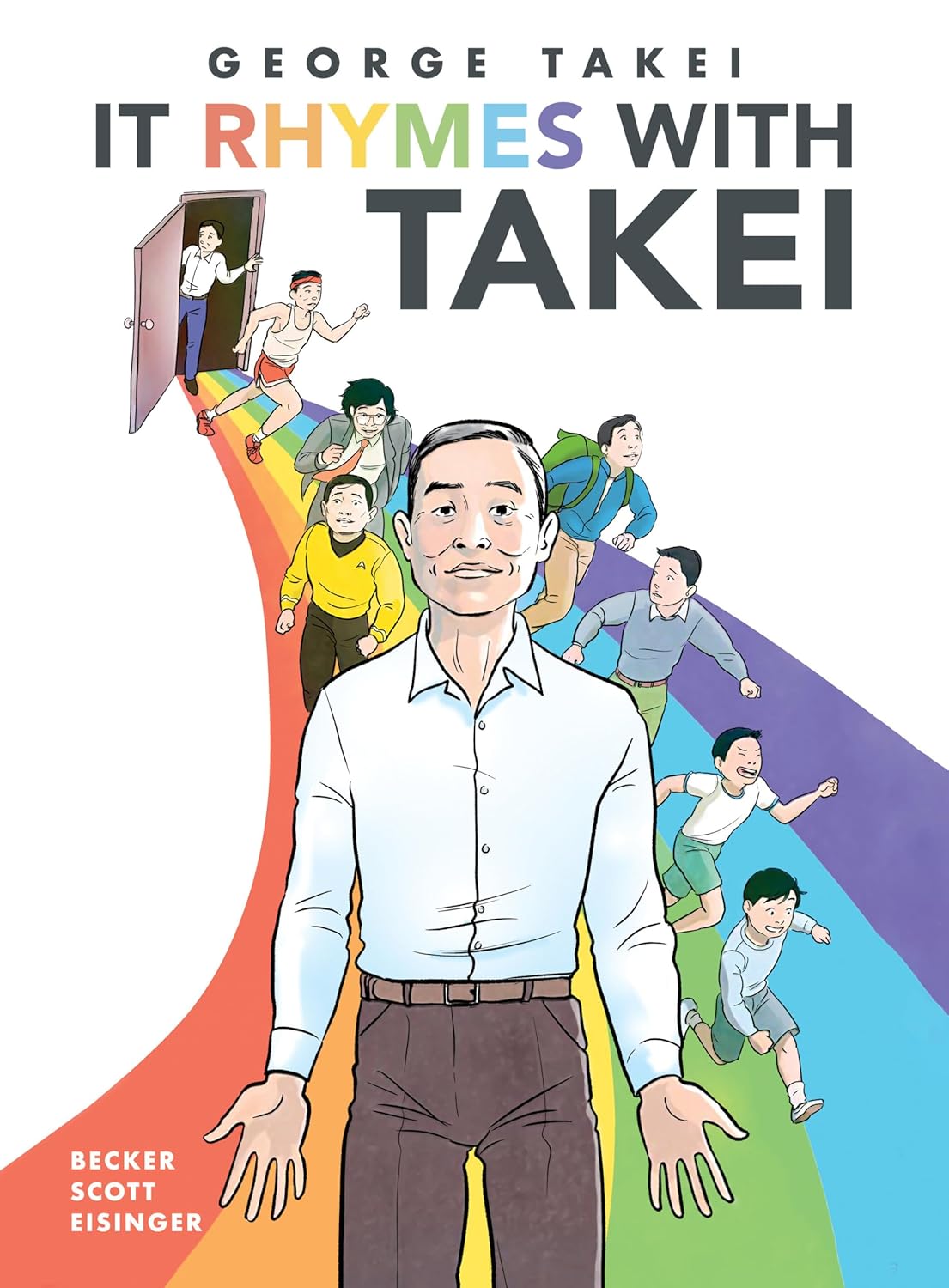
It Rhymes with Takei (2025)
George Takei ʼ60, M.A. ʼ64
Following the award-winning bestseller “They Called Us Enemy,” George Takei’s new full-color graphic memoir reveals his most personal story. Takei has shown the world many faces: actor, author, outspoken activist, helmsman of the Starship Enterprise and living witness to the internment of Japanese Americans. Now, for the first time ever, he shares the full story of his life in the closet, his decision to come out as gay at the age of 68, and the way that moment transformed everything.
Twenty Years of Legal Marriage for Same-Sex Couples in the United States: Evidence Review and New Analyses (2024)
Benjamin Karney, M.A. ʼ92, Ph.D. ʼ97
It has been 20 years since the first marriage licenses were issued to same-sex couples in Massachusetts. The authors of this report draw on an evidence review and analyses that reveal that the benefits of access to legal marriage for same-sex couples are unambiguously positive. For the past 25 years, Dr. Benjamin Karney has been studying change and stability in intimate relationships, especially in the early years of marriage. His research relies upon longitudinal data, repeated measures, multilevel modeling and observational coding of couple interactions.

Love Comes First: Creating LGBTQ Families (2021)
Bradford Kolb, EMBA ʼ22
This first-hand account covers practical information from an organization specializing in adoption for LGBTQ parents as well as sperm donation from the largest sperm bank in the country. As president and managing director of HRC Fertility, Dr. Bradford Kolb is internationally known for having some of the highest rates of pregnancy success in the country. He has also been a pioneer in assisting LGBTQ families. Dr. Kolb is the president and board chair of Love Comes First, a nonprofit organization dedicated to furthering awareness of LGTBQ families via multimedia storytelling.
Mama's Boy: A Story from Our Americas (2019)
Dustin Lance Black ʼ96
Dustin Lance Black wrote the Oscar-winning screenplay for “Milk” and helped overturn California's anti-gay marriage Proposition 8, but he grew up in a conservative Mormon household outside San Antonio, Texas. His book explores what it took to remain a family despite such divisions — a journey that stretched from the steps of the U.S. Supreme Court to the wood sheds of East Texas. Black is an Oscar winner, a TFT alumnus and a veteran screenwriter, producer, director and playwright.
***
Send your Books by Bruins recommendations. You can also search for authors or share news on the UCLA Alumni Class Notes page.
Books by Bruins Library
Previous articles in the Books by Bruins series


Recent Articles
L.A. Wildfires: Bruins Helping Bruins
T
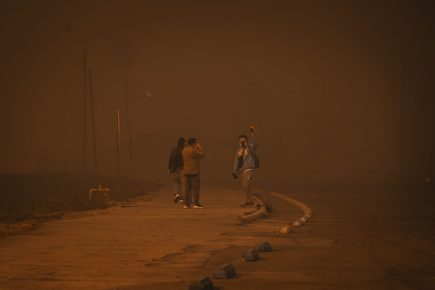
he January wildfires across Los Angeles County were the most destructive in California history, leaving behind immeasurable damage, displacement and a citywide sense of loss. The Pacific Palisades and Altadena neighborhoods have been devastated and the entire city is shaken, either by personal loss or by the scale of destruction and its impact on friends, family and coworkers. The fires have upended the lives of many in the Bruin community, and Bruins have responded with an outpouring of support.
After nearly a month of intense firefighting efforts, all the fires are 100% contained, but the damage is staggering. The Palisades Fire burned 23,707 acres, destroying 6,833 structures. The Eaton Fire burned 14,021 acres, and destroyed 9,418 structures. In all, 29 lives were lost and estimates show that 150,000 people were displaced. Thousands of families have lost their homes or cannot return to them until their neighborhoods are safe again. Artists lost their studios, small business owners lost their shops, housekeepers, gardeners and teachers lost their places of employment. As wildfires broke out across the city on Jan. 7, UCLA Chancellor Julio Frenk had just started his first full week in his new role. He quickly shifted his focus to leading UCLA’s response. While the UCLA campus was never in immediate danger, the University closely monitored the situation. Students, faculty and staff who lived nearby had to evacuate, and many learned their homes had been lost in the fire. The Bruin community immediately began organizing ways to help. Chancellor Frenk encouraged Bruins to “look out for one another and mobilize our reservoirs of kindness.”
IMMEDIATE NEEDS
As the winds shifted and the fire began to move towards campus, the Academic Senate made a decision to move classes online for a week out of an abundance of caution. To keep in touch with the Bruin community, Frenk began sharing personal video messages updating the community on UCLA’s efforts to keep health care facilities open and running, limit water use on campus and provide access to temporary housing, meals and support.
Chancellor Frenk announced a series of virtual Town Halls for staff, students, alumni and parents to answer questions from the community and provide updates on resources. UCLA also established a campus updates and resources page with up-to-date information.
Across campus, student groups, campus departments and other units jumped into action to support the community’s most pressing needs. The UCLA College Corps, a group of students who perform climate-related community service partnered with the UCLA Volunteer Center to mobilize the purchase of comfort and care items from an Amazon wish list, which were combined with donations from businesses. They distributed more than 500 care packages to UCLA community members affected by the fires.
UCLA ALUMNI
Bruins are finding ways to support each other and give back. Within the UCLA community, it is estimated that the fires affected more than 22,000 alumni. Alumni Affairs is working with various alumni networks to assess the needs of impacted Bruins, sharing resources and making plans to help in their long-term recovery. A large list was compiled of resources for affected Bruins, ranging from pet/animal care to temporary housing assistance to programs for small businesses.
Alumni who are searching for ways to help can directly assist displaced Bruins via GoFundMe, or volunteer their services through this interest form. Julie Sina, associate vice chancellor of Alumni Affairs, has said, “Your alumni community, 670,000 Bruins, are here to support you and lift you, through what we know will not only be today, but as time moves forward, through the recovery. Please don’t hesitate to reach out.”
DISASTER RECOVERY CENTER
In his message to the UCLA community on Jan. 14, Chancellor Frenk shared that the University would open space at its UCLA Research Park property, formerly the Westside Pavilion mall, for the Federal Emergency Management Agency to use as a Disaster Recovery Center. FEMA partnered with the City of Los Angeles and other federal, state and local government agencies and nonprofits to provide much needed services. Since then, the Center has served nearly 17,000 people with applying for disaster relief loans and replacing lost or destroyed birth certificates, passports and driver’s licenses. The UCLA Foundation and Alumni teams have organized a table staffed by UCLA and our alumni volunteers every day since the opening of the center. Nearly 2,500 Bruins have signed up to lend a helping hand. Volunteers are connecting alumni with resources, answering questions and sharing information about University job openings. UCLA graduates and graduates of any UC can request a replacement diploma free of charge. Kristine Werlinich, executive director of The UCLA Foundation says, “Volunteers have taken away that it’s good to be able to show up for people as a friendly face and an ear to listen, just being there for them when they're going through a tough time.”
The UCLA Alumni Association is collecting new or gently used Bruin apparel to share with Bruins who have lost theirs in the fires. Whether it’s a hoodie, a T-shirt or anything with Bruin flair, donations can be dropped off at the James West Alumni Center on campus. A pop up will be hosted in the spring by the Alumni Association to distribute the gear.
COMMUNITY
Bruins are using their skills in any way they can to help others. Alan Barasorda ʼ93 is the director of finance and human resources for the Pasadena Senior Center. He is also a longtime member and current president of the Rose Bowl Bruins. Basorda’s UCLA story begins in 1990 when he attended his New Bruin Orientation. He remembers someone asking the gathered students if they felt special, having received an acceptance to their dream school. They followed the question with a suggestion, “I want you to remember this feeling so that after you graduate you can show your gratitude by giving back to the community.” Basorda took that message to heart, and it has inspired him throughout his life.

The Pasadena Senior Center is a nonprofit working to improve the lives of low income and food insecure older adults. During the fire, the Center needed to close briefly, so they brought their supplies to share with the nearby Red Cross Center. In the meantime, the Center collected donations and when they reopened on Jan. 10, they were restocked and eager to provide much needed meals and services. The Altadena Senior Center burned in the fire, so the Pasadena Center extended a welcome to their seniors as well.
Barasorda has brought UCLA to the Senior Center, hosting Rose Bowl Bruin events and volunteer opportunities. He encourages others to volunteer at the Center, or find other ways to get involved. He says, “It’s about giving back, because that’s what we Bruins do.”
Among the heroes of the community were the firefighters and first responders. Nearly two dozen Los Angeles Fire Department battalion chiefs are UCLA Extension alums. Battalion chiefs coordinate resources and people, a job that requires excellent project management skills. The firefighters earned certified associate project manager certificates through the project management professional exam preparation course within UCLA Extension in 2019.
CAMPUS ORGANIZATIONS
Many Bruins need help coping with the aftermath of the fires, and UCLA has responded by mobilizing campus organizations and centers. The UCLA Homeless Healthcare Collaborative provided medical care to people who were displaced by the fires and dentistry students and others have mobilized to supply fire-impacted residents with essential relief items. The UCLA Community Programs Office worked with partners including Semel Healthy Campus Initiative Center, UCLA Residential Life and the local nonprofit Food Forward to hold regular food distribution events for students, faculty, staff and alumni. Student volunteers stepped up to help feed hundreds of Bruins and their families at events across UCLA.

UCLA also provided counseling for students. The Counseling and Psychological Services (CAPS) staff were made available to support mental health needs and have a 24-hour a day hotline. The UCLA RISE Center also provided support for mental and emotional wellbeing, and held specialized drop-in support and programming for those impacted by fires.
UCLA EXPERTS
As the focus shifts from immediate support for fire survivors to rebuilding and recovery, UCLA experts are helping guide policymakers and communities to address immediate and long-term challenges, including water supply, air quality, recovery planning, and the governance and politics of disaster response.
Gregory Pierce, one of the experts from the UCLA Luskin Center for Innovation, consulted with community members and politicians on increasing safety and trust in drinking water systems impacted by wildfires. He said, “We need to coordinate ASAP on testing, treatment and public communication and involve nonprofit organizations that are trusted in their communities. Otherwise, residents will be confused, concerned or worse regarding the safety of their water.”
Rachel Connolly, an air quality and environmental equity researcher at UCLA, recommended N95 masks and air purifiers to protect from contaminated air. The Campus Air Quality Dashboard allows anyone to access the information from five air quality sensors across campus. UCLA provided N95 masks at the Ashe Center and from residence halls during and after the fires.
FINANCIAL SUPPORT
As UCLA continues to expand the scope of its support for fire relief and recovery efforts, it has also established the Bruin Wildfire Relief Funds to assist students, faculty, staff and researchers who have been impacted by this tragedy. Rebuilding and recovery won’t be achieved in the coming weeks or months; it will take years and will require a large-scale mobilization. But if there’s one thing we can count on, it’s that Bruins are here to help.
Below is a list of UCLA opportunities.
- Economic Crisis Fund - students in need
- UCLA Employee Relief Fund – UCLA staff in need
- UCLA Health Employee Relief Fund - assist those who work in patient care and David Geffen School of Medicine faculty and employees.
- GoFundMe – UCLA alumni in need
- Volunteer Interest Form – Offer your time, resources or expertise
- UCLA Volunteer Center – Database of volunteer opportunities
If you are impacted by the fires and are in need of support, please reach out to community@alumni.ucla.edu.
Recent Articles
- The Fire Within: Leo Rochman’s Story of Resilience
- UC Inspires Honors UCLA Alumni
- UCLA AAP Alumni Spotlight - Adrianos Facchetti ’01, J.D.
- The Story Behind Jackie Robinson’s 1946 Reintegration of Organized Baseball
- UCLA Prytanean Celebrates Its Centennial
- Building Community: UCLA Disability Alumni Network Focuses on Belonging and Visibility
In Memoriam: Kelli Tani '17

Former Student Alumni Association board member Kelli Tani '17 has passed away in a tragic biking accident. She was 28.
A celebration of life service for the California-born resident of Colorado will be held on at 1 p.m. on Saturday, Nov. 23, at Riviera United Methodist Church, 375 Palos Verdes Blvd., Redondo Beach, CA 90277. Those wishing to attend are requested to RSVP for planning purposes by calling Tani's home church, Faith UMC, at 310-217-7000.
A communications studies major and member of Alpha Delta Pi sorority, Tani, who worked at NBCUniversal Media and Google, participated in UCLA Alumni's Entertainment Networking Night. At the time of her death, she was an MBA candidate at the NYU Stern school of Business.
Tani is survived by her parents, Gary and Cathie Tani; brother, Andrew; fiancé, Jon Hurwitz of Los Gatos, California; grandfather, Koichi Ono; uncles Daryl Ono and Dr. Lloyd Tani of Salt Lake City, Utah; aunt, Colleen Tani; cousins Ryan (Bronte) and Jaclyn Tani, and many family and friends. She was predeceased by her brother, Christopher; grandparents, Joe and Lorraine Tani and Hisako Ono, and other relatives.
News of Tani's passing prompted an outpouring of grief and remembrances from her friends and colleagues, some of which we share here.
There are no words that could encapsulate Kelli's spirit and her warm nature. Kelli was truly one of a kind. She was so energetic, fun, inclusive, kind, and bubbly. She made everyone feel seen and heard, and was able to fill a room with her light in a very special way - her light only made everyone else's shine brighter. Kelli was very diligent in her work and I always trusted in whatever she was delivering to be of very high quality. She was always someone I could count on. While I respected and admired her professional accomplishments, it was her zest for life and community building ability that made her truly special. She excelled at everything she put her mind to, and that included finding balance in her professional and personal life. Kelli was known to make you feel special and heard, and could connect with practically everybody. Kelli will truly be missed by so many of the lives she deeply touched.
— Eunice Jung, former president, Student Alumni Association
Kelli truly was the most incredible human. We bonded as a true family on Spring Sing together as we spent countless hours putting together an amazing show for UCLA students and becoming such a close knit unit. lli was always a bright light in any room. She was thoughtful, selfless, kind, bubbly and the life of the party. She was dedicated and hard working yet also knew how to not take life too seriously. She made any moment more fun and always brought an infectious positive energy that lifted everyone around her and brought people together.
— Abby Freemire
Kelli was my director on Alumni Relations during her senior year and was truly the piece that brought us all together. Our committee was very close that year and we all have Kelli to thank for that. She was incredibly thoughtful, funny, kind, and always there to listen. Her zest for life and those around her was so apparent. She will be deeply missed by us all.
— Grace Hunter
There were so many things I admired about Kelli, but one of the biggest ones was how she so effortlessly and genuinely built community with others. Whether it was her committees or friends, she had such a special way of bringing people together and making them a group that cared for and supported each other.
— Geena Shah
Without a doubt, Kelli was truly a rare and special person. She had the most vibrant and beautiful soul, with a contagious smile and laughter that would light up every room she walked into. She possessed the amazing gift of humor, cared tremendously for her friends and loved ones, and poured her heart and soul into all of her passions. She made an indelible impact on so many of our lives, and I know all of us lucky enough to know her will carry her in our hearts for the rest of our lives. I am grateful for our unforgettable memories and friendship, from the all-star cast we had in Career Networking to losing our voices together at football games to graduating together as SAAniors.
— Christian Tejeda
Her beaming smile that we all knew and loved was always the first thing you noticed about her, and then quickly after came her radiant light, warmth, and energy. I truly don’t have a single memory of her not smiling or being her happy self.
— Paulina Hernandez
Kelli and I were on Spring Sing committee together where we spent so many weekends and long nights preparing for the big show. We became one big family and Kelli was the light in the center of it. She brought so much joy, positive energy, and laughter into every moment. Kelli was such a rare person.
— Amir Ghowsi
Kelli was my co-Director on Spring Sing. We spent countless hours during one of the most monumental years of my college experience putting together a dream Stage Crew for the event. She was pure sunshine - not only to work with day after day, but to simply be around, laugh with, play with. Her genuine kindness and pure silliness was contagious, and I’ll always be grateful for that time spent with her as a partner in crime, Stage Crew mom and friend. May her unmatched light continue to shine bright on us.
— Ari Stanton
I am sending so much love to your family. Kelli was so sweet and always made me feel seen & included. I had what I know now was severe social anxiety, and she was quite literally one of the handful of people from my time in SAA with whom I immediately felt comfortable and got to connect with. I'll remember her dearly.
— Tunrayo
Kelli reminds me of the sun, radiating warmth on the days you need it. Big ol' smile on her face whenever I walked into meeting. Thank you Kelli. Your shine made Tuesday nights even better.
— Frankie
I met Kelli during my sophomore year at UCLA. Kelli was a senior and the director of my Student Alumni Association committee. I feel grateful to have met Kelli during this period of my life, because it was a formative time as I was exploring who I wanted to be. I instantly looked up to Kelli, and saw her as the older sister I never had...
— Read more of Catherine Zhang's tribute to Kelli here.


Recent Articles
- The Fire Within: Leo Rochman’s Story of Resilience
- UC Inspires Honors UCLA Alumni
- UCLA AAP Alumni Spotlight - Adrianos Facchetti ’01, J.D.
- The Story Behind Jackie Robinson’s 1946 Reintegration of Organized Baseball
- UCLA Prytanean Celebrates Its Centennial
- Building Community: UCLA Disability Alumni Network Focuses on Belonging and Visibility
Career Anxiety and How Parents Can Help

As a 25-year veteran executive recruiter, I had the opportunity this summer to teach a career management course to UCLA recent graduates. It opened my eyes to some startling trends. A phenomenon that surprised me was the rise of "snowplow parenting." This is defined as a parenting style that seeks to remove obstacles from a student’s path to prevent them from experiencing pain, failure or discomfort, particularly around academic and career endeavors. Instead of allowing students to register themselves for the course, parents were doing it on their behalf. Some parents even asked if they could attend the class instead of their student or sit in. This level of intervention reflected deeper concerns — parents were feeling the stress of the current job market as much as their recent grad, if not more.
Scholars note that a young person’s soft skills, particularly communication, problem-solving and adaptability, are stunted when guardians act as intermediaries. Critical for workplace success, these skills may remain underdeveloped when young adults rely on parents to handle complex or challenging situations. The Atlantic and New York Times have reported increased instances of parents calling employers on behalf of their adult children or even sitting in on job interviews. This behavior signals to employers that the candidate may lack autonomy and initiative.
At the same time, I was equally surprised by the fears and anxieties felt by my Gen Z students about the job search process. Their reluctance to show enthusiasm during interviews, lack of preparation and the alarming admission that some had applied to over 1,000 jobs without being qualified revealed a deeper issue. These students were so overwhelmed that they threw applications into the void, hoping something would stick, and then they became despondent when none of it resulted in an interview. I quickly realized that this was about their fear of the unknown — failure — and fear of entering the workforce without a clear idea of what they wanted to do.
In my previous series “Gen Z in the Workforce,” I described how this generation was under pressure, with many struggling with mental health, and figuring out their path was challenging. The impact of the COVID-19 pandemic has only worsened their uncertainty. Internships were canceled, job opportunities dried up and the usual pathways to building work experience disappeared overnight. As a result, many were going into the workforce “blind,” unprepared and unsure of how to navigate the complexities of today’s job market. Some were even postponing their entry into the workforce altogether, opting for graduate school to avoid the job search.
My summer experience taught me a great deal about the stresses facing today’s graduates and the well-intentioned but sometimes overbearing role of parents. Eighty percent of the students expressed feeling tremendous pressure from their parents to hurry up and land a job. If parents really want to help, they can utilize some practical strategies and support techniques to help young adults without enabling them. They can offer to research potential companies, but they should also allow the job-seeker to reach out and connect on their own. They can listen to the challenges of their adult children but should refrain from “fixing” the situation. Guardians can also help by suggesting networking strategies but should let the young adult take the lead.
My course, The Classroom, included the benefit of office hours where students were able to schedule time with me to discuss anything about their job search. I created a judgement-free environment where they can feel comfortable being open about their frustrations and disappointments about the process. My advice for snowplow parents is to start the shift from over-involvement to a more supportive, hands-off role that fosters independence.
Here’s what that looks like:
- Let Failure Be a Teacher: Failure is necessary for growth. By stepping in to solve every problem, parents prevent their student from learning resilience, problem-solving and how to navigate setbacks independently. Encourage parents to view failure not as something to avoid but as a steppingstone to success.
- Trust Their Abilities: College graduates are capable adults who need opportunities to prove themselves. They may not always get it right, but trusting them to find their way will help build their confidence. Parents are encouraged to voice their belief in their young adult’s abilities, which can provide emotional support without micromanaging.
- Provide Guidance, Not Control: Act as a sounding board rather than decision-makers. Offer advice when asked but allow the young adults to make the final call on important decisions. This approach nurtures independence and teaches young adults to weigh options and accept the consequences.
- Redefine Support: Parents should transition from "doers" to "supporters." Being supportive does not mean fixing every issue. Instead, it means offering encouragement, listening and showing empathy. It's OK to observe from afar but to trust the process.
- Let Them Come to You First: If a parent has made it known they are there for support, the young adult will feel free to express themselves earnestly when ready. They may come to seek advice or air frustrations. Regardless, the goal remains the same - keep them moving forward with confidence and encouragement.
- Celebrate Effort, Not Just Results: Focus on their effort and determination rather than just the outcomes. Whether or not a project or job application is successful, praise their persistence, reinforcing resilience and perseverance.
- Encourage Networking Over Handholding: Instead of directly intervening in their job search or career steps, encourage them to build their network. Parents can help connect them to professionals, but their young adult needs to have those conversations and relationships on their terms.
- Understand the Long-Term Value: Allowing their young adult to struggle and overcome challenges now will set them up for long-term success. By stepping back, guardians are equipping their graduate with critical life skills and giving them the space to grow, explore and learn from their own experiences.
The Alumni Association is also here for encouragement and support. Bruins have access to the largest network of UCLA alumni professionals through UCLA ONE, where they can have industry-specific questions answered, seek an informational interview or search jobs posted by Bruins. Furthermore, the Association:
- Offers professional development workshops taught by seasoned career coaches
- Runs the Bruin Success podcast where established Bruins share lessons from their career journey
- Provides in-person networking opportunities with Bruins from a variety of fields
As mentioned earlier, I recently taught The Classroom I, II and, coming next spring, part III. The course is targeted for recent graduates seeking to gain valuable insights and practical tools for their job search. The sessions are recorded and available for both course participants and non-participants.
Ultimately, these students are all Bruins. Why shouldn’t we have every confidence in the world that they can succeed on their own? They beat the odds, they got into UCLA and they successfully graduated from the No. 1 public university in the country.

Amy Rueda is a 25-year veteran of executive search, who has placed CEOs and C-suite executives across multiple industries and functional areas. Her passion for leading diversity initiatives that focus on change management and employee engagement is reflected in her portfolio of accomplishments. Rueda studied political science and was born and raised in Los Angeles. Her previous articles can be viewed at https://alumni.ucla.edu/career-engineering.
Career Engineering Articles
-
Navigating Job Loss and Rebuilding Your Career

The recent wave of federal layoffs has left thousands of professionals, many seasoned, accomplished and deeply valued in their organizations, suddenly without work. The abrupt loss has been more than a career disruption for UCLA alumni and others in similar positions — it has been a shock to the system. Job loss, particularly when it’s…
-
Career Anxiety and How Parents Can Help

As a 25-year veteran executive recruiter, I had the opportunity this summer to teach a career management course to UCLA recent graduates. It opened my eyes to some startling trends. A phenomenon that surprised me was the rise of "snowplow parenting." This is defined as a parenting style that seeks to remove obstacles from a…
-
Gen Z in the Workforce Part III

Part III: Shaping the Future Generation Z has emerged as a formidable force for positive change across various facets of society. They are having a transformative impact on the economy, artificial intelligence (AI), sustainability and social justice. As this generation enters the professional sphere, they bring with them a unique set of values, skills and…
-
Gen Z in the Workforce Part II

Part II: A Mental Health Discovery If you work with them, you may have noticed that the newest generation entering today’s workforce has some unique characteristics. In our last article about Gen Z in the Workforce, we discussed the business philosophies predominant among 22- to 26-year-olds, citing their application of cancel culture, preference for remote…
-
Gen Z in the Workforce Part I

Part I: Understanding Gen Z Philosophies Last summer, I had the privilege to teach a career management course for the Class of 2023, called The Classroom. The Classroom is a six-week program to help our most recent grads from UCLA transition from the classroom to the workforce. The sessions addressed the benefits of: As any…
-
Interview Strategies for Success

Landing a job, particularly your first, is nothing short of intimidating. The most challenging part of the process is the pressure to execute a stellar interview. This undertaking is not limited to those entering the workforce for the first time; it applies to everyone at all levels. Let's face it, interviewing is nerve-racking, especially when…
-
What to Know About Recruiters

Being contacted by a recruiter is one of the best feelings you can experience, personally and professionally. The experience of being acknowledged as a possible candidate often comes with feelings of accomplishment, recognition and pride. But are all calls from recruiters the same? Not necessarily. What varies are the types of recruiters that reach out…
-
What Steps to Take to Land Your Next Job

It's that time of year again when we revisit resolutions we've made for 2023. For those who have stuck with their goals, congratulations! Unfortunately, some of us didn't and feel guilty about breaking our promise. But the good news is that it's never too late to restart. For example, if one of your resolutions was…
-
Where to Work

After two and a half years into this pandemic, the workforce is redefining what constitutes the optimal workplace. For individuals seeking a greater work-life balance, the flexibility to work from home offers several health, financial and productivity benefits. For others, returning to the office offers distinct advantages in relationship-building and access to key resources. As…
-
Why References Matter

When a company begins to evaluate a final candidate for a position, they often do a thorough background check prior to extending an offer. Unfortunately, some candidates overstate their experience and don't realize they are putting their candidacy and reputation at risk. This is why references matter. Because they help validate the candidate’s achievements. But…
-
When a Job Search Feels Wrong

It was hard not to get excited when a recruiter called with a once-in-a-lifetime opportunity. She was looking for a corporate leader to oversee talent management for a global pharmaceutical company. The job description had my name written all over it. My experience and credentials aligned perfectly with the role's requirements. And the best part…
-
Selling Yourself

Congratulations! You've applied for your dream job and made it to the interview stage of the process. However, preparing for the job interview can be stressful and dominate your attention when thinking through every possible scenario that could come up during your face-to-face interaction with the executive recruiter or hiring manager. The key is to…
-
Who Gets Hired and Why?

The ideal executive candidate is the sum of multiple variables. Yes, we expect the résumé to shine and the interview to be stellar, but what is the DNA of the ideal candidate? Integrity is in the genetic code of an honest, sincere and principled leader. It is an ever-present code of conduct that is noble…
Bruins Then and Now
Do you have a great photo of yourself with your BFF, classmates, or teammates from your days on campus that would be worth … recreating? UCLA Magazine is working on a feature story where alumni will be invited back to campus to recreate a photo from their time at UCLA, to see the “then” and “now.” (You can see examples here.) Get your group back together for a fun photo shoot for the 2025 print edition of UCLA Magazine! Please submit your photos and your contact information to Michael Callahan, editorial director, at mcallahan@stratcomm.ucla.edu.


Recent Articles
Our Proud Partners


